Same prompt, generated with each model separately — click one to see how it holds up.
Why this works
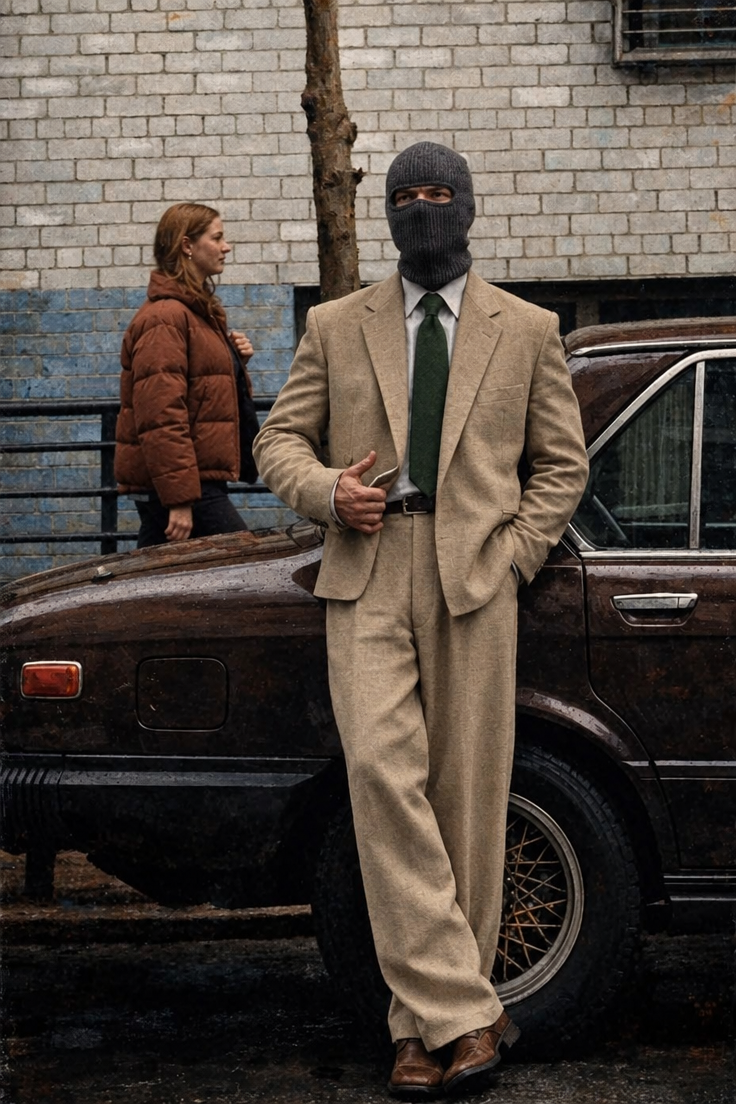
The understated mood comes from the exact combination of “overcast sky,” “wet city street,” and “moody gritty understated atmosphere,” while “muted earthy color palette” consolidates the beige-and-gray dominant colors seen in the image. “Full-body composition” keeps the man, charcoal balaclava, sand-tan suit, deep green tie, and dark vintage sedan readable as one vertical fashion-editorial arrangement. The phrase “woman walks past” adds a secondary diagonal movement behind the static figure, and “weathered brick wall background” supplies coarse urban texture without competing with the subject.
FAQ
→How do I make the man’s face and clothing more central and prominent?
Replace “Full-body composition” with “full-body portrait with the man filling most of the vertical frame, centered in the foreground,” and change “a woman walks past wearing a soft rust-brown puffer jacket” to “a softly blurred passerby in the far background.” Keep “his balaclava covers his head and face except the eyes” if the eyes should remain the main facial focal point.
→How do I shift this from gritty and subdued to a sharper luxury-fashion mood?
Replace “moody gritty understated atmosphere” with “polished high-fashion atmosphere with crisp tailored elegance,” and change “muted earthy color palette” to “high-contrast palette of charcoal, ivory, deep green, and restrained rust.” You can also replace “overcast sky” with “clean late-afternoon sunlight with controlled highlights” to give the sand-tan linen suit and deep green tie more definition.
→How do I build a series of variations while keeping the same editorial identity?
Keep the fixed structure “photorealistic fashion editorial scene with cinematic urban realism,” “full-body composition,” and the man’s “charcoal wool balaclava” with “sand-tan linen suit.” Swap only the setting phrase “wet city street with a weathered brick wall background” for variants such as “rain-darkened concrete underpass,” “industrial tram platform at dusk,” or “narrow café-lined street after rain,” while changing the secondary figure from “a woman” to different pedestrians and preserving “muted earthy color palette.”
Learn the technique behind this
- Why does AI get hands and faces wrong, and how do I fix it? — Hands fail because they're small in frame, extremely variable in pose, and self-occluding — the model has less usable signal per pixel than for any other body part.
- Why can't AI spell, and how do I get readable text in an image? — Older diffusion models had no character-level representation of text, so they produced letterform-shaped texture instead of words.
- How should a prompt be structured, and does word order matter? — A prompt that behaves predictably names one subject first, then what it is doing, then where, then the light, then the lens or medium, then the style.
Related prompts
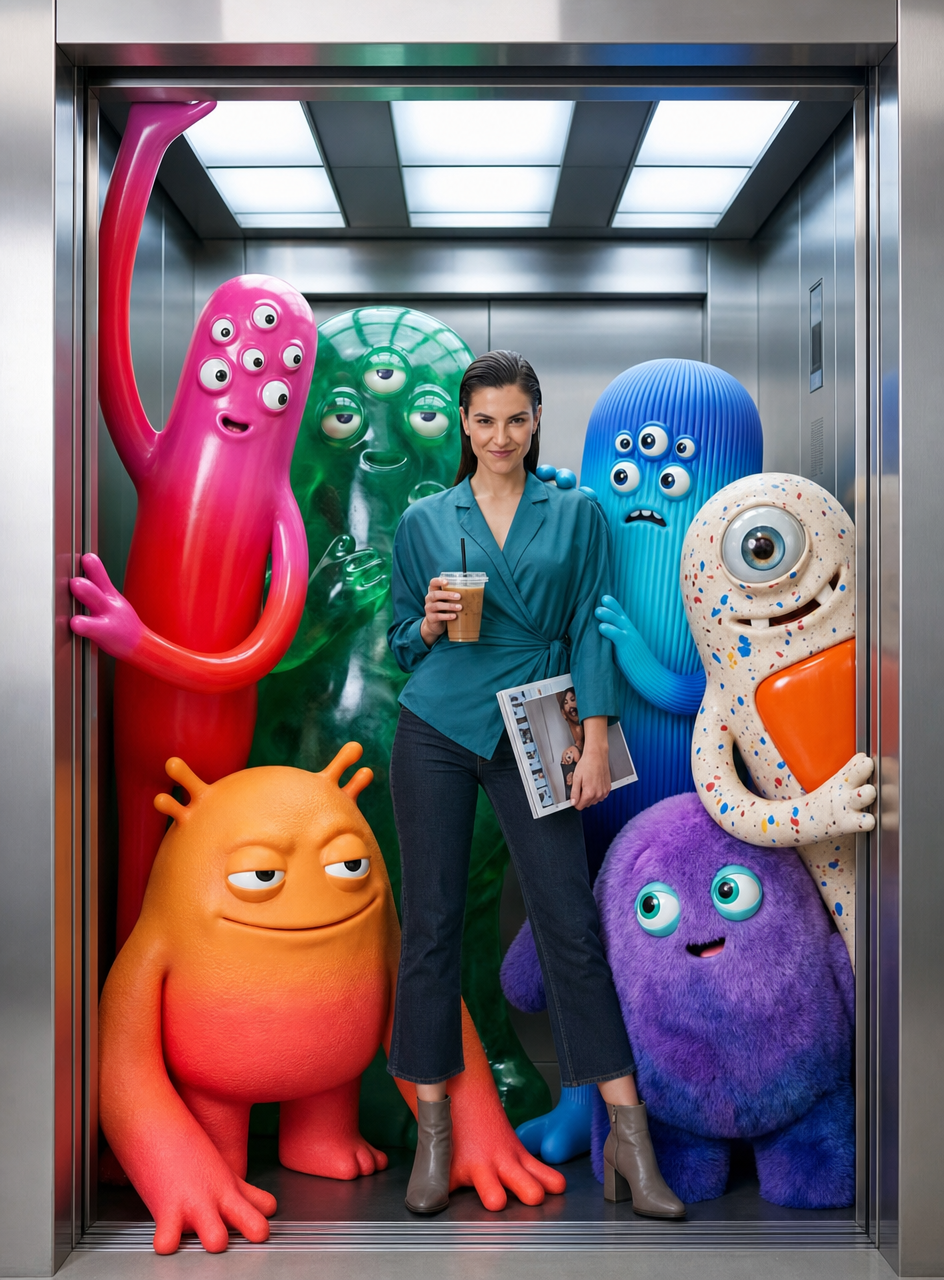
Teal fashion editorial in monster-filled lift
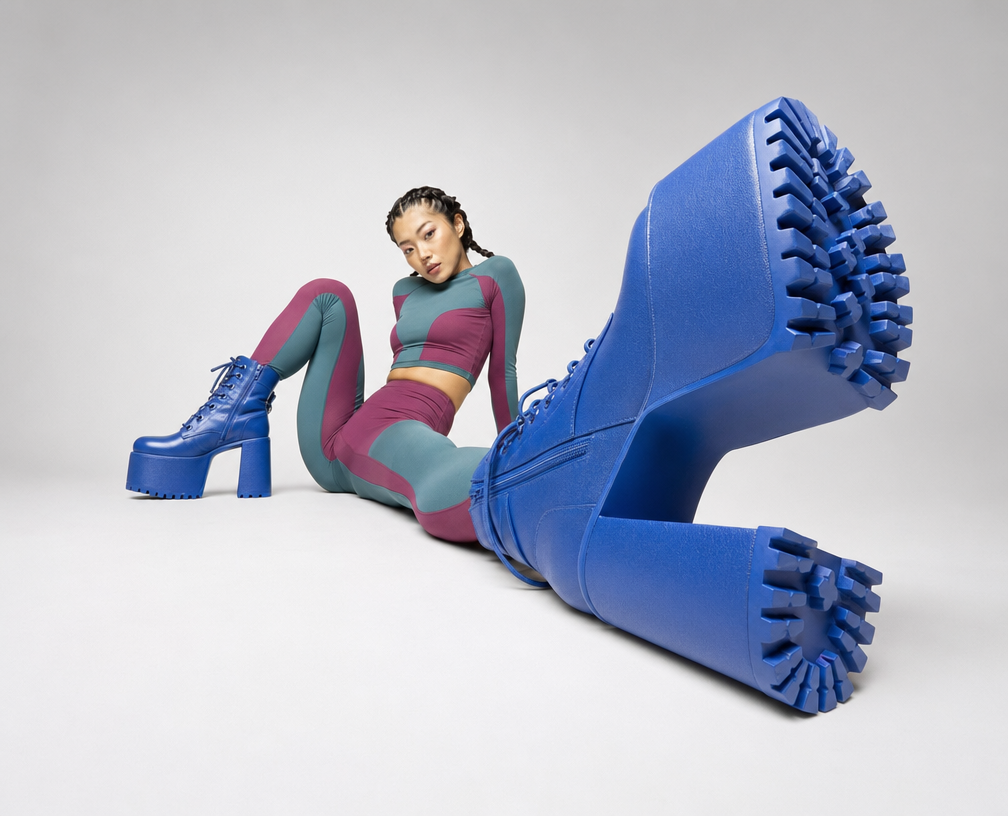
Cobalt Boots in Sleek Studio Edit
Silhouette Influencer by Sunlit Window
Sunlit editorial on striped beach towel