Why this works
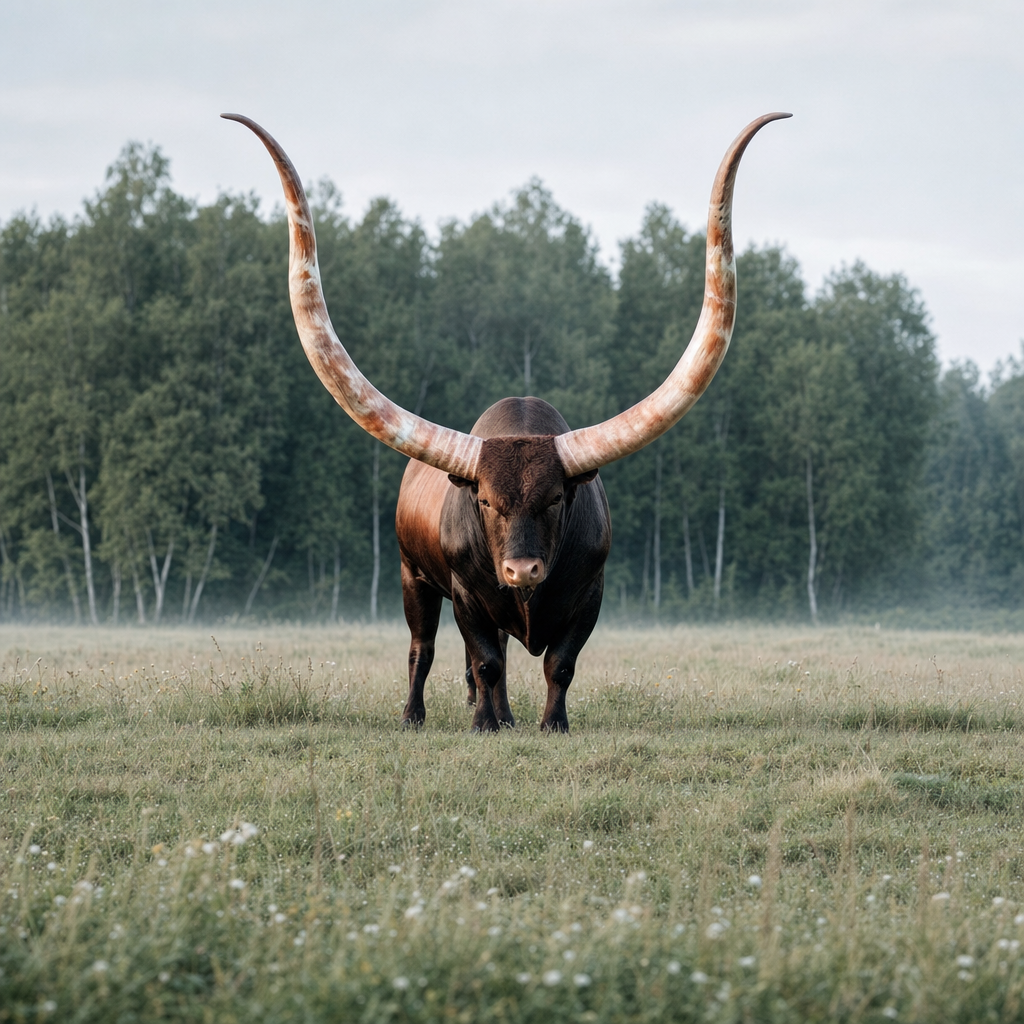
The centered, front-facing longhorn bull gives the image a direct, imposing presence, while “massive sweeping curved horns” makes its silhouette the dominant visual feature. “Slightly wider framing so more of the meadow is visible” adds environmental scale without weakening the subject’s priority, because “shallow depth of field” keeps the bull sharp and the “distant dark tree line softly blurred.” The intended serene contrast comes from “cool, soft early-morning light” and the pale-green/light-brown palette, though the generated tan, brown, and gray tones make the result feel more earthy and grounded than pastel.
FAQ
→How do I make the bull feel even more dominant in the frame?
Replace “slightly wider framing so more of the meadow is visible” with “tight medium portrait framing from the chest up,” and add “horns extending nearly to both side edges of the frame.” Keep “centered composition” and “front-facing” so the gaze and horn span remain symmetrical.
→How do I make the scene feel warmer and less subdued?
Replace “cool, soft early-morning light” with “warm golden sunrise light with low-angle rim lighting,” and change “pale greens and light browns” to “rich emerald grass, warm ochre fur, and amber highlights.” Retain “distant dark forest tree line” if you want the brighter bull to stand out against a strong background.
→How do I create a matching variation with a different animal?
Replace “front-facing longhorn bull” and “massive sweeping curved horns” with a specific counterpart such as “front-facing Highland cow with shaggy russet fur and broad horns,” while keeping “centered composition,” “shallow depth of field,” and “slightly wider framing so more of the meadow is visible.” Adjust “calm, powerful gaze” to “calm, watchful gaze” if the replacement animal should feel alert rather than imposing.
Learn the technique behind this
- Why can't AI spell, and how do I get readable text in an image? — Older diffusion models had no character-level representation of text, so they produced letterform-shaped texture instead of words.
- How should a prompt be structured, and does word order matter? — A prompt that behaves predictably names one subject first, then what it is doing, then where, then the light, then the lens or medium, then the style.
- Do negative prompts work, and what should go in one? — Negative prompts work on models that support a separate negative conditioning channel — mainly Stable Diffusion and FLUX-family models.
Related prompts
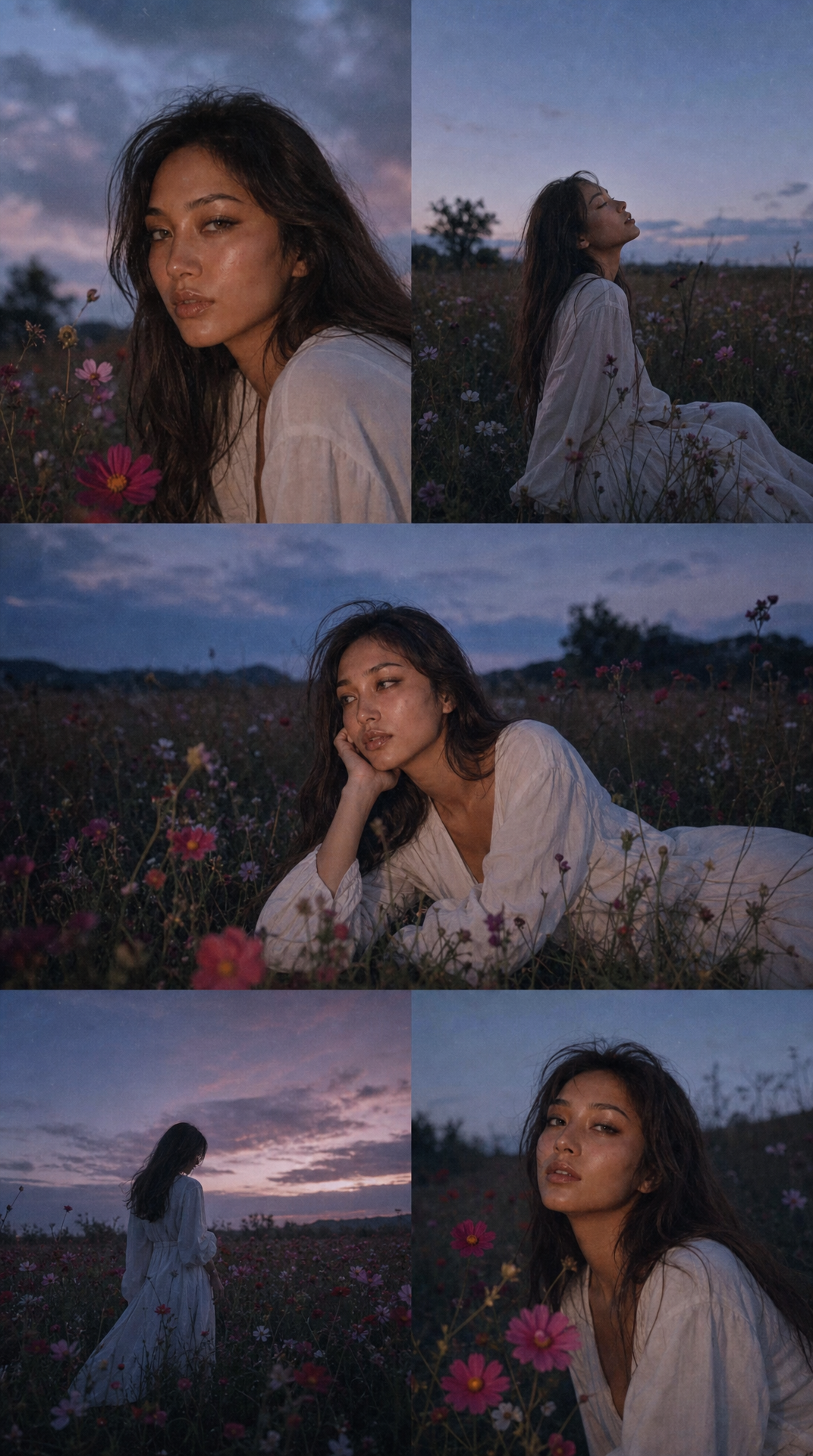
Solitary Woman in Twilight Wildflower Meadow

Golden-hour surf under dramatic clouds
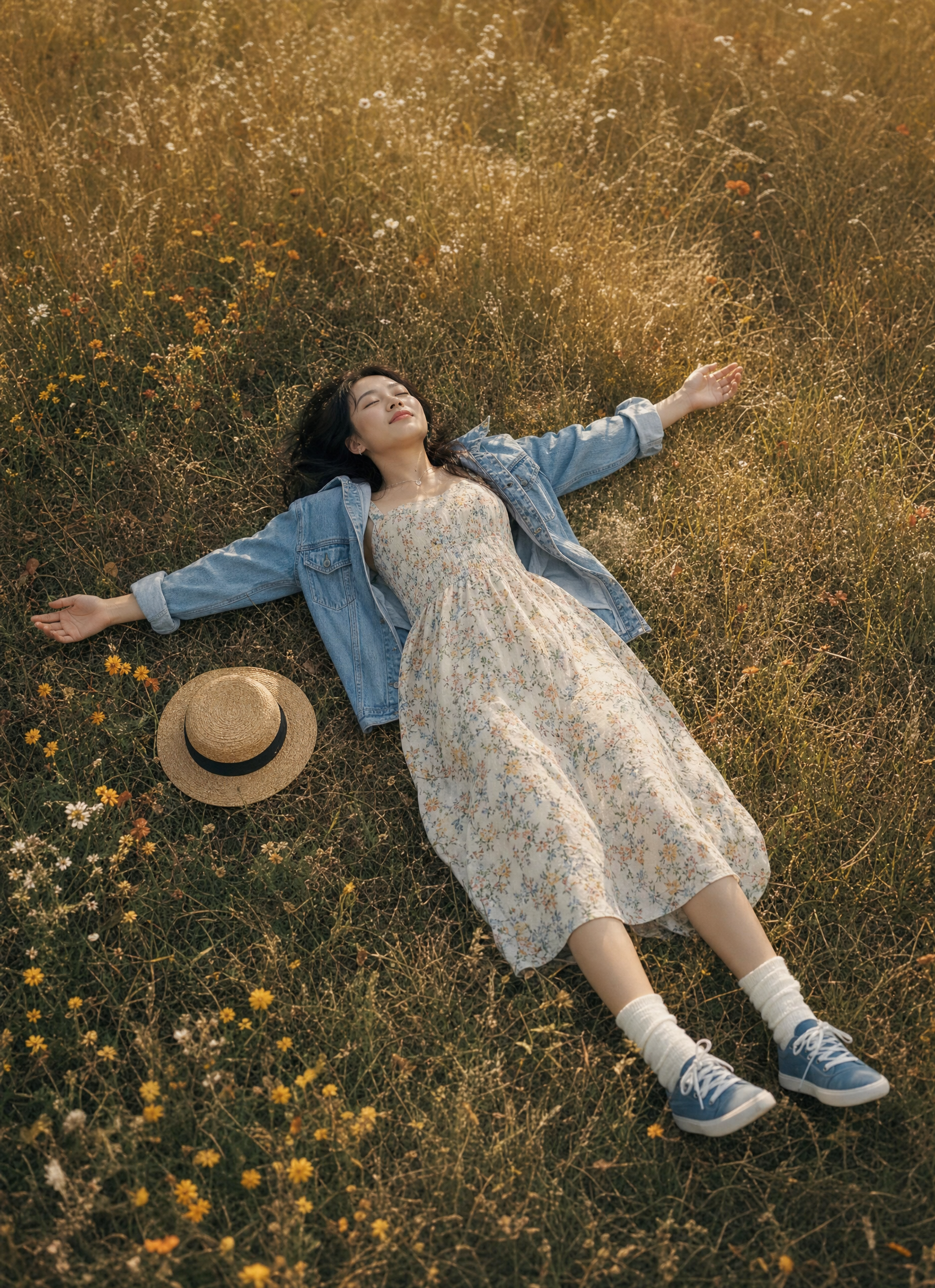
Woman Relaxing in Golden Autumn Field

Man on sand dune in blue hour