Why this works
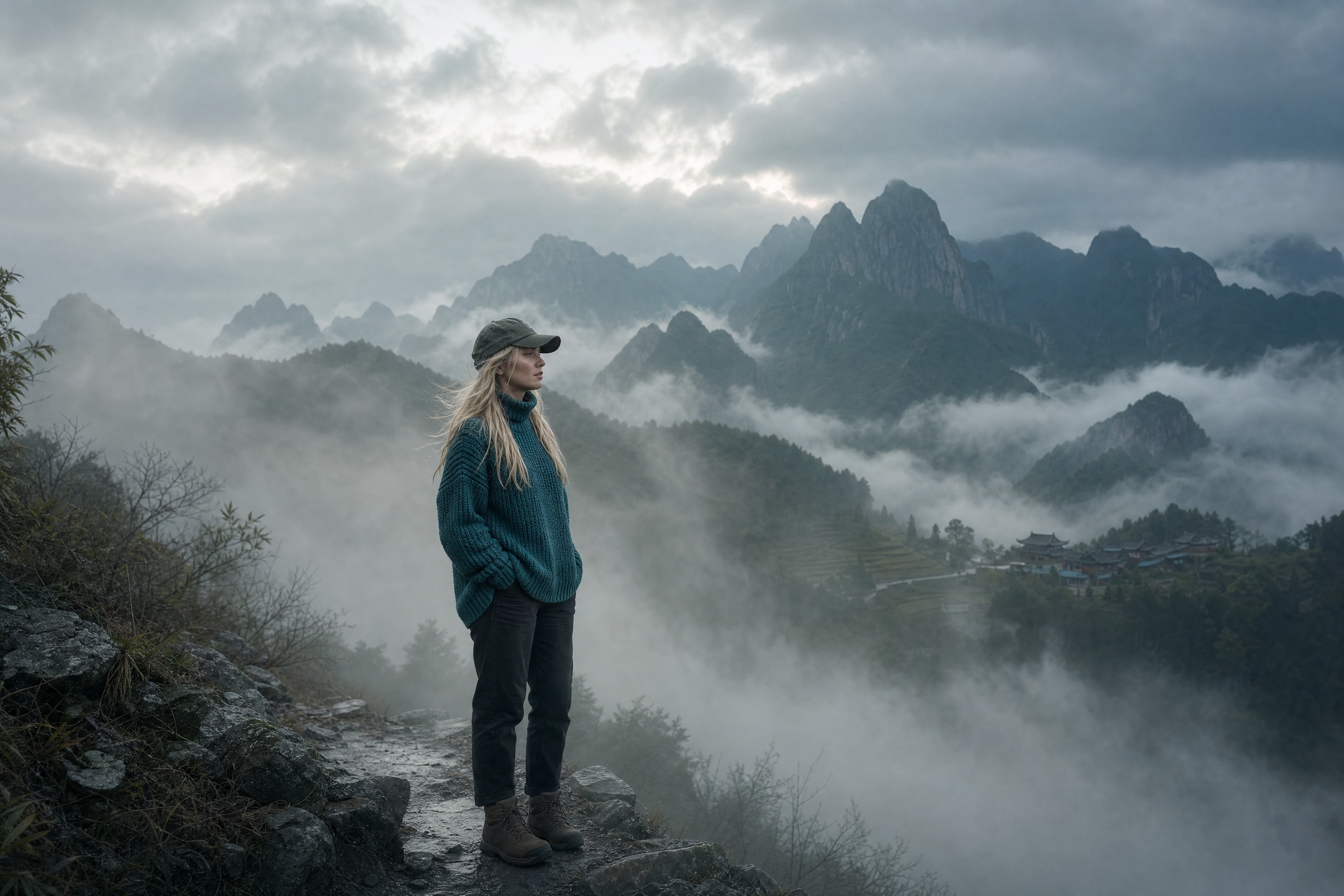
The phrase “lone woman standing on a misty mountain cliff overlook” establishes a full-body portrait and gives the scene its solitary, adventurous mood, while “wide-angle shot” makes the jagged peaks and layered valleys feel expansive around her. “Cool atmospheric haze,” “soft natural light,” and valleys that “fade into low clouds” produce the blue-dominant palette and subdued contrast visible across the image. Her teal sweater, dark olive cap, dark jeans, and hiking shoes create a compact dark-and-teal focal accent against the pale mountain layers, while “cinematic composition” keeps the figure readable within the large landscape.
FAQ
→How do I make the woman more prominent without losing the mountain scale?
Replace “wide-angle shot” with “moderate wide-angle medium-full-body shot” and add “woman occupying the central third of the frame, sharply detailed face and clothing.” Keep “dramatic jagged peaks” and “layered valleys” so the background remains expansive, but remove “lone” if you want less emphasis on isolation.
→How do I shift this from serene adventure to a darker, stormier mood?
Replace “soft natural light” with “dramatic overcast storm light with strong side shadows,” change “cool atmospheric haze” to “dense charcoal storm clouds and rain veils,” and replace “serene adventurous mood” with “tense, foreboding wilderness mood.” Retain the teal sweater and dark olive cap so the subject still separates from the darker landscape.
→How do I build a matching series in different environments?
Keep the subject and style phrases, especially “a lone woman,” “teal chunky knit sweater,” “dark olive baseball cap,” “photorealistic,” and “cinematic composition,” then replace “misty mountain cliff overlook” and its mountain description with a specific location such as “windswept coastal headland above slate-gray waves” or “snow-covered alpine ridge above frozen valleys.” Adjust “low clouds” and “cool atmospheric haze” to setting-specific elements such as “sea spray” or “blowing snow.”
Learn the technique behind this
- Why can't AI spell, and how do I get readable text in an image? — Older diffusion models had no character-level representation of text, so they produced letterform-shaped texture instead of words.
- Which aspect ratio should I use, and how does it change the image? — Aspect ratio determines what the model composes, not how it's cropped afterwards.
- How should a prompt be structured, and does word order matter? — A prompt that behaves predictably names one subject first, then what it is doing, then where, then the light, then the lens or medium, then the style.
Related prompts
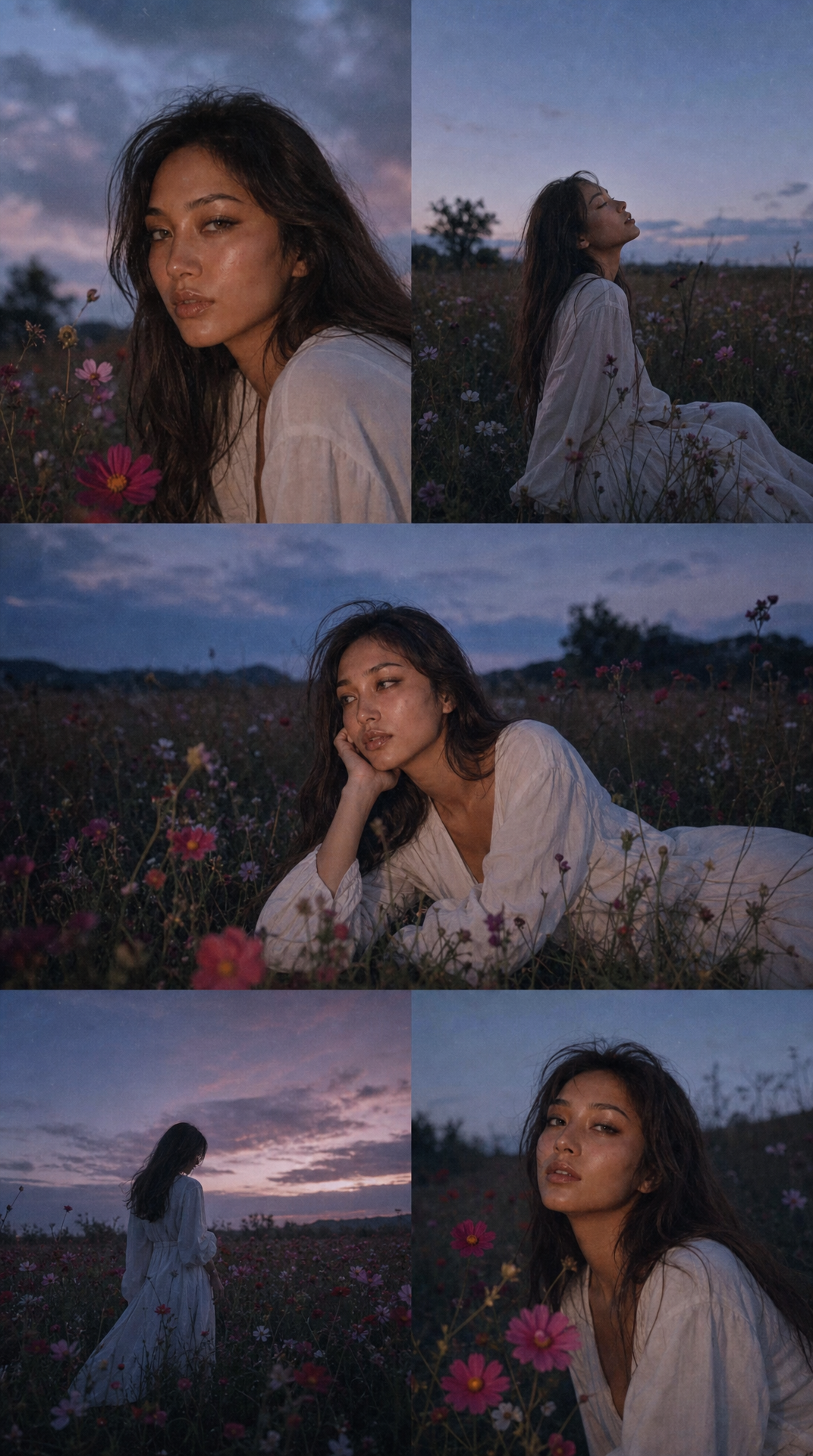
Solitary Woman in Twilight Wildflower Meadow
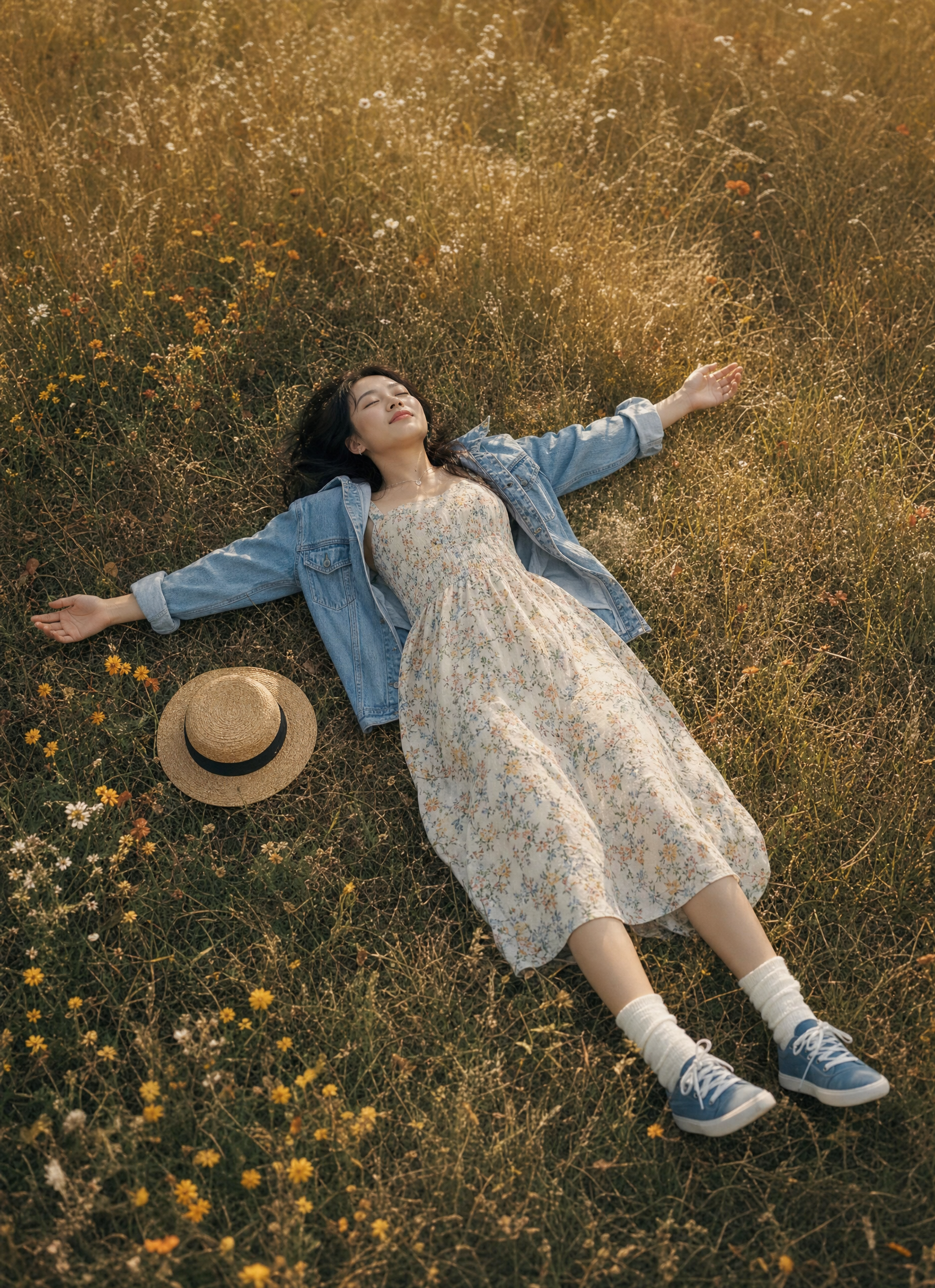
Woman Relaxing in Golden Autumn Field
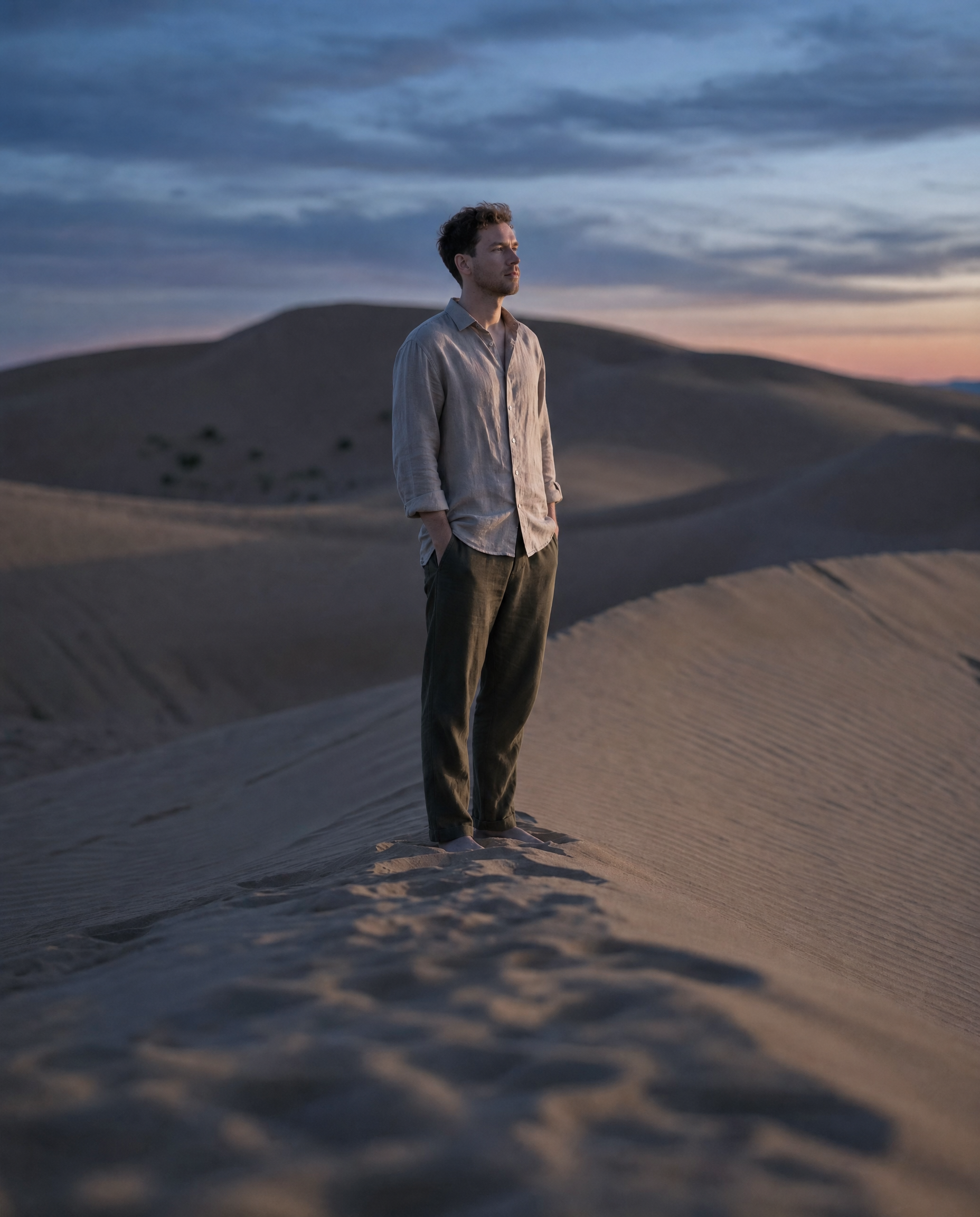
Man on sand dune in blue hour
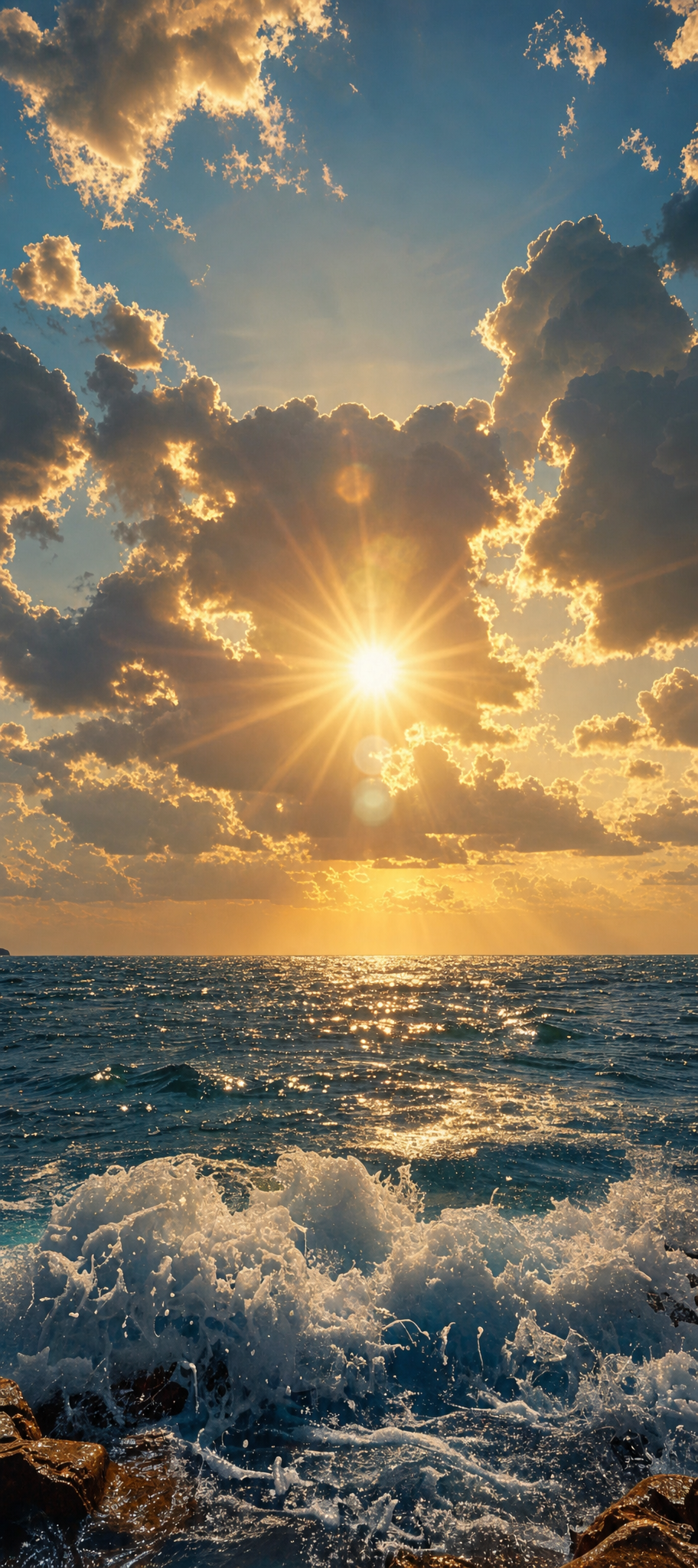
Golden-hour surf under dramatic clouds