Why this works
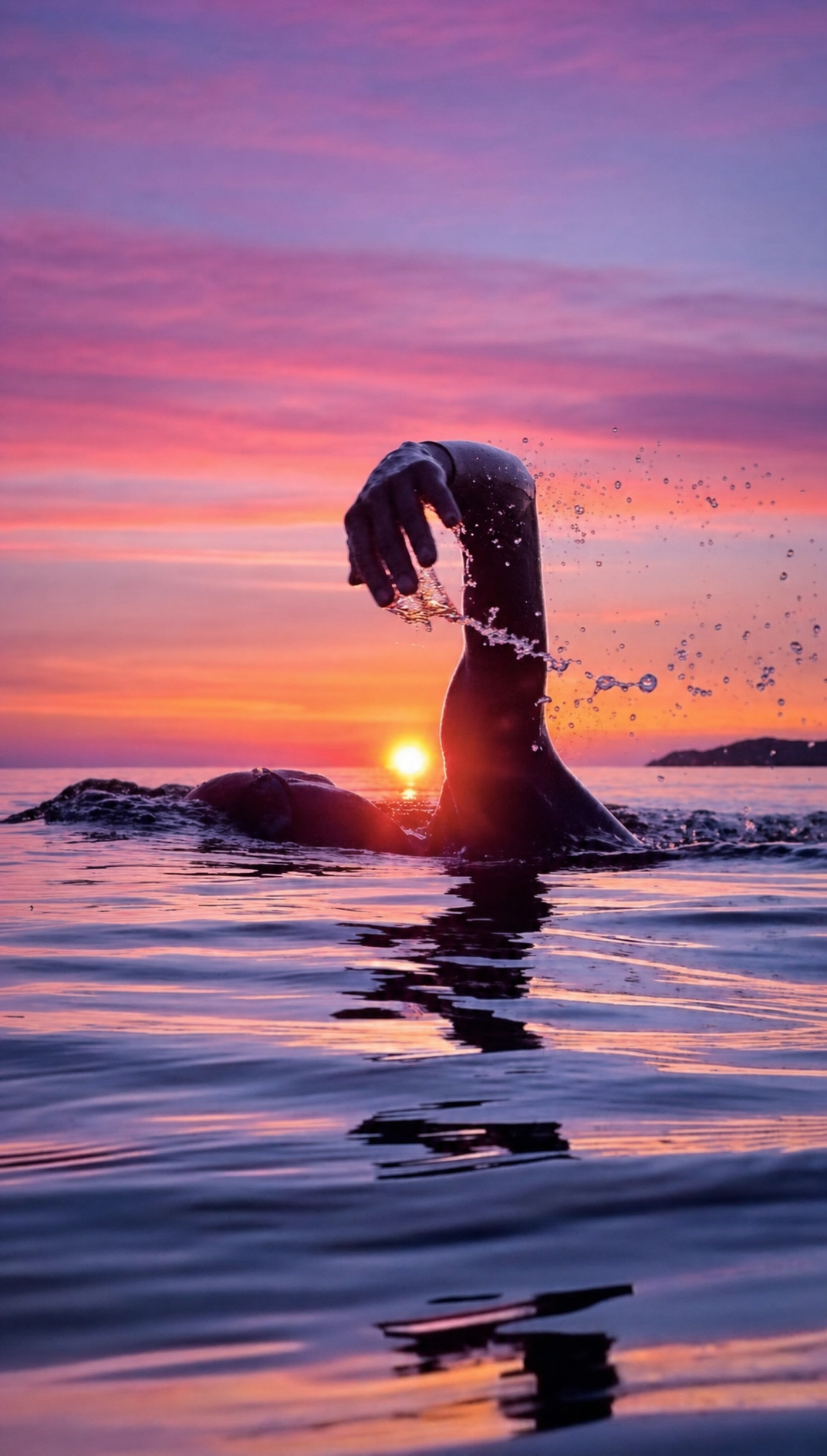
The wide-shot composition and “low waterline perspective” place the lone swimmer against expansive open water, while the “distant shoreline remains a dark silhouette on the horizon” supplies scale and a clean visual boundary. The dreamy tone comes specifically from “richer magenta and soft lavender tones” and “dreamy cinematic atmosphere,” with “natural sunset light” picking out the raised arm, droplets, and skin highlights. “Shallow depth of field for subject emphasis” keeps the swimmer readable without losing the mirror-like water, whose calm surface and gentle ripples reinforce the serene mood.
FAQ
→How do I make the swimmer feel more dramatic and central?
Replace “wide-shot” and “low waterline perspective” with “medium close-up from just above the waterline,” and change “one arm lifts out of the waves” to “the swimmer’s face and raised arm dominate the foreground, droplets frozen sharply in midair.” Replace “shallow depth of field for subject emphasis” with “strong subject isolation and crisp focus on the face, arm, and droplets.”
→How do I shift this from dreamy serenity to a stormier, more tense mood?
Replace “calm and mirror-like with gentle ripples” with “choppy dark water with wind-driven waves,” and change “richer magenta and soft lavender tones” to “deep violet, slate blue, and bruised crimson storm clouds.” Replace “dreamy cinematic atmosphere” with “tense cinematic atmosphere,” and “natural sunset light” with “low, intermittent light breaking through heavy clouds.”
→How do I build a variation series with a different setting while keeping the same visual structure?
Keep “low waterline perspective,” “cinematic framing,” “shallow depth of field,” and “one arm lifts out of the waves,” then replace “calm open sea with distant shoreline silhouette on the horizon” with a matched setting such as “misty mountain lake with dark pine-covered ridges on the horizon” or “quiet tropical lagoon with a narrow volcanic island silhouette.” Keep “ultra-detailed water splashes and skin highlights” so the swimmer remains the consistent visual anchor across the series.
Learn the technique behind this
- Why can't AI spell, and how do I get readable text in an image? — Older diffusion models had no character-level representation of text, so they produced letterform-shaped texture instead of words.
- How do I keep one consistent style across a whole set of images? — Style consistency is more achievable than character consistency because style lives in describable attributes.
- How should a prompt be structured, and does word order matter? — A prompt that behaves predictably names one subject first, then what it is doing, then where, then the light, then the lens or medium, then the style.
Related prompts
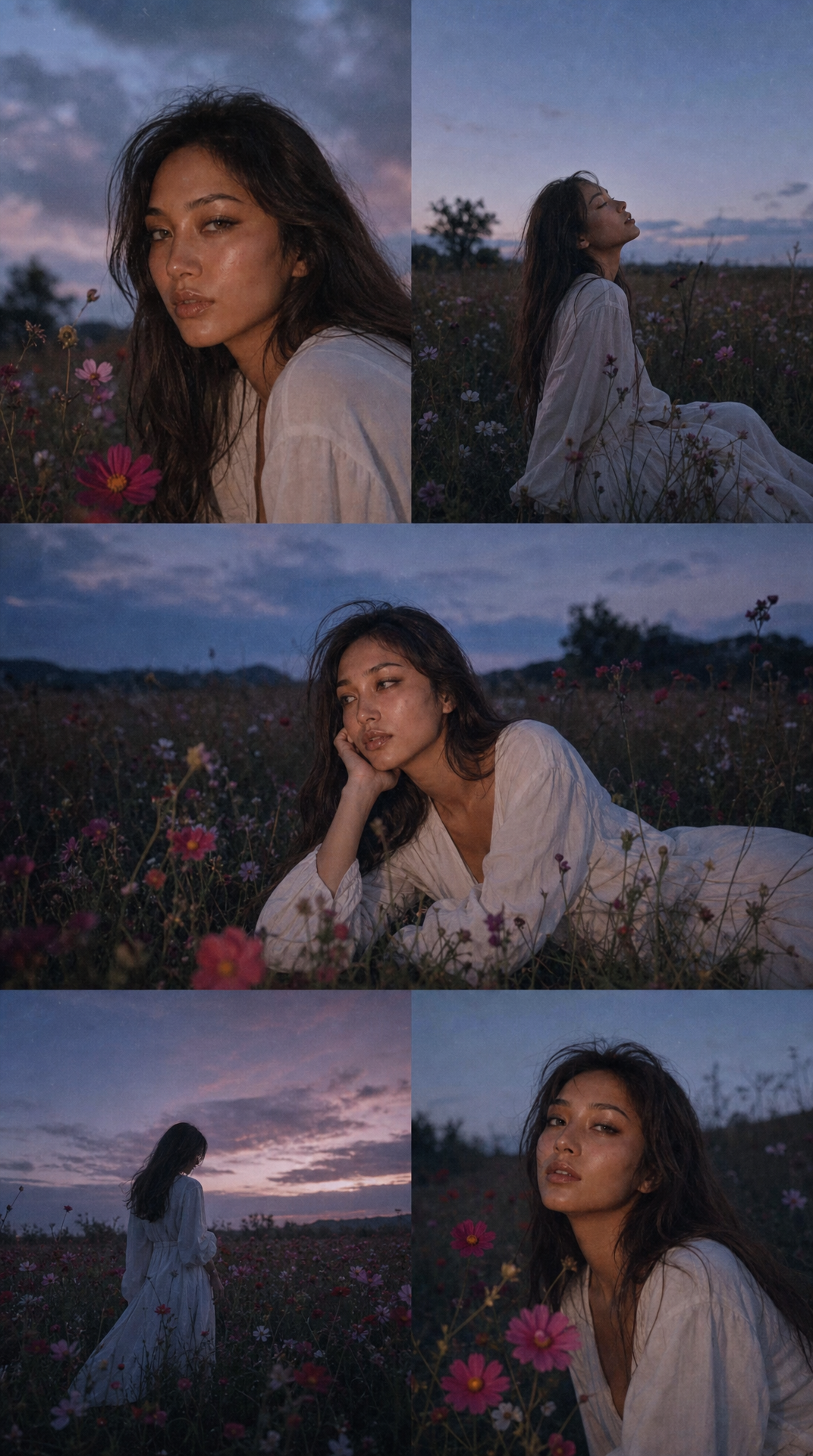
Solitary Woman in Twilight Wildflower Meadow
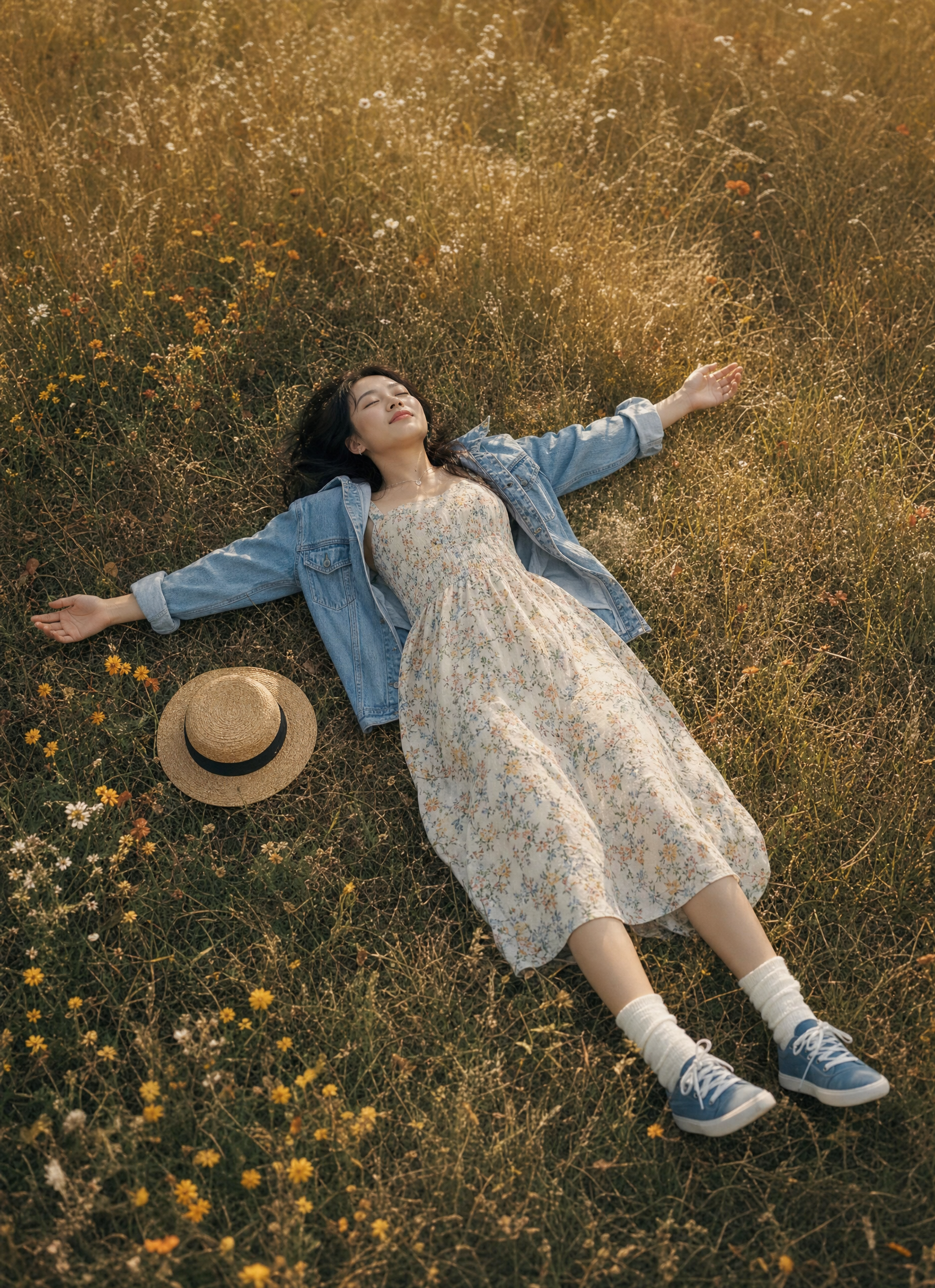
Woman Relaxing in Golden Autumn Field
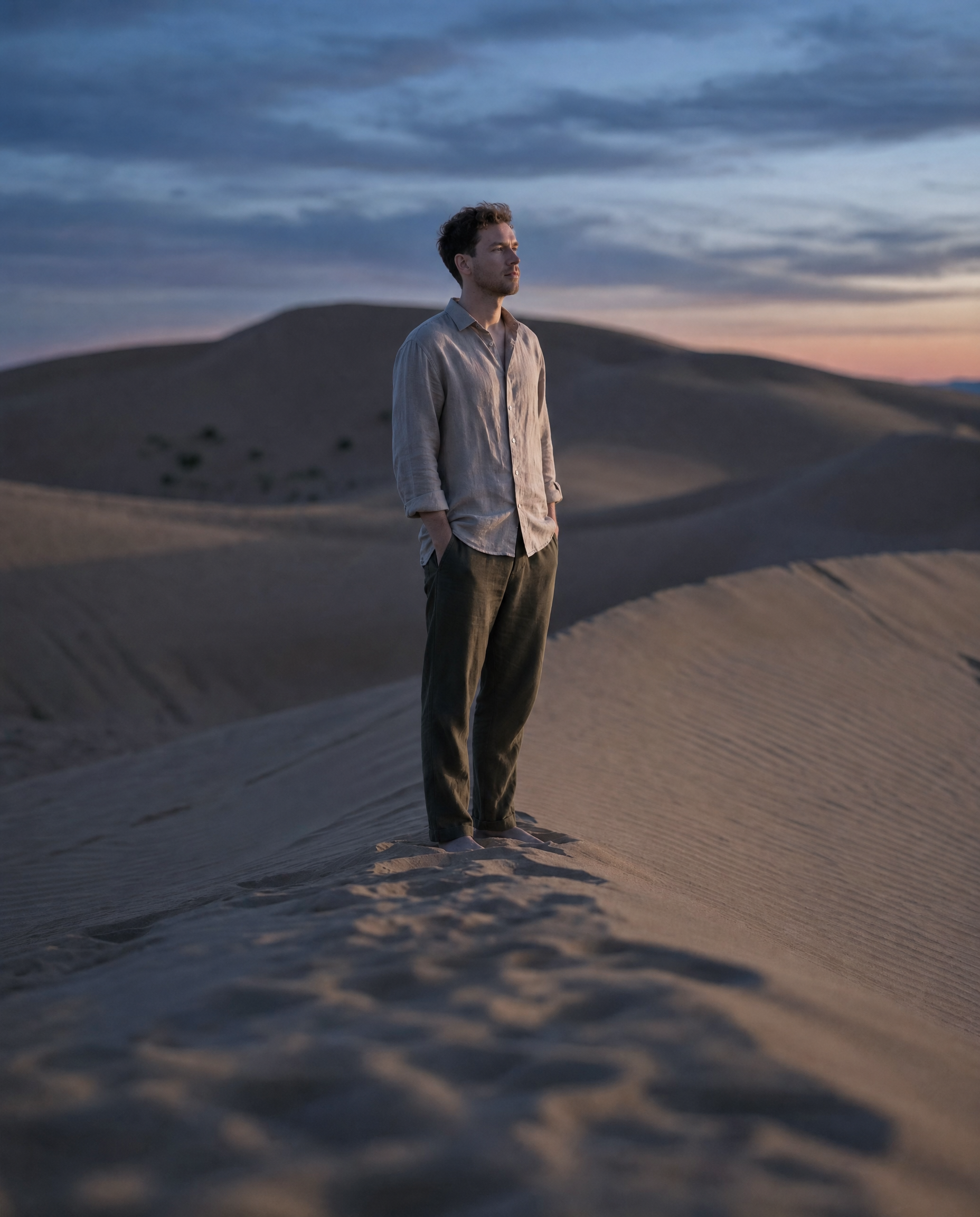
Man on sand dune in blue hour

Golden-hour surf under dramatic clouds