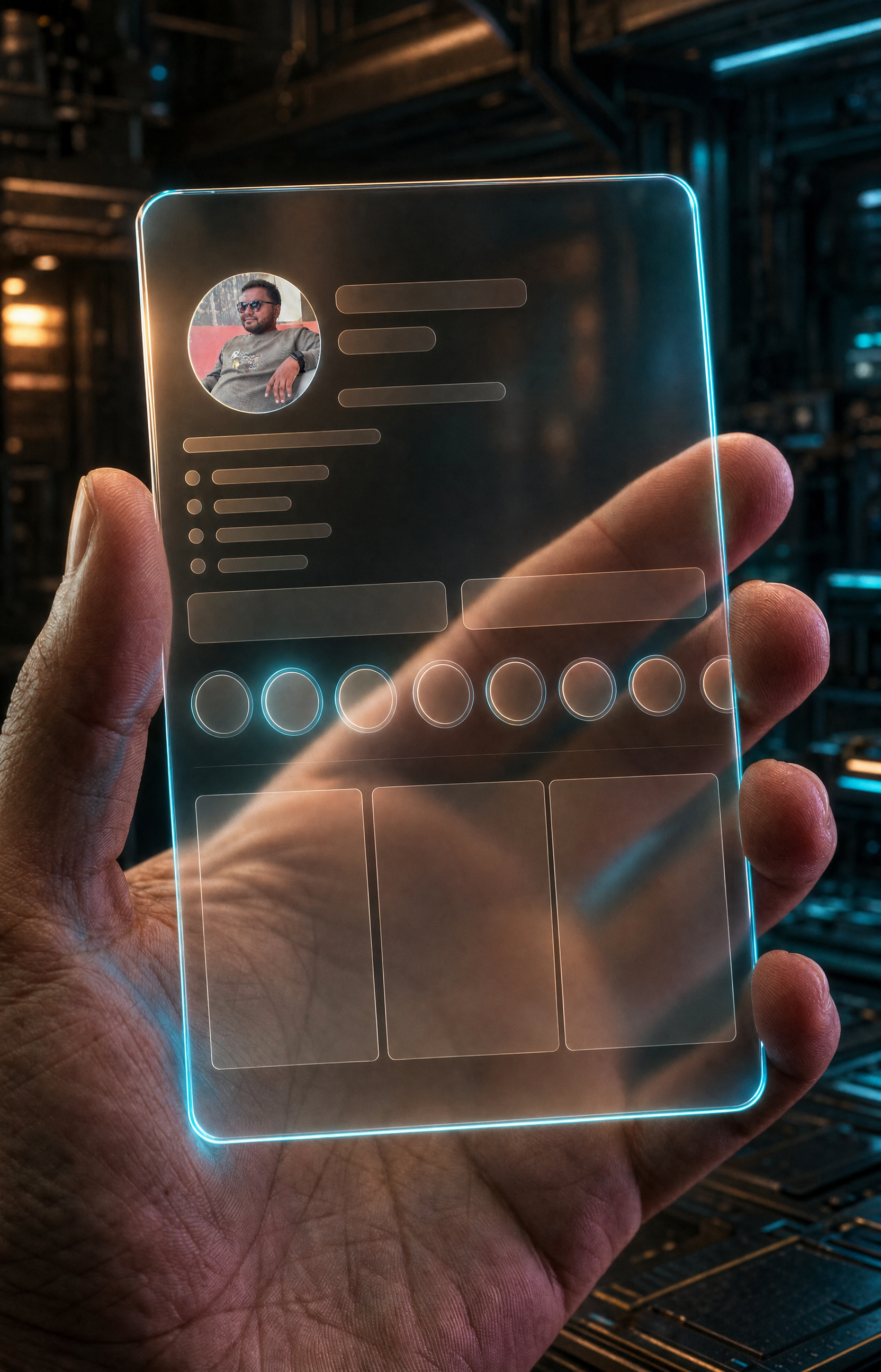
Why this works
The phrase “cinematic close-up” and the “100mm macro lens, f/2.2, shallow depth of field” keep the hand and smart card dominant while turning the dark metal workshop into smooth background bokeh. “Soft volumetric warm amber and teal ambient lighting” supplies the brown-and-teal color harmony and moody contrast, while “subtle rainbow refractions” gives the semi-transparent card a controlled glassmorphism shimmer. “Realistic skin texture with fine pores and natural creases” anchors the futuristic interface in tactile detail, making the holographic panel feel physically held rather than pasted into the frame.
FAQ
→How do I make the holographic profile panel more prominent than the hand?
Replace “a minimal social profile-style interface panel hovering above the palm (no text)” with “a large translucent profile interface panel occupying the upper center of the frame, clearly legible icon shapes and layered UI cards, no readable text,” and change “cinematic close-up” to “tight close-up centered on the floating interface.” Keep “f/2.2” but specify “the interface panel in sharp focus, hand slightly softer.”
→How do I shift this from moody industrial realism to a brighter, cleaner futuristic tone?
Replace “dim high-tech industrial workshop with dark metal surfaces” with “bright white futuristic laboratory with frosted glass and polished chrome surfaces,” and replace “soft volumetric warm amber and teal ambient lighting” with “high-key cool white lighting with crisp cyan accents and minimal shadows.” Retain “subtle rainbow refractions” for the glassmorphism color detail, but remove “moody” from the mood description.
→How do I create a matching series with different holographic objects while preserving this visual identity?
Keep the fixed visual phrases “100mm macro lens, f/2.2, shallow depth of field,” “soft volumetric warm amber and teal ambient lighting,” “photorealistic,” and “realistic skin texture.” Swap “a human hand holding a holographic semi-transparent smart card” for consistent variants such as “a human hand holding a translucent holographic key,” “a floating glassmorphism medical badge,” or “a semi-transparent holographic access token,” while retaining “dark high-tech industrial workshop” and “gentle bokeh background.”
Learn the technique behind this
- Why can't AI spell, and how do I get readable text in an image? — Older diffusion models had no character-level representation of text, so they produced letterform-shaped texture instead of words.
- How should a prompt be structured, and does word order matter? — A prompt that behaves predictably names one subject first, then what it is doing, then where, then the light, then the lens or medium, then the style.
- Why does AI get hands and faces wrong, and how do I fix it? — Hands fail because they're small in frame, extremely variable in pose, and self-occluding — the model has less usable signal per pixel than for any other body part.
Related prompts

DJ in neon haze at low angle

Glowing Fiber-Optic Cables With Purple Data Lines
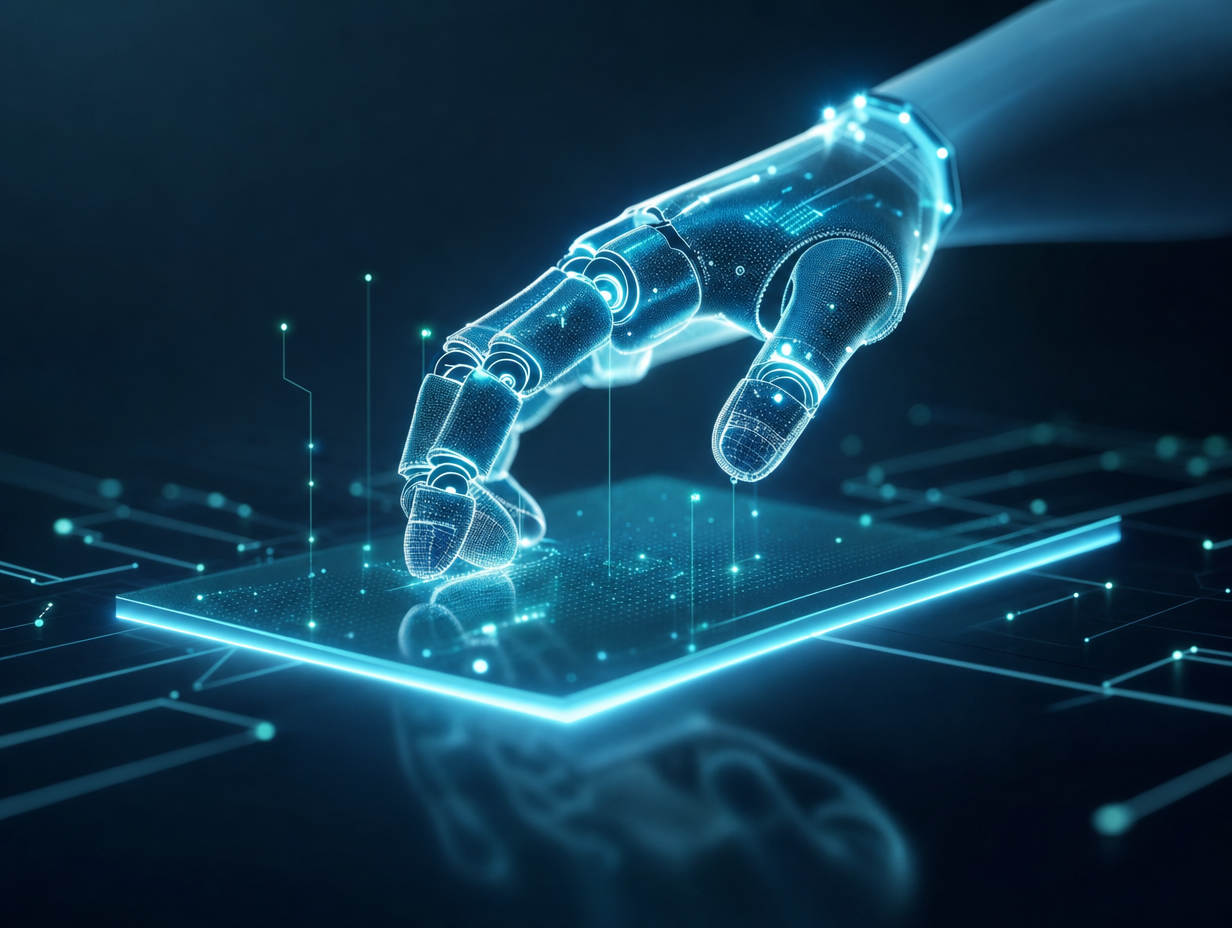
Cyan Hologram, Sleek Robotic Hand
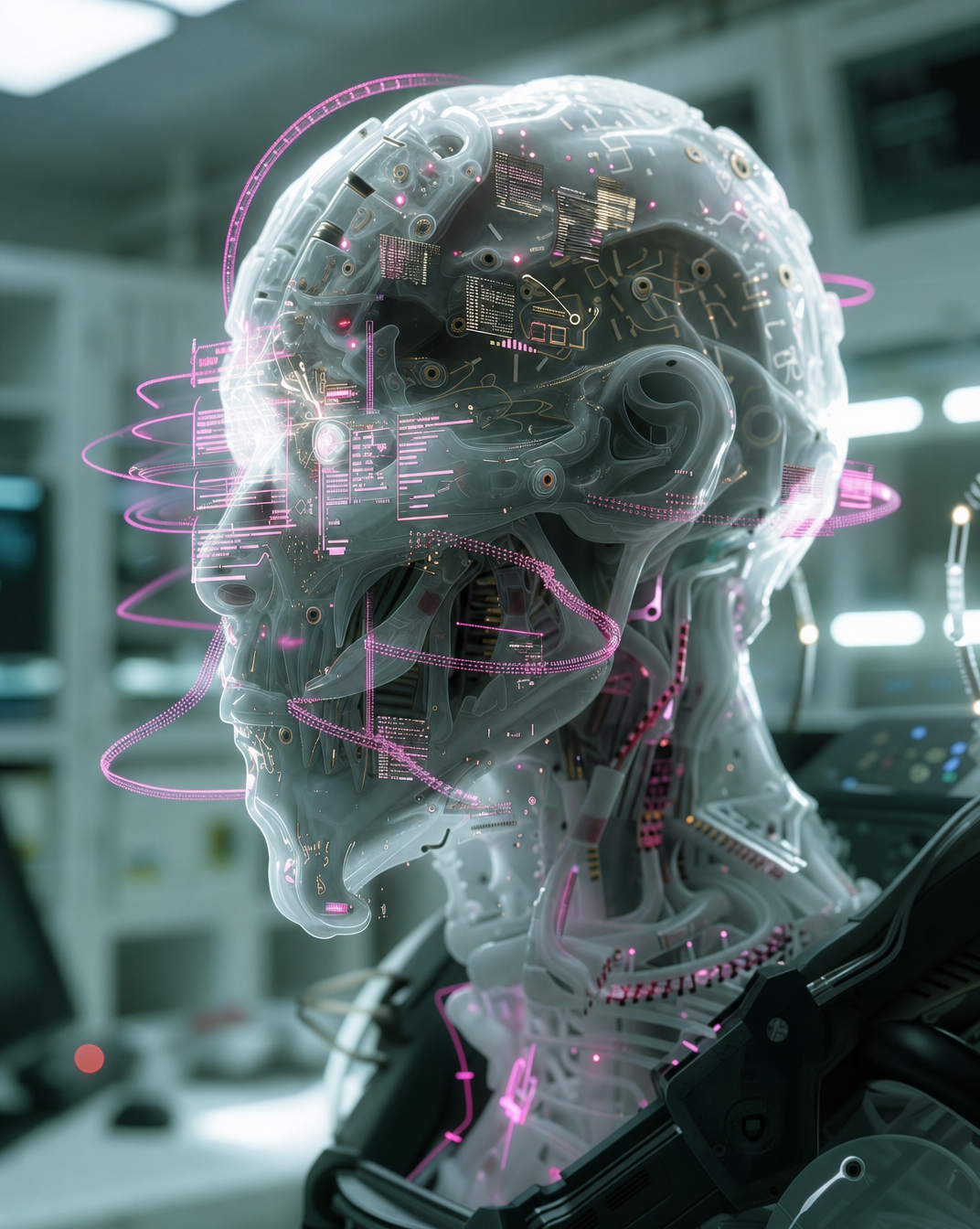
Cyborg head with magenta holograms and translucent skull