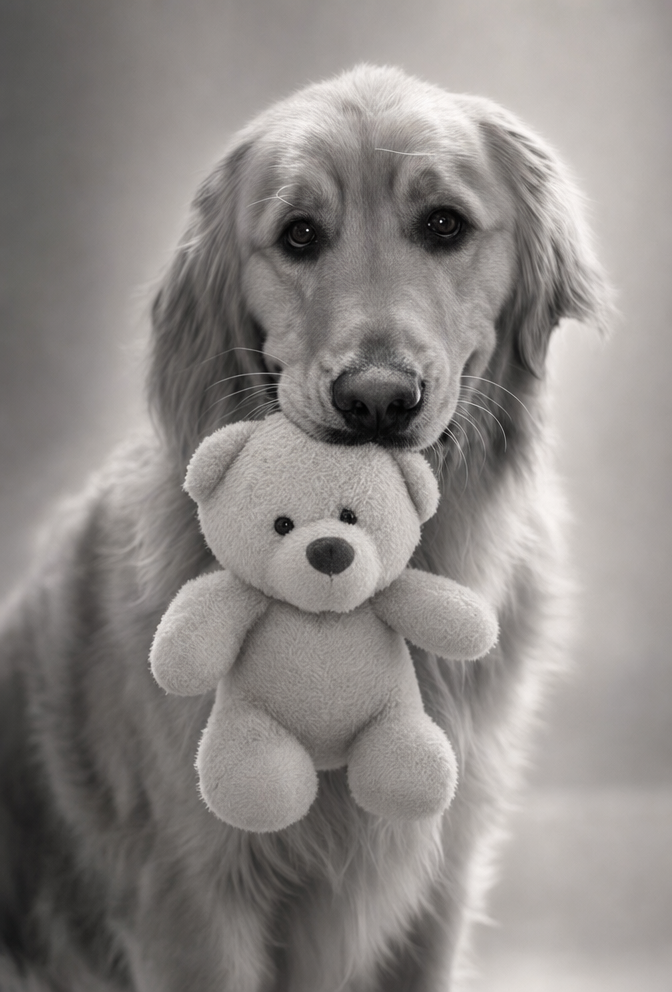
Why this works
“Close-up centered composition” makes the portrait feel immediate, while “the eyes in sharp focus” gives the viewer a clear emotional anchor. The “slightly cooler, silvery-gold look” and “black-and-white photorealistic” treatment reduce color distraction, leaving the white fur highlights and black facial details to define the image’s tonal structure. “Softer studio lighting,” “slight mid-gray tone blur,” and “shallow depth of field” supply the calm, tender mood by keeping contrast restrained and the background unobtrusive; the “small round teddy bear shape” adds a readable, gentle point of interaction.
FAQ
→How do I make the teddy bear more prominent without losing the dog’s expression?
Replace “centered composition” with “slightly off-center portrait composition, dog’s head and teddy bear both fully visible,” and change “small round teddy bear shape” to “clearly visible small round teddy bear held forward in the mouth.” Keep “the eyes in sharp focus,” but add “eyes and teddy bear equally sharp” if the toy must compete visually with the face.
→How do I make this portrait feel warmer and more cheerful?
Replace “slightly cooler, silvery-gold look” with “warm honey-gold fur with soft luminous highlights,” and change “subtle mid-gray tones” to “soft warm-gray and cream background tones.” Swap “calm, tender mood” for “bright affectionate mood,” while retaining “softer studio lighting” to avoid harsh contrast.
→How do I build a matching series with different toys and poses?
Keep the fixed structure, including “black-and-white photorealistic,” “close-up centered composition,” “the eyes in sharp focus,” and “shallow depth of field.” Create variations by replacing only “a small round teddy bear shape” with phrases such as “a small plush duck,” “a knotted fabric rope toy,” or “a tiny stuffed rabbit,” then vary the action with “held gently,” “resting against one paw,” or “tilted playfully in the mouth.”
Learn the technique behind this
- Why can't AI spell, and how do I get readable text in an image? — Older diffusion models had no character-level representation of text, so they produced letterform-shaped texture instead of words.
- How should a prompt be structured, and does word order matter? — A prompt that behaves predictably names one subject first, then what it is doing, then where, then the light, then the lens or medium, then the style.
- Which aspect ratio should I use, and how does it change the image? — Aspect ratio determines what the model composes, not how it's cropped afterwards.
Related prompts
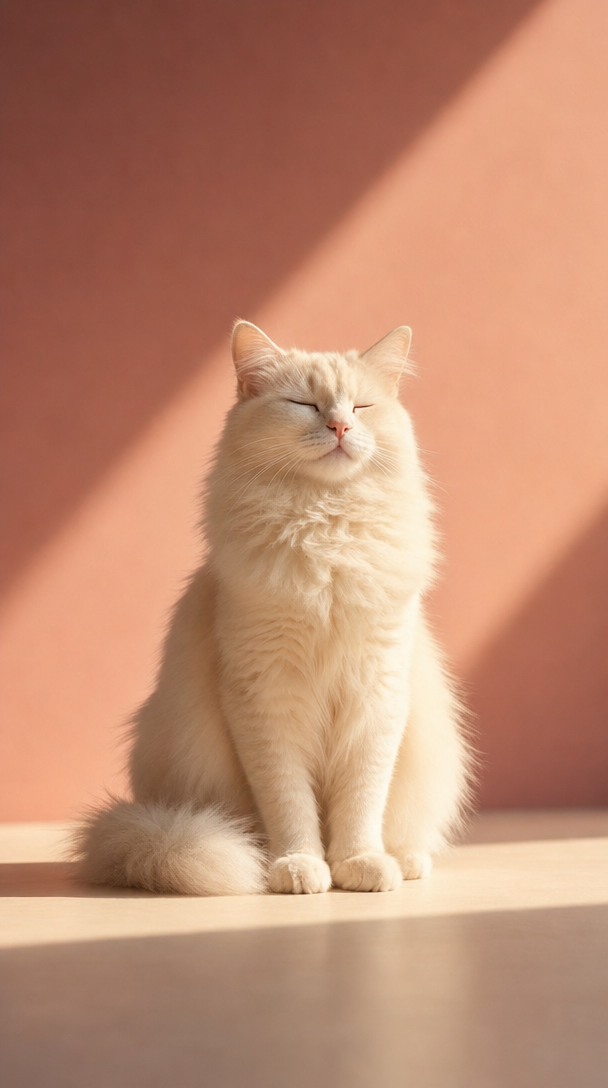
Cream Longhaired Cat in Warm Dusty-Rose Light

Warm Studio Laughter With Brown Puppy
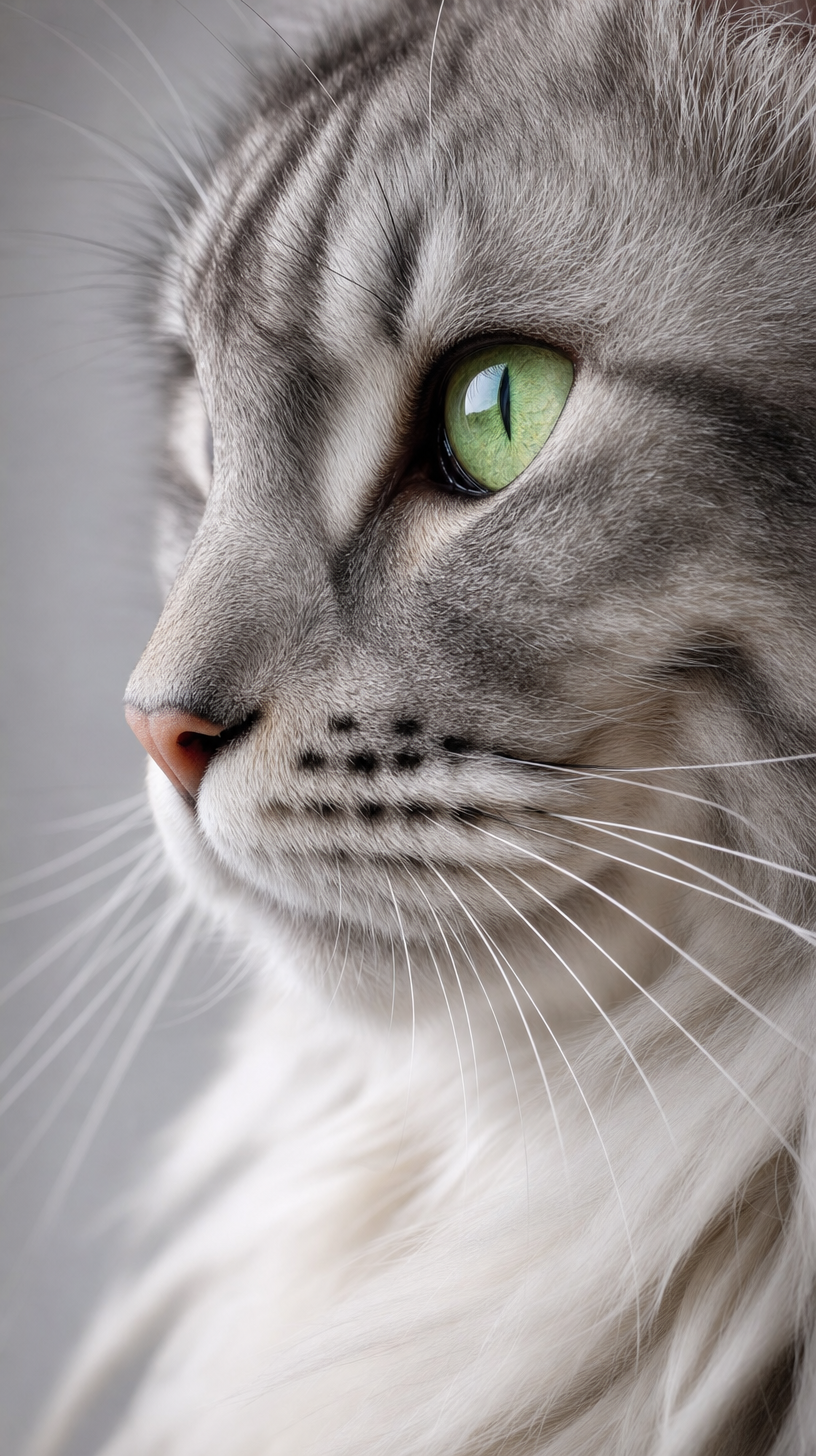
Long-haired gray tabby cat with green eyes
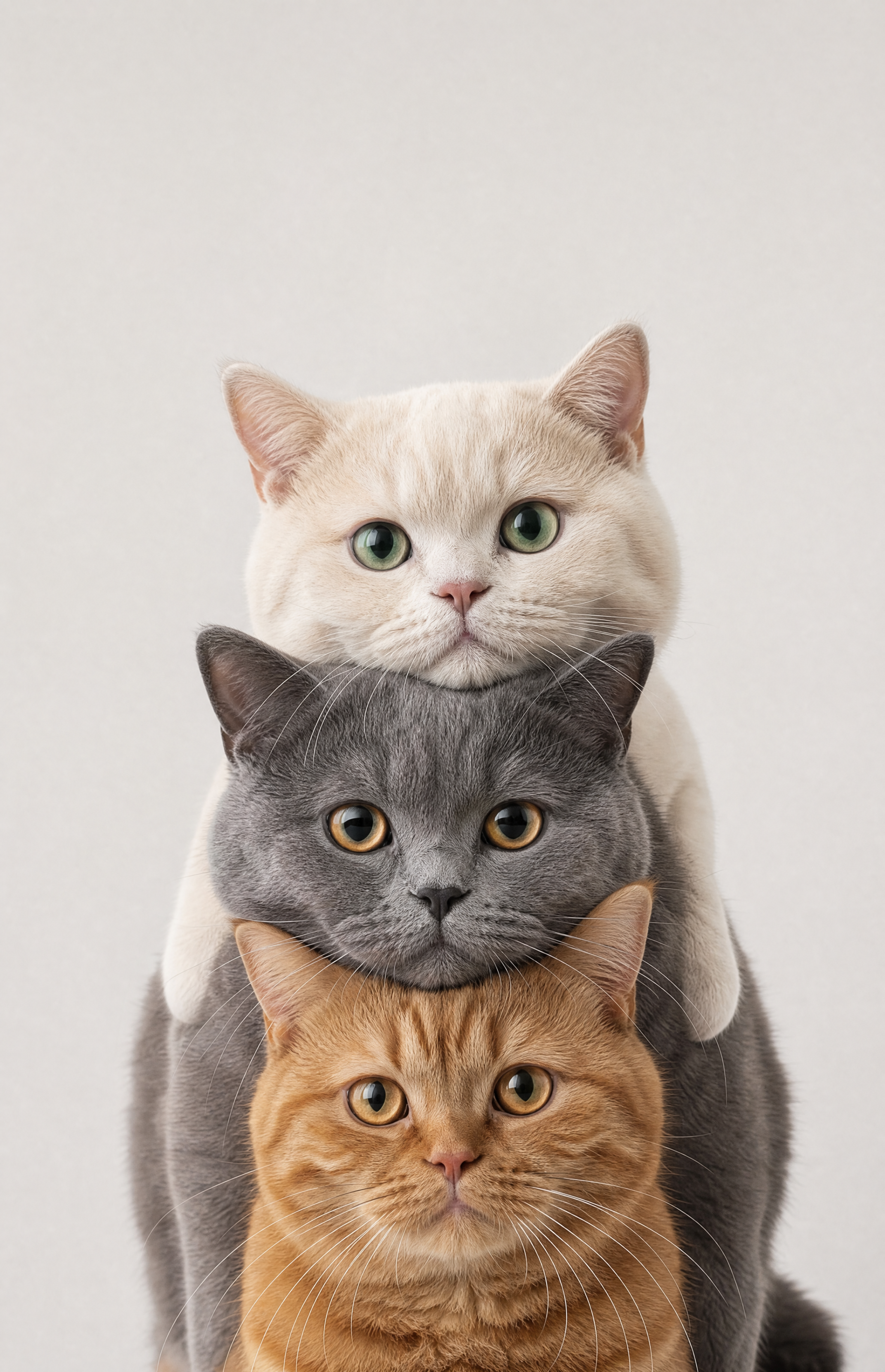
Cream, Smoky Gray, and Ginger Tabby Stacked Cats