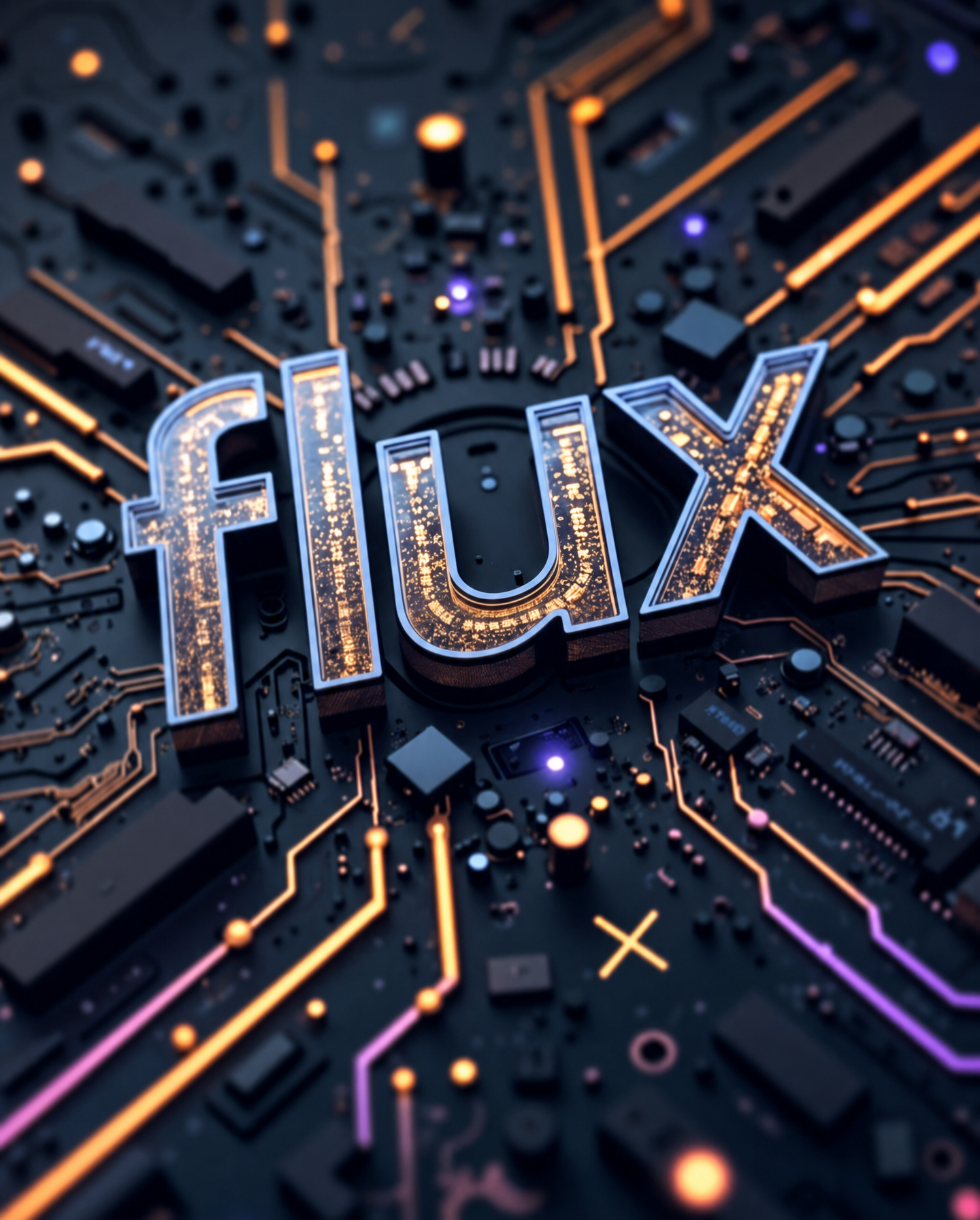
Same prompt, generated with each model separately — click one to see how it holds up.
Why this works
'Extreme macro close-up' plus 'dramatic shallow depth of field' is what turns an ordinary PCB into an alien landscape, since only a sliver of the board stays sharp while solder points blur into bokeh. The color harmony traces directly back to 'glowing amber and violet illuminated circuit traces' - those two hues split the frame into warm gold highlights against cool purple shadow, which is why the dominant palette reads gold/orange/purple instead of the usual green PCB look. 'Cinematic lighting' is doing the heavy lifting on mood, giving the tiny chips a sense of scale like they're skyscrapers lit at night, and 'futuristic tech aesthetic' plus 'high detail 3D render' is what keeps the surfaces glossy and CG-clean rather than looking like a photographed real board.
FAQ
→How do I make the microchips the clear focal point instead of the glowing traces?
Move 'tiny microchips and solder points' earlier in the sentence, right after 'circuit board', and add a phrase like 'oversized microchip in sharp focus, traces blurred in background' so the depth of field falls on the chip instead of spreading evenly across the traces.
→How do I shift this from a cool sci-fi mood to something warmer or more organic?
Swap 'glowing amber and violet illuminated circuit traces' for 'glowing amber and deep red circuit traces' and drop 'futuristic tech aesthetic' in favor of 'bio-mechanical aesthetic' - that alone pushes the palette toward reds and browns and makes the board feel grown rather than manufactured.
→How do I build a series of variations from this same prompt?
Keep 'Extreme macro close-up', 'dramatic shallow depth of field', and 'high detail 3D render' fixed as your anchor phrases, then cycle the color pair in 'glowing amber and violet illuminated circuit traces' - try 'cyan and magenta', then 'green and gold' - so each render stays structurally identical but reads as a distinct entry in the set.
Learn the technique behind this
- Why can't AI spell, and how do I get readable text in an image? — Older diffusion models had no character-level representation of text, so they produced letterform-shaped texture instead of words.
- How should a prompt be structured, and does word order matter? — A prompt that behaves predictably names one subject first, then what it is doing, then where, then the light, then the lens or medium, then the style.
- Do negative prompts work, and what should go in one? — Negative prompts work on models that support a separate negative conditioning channel — mainly Stable Diffusion and FLUX-family models.
Related prompts

DJ in neon haze at low angle
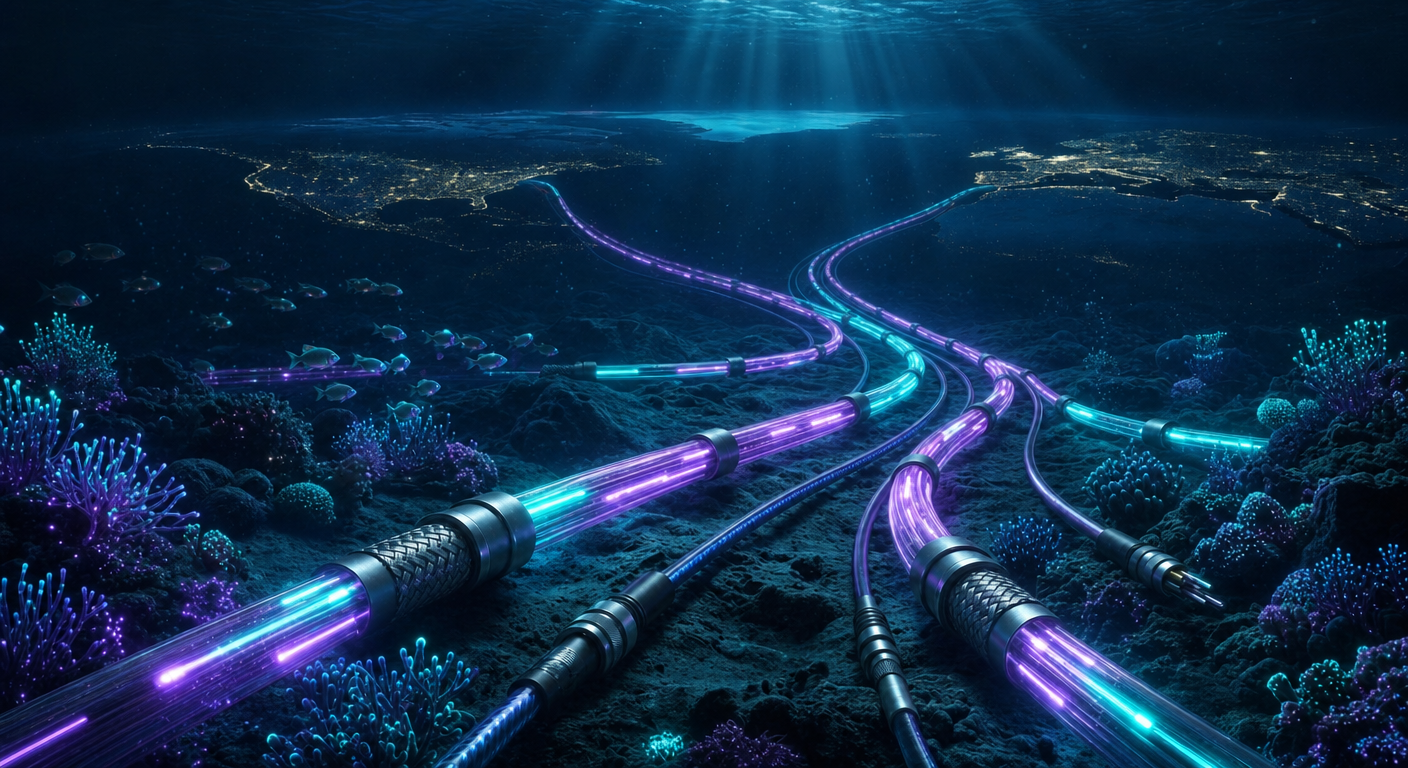
Glowing Fiber-Optic Cables With Purple Data Lines

Cyan Hologram, Sleek Robotic Hand
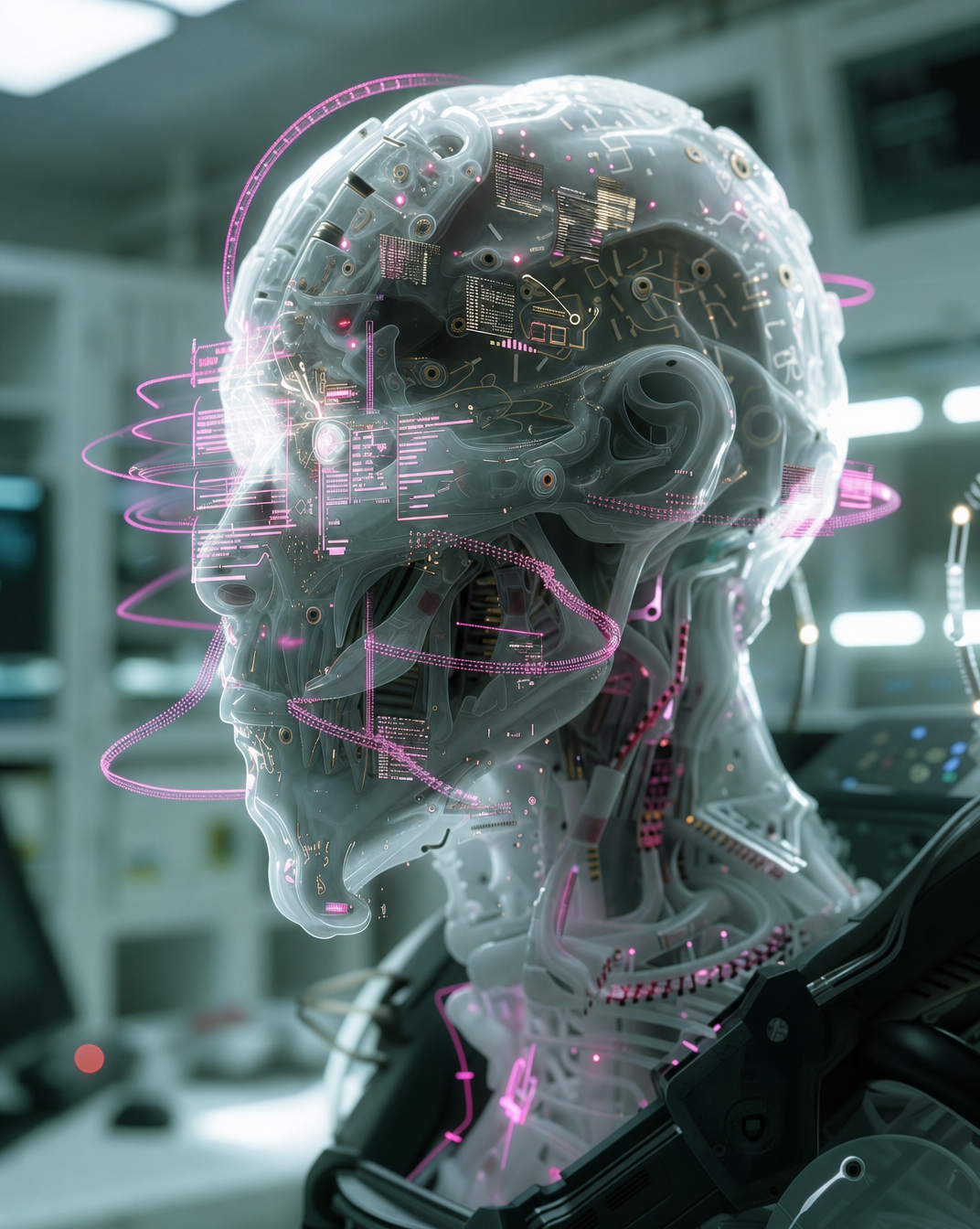
Cyborg head with magenta holograms and translucent skull