Why this works
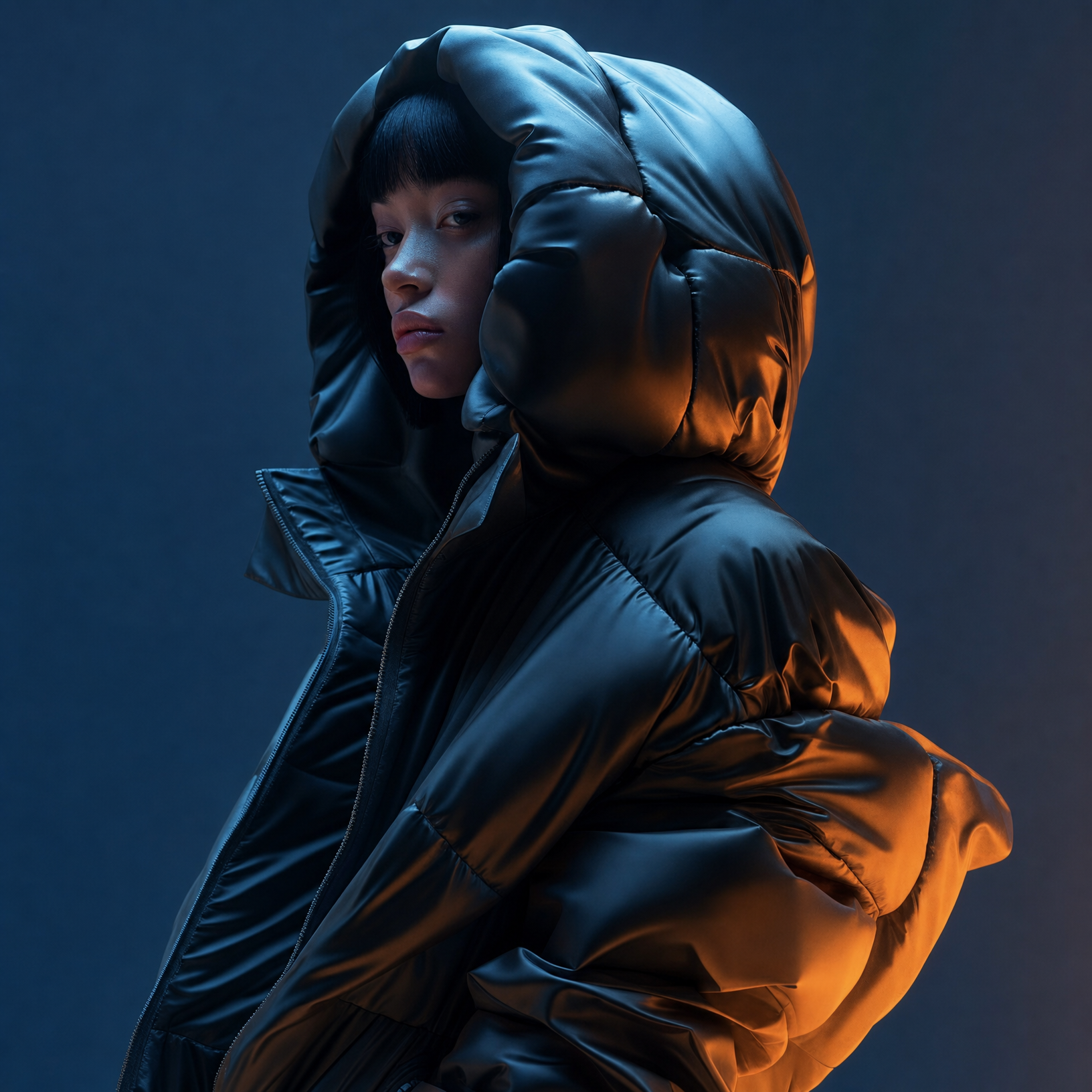
The close portrait framing is anchored by “dramatic side profile” and “high-resolution editorial framing,” keeping the composed expression and oversized hood dominant rather than dispersing attention across a scene. “Soft cool blue ambient light with subtle teal highlights” establishes the blue field, while “warm amber rim light along the jacket edges” supplies the orange contrast and cleanly traces the glossy silhouette. “Shallow depth of field” separates the subject from the studio background, and “ultra-detailed fabric texture” makes the puffer’s reflective surface carry the futuristic streetwear effect.
FAQ
→How do I make the hood and jacket more visually dominant?
Replace “dramatic side profile” with “tight three-quarter close-up emphasizing the hood and shoulders,” and change “oversized glossy hooded puffer jacket” to “massive sculptural hood framing the face, jacket filling most of the frame.” Keep “warm amber rim light along the jacket edges” so the enlarged silhouette remains clearly outlined.
→How do I shift this from sleek and moody to a brighter, more energetic editorial tone?
Replace “soft cool blue ambient light with subtle teal highlights” with “bright icy-blue studio illumination with crisp cyan highlights,” and change “sleek moody atmosphere” to “energetic high-fashion atmosphere.” Reduce the contrast of “warm amber rim light along the jacket edges” by replacing it with “soft golden fill light across the jacket,” which spreads warmth beyond the outline.
→How do I build a series of variations while keeping the same visual identity?
Keep “photorealistic fashion editorial,” “shallow depth of field,” and the blue-and-amber lighting structure unchanged, then swap only the subject and styling phrase. For example, replace “young person wearing an oversized glossy hooded puffer jacket” with “young person wearing a metallic quilted bomber with a raised collar,” or with “young person wearing a translucent technical parka with sculptural panels,” while retaining “dramatic side profile” and “clean modern composition.”
Learn the technique behind this
- Why can't AI spell, and how do I get readable text in an image? — Older diffusion models had no character-level representation of text, so they produced letterform-shaped texture instead of words.
- How should a prompt be structured, and does word order matter? — A prompt that behaves predictably names one subject first, then what it is doing, then where, then the light, then the lens or medium, then the style.
- Do negative prompts work, and what should go in one? — Negative prompts work on models that support a separate negative conditioning channel — mainly Stable Diffusion and FLUX-family models.
Related prompts
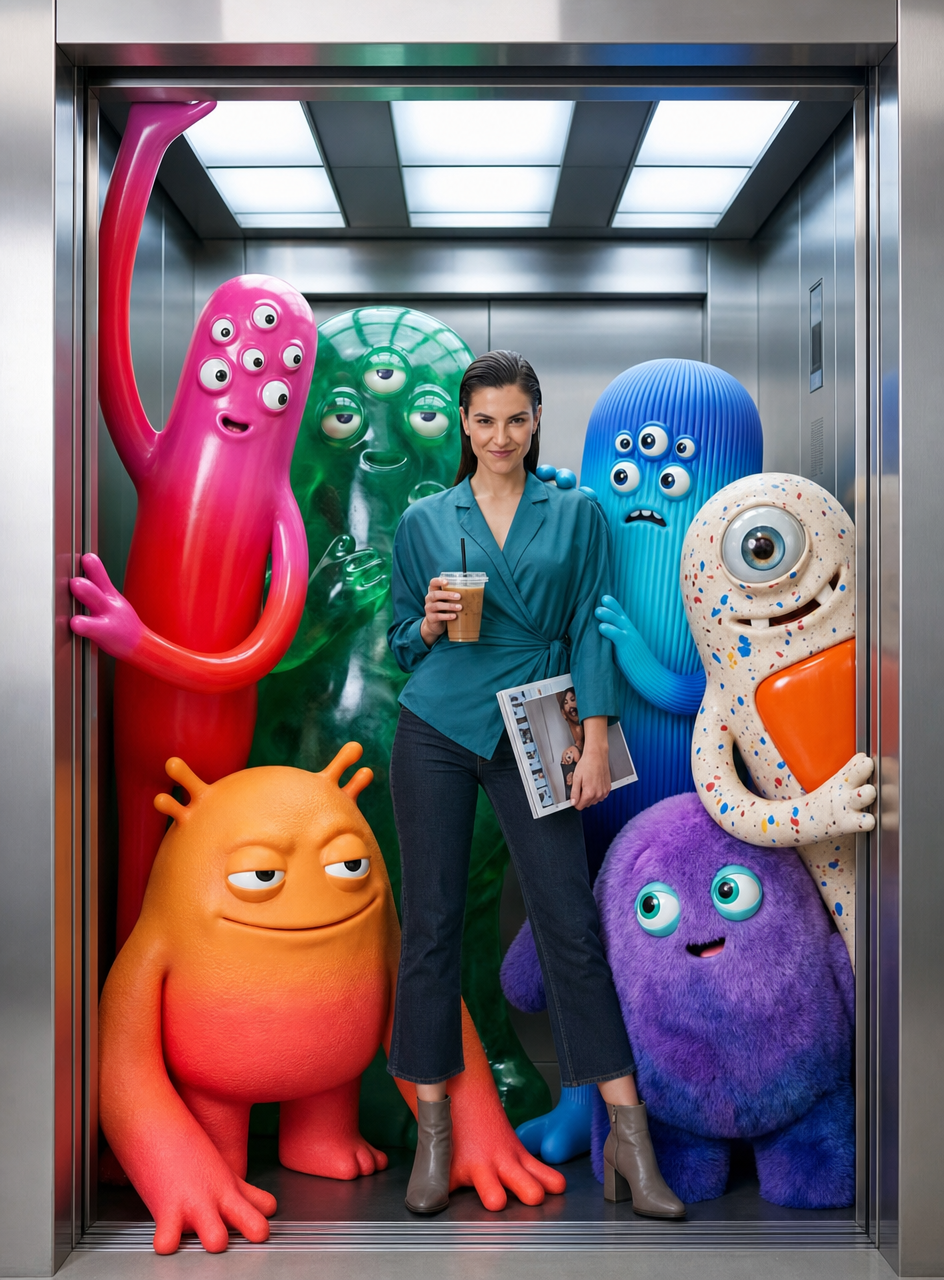
Teal fashion editorial in monster-filled lift
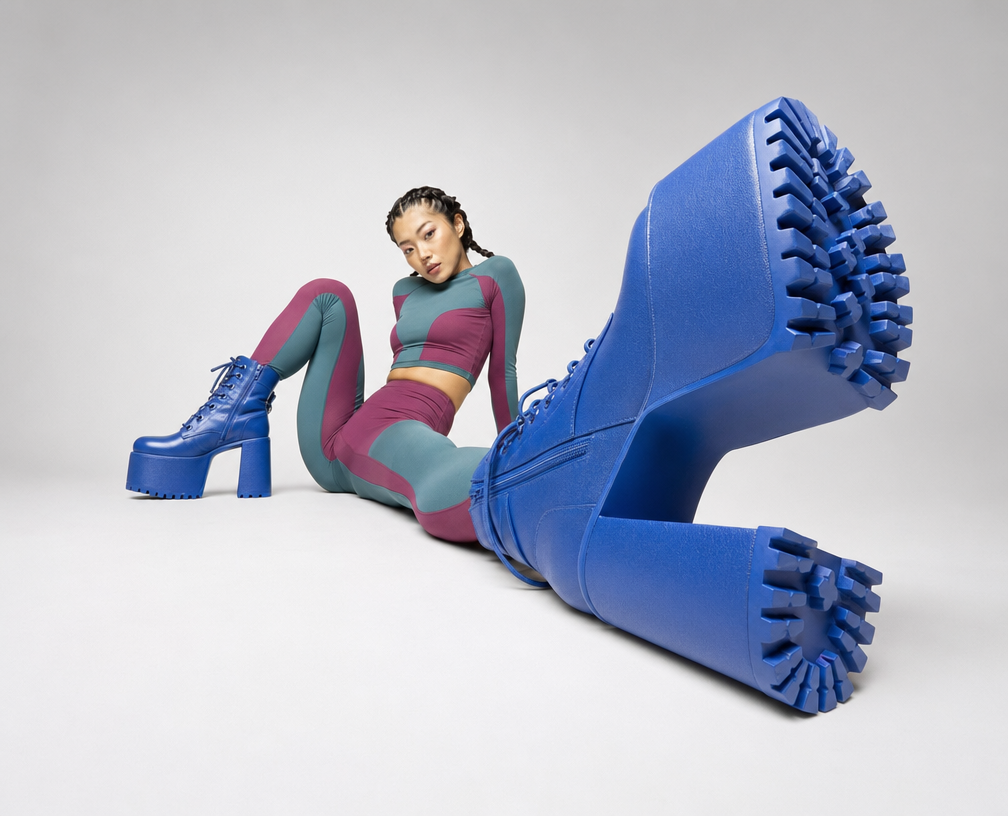
Cobalt Boots in Sleek Studio Edit
Silhouette Influencer by Sunlit Window

Sunlit editorial on striped beach towel