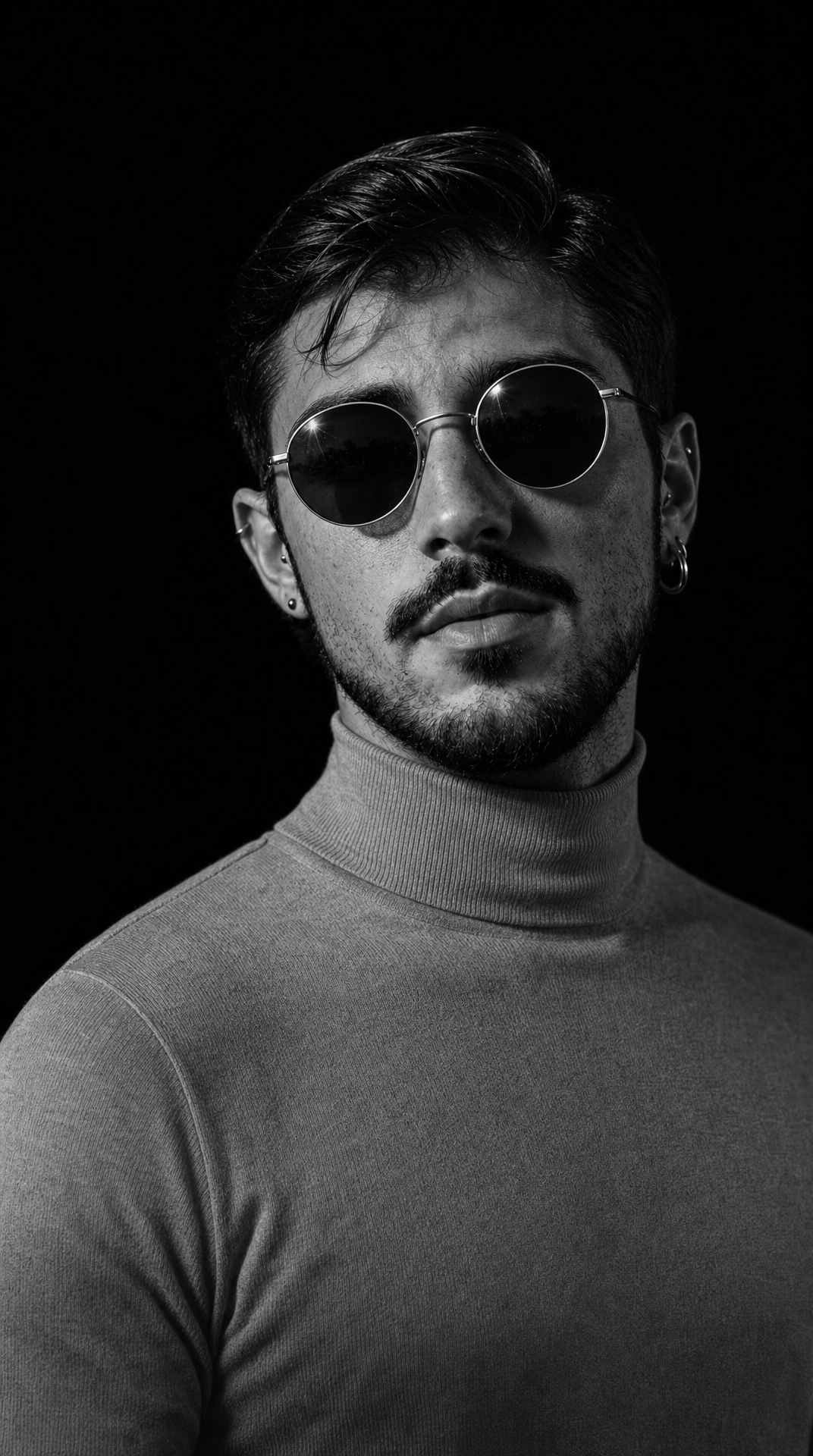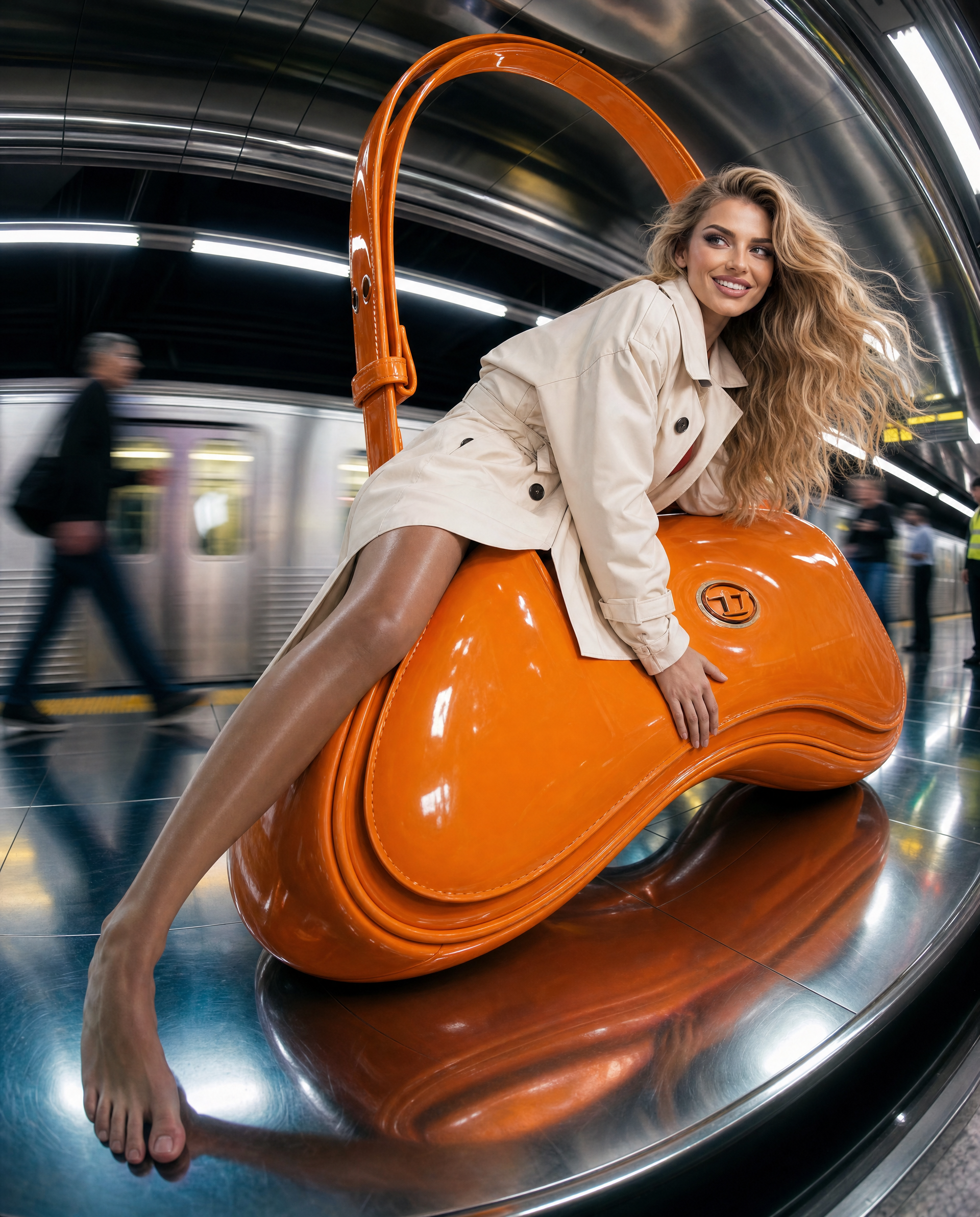
Same prompt, generated with each model separately — click one to see how it holds up.
Why this works
“Dynamic low-angle fashion editorial composition” makes the woman and glossy orange handbag-shaped object feel monumental, while the full-body portrait framing keeps the tailored cream trench coat and sheer tights readable. The playful glamour comes from “posing playfully” and “smiling at camera,” with “long blonde wavy hair” reinforcing the polished fashion-editorial identity. “Reflective metal floor,” “neon-colored reflections,” and a “passing train” create the futuristic subway energy; the dominant black, gray, white, and beige tones keep that color activity controlled around the orange object and cream coat.
FAQ
→How do I make the handbag-shaped object and its orange color more central?
Replace “posing playfully on a glossy orange handbag-shaped object” with “seated prominently on an oversized glossy orange handbag sculpture, centered as the main subject,” and change “dynamic low-angle fashion editorial composition” to “symmetrical low-angle composition with the handbag sculpture dominating the foreground.”
→How do I shift this from playful glamour to a darker, more dramatic mood?
Replace “posing playfully” and “smiling at camera” with “standing confidently with a serious expression,” and change “futuristic urban lighting with neon-colored reflections” to “hard directional blue and magenta lighting with deep shadows and sharp rim light.” Keep “reflective metal floor” to preserve the station’s polished visual structure.
→How do I create a series of variations without losing the campaign’s visual identity?
Keep “photorealistic fashion editorial,” “high-end commercial advertising photography,” “dynamic low-angle fashion editorial composition,” and “glossy orange handbag-shaped object” fixed. Swap “modern subway station” for locations such as “rainy airport terminal,” “brutalist gallery,” or “luxury hotel lobby,” and replace “passing train” with a setting-specific background action such as “departing jet,” “moving projection installation,” or “slowly opening elevator doors.”
Learn the technique behind this
- Why can't AI spell, and how do I get readable text in an image? — Older diffusion models had no character-level representation of text, so they produced letterform-shaped texture instead of words.
- Why does AI get hands and faces wrong, and how do I fix it? — Hands fail because they're small in frame, extremely variable in pose, and self-occluding — the model has less usable signal per pixel than for any other body part.
- Do negative prompts work, and what should go in one? — Negative prompts work on models that support a separate negative conditioning channel — mainly Stable Diffusion and FLUX-family models.
Related prompts
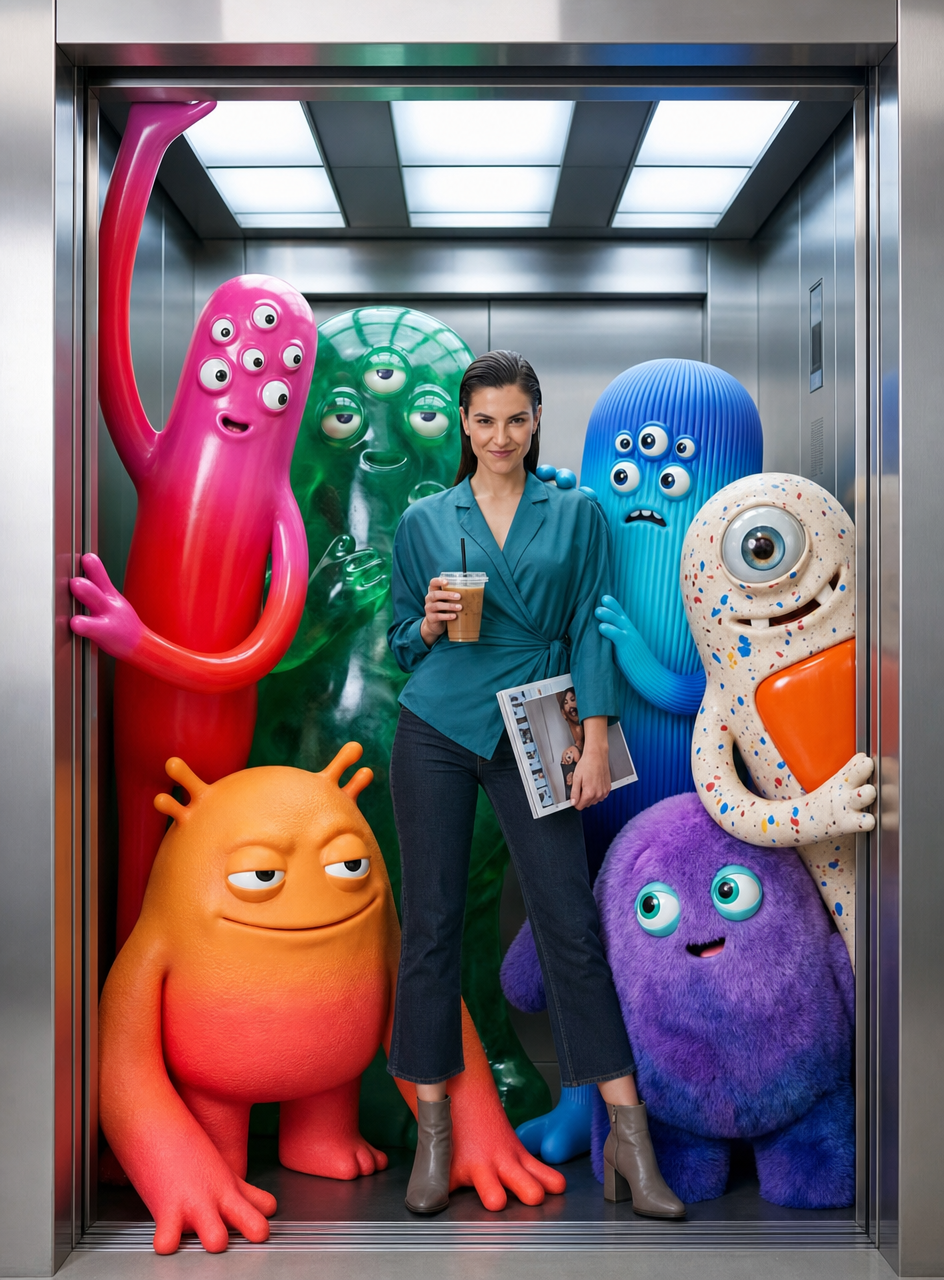
Teal fashion editorial in monster-filled lift
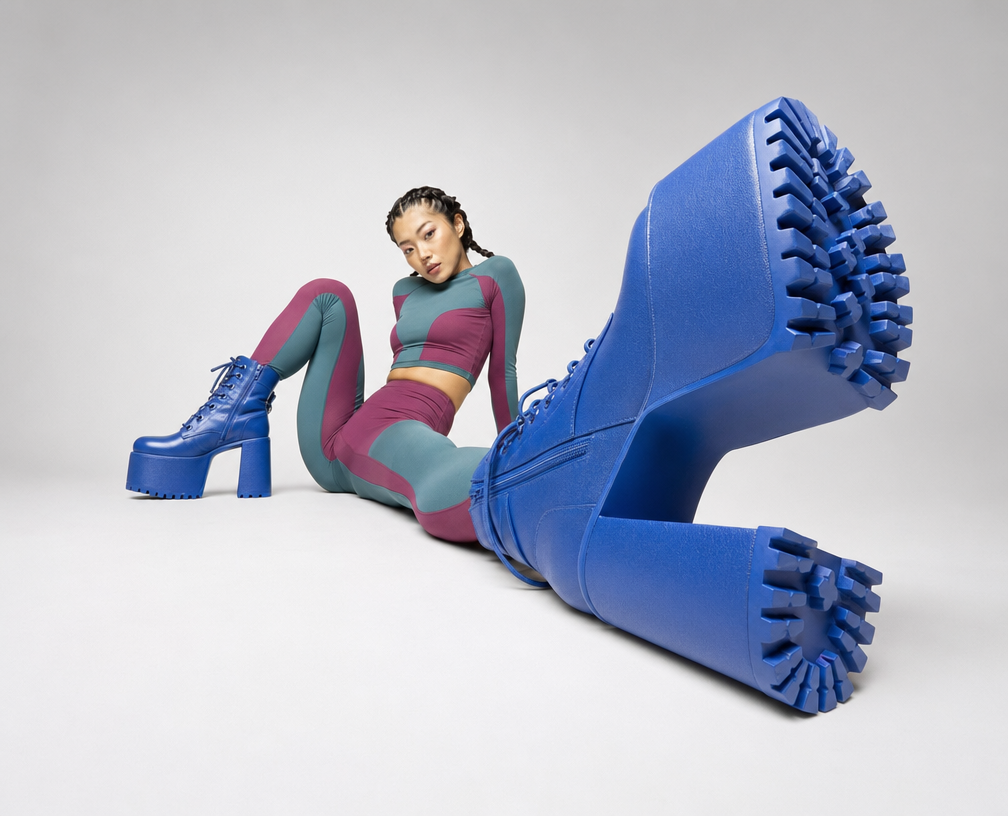
Cobalt Boots in Sleek Studio Edit

Silhouette Influencer by Sunlit Window

Sunlit editorial on striped beach towel