Why this works
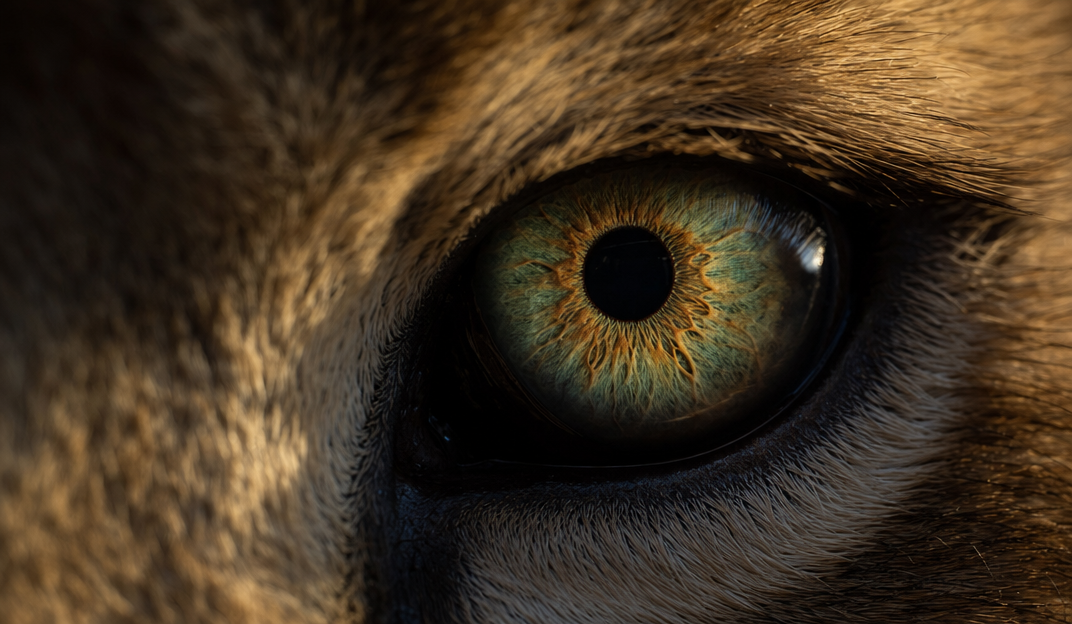
'Extreme macro close-up' and 'macro lens with shallow depth of field' are what force the eye to fill the frame and blur everything else into soft tan and gold, giving that mesmerizing tunnel-vision feel. The intensity comes from 'dramatic side lighting creating depth and shadow' combined with 'sharp reflective highlights' - that's the specific phrase pairing that carves out the glassy highlight on the iris while letting the far side of the eye fall into shadow. 'Deep emerald and copper iris patterns' is the only color instruction in the whole prompt, which is why those two hues dominate against the neutral tan fur rather than competing with a busier palette. 'Detailed fur texture and whiskers surrounding the eye' plus 'hyper-realistic detail' are what keep the surrounding tan fur from reading as a flat blurred smear, giving it just enough texture to sell the scale.
FAQ
→How do I make the lighting feel softer and less dramatic?
Swap 'dramatic side lighting creating depth and shadow' for something like 'soft diffused overhead lighting' or 'gentle golden-hour glow.' That single change flattens the shadow side of the eye and will likely shift the mood word from 'intense' toward calm, so you may also want to drop 'high contrast' from the style modifiers to match.
→How do I get a different animal's eye instead of a lion's?
Replace 'lion's eye' and 'emerald and copper iris patterns' with the animal and its actual eye color, for example 'wolf's eye' with 'pale amber and grey iris patterns,' or 'owl's eye' with 'golden and black iris patterns.' Keep 'extreme macro close-up' and 'sharp reflective highlights' untouched since those are what control the framing and glassy highlight regardless of species.
→How do I build a series of variations from this same prompt?
Keep 'extreme macro close-up photograph of a [subject]'s eye' and 'dramatic side lighting' fixed as your anchor phrases, then cycle the iris color description ('deep emerald and copper,' 'icy blue and silver,' 'burnt orange and black') and swap 'lion's eye' for different animals each time. This gives you a consistent macro-detail composition and lighting mood across the set while only the color palette and subject shift from image to image.
Learn the technique behind this
- Why can't AI spell, and how do I get readable text in an image? — Older diffusion models had no character-level representation of text, so they produced letterform-shaped texture instead of words.
- How should a prompt be structured, and does word order matter? — A prompt that behaves predictably names one subject first, then what it is doing, then where, then the light, then the lens or medium, then the style.
- Do negative prompts work, and what should go in one? — Negative prompts work on models that support a separate negative conditioning channel — mainly Stable Diffusion and FLUX-family models.
Related prompts
Cream Longhaired Cat in Warm Dusty-Rose Light
Warm Studio Laughter With Brown Puppy
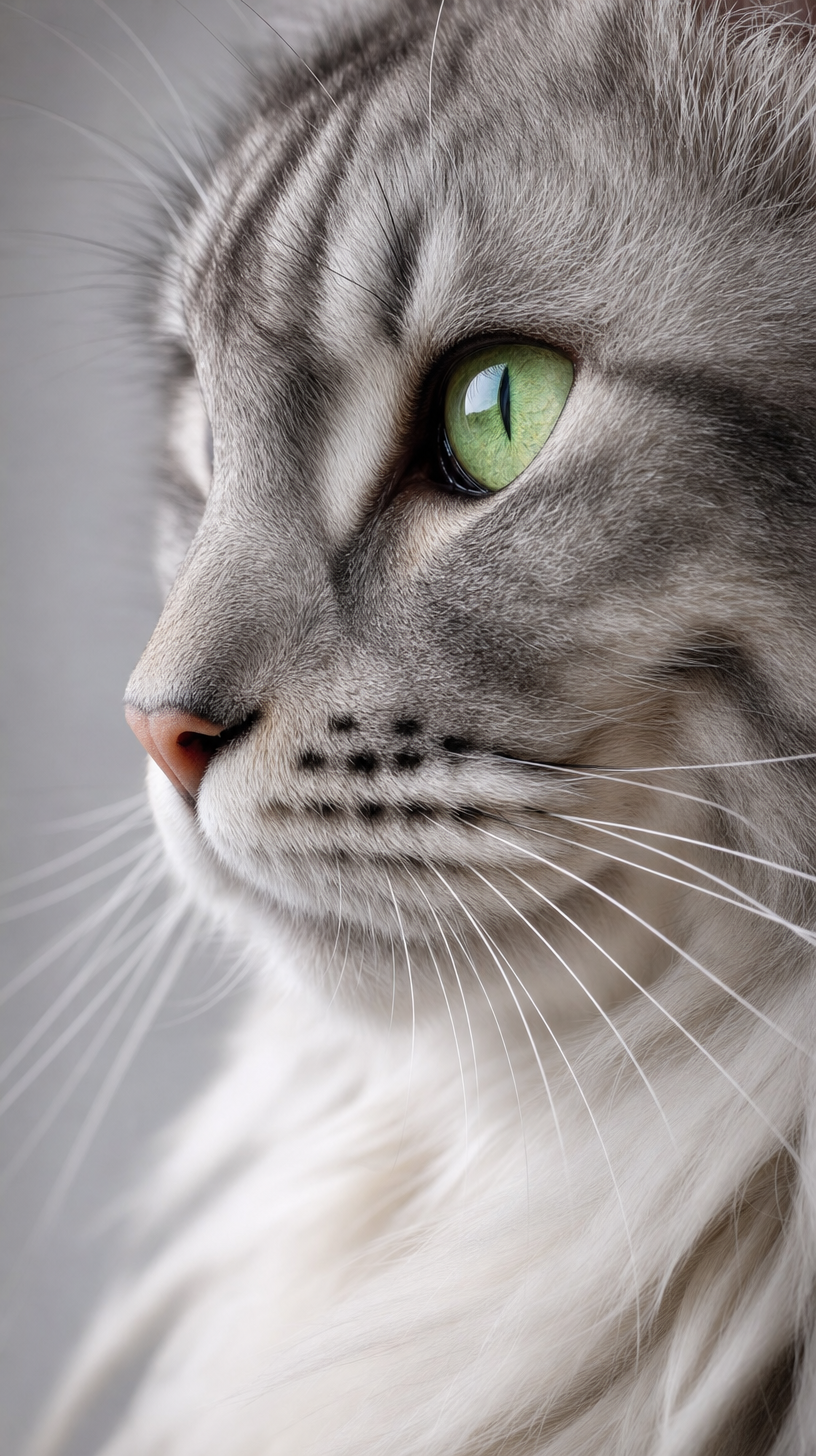
Long-haired gray tabby cat with green eyes
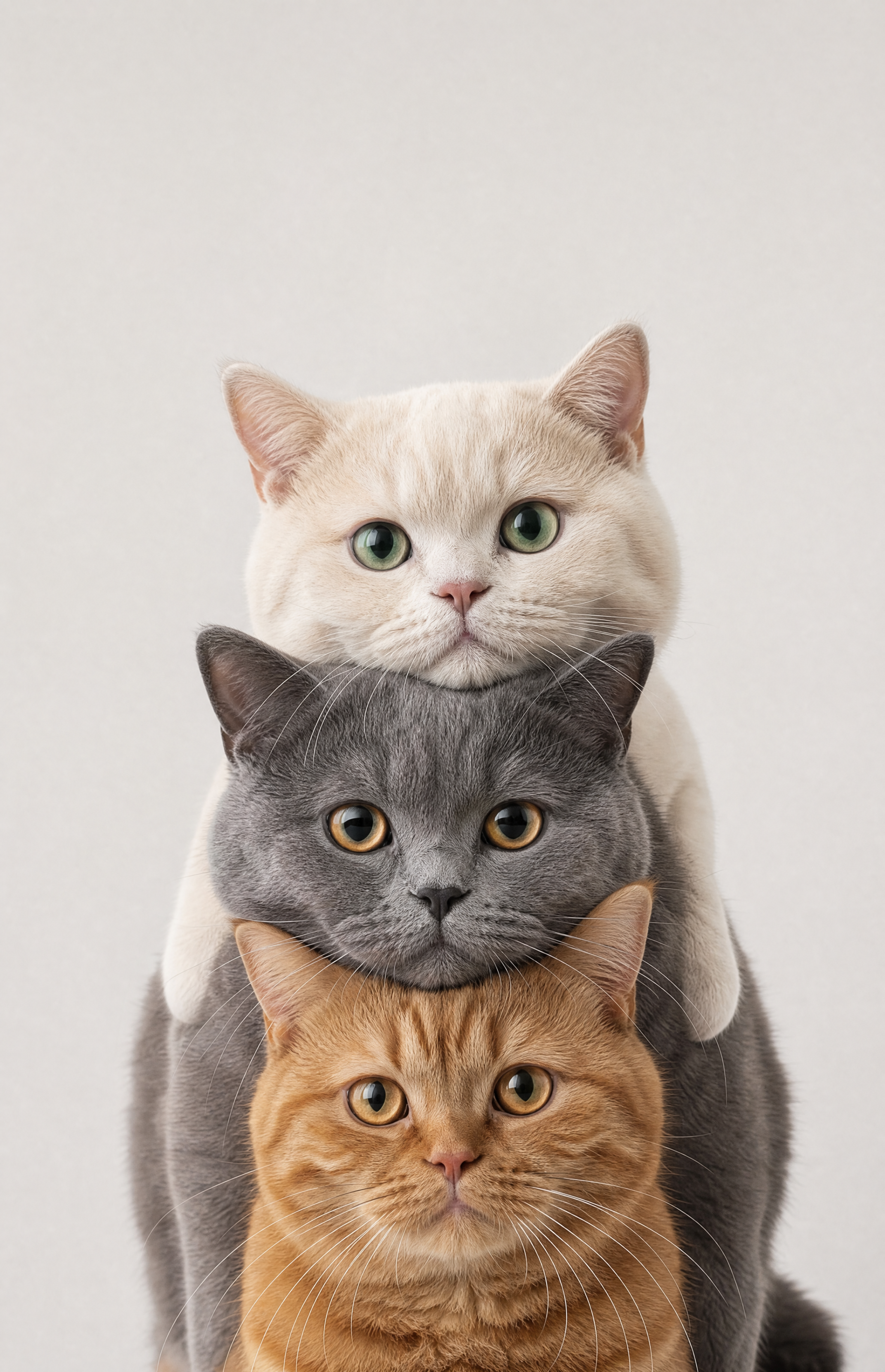
Cream, Smoky Gray, and Ginger Tabby Stacked Cats