Why this works
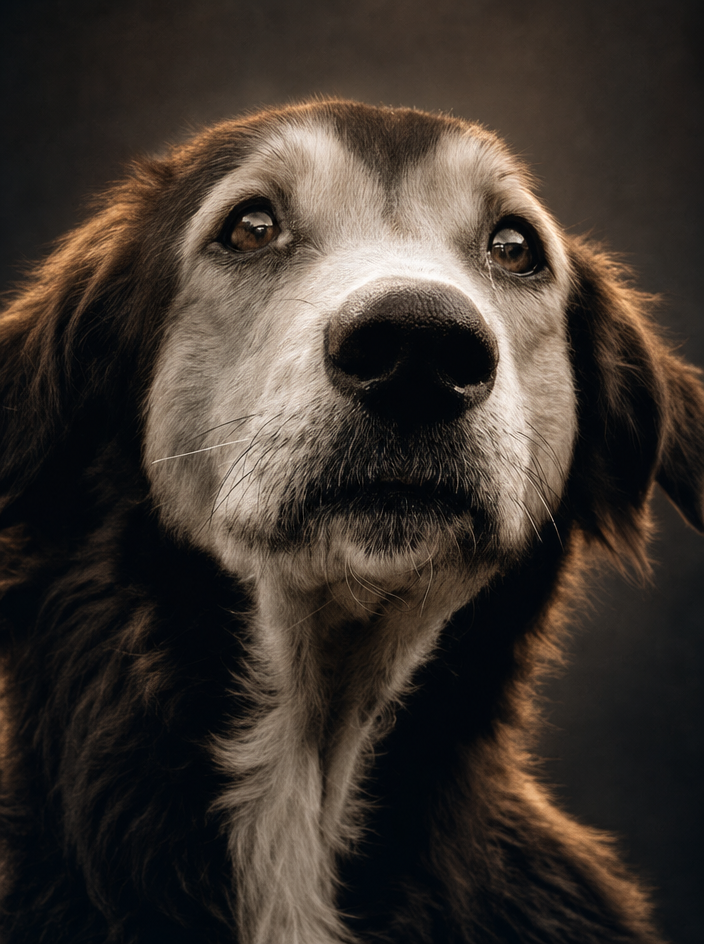
“Close-up photorealistic studio portrait” and “centered framing” make the elderly dog’s face fill the composition, while “keep the dog’s prominent nose in sharp focus” gives the viewer a precise visual anchor. The “deep charcoal background” separates the brown-and-white fur, and “softer, warmer directional lighting” with “gentle rim light along the fur” adds warmth and edge definition without losing the requested “moody, intimate, contemplative atmosphere.” “Shallow depth of field,” “detailed fur texture,” and “subtle shadow falloff” preserve tactile detail around the eyes and nose while letting the background recede.
FAQ
→How do I make the dog’s eyes more central than its nose?
Replace “keep the dog’s prominent nose in sharp focus” with “place the eyes at the focal point, with both eyes tack sharp and the nose gently softened.” Keep “close-up framing” and “expressive eyes in focus,” and add “slightly above-eye-level camera angle” to give the gaze more visual authority.
→How do I change the mood from contemplative to warm and affectionate?
Replace “moody, intimate, contemplative atmosphere” with “warm, tender, reassuring atmosphere,” and change “deep charcoal background” to “soft warm beige studio background.” Replace “subtle shadow falloff” with “gentle, lifted shadows,” while retaining “softer, warmer directional lighting” and “gentle rim light along the fur.”
→How do I create a matching series with different dog subjects?
Keep the structural phrases “centered framing,” “deep charcoal background,” “softer, warmer directional lighting,” “gentle rim light along the fur,” “shallow depth of field,” and “face and nose sharp.” Swap “elderly black-and-white dog” for consistent variants such as “young golden retriever,” “senior brindle boxer,” or “small cream-colored terrier,” and adjust “natural fur contrast” to match each coat while preserving “photorealistic studio portrait.”
Learn the technique behind this
- Why can't AI spell, and how do I get readable text in an image? — Older diffusion models had no character-level representation of text, so they produced letterform-shaped texture instead of words.
- How should a prompt be structured, and does word order matter? — A prompt that behaves predictably names one subject first, then what it is doing, then where, then the light, then the lens or medium, then the style.
- Which aspect ratio should I use, and how does it change the image? — Aspect ratio determines what the model composes, not how it's cropped afterwards.
Related prompts
Cream Longhaired Cat in Warm Dusty-Rose Light
Warm Studio Laughter With Brown Puppy
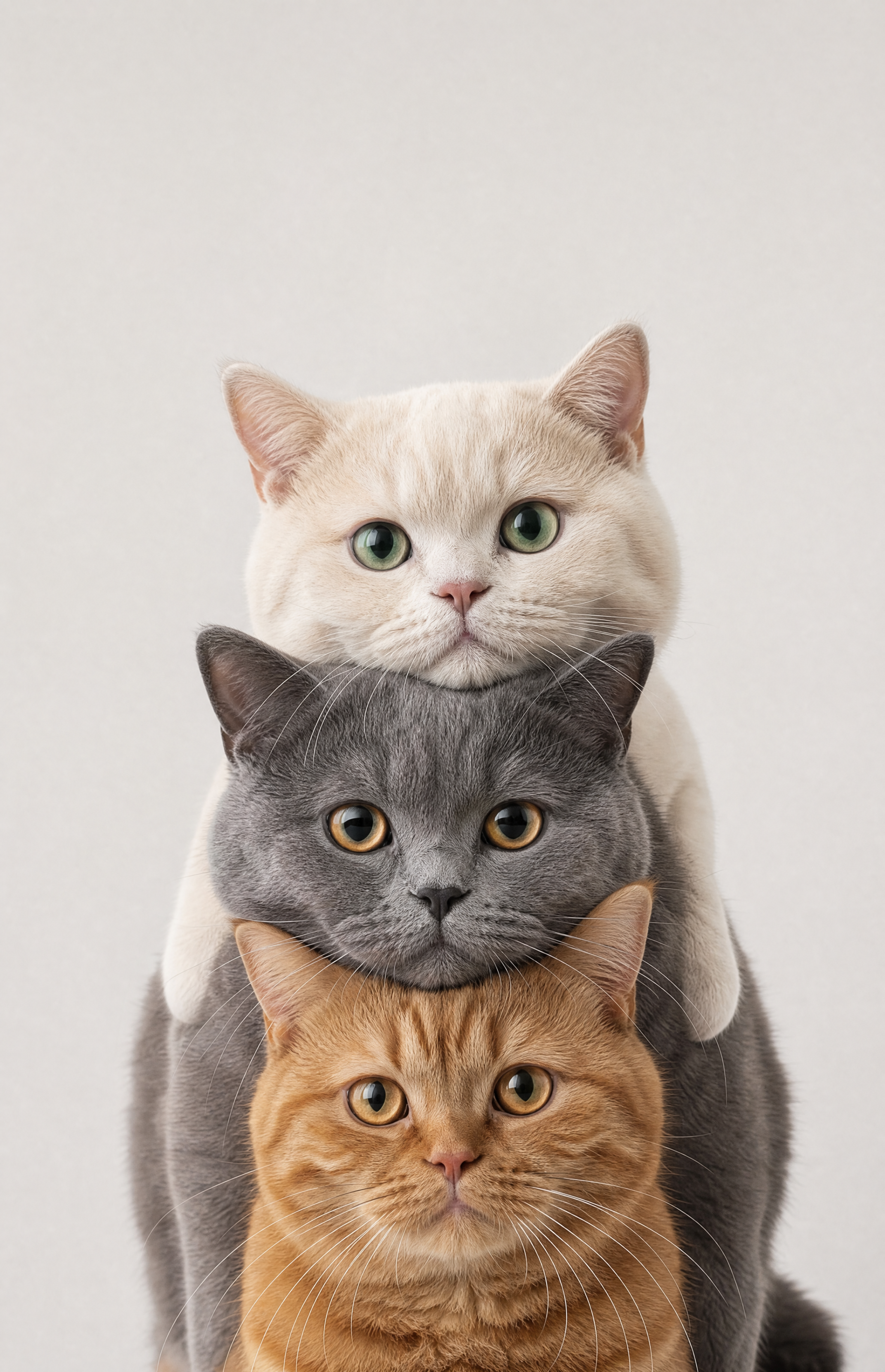
Cream, Smoky Gray, and Ginger Tabby Stacked Cats
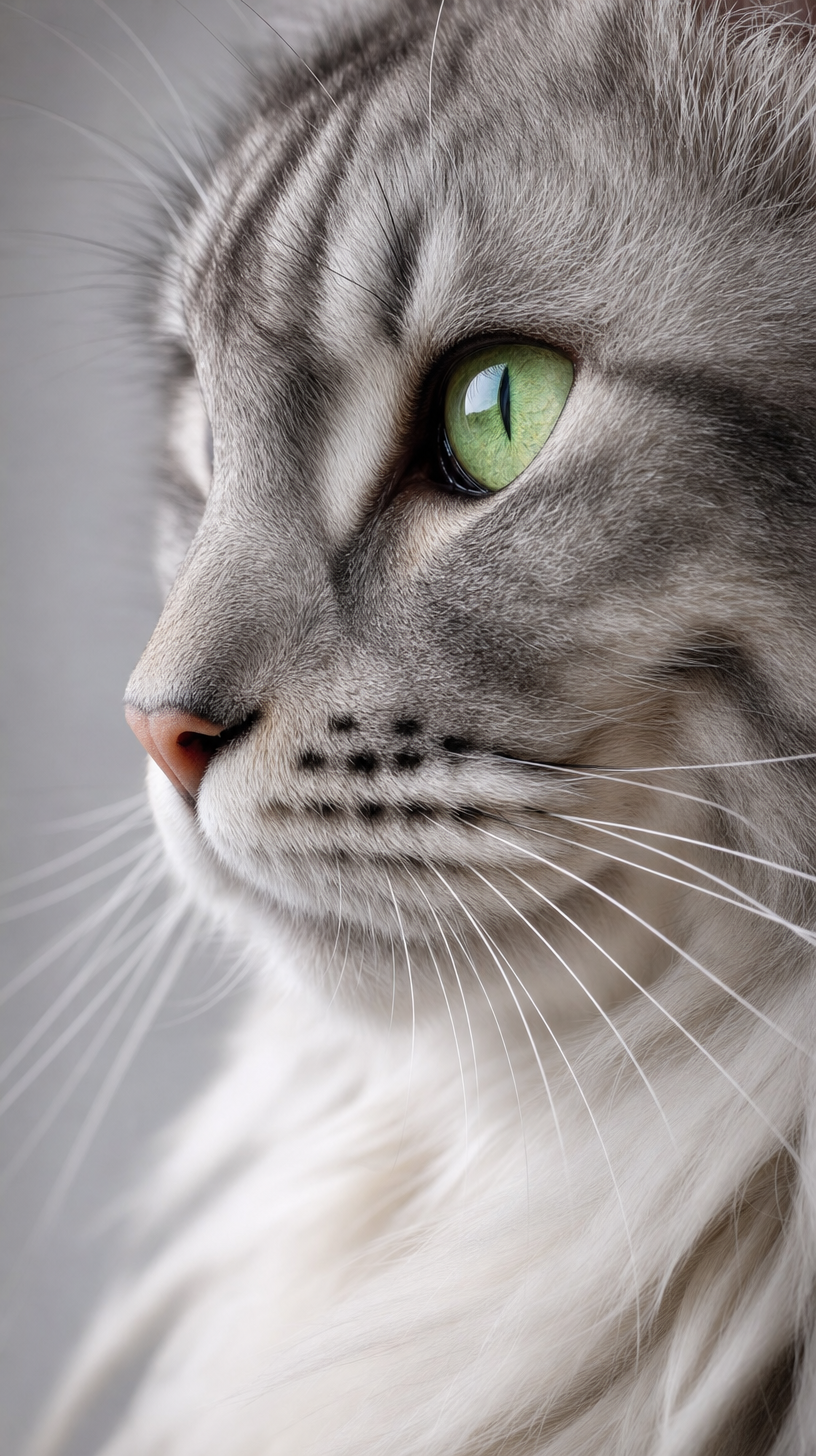
Long-haired gray tabby cat with green eyes