Why this works
The phrase “full-body fashion portrait” establishes the vertical, figure-led composition, while “turns her head back over her shoulder toward the camera” adds a candid, romantic gesture without losing the walking pose. “Deep magenta flowers” contrast with the “flowing cream-white dress,” and “golden hour lighting,” “side-back rim light,” and “brighter warm glow coming from the horizon” explain the warm beige and brown highlights visible across the scene. “Shallow depth of field with softly blurred rows of tulips” keeps the woman dominant, while “gentle haze in the distance” and “a few magenta petals drift through the air in the foreground” build depth around her.
FAQ
→How do I make the woman more prominent in the frame?
Replace “full-body fashion portrait” with “full-body portrait with the woman occupying most of the vertical frame,” and change “softly blurred rows of tulips” to “strongly blurred background with only a narrow band of flowers in focus.” Keep “turns her head back over her shoulder toward the camera” to preserve the defining gesture.
→How do I shift this from dreamy romance to a more editorial fashion mood?
Replace “relaxed, romantic expression” and “elegant dreamy atmosphere” with “confident editorial expression” and “high-fashion magazine atmosphere.” Change “soft breeze subtly moves the fabric” to “wind creates a deliberate sculptural sweep in the dress,” and replace “gentle haze in the distance” with “clean, crisp air and controlled contrast.”
→How do I create a matching variation with a different flower field?
Replace “vast tulip field made of deep magenta flowers” and “softly blurred rows of tulips” with a specific alternative such as “vast lavender field made of purple flower rows” and “softly blurred rows of lavender.” For coordinated color changes, replace “a few magenta petals” with “a few purple lavender stems and petals drifting through the foreground,” while retaining “cream-white dress” and the existing “side-back rim light.”
Learn the technique behind this
- Why can't AI spell, and how do I get readable text in an image? — Older diffusion models had no character-level representation of text, so they produced letterform-shaped texture instead of words.
- How should a prompt be structured, and does word order matter? — A prompt that behaves predictably names one subject first, then what it is doing, then where, then the light, then the lens or medium, then the style.
- Why does AI get hands and faces wrong, and how do I fix it? — Hands fail because they're small in frame, extremely variable in pose, and self-occluding — the model has less usable signal per pixel than for any other body part.
Related prompts
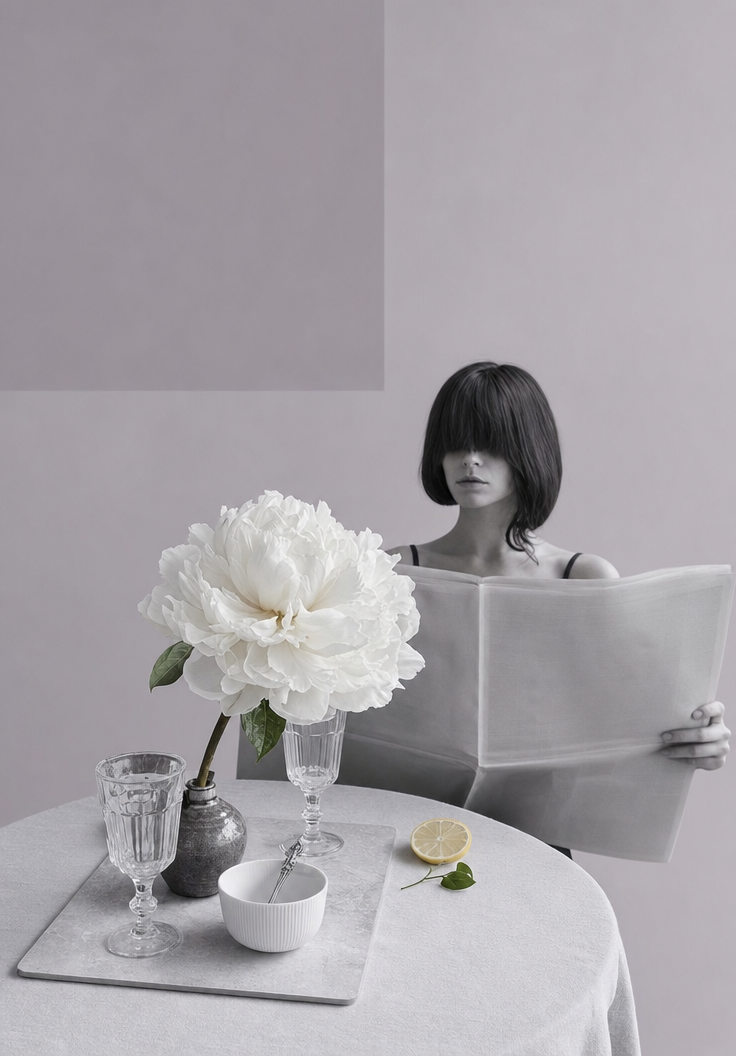
Dreamy Woman Reading by Soft Bloom
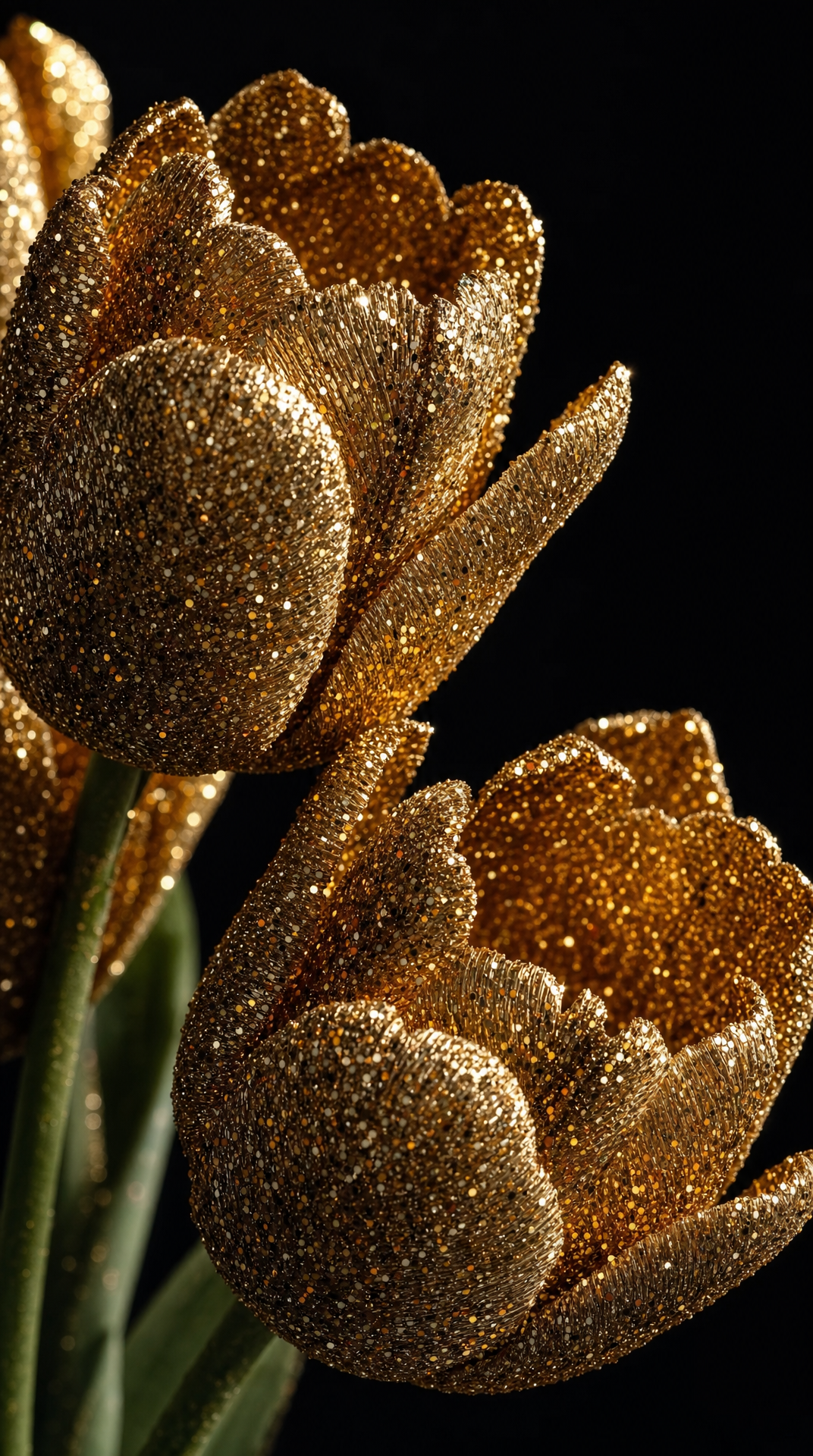
Glittered Tulip Duo in Dramatic Light
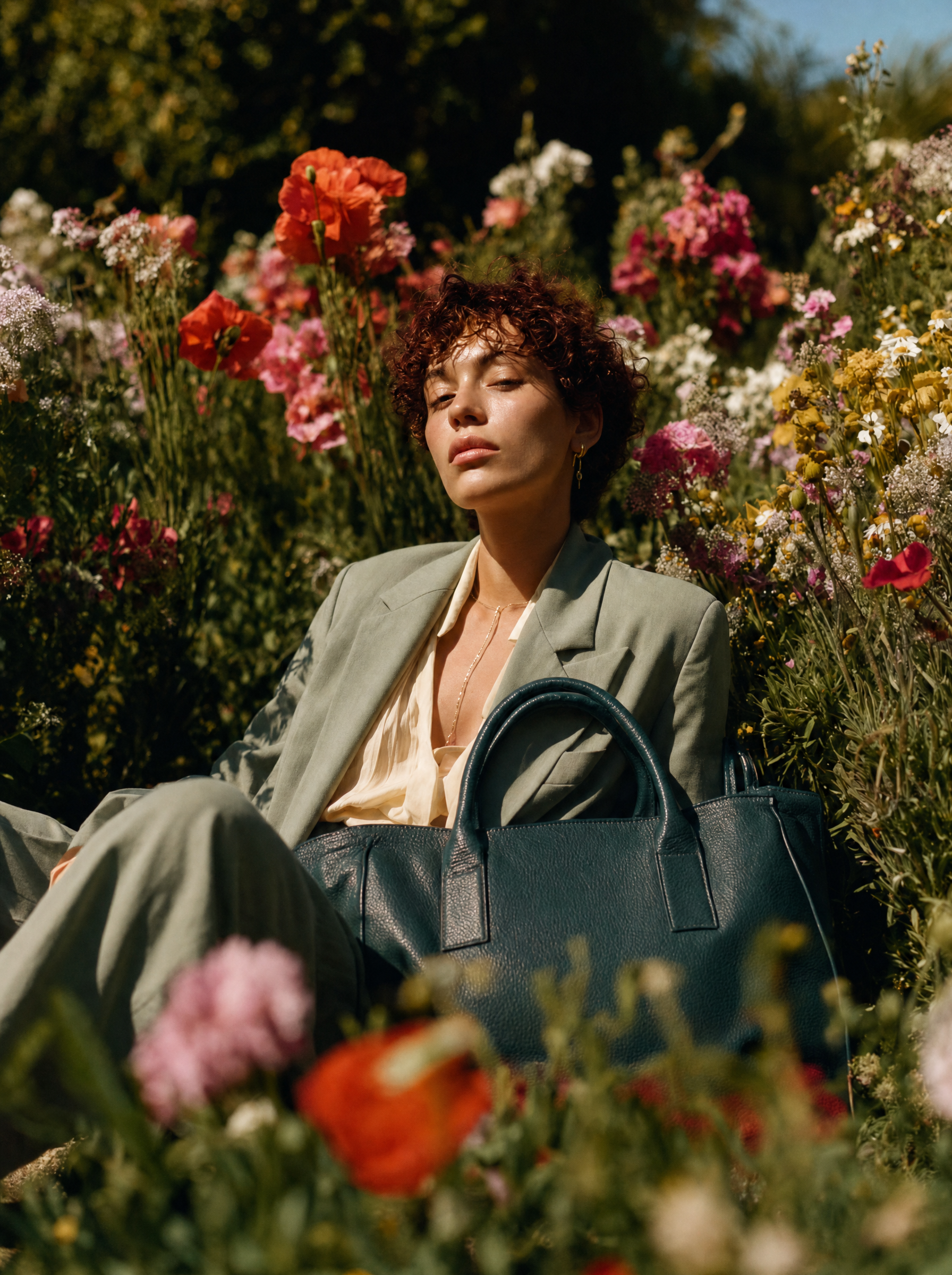
Serene Fashion Portrait in Blooming Garden
Blush-pink Ranunculus With Velvet Petals, Burgundy Background