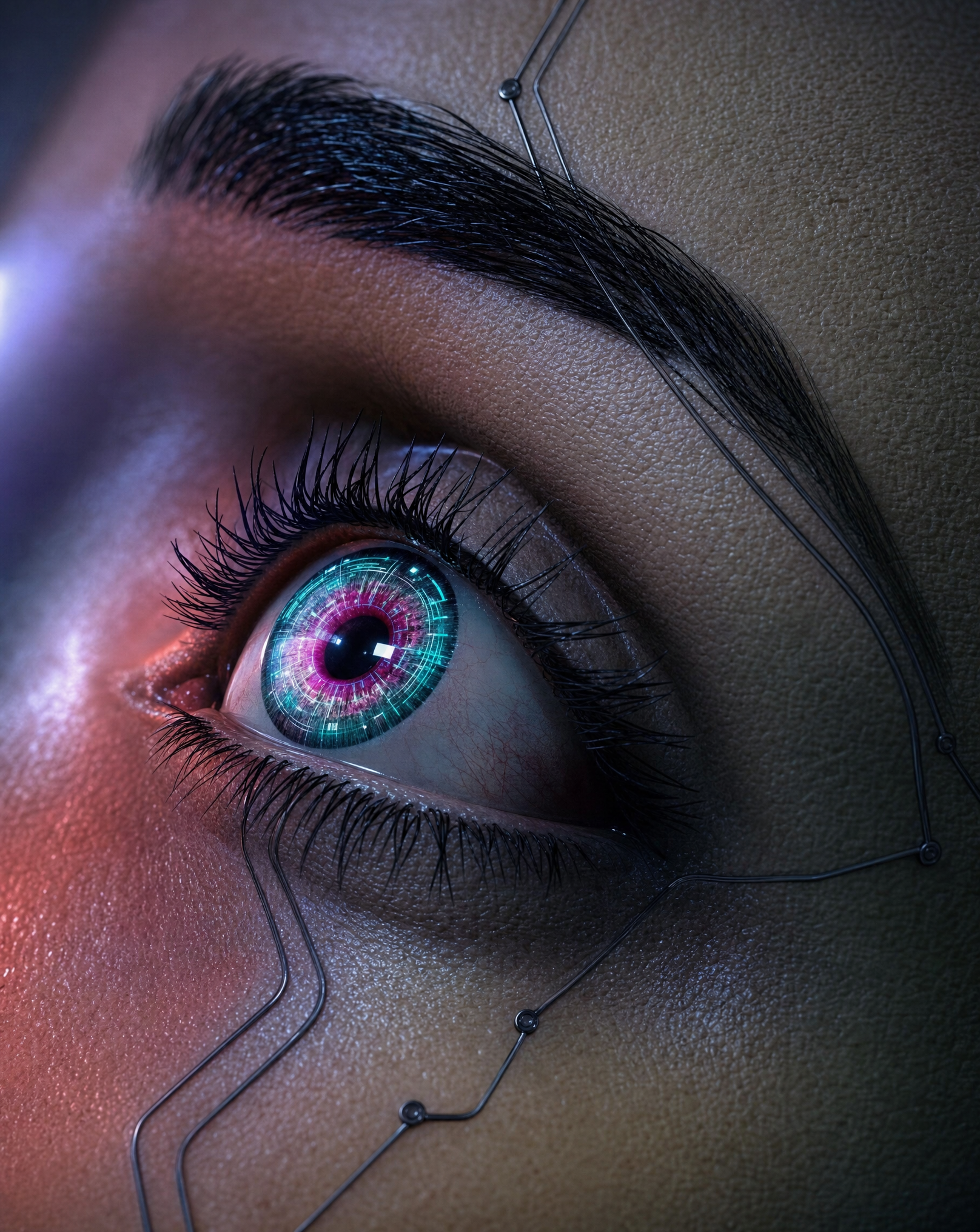
Why this works
“Extreme close-up cinematic macro portrait” removes context and makes the iris, eyelashes, and cheek traces carry the image, while “sharp focus on iris and eyelashes” establishes the visual priority. The teal-and-magenta glowing iris and “thin, matte-black nano-trace filaments” create a controlled teal, pink, black, and gray palette, with the filaments’ diagonal arc pulling the eye across the cheek toward the temple. “Cool violet rim light with soft red subsurface highlights” supplies the dramatic violet-red contrast, while “hyper-realistic skin texture” and “detailed eyelashes/eyebrow” keep the futuristic implants grounded in a tactile human face.
FAQ
→How do I make the cybernetic circuitry more prominent than the eye itself?
Replace “sharp focus on iris and eyelashes” with “sharp focus on the nano-trace filaments and holographic circuitry,” and change “subtle holographic circuitry patterns” to “bright, intricate holographic circuitry patterns spreading across the iris, cheek, and temple.” Keep “extreme close-up,” but add “filaments occupy the central foreground” to give the implants stronger compositional priority.
→How do I shift this from an intense dramatic mood to a colder, cleaner clinical tone?
Replace “soft red subsurface highlights” with “pale cyan subsurface highlights,” and change “intense futuristic dramatic mood” to “sterile, restrained medical-futurist mood.” Swap “dramatic sci-fi contrast” for “even, low-contrast illumination” while retaining “cool violet rim light” as a controlled accent.
→How do I build a matching series with different implant designs while preserving this image’s identity?
Keep the fixed anchors “extreme close-up cinematic macro portrait,” “hyper-realistic skin texture,” and “cool violet rim light,” then replace “thin, matte-black nano-trace filaments that arc diagonally across the cheek toward the temple” with variants such as “fine silver conduits branching beneath the lower eyelid” or “luminous geometric plates framing the outer eye.” For consistent color and framing, retain “teal-and-magenta glowing iris” and “sharp focus on iris and eyelashes” in every version.
Learn the technique behind this
- Why can't AI spell, and how do I get readable text in an image? — Older diffusion models had no character-level representation of text, so they produced letterform-shaped texture instead of words.
- How should a prompt be structured, and does word order matter? — A prompt that behaves predictably names one subject first, then what it is doing, then where, then the light, then the lens or medium, then the style.
- Why does AI get hands and faces wrong, and how do I fix it? — Hands fail because they're small in frame, extremely variable in pose, and self-occluding — the model has less usable signal per pixel than for any other body part.
Related prompts
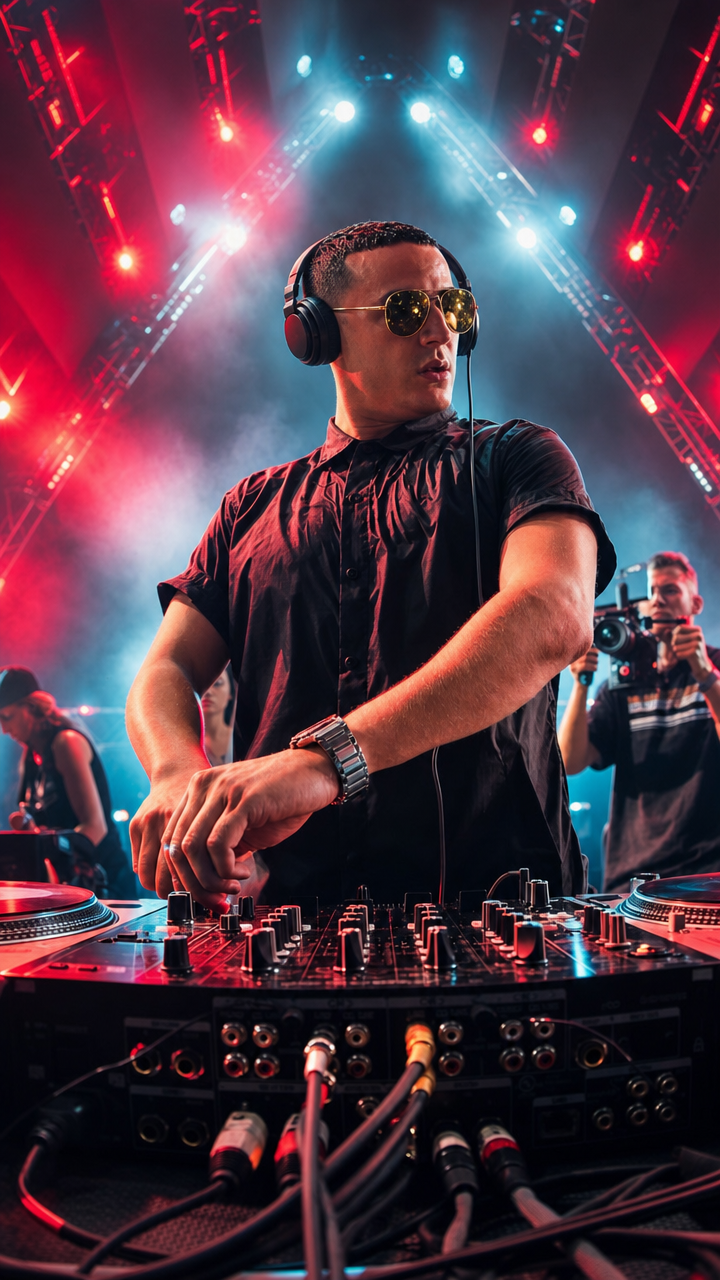
DJ in neon haze at low angle

Glowing Fiber-Optic Cables With Purple Data Lines
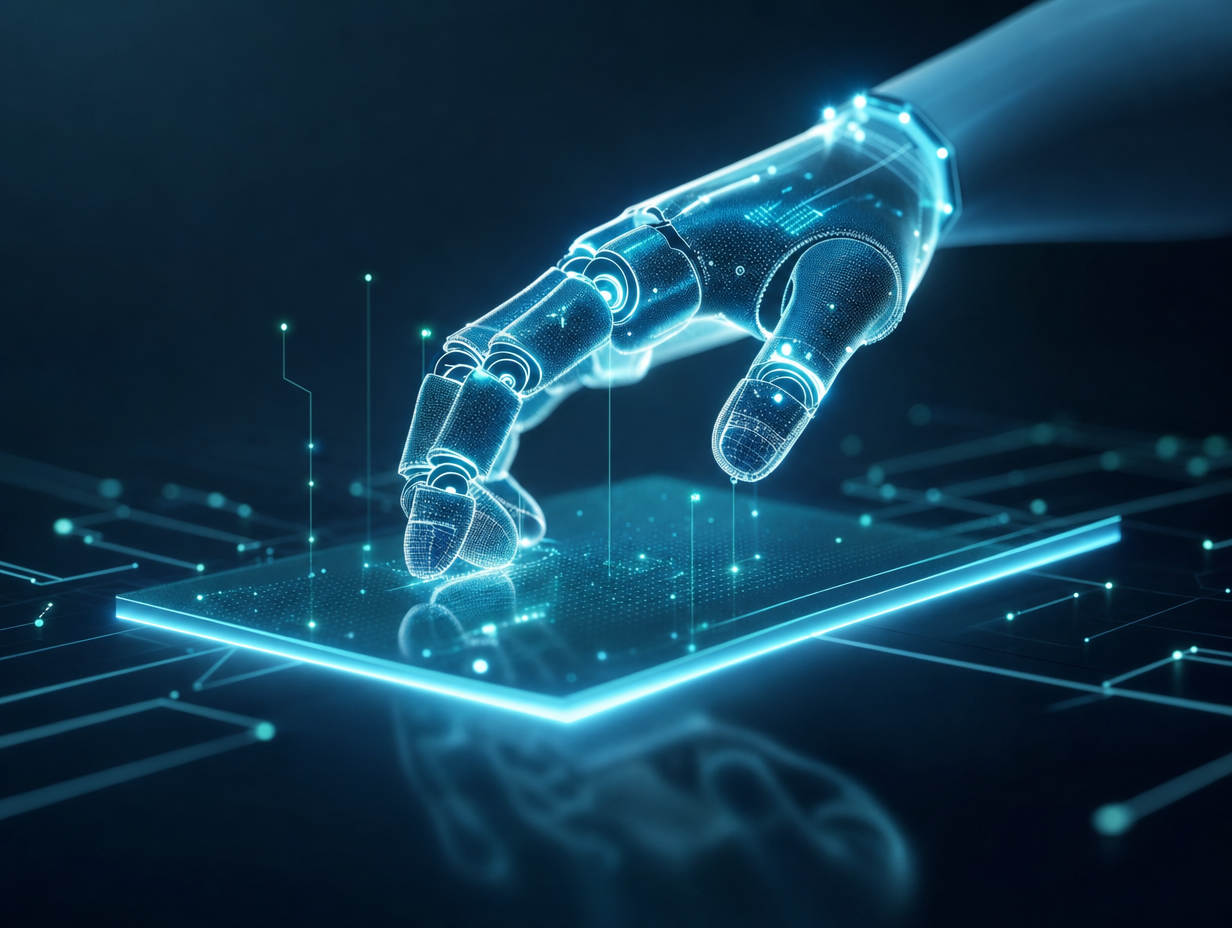
Cyan Hologram, Sleek Robotic Hand
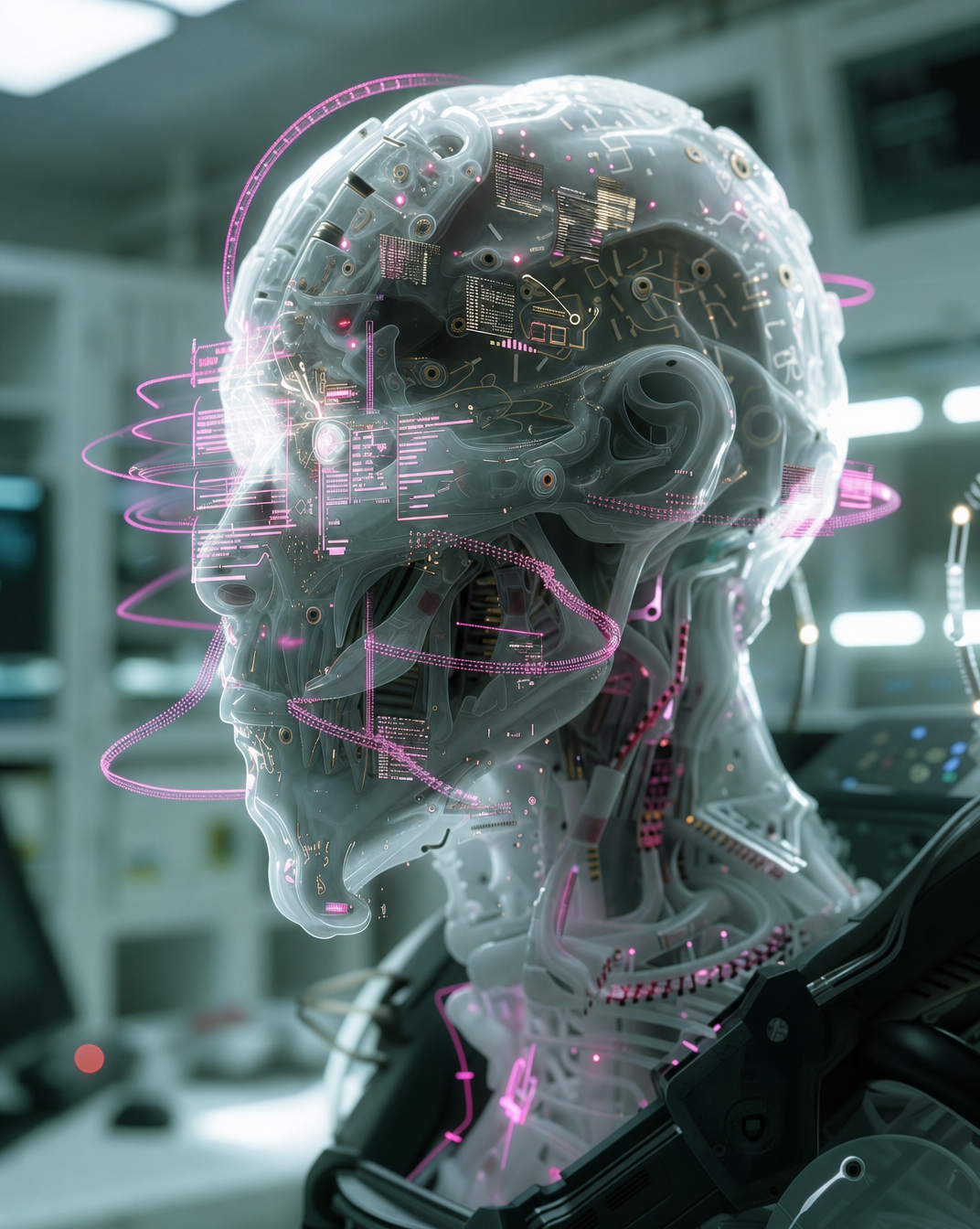
Cyborg head with magenta holograms and translucent skull