Why this works
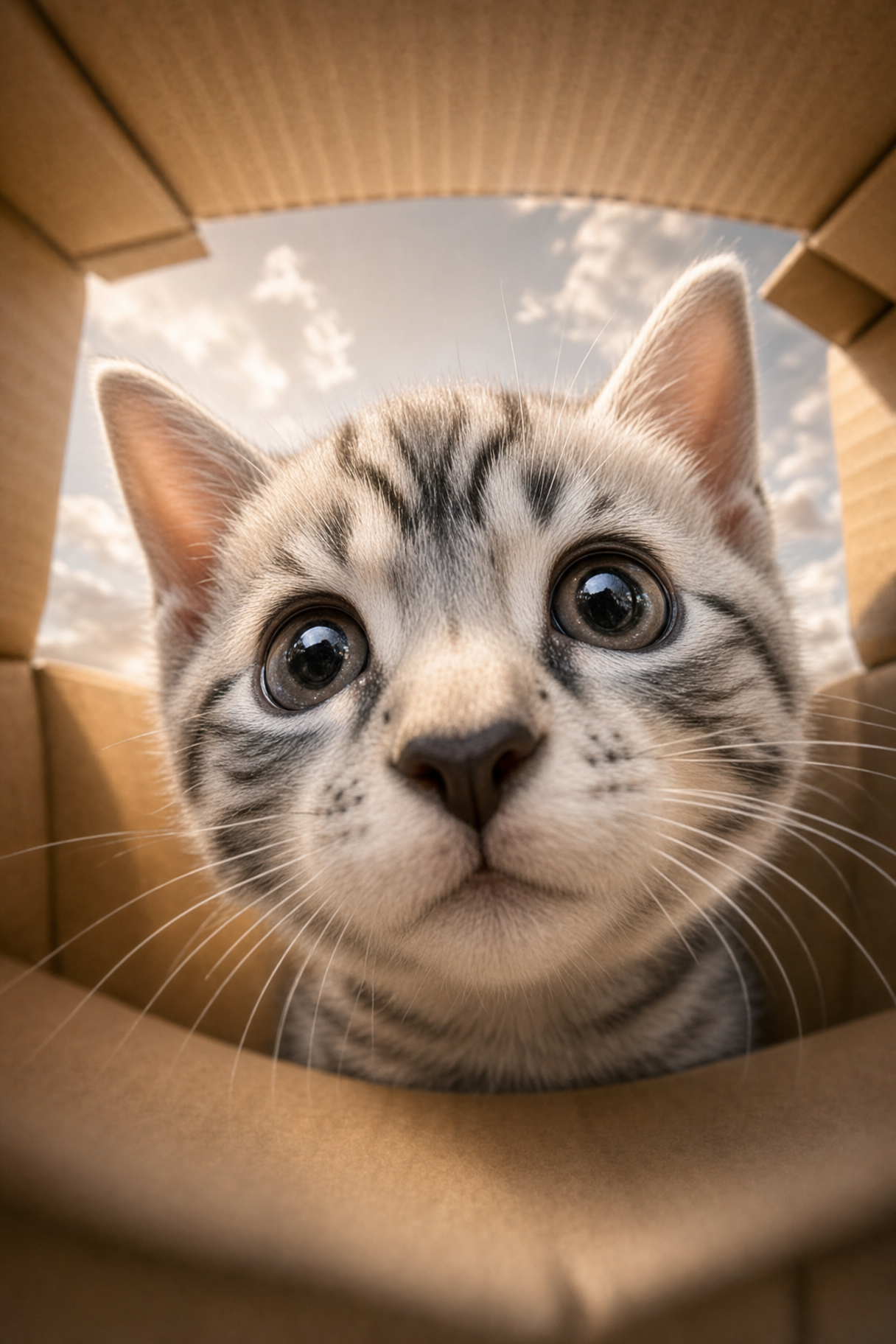
The phrase 'shot with a wide angle lens at f/2.0 creating moderate depth of field and dynamic perspective distortion' is what actually produces that oversized-nose, tunnel-vision effect, not just the box setting alone. 'Looking upward through the wide opening toward a soft grey sky with wispy clouds' is why the frame reads as tan cardboard walls funneling into a flat gray field, which explains the two dominant colors and the tight portrait-closeup crop. The mood comes from stacking 'investigating the camera with intense focus' against 'bright, inquisitive, gleaming eyes full of wonder and mischief', two phrases doing the emotional heavy lifting rather than the lighting. 'Soft natural daylight filtered through overcast conditions' is specifically what keeps the fur lit without harsh shadows, giving the delicate highlight-and-shadow texture on the tabby markings instead of the punchier look direct sun would create.
FAQ
→How do I make the kitten's eyes the clear focal point instead of the nose?
Drop the f/2.0 down to something like f/4 to reduce the perspective distortion pulling the nose forward, and add a phrase like 'sharp focus on the eyes with soft falloff toward the nose and box edges' right after the aperture description. You could also swap 'its small pink nose appears very close to the lens' for 'its eyes fill the upper frame, catching a glint of daylight' to redirect attention upward.
→How do I shift this from playful to more dramatic or moody?
Replace 'soft natural daylight filtered through overcast conditions' with 'a single shaft of late afternoon sun breaking through storm clouds' and swap 'playful mood, soft warm tones' for 'moody chiaroscuro lighting, deep shadows, muted cool tones'. Changing 'wispy clouds' to 'heavy dark storm clouds' will also shift the gray sky from gentle to ominous without touching the kitten description at all.
→How do I turn this into a series with different animals or containers?
Keep the camera and lighting language identical ('wide angle lens at f/2.0', 'soft natural daylight filtered through overcast conditions') since that's what unifies the look, and just swap 'a charming silver tabby kitten' for something like 'a fluffy golden retriever puppy' or 'a curious baby raccoon', and 'cardboard box' for 'wicker basket' or 'terracotta flower pot'. Changing only the subject and setting nouns while leaving the lens, lighting, and mood phrases untouched is what keeps the series looking like one consistent campaign.
Learn the technique behind this
- Why can't AI spell, and how do I get readable text in an image? — Older diffusion models had no character-level representation of text, so they produced letterform-shaped texture instead of words.
- Which aspect ratio should I use, and how does it change the image? — Aspect ratio determines what the model composes, not how it's cropped afterwards.
- How should a prompt be structured, and does word order matter? — A prompt that behaves predictably names one subject first, then what it is doing, then where, then the light, then the lens or medium, then the style.
Related prompts
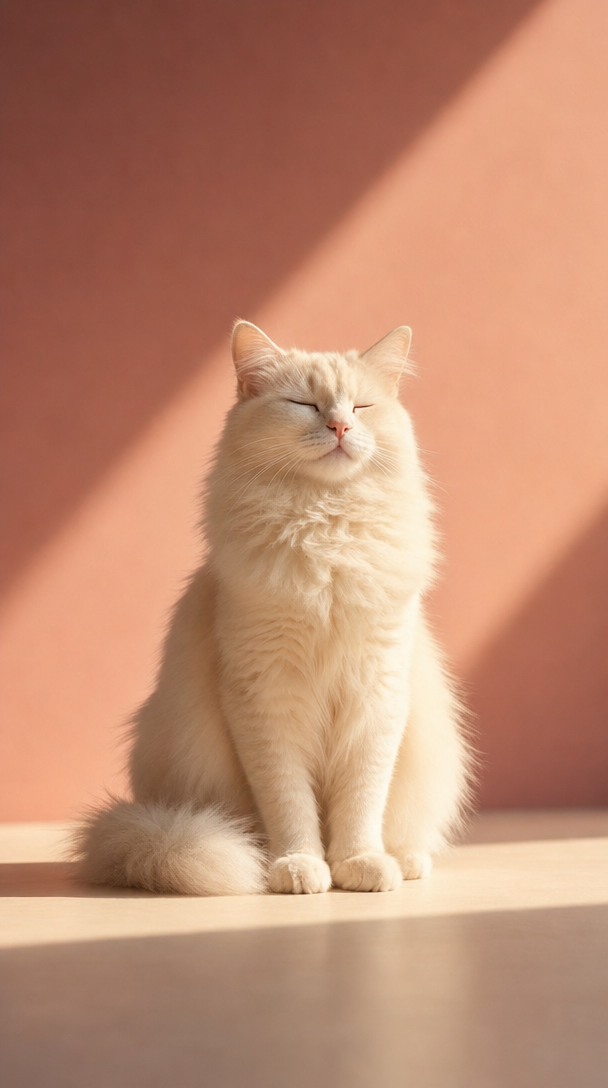
Cream Longhaired Cat in Warm Dusty-Rose Light
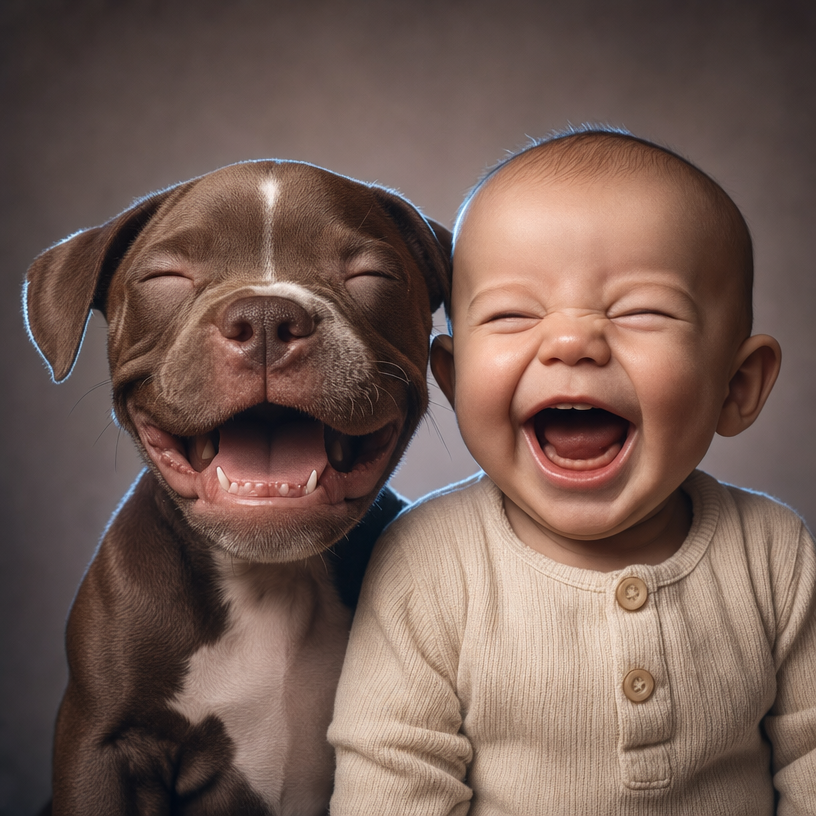
Warm Studio Laughter With Brown Puppy
Cream, Smoky Gray, and Ginger Tabby Stacked Cats
Long-haired gray tabby cat with green eyes