Why this works
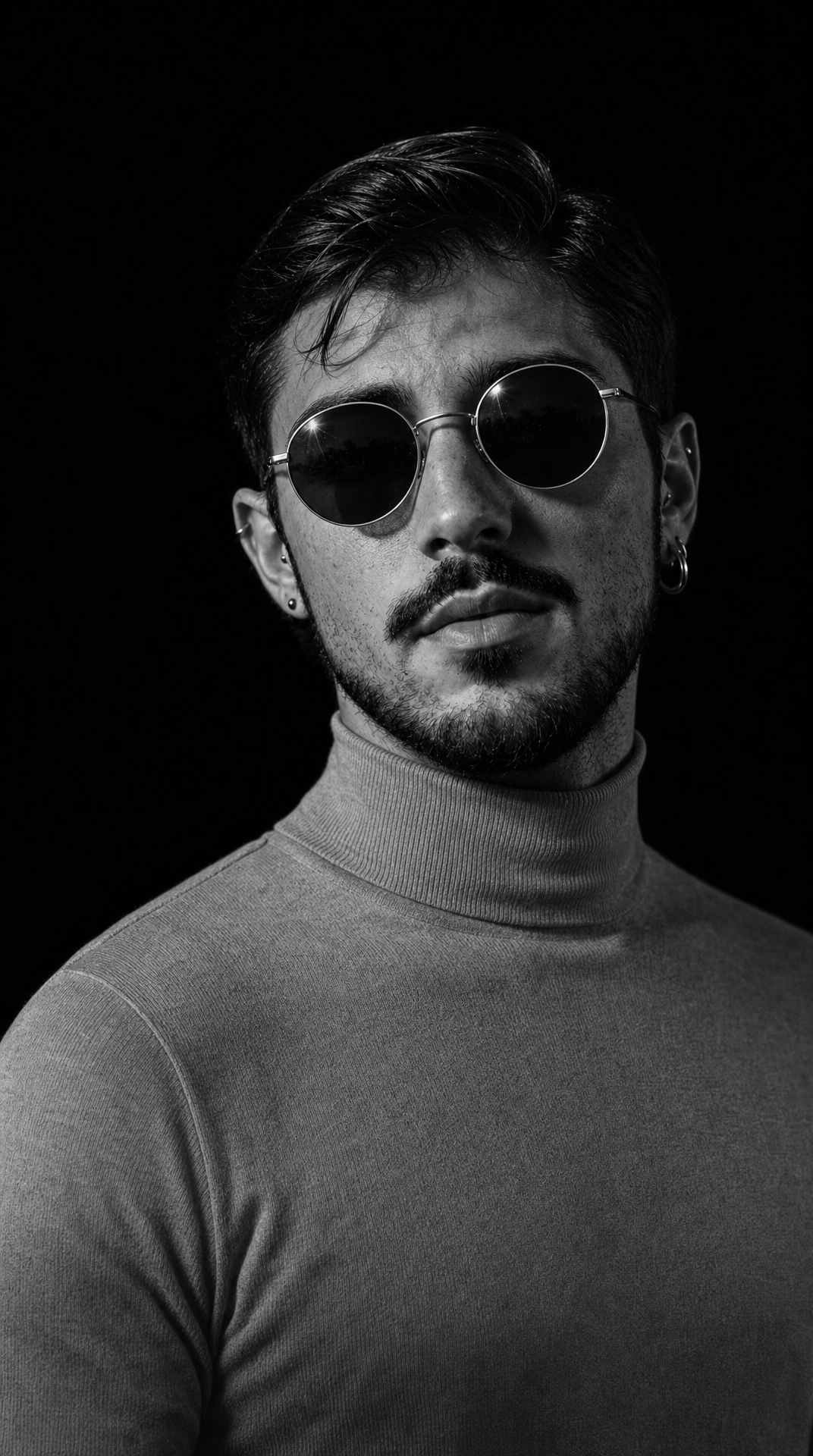
The phrase “oversized close-up product composition” makes the cream handbag and its circular handle dominate the centered frame, while the model reclining inside the handle supplies the unusual sense of scale. “Clean soft lighting” preserves the cream, gold, and brown palette without harsh contrast, and “ultra-sharp textures and reflections on the bag and jewelry details” gives the hardware a polished luxury finish. “Shallow depth of field” isolates the handle, sunglasses, and jewelry against the “minimal studio background,” creating the sleek editorial focus.
FAQ
→How do I make the model’s face and sunglasses more central than the handbag?
Replace “an oversized close-up product composition” with “a balanced medium close-up portrait with the model’s face centered inside the circular handle,” and change “the model reclines partially inside the open handle” to “the model’s face and gold-tinted round sunglasses fill the center of the open handle.” Keep “ultra-sharp textures and reflections” if you still want the bag hardware crisp.
→How do I turn the sleek luxury mood into a darker, more dramatic campaign?
Replace “clean soft lighting” with “dramatic low-key side lighting with deep sculpted shadows,” and replace “minimal studio background” with “a dark espresso studio background with subtle burgundy gradient.” Change “deep burgundy sleeveless outfit” to “black satin sleeveless outfit with burgundy accents” for a deeper tonal range while retaining the gold accessories.
→How do I create a series of variations using different handbags without losing the composition?
Keep “oversized close-up product composition,” “reclines partially inside the open handle,” and “centered” unchanged, then replace “cream designer handbag with a large circular top handle” with variations such as “chocolate-brown structured handbag with a sculptural oval handle” or “metallic gold handbag with a geometric top handle.” Match each replacement with a related outfit color, such as “warm ivory” for brown leather or “deep black” for metallic gold.
Learn the technique behind this
- Why can't AI spell, and how do I get readable text in an image? — Older diffusion models had no character-level representation of text, so they produced letterform-shaped texture instead of words.
- How should a prompt be structured, and does word order matter? — A prompt that behaves predictably names one subject first, then what it is doing, then where, then the light, then the lens or medium, then the style.
- Why does the model ignore parts of my prompt? — Ignored instructions are almost always conflicts, counts, or spatial relationships — three things current models handle badly — rather than the model failing to read you.
Related prompts

Teal fashion editorial in monster-filled lift
Cobalt Boots in Sleek Studio Edit

Silhouette Influencer by Sunlit Window

Sunlit editorial on striped beach towel