Why this works
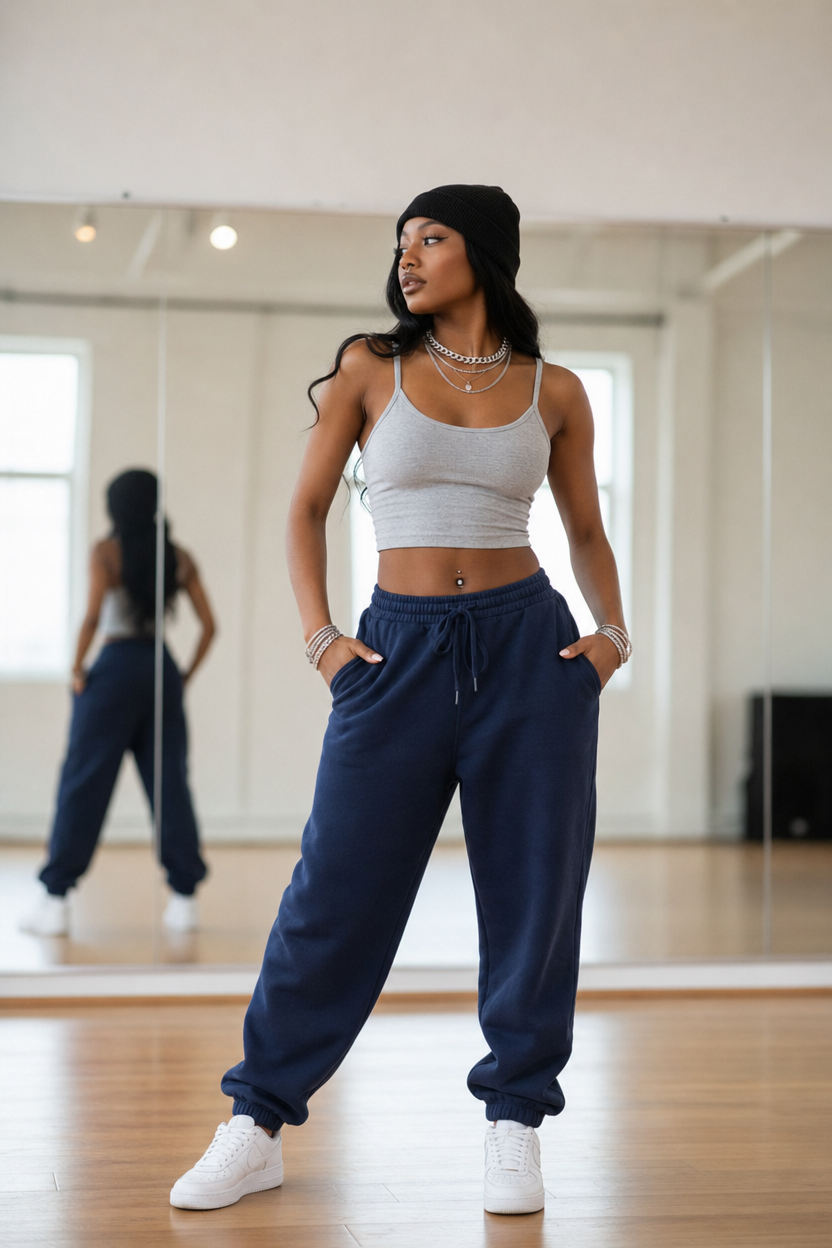
The full-body portrait framing keeps the woman’s slight lean, white low-top sneakers, and polished wooden floor visible, while “crisp facial focus” makes her expression the visual anchor. “Soft morning daylight” and the light-gray tank top against dark blue jogger pants produce the clean blue-and-white harmony seen in the image, while “shallow depth of field that keeps the studio details softly blurred behind her” separates the subject from the mirrored wall and minimal interior. The phrases “confident urban fashion pose” and “layered silver chain jewelry” supply the modern streetwear attitude without disrupting the restrained palette.
FAQ
→How do I make the mirrored wall and dance setting more central?
Replace “studio details softly blurred behind her” with “sharp, clearly visible mirrored wall and polished wooden floor,” and change “full-body portrait framing” to “wide full-body environmental portrait.” Add “strong symmetrical reflection of the subject” if the mirror should become a second compositional focal point.
→How do I shift this from a soft morning mood to a dramatic nightlife look?
Replace “Soft morning daylight fills the modern minimal interior” with “deep blue and magenta LED lighting cuts across a dark dance studio,” and change “natural and even” to “high-contrast directional lighting.” Keep the “dark blue high-waisted jogger pants,” or replace them with “black tailored cargo pants,” to reinforce the darker palette.
→How do I create a coordinated series with different outfits and poses?
Keep “photorealistic full-body fashion portrait,” “bright dance studio,” and “polished wooden floor” unchanged, then swap the outfit phrase for options such as “cream cropped sweatshirt, olive cargo trousers, and black trainers.” Replace “confident urban fashion pose with a slight lean” with variations such as “dynamic mid-step pose” or “arms-crossed upright stance,” while retaining “crisp facial focus” and “shallow depth of field” for visual consistency.
Learn the technique behind this
- Why can't AI spell, and how do I get readable text in an image? — Older diffusion models had no character-level representation of text, so they produced letterform-shaped texture instead of words.
- How should a prompt be structured, and does word order matter? — A prompt that behaves predictably names one subject first, then what it is doing, then where, then the light, then the lens or medium, then the style.
- Why does AI get hands and faces wrong, and how do I fix it? — Hands fail because they're small in frame, extremely variable in pose, and self-occluding — the model has less usable signal per pixel than for any other body part.
Related prompts
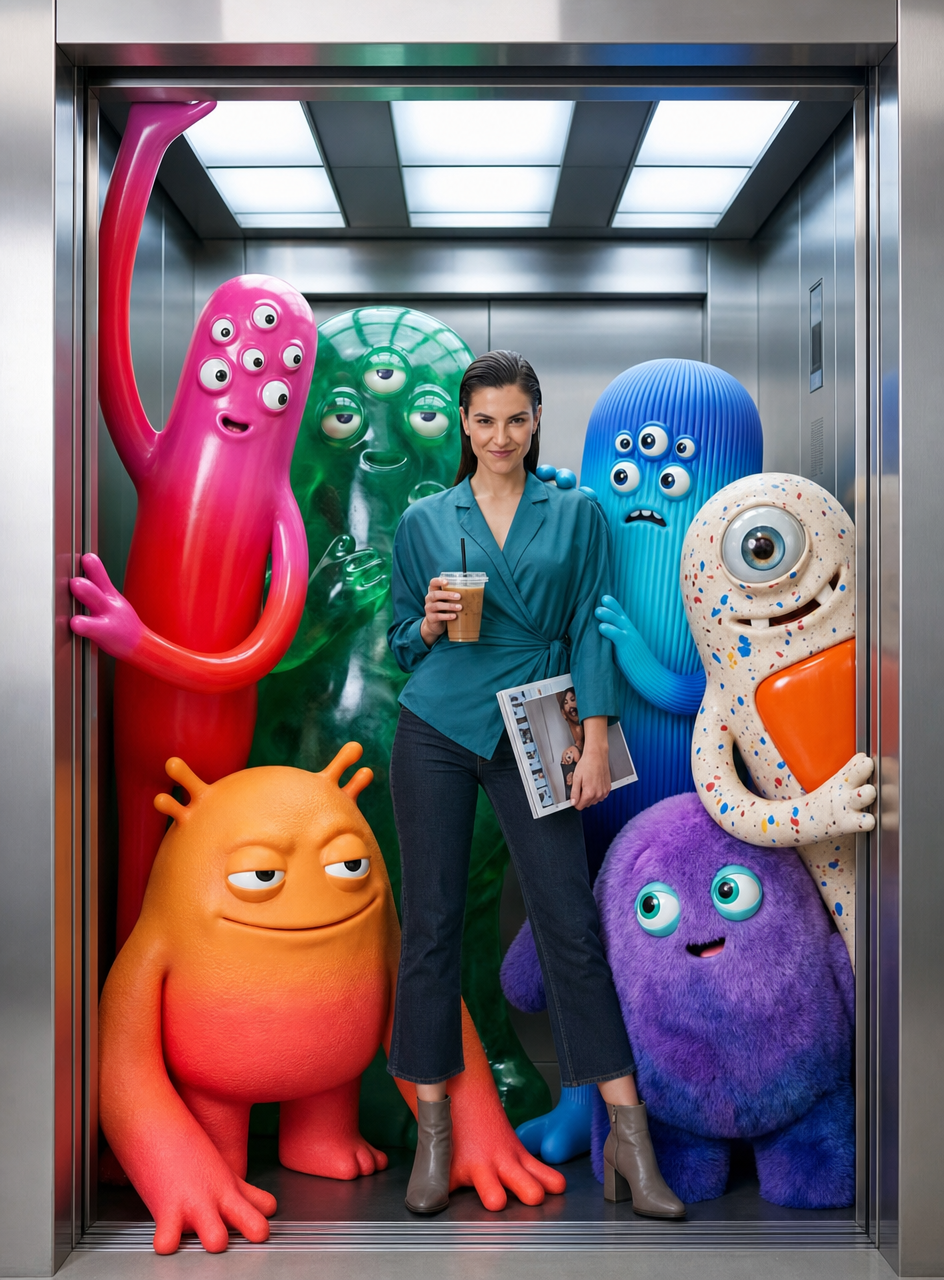
Teal fashion editorial in monster-filled lift
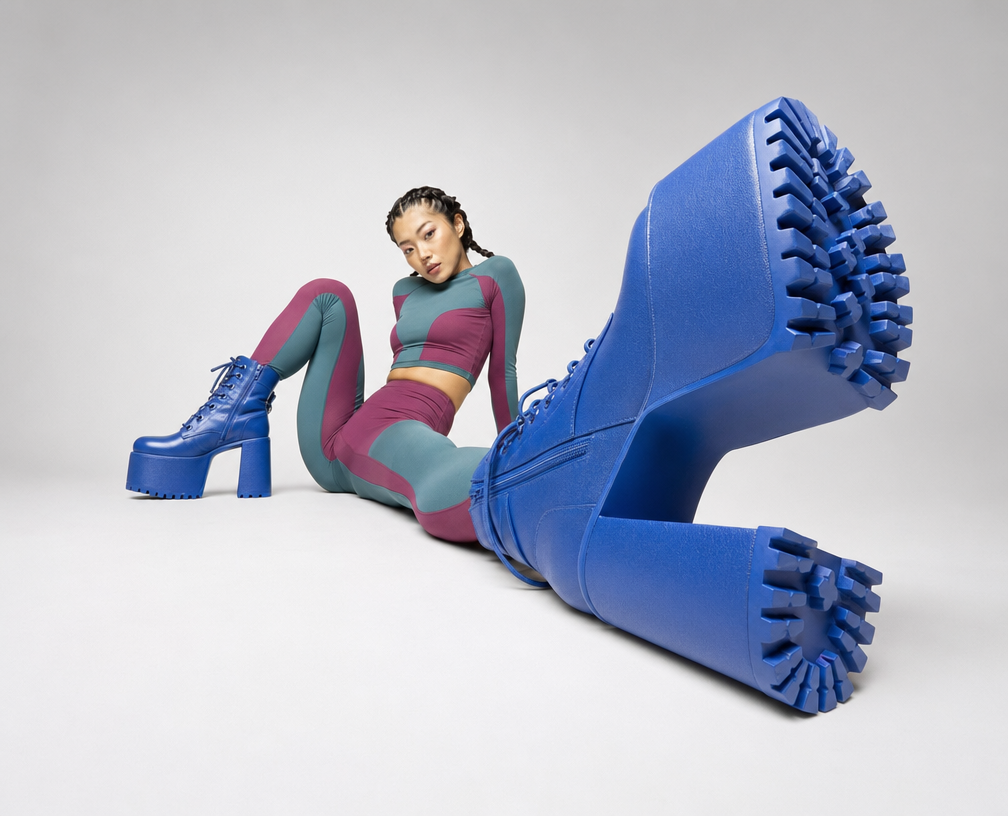
Cobalt Boots in Sleek Studio Edit
Silhouette Influencer by Sunlit Window
Sunlit editorial on striped beach towel