Why this works
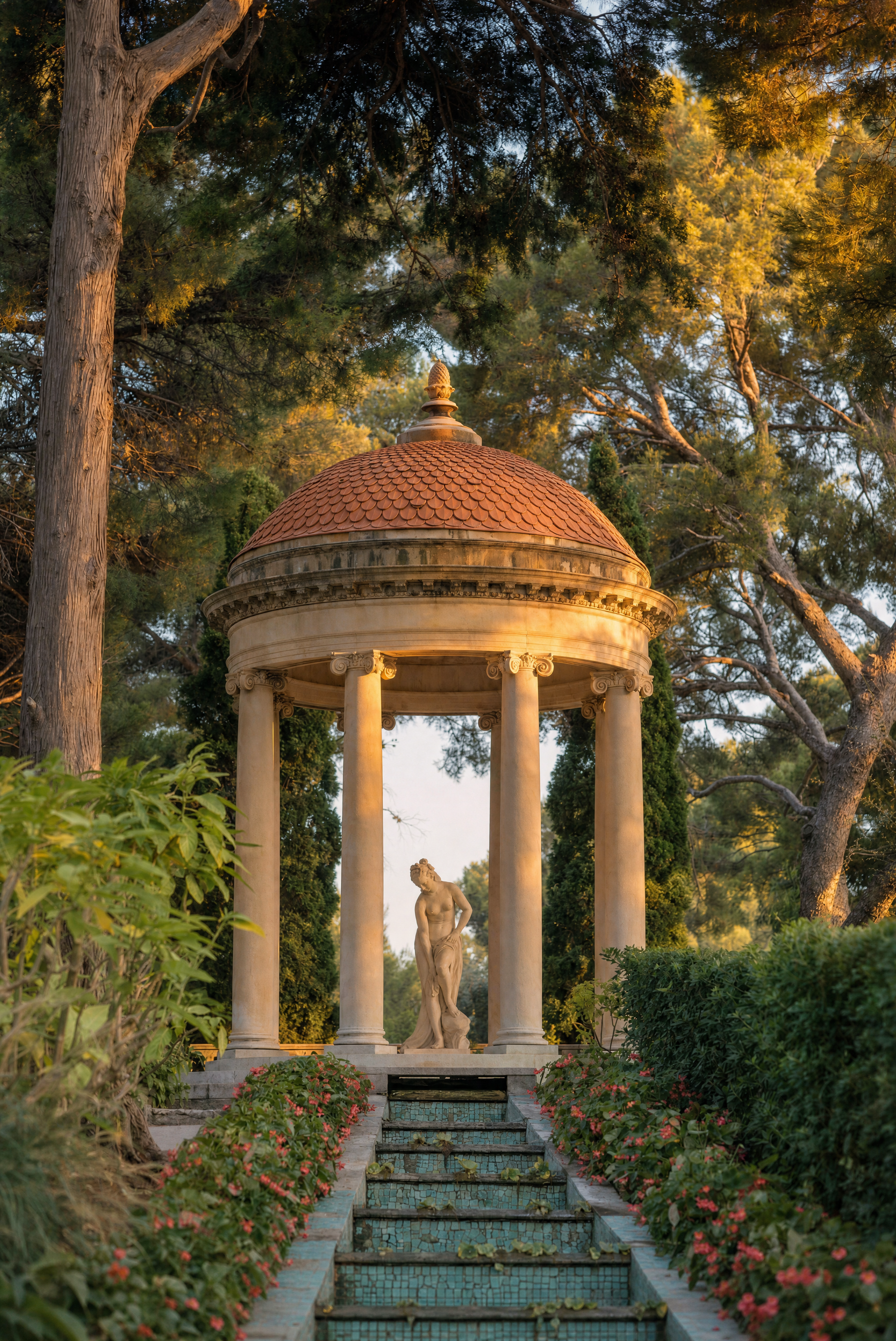
“Centered at the end of a short stairway” gives the pavilion a strong axial focal point, while “vertical composition” lets the stairs, columns, and domed roof build upward through the frame. The terracotta-red roof, pale sandstone columns, and “warm late-afternoon golden sunlight” establish the brown, beige, and gold palette, with “soft dappled highlights through the foliage” adding controlled variation without breaking the serene mood. “Dense hedges and flowering plants framing the stairs” creates a natural border, and “crisp stone and plant detail” is responsible for the tactile, photorealistic finish.
FAQ
→How do I make the statue more prominent than the pavilion?
Replace “with a statue inside” with “a prominent marble statue in the center of the pavilion, clearly visible and occupying the visual focal point,” and add “the pavilion slightly recedes as a framing structure.” Keep “centered at the end of a short stairway” to preserve the existing symmetry.
→How do I make this scene feel moodier and less warmly idyllic?
Replace “warm late-afternoon golden sunlight with soft dappled highlights through the foliage” with “cool overcast twilight, deep diffuse shadows, and restrained blue-gray ambient light.” Change “serene, elegant, warm” to “quiet, mysterious, contemplative,” and replace “natural color palette” with “muted desaturated earth tones.”
→How do I create a series of related garden-pavilion variations?
Keep the phrases “vertical composition,” “centered framing at the end of the stairs,” “photorealistic,” and “architectural landscape photography” unchanged, then swap the setting details: use “a misty Japanese moss garden,” “a formal French parterre,” or “a Mediterranean cypress garden.” Replace “terracotta-red domed tile roof and pale sandstone columns” with a matching architectural design for each setting while retaining “a statue inside” as the recurring subject.
Learn the technique behind this
- Which aspect ratio should I use, and how does it change the image? — Aspect ratio determines what the model composes, not how it's cropped afterwards.
- Why can't AI spell, and how do I get readable text in an image? — Older diffusion models had no character-level representation of text, so they produced letterform-shaped texture instead of words.
- How should a prompt be structured, and does word order matter? — A prompt that behaves predictably names one subject first, then what it is doing, then where, then the light, then the lens or medium, then the style.
Related prompts
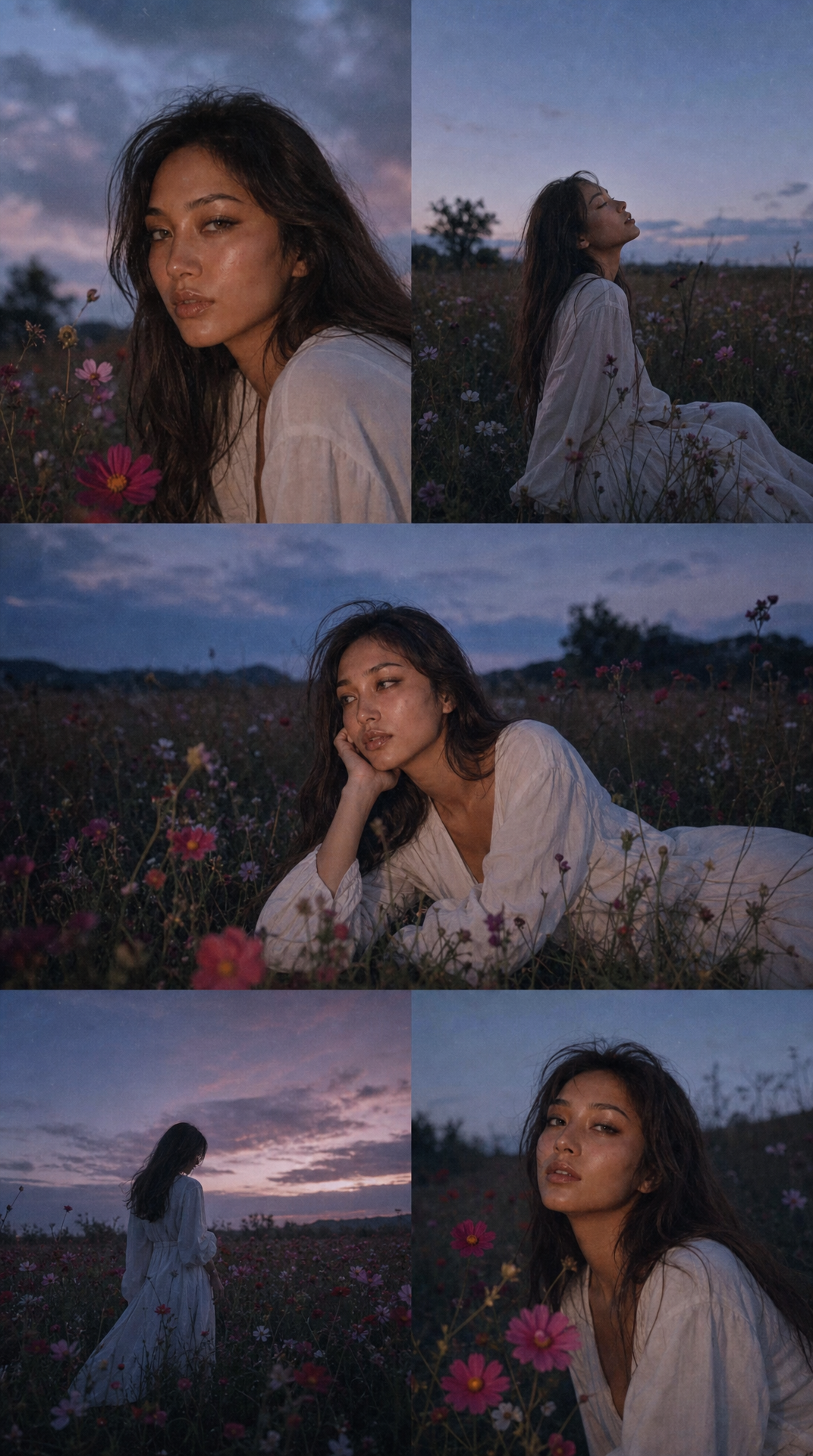
Solitary Woman in Twilight Wildflower Meadow
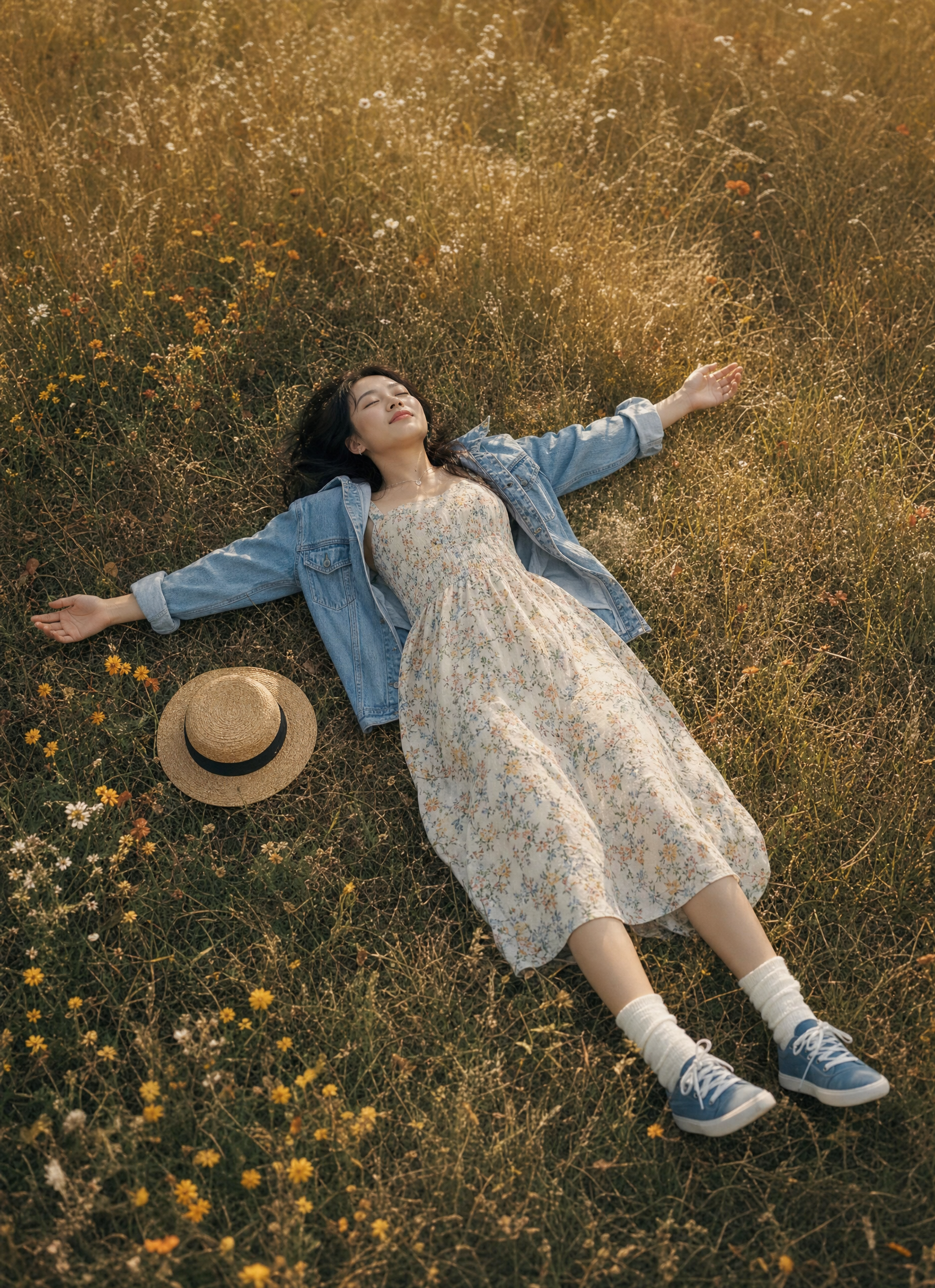
Woman Relaxing in Golden Autumn Field
Man on sand dune in blue hour
Golden-hour surf under dramatic clouds