Why this works
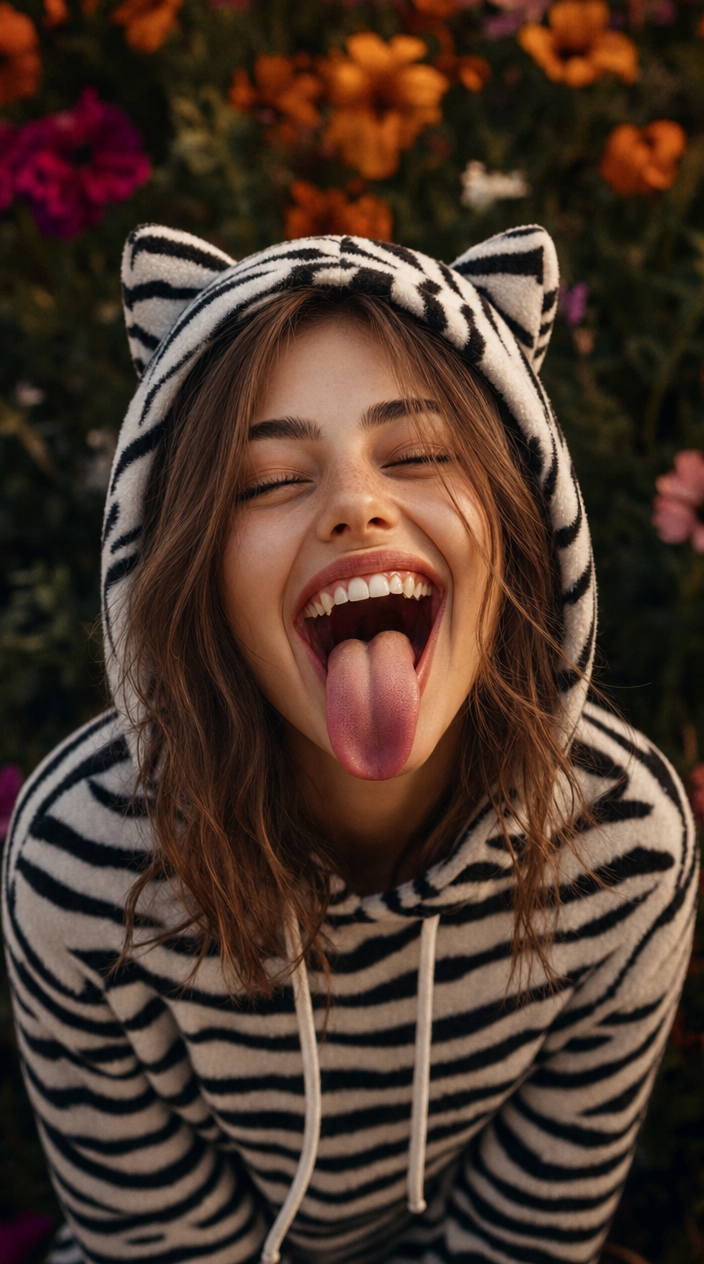
The phrase “close-up photorealistic fashion editorial portrait” makes the face, tongue-out pose, closed eyes, and cat-like hood the clear focal point, while “shallow depth of field” and “soft focus background” keep the colorful flower garden from competing. “Warm golden natural light” supports the cheerful tone, and the “zebra-print hoodie” concentrates black contrast around the warm brown chestnut hair and realistic skin tones, matching the image’s dominant black-and-brown palette. “Crisp facial texture” and “high detail” preserve expression and skin detail even as the garden dissolves into blur.
FAQ
→How do I make the cat-like hoodie more visually prominent?
Replace “Close-up” with “medium close-up framed from the chest up,” and change “wearing a zebra-print hoodie with cat-like ears” to “wearing a bold zebra-print hoodie, oversized cat-like ears fully visible and centered in the frame.” Keep “shallow depth of field” so the expanded garment remains sharper than the flower garden.
→How do I turn the cheerful portrait into a darker, more dramatic variation?
Replace “playful, whimsical expression” with “quiet, mischievous expression,” and change “Warm golden natural light” to “directional amber side-light with deep soft shadows.” Swap “blurred colorful flower garden” for “blurred nighttime garden with dark foliage and isolated highlights” to preserve the portrait composition while reducing its brightness.
→How do I create a matching series with different outfits and backgrounds?
Keep the fixed structure “photorealistic fashion editorial portrait,” “close-up framing,” “shallow depth of field,” “crisp facial texture,” and “realistic skin tones,” then replace “zebra-print hoodie with cat-like ears” and “blurred colorful flower garden” as paired variables. For example, use “silver metallic bomber jacket” with “blurred city lights,” or “cream knit sweater” with “blurred autumn woodland,” while retaining “warm golden natural light” for visual consistency.
Learn the technique behind this
- Why can't AI spell, and how do I get readable text in an image? — Older diffusion models had no character-level representation of text, so they produced letterform-shaped texture instead of words.
- How should a prompt be structured, and does word order matter? — A prompt that behaves predictably names one subject first, then what it is doing, then where, then the light, then the lens or medium, then the style.
- Which aspect ratio should I use, and how does it change the image? — Aspect ratio determines what the model composes, not how it's cropped afterwards.
Related prompts
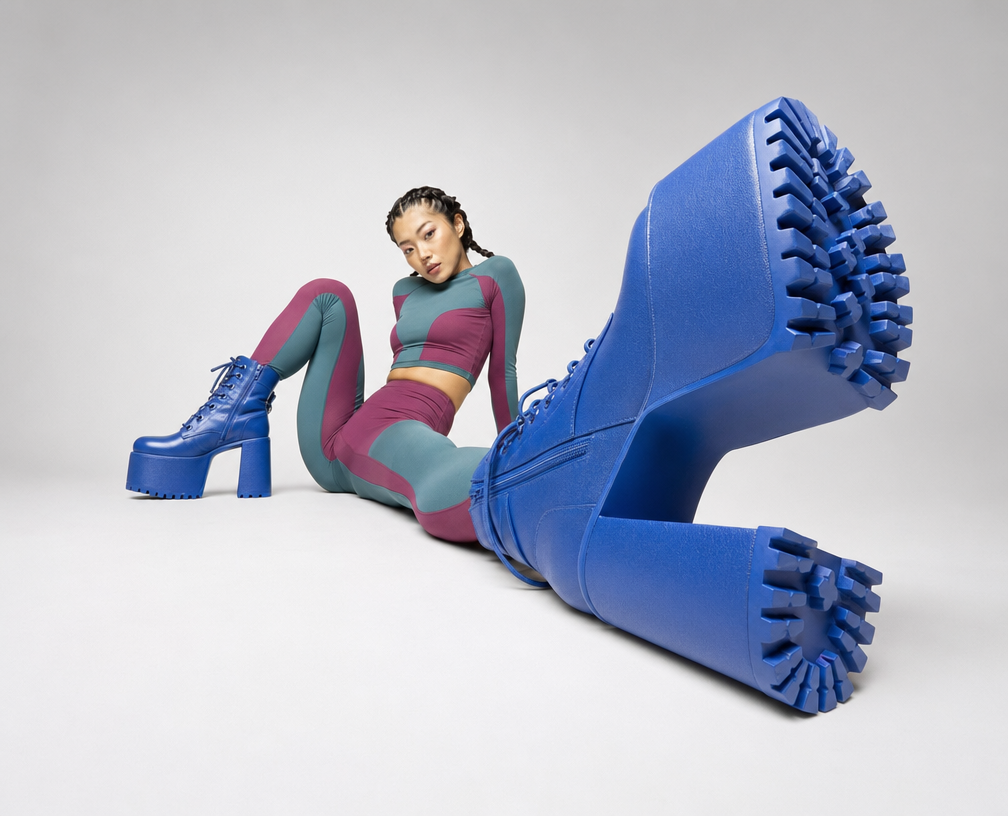
Cobalt Boots in Sleek Studio Edit
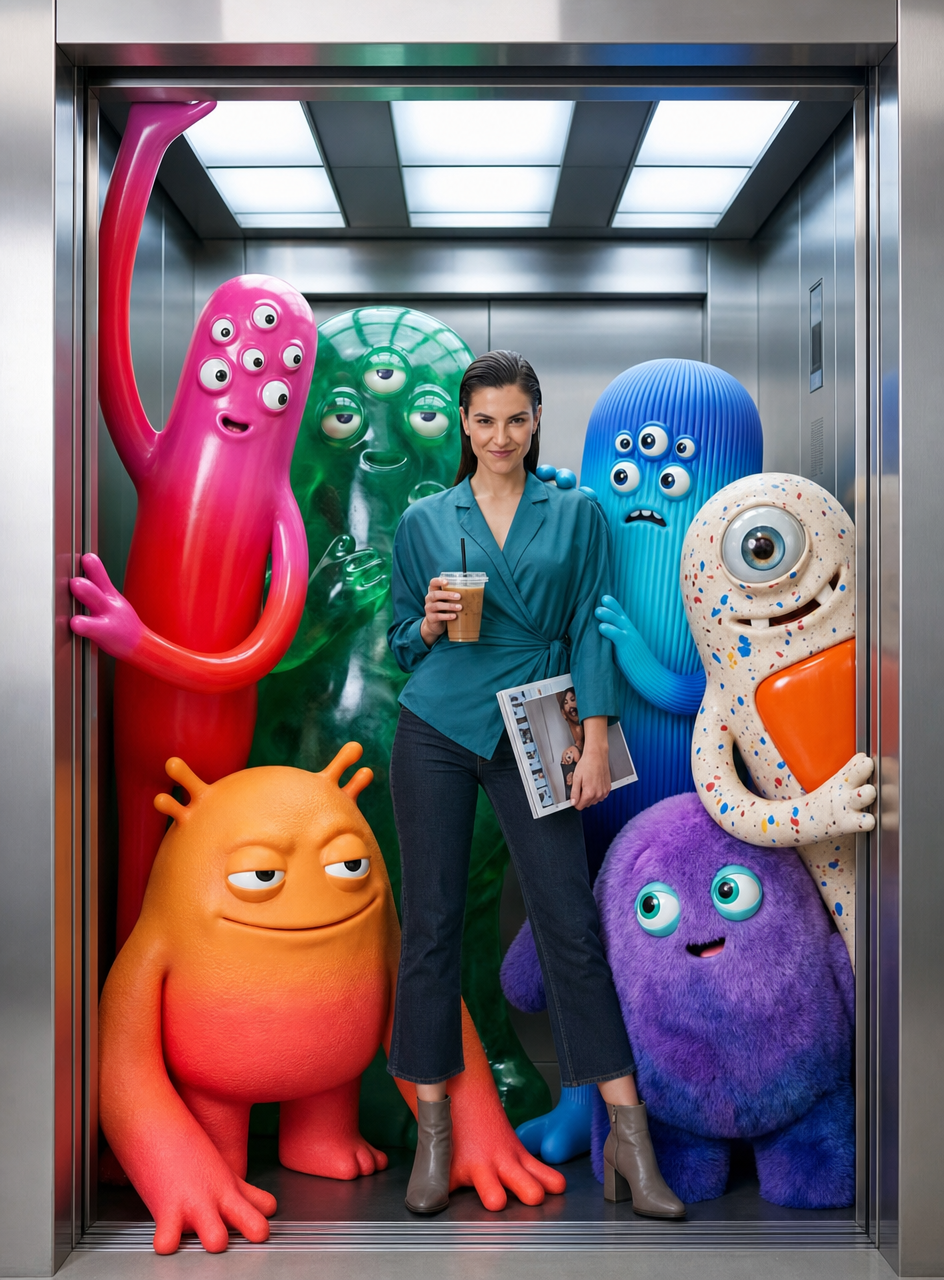
Teal fashion editorial in monster-filled lift
Sunlit editorial on striped beach towel
Silhouette Influencer by Sunlit Window