Why this works
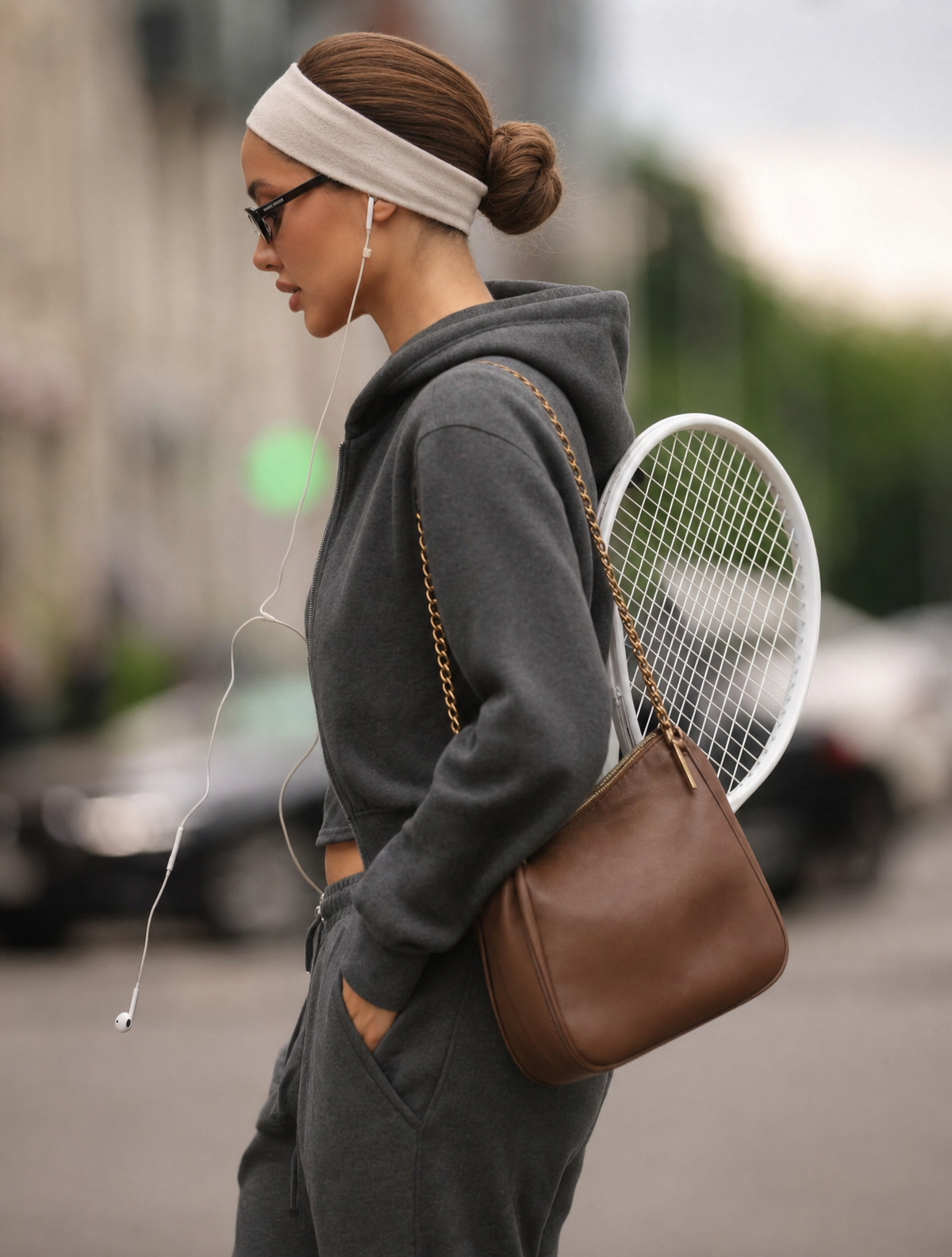
The profile, full-body framing gives the image a clear walking silhouette, while “a tennis racket is tucked into a medium brown leather designer handbag with a gold chain strap” supplies an unusual diagonal accessory detail. The brown handbag and “light beige headband” create the dominant warm brown-beige harmony against the charcoal-grey tracksuit, and “soft overcast natural light” keeps those neutrals restrained rather than glossy. “Shallow depth of field” pushes the pedestrians and storefronts into a supporting urban texture, while “crisp facial detail” preserves the editorial portrait’s point of attention.
FAQ
→How do I make the tennis racket and handbag more visually prominent?
Replace “a tennis racket is tucked into a medium brown leather designer handbag” with “a tennis racket prominently emerging from an oversized medium brown leather handbag, clearly visible in the foreground,” and add “accessory-focused composition” after “editorial fashion photography.”
→How do I shift this from casual-luxury to a moodier, more cinematic street portrait?
Replace “soft overcast natural light” with “low, directional late-afternoon light with deep controlled shadows,” and replace “modern casual-luxury mood” with “moody cinematic urban elegance.” Change the background phrase to “darkened storefronts and blurred evening pedestrians” to support the tonal shift.
→How do I create a coordinated series of variations from this prompt?
Keep “photorealistic editorial street-style portrait,” “profile,” “shallow depth of field,” and “crisp facial detail” unchanged, then swap the wardrobe and accessory clauses for controlled variants such as “navy tracksuit with a cream headband and burgundy leather tote” or “olive tracksuit with a rust scarf and black structured handbag.” Preserve “urban street background” while changing only the storefront type, season, or pedestrian styling so the set retains a consistent visual language.
Learn the technique behind this
- Why can't AI spell, and how do I get readable text in an image? — Older diffusion models had no character-level representation of text, so they produced letterform-shaped texture instead of words.
- Why does AI get hands and faces wrong, and how do I fix it? — Hands fail because they're small in frame, extremely variable in pose, and self-occluding — the model has less usable signal per pixel than for any other body part.
- How do I keep the same character across multiple images? — Text prompts alone won't hold a face across images — a description defines a type, not a person.
Related prompts
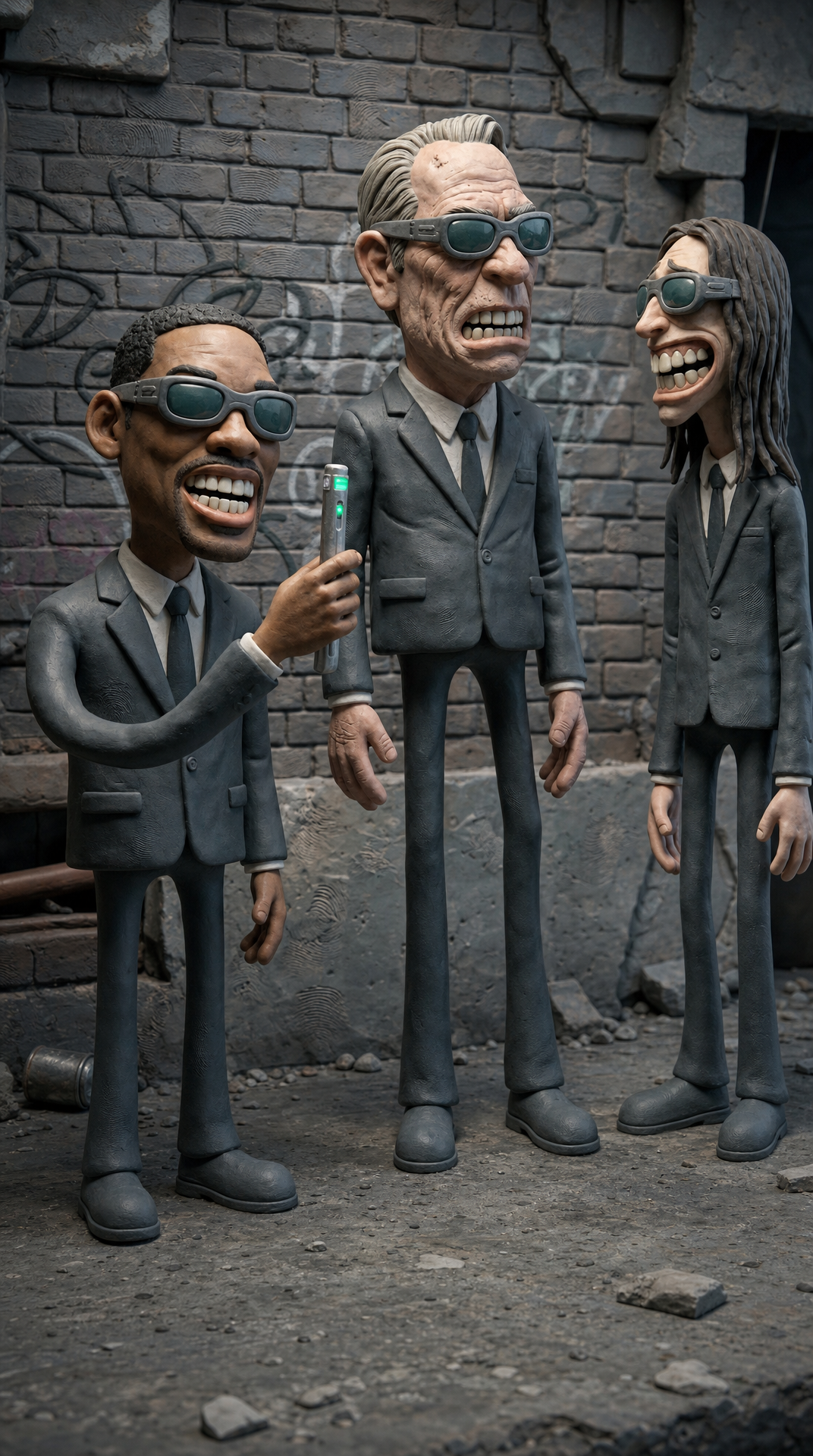
Grotesque Claymation Gangsters in Gritty Alley
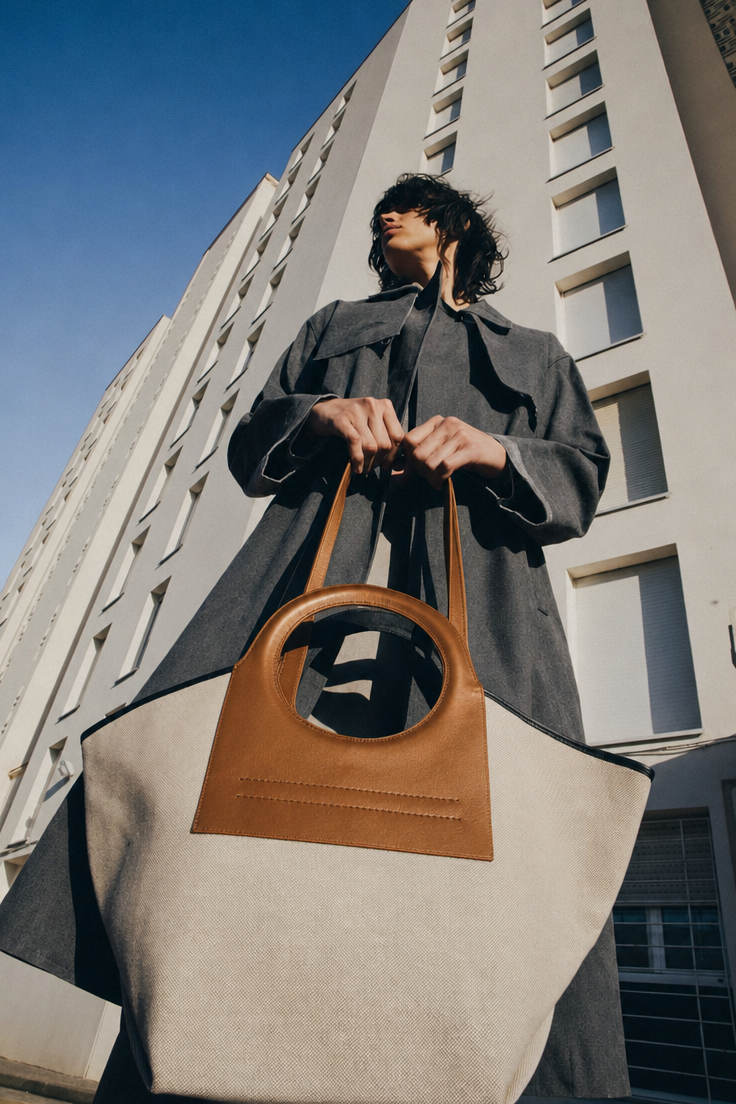
Charcoal coat with tan-handled tote
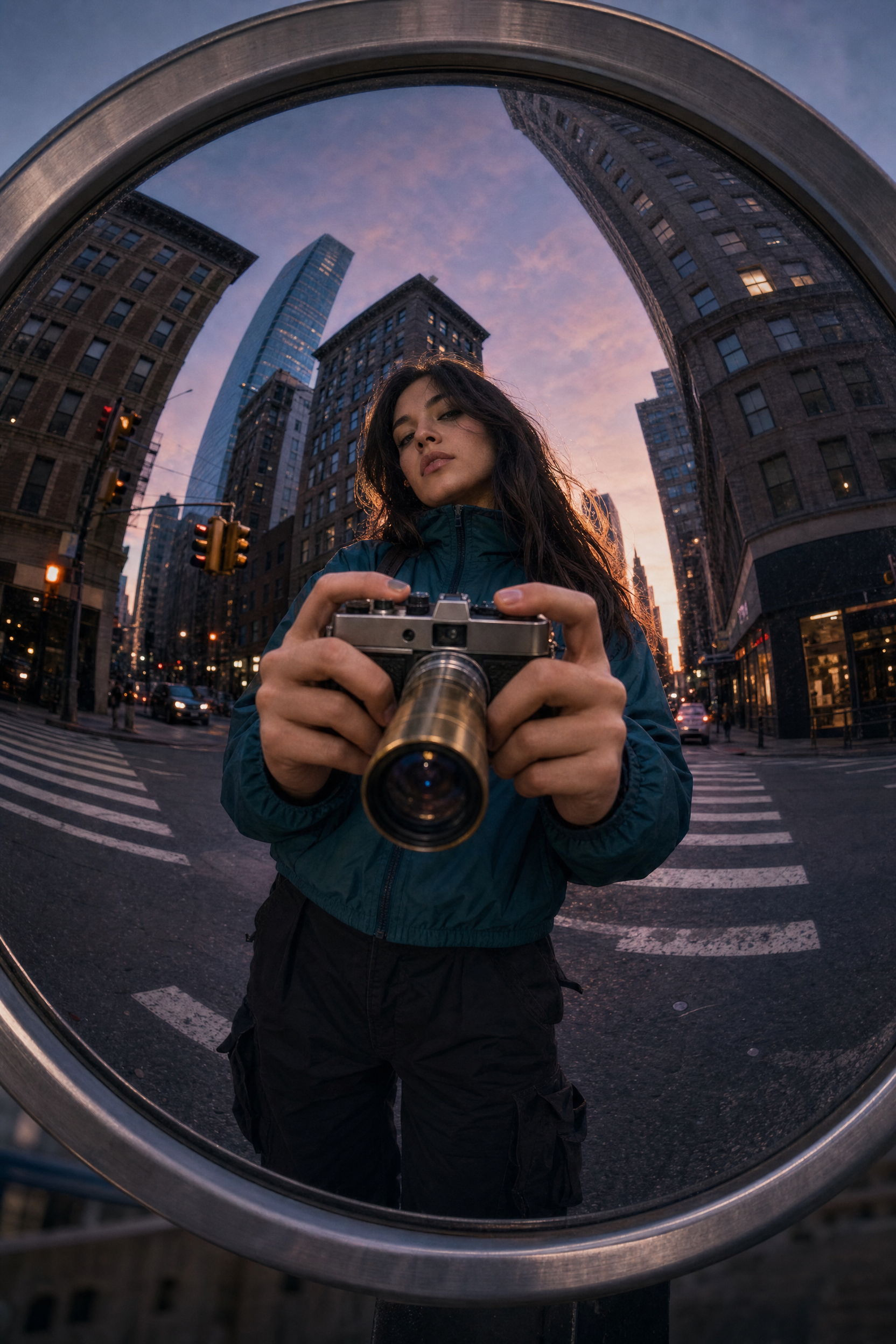
Woman in Teal Jacket Capturing Twilight Reflection
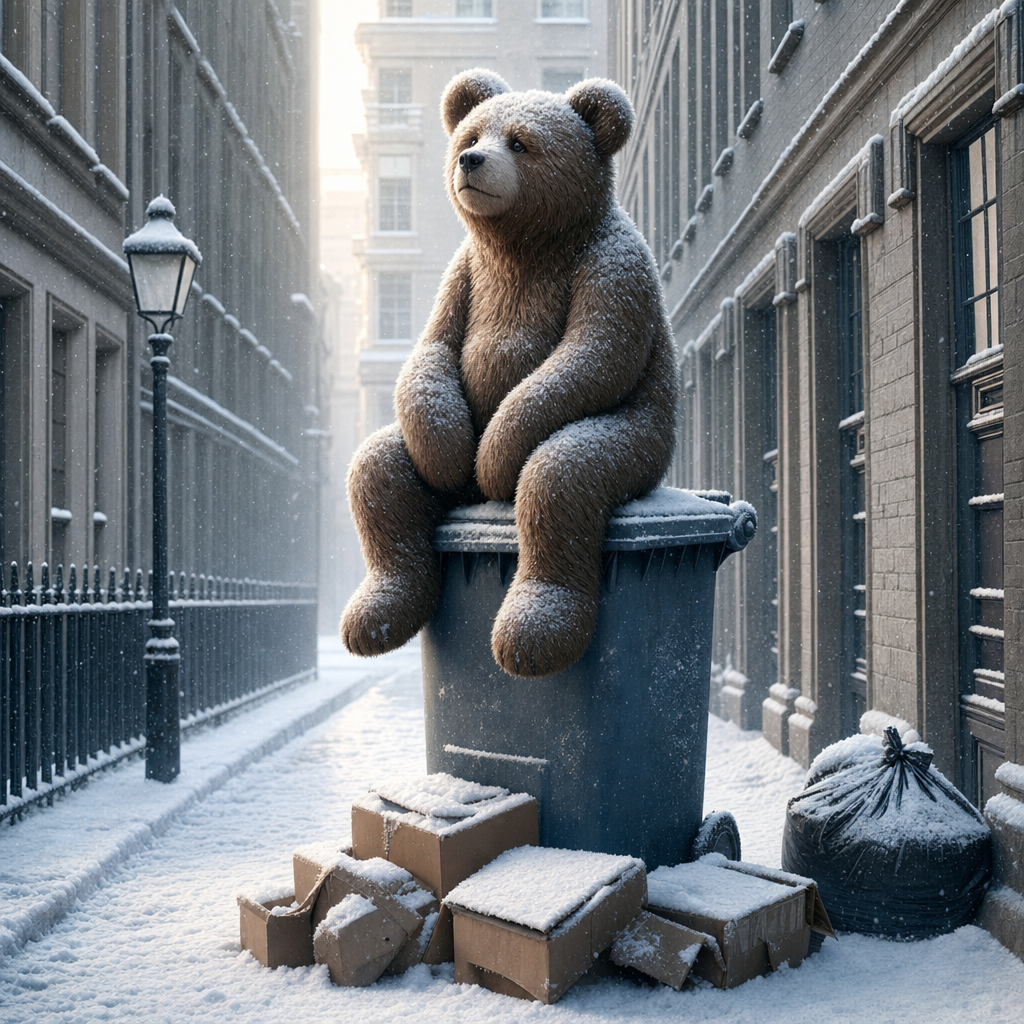
Stuffed Bear on Winter Dumpster at Dawn