Why this works
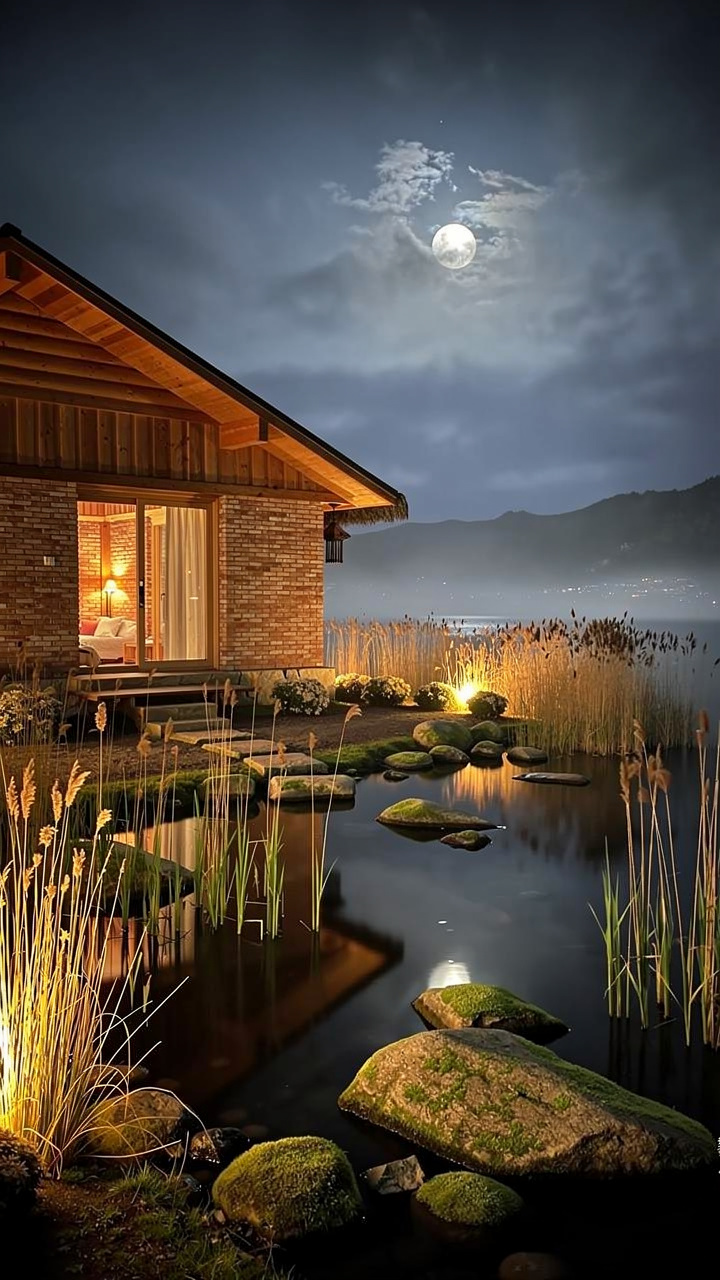
The wide-shot composition establishes a quiet sense of scale by placing the cabin on the left against the “calm lake,” “distant shoreline lights,” and moonlit sky. The mood depends on the contrast between “warm amber light glowing from a brick-and-wood cabin” and “softened by thin misty clouds,” while “higher shadow contrast” keeps the black night from becoming flat. “Illuminated tall reeds and low mossy rocks” supply tactile foreground framing, and “shallow depth of field with crisp cabin details” directs attention back to the cabin despite the broad view.
FAQ
→How do I make the cabin more central and prominent?
Replace “on the left” with “centered on the far shoreline” and change “wide-shot” to “medium-wide shot.” Strengthen “crisp cabin details” to “sharp, highly detailed cabin facade and glowing windows,” while retaining “calm lake” and “distant shoreline lights” as supporting background elements.
→How do I turn the cozy romantic scene into a colder, more mysterious image?
Replace “warm amber light” with “cold blue-white interior light” and “cozy tranquil romantic atmosphere” with “quiet, eerie, mysterious atmosphere.” Change “gentle landscape lighting” to “minimal moonlit illumination on reeds and rocks,” and replace “gold” tones with “blue, charcoal, and silver” in the color direction.
→How do I create a series of variations without losing the original visual identity?
Keep the fixed anchors “photorealistic cinematic nighttime,” “calm reflective lake,” “ultra-realistic textures and reflections,” and “cabin by the water.” Vary one scene element at a time, such as replacing “thin misty clouds” with “light snowfall,” “low fog,” or “clear star-filled sky,” while keeping the “warm amber light” and “wide-shot” unchanged for visual continuity.
Learn the technique behind this
- Why can't AI spell, and how do I get readable text in an image? — Older diffusion models had no character-level representation of text, so they produced letterform-shaped texture instead of words.
- How should a prompt be structured, and does word order matter? — A prompt that behaves predictably names one subject first, then what it is doing, then where, then the light, then the lens or medium, then the style.
- Which aspect ratio should I use, and how does it change the image? — Aspect ratio determines what the model composes, not how it's cropped afterwards.
Related prompts
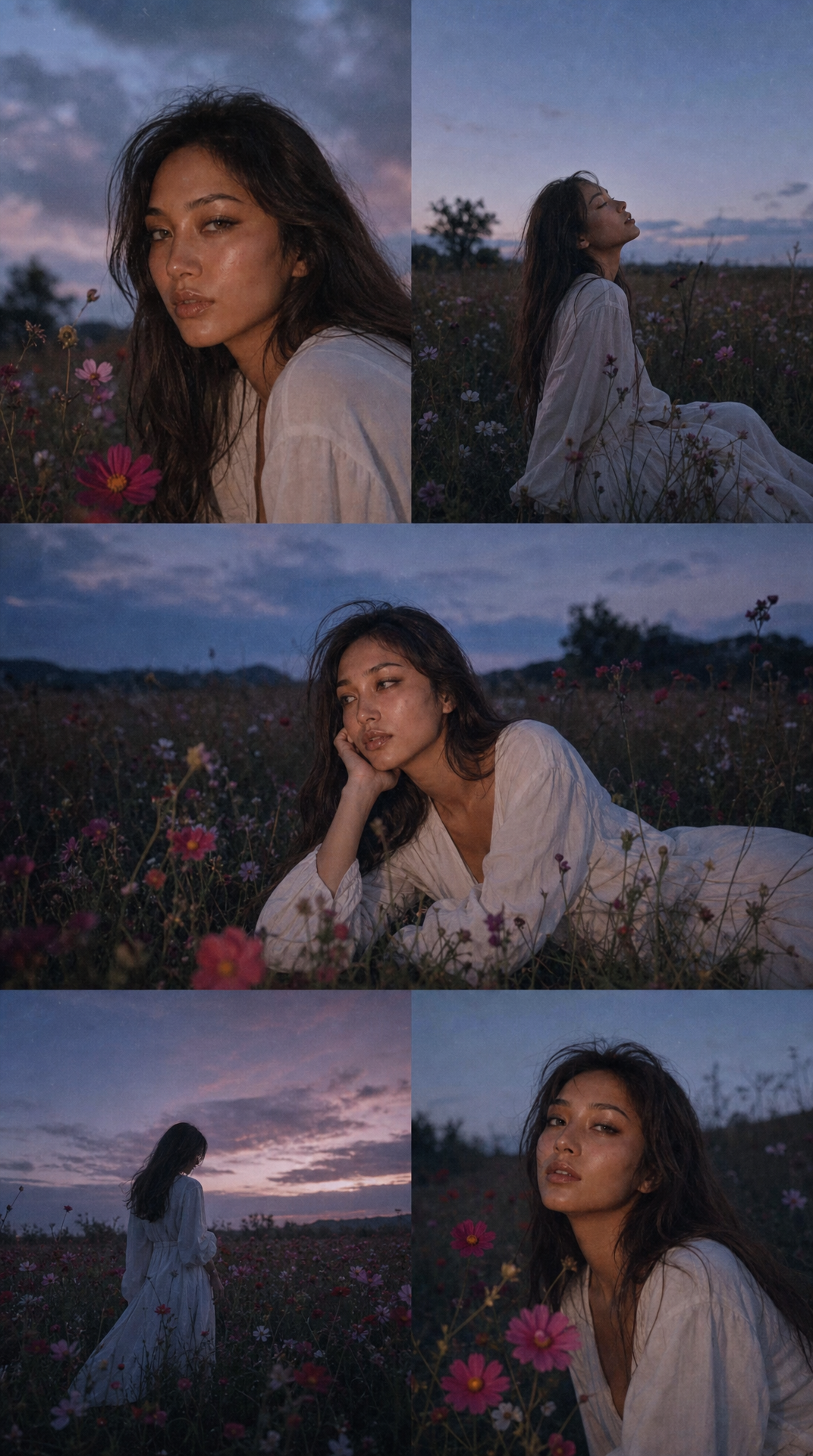
Solitary Woman in Twilight Wildflower Meadow
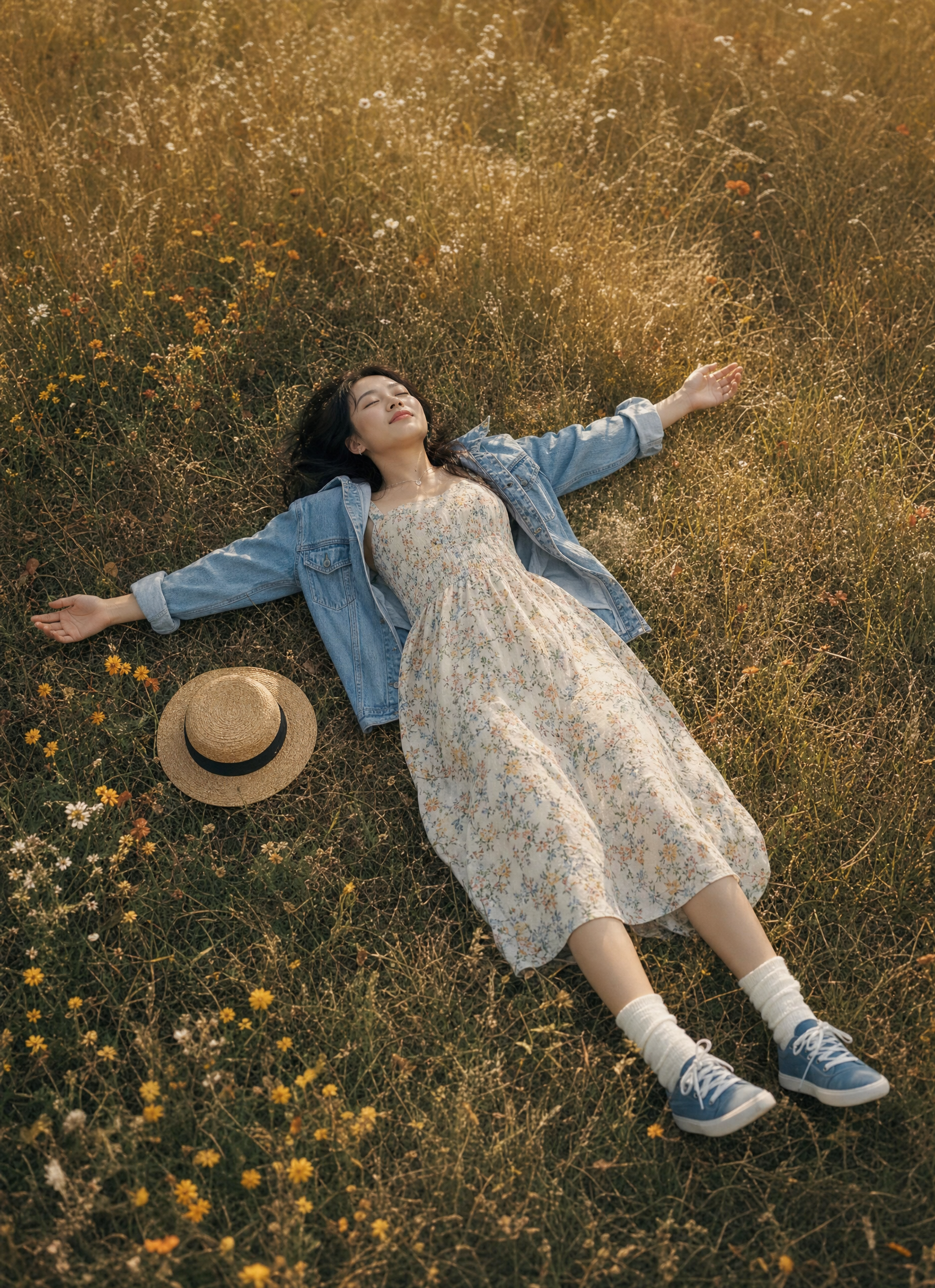
Woman Relaxing in Golden Autumn Field
Man on sand dune in blue hour
Golden-hour surf under dramatic clouds