Why this works
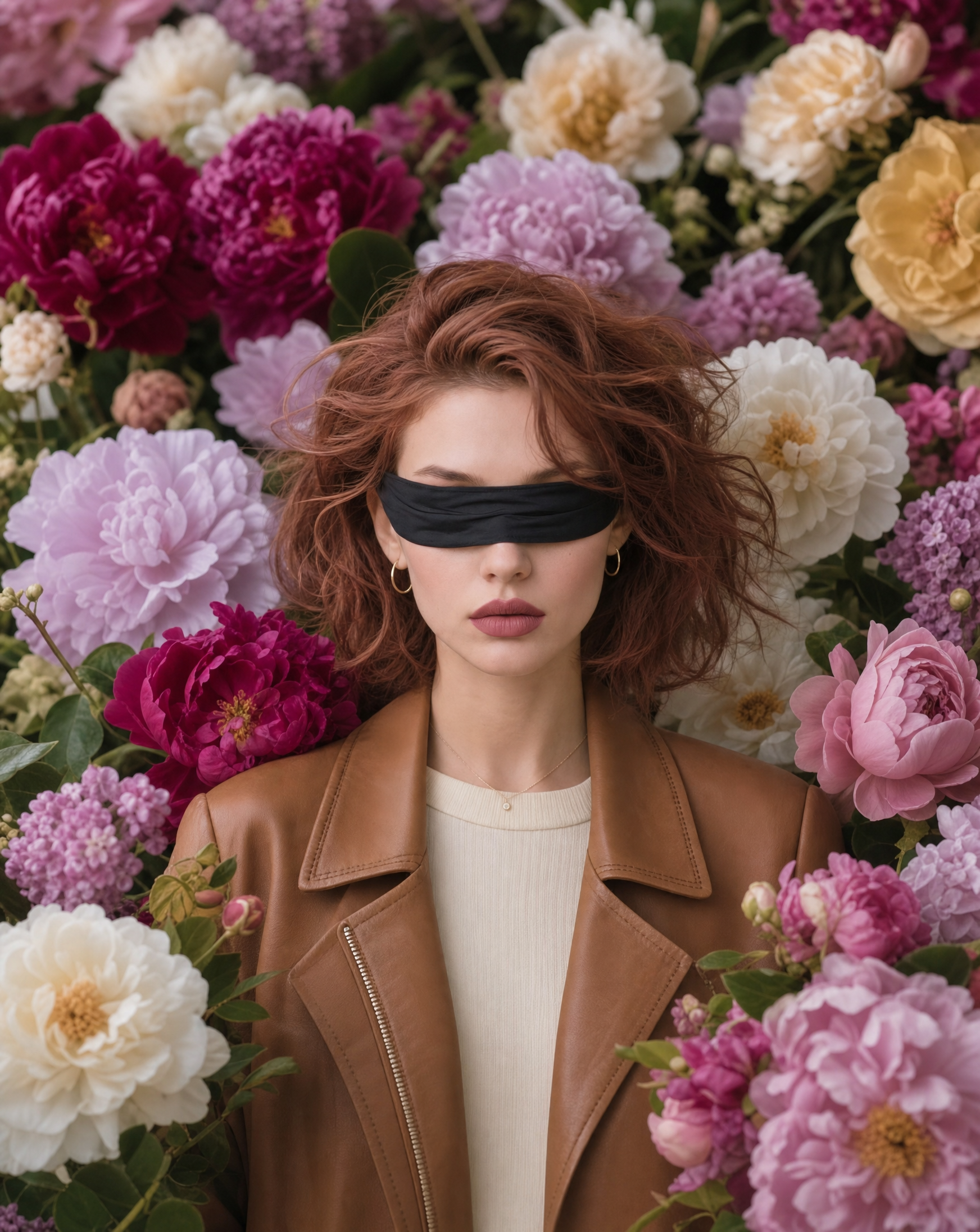
The centered close-up framing makes the blindfolded woman the immediate focal point, while “shallow depth of field” separates her realistic skin detail from the dense oversized-flower backdrop. The dreamy, surreal mood comes from “dreamy editorial lookbook photography,” “soft diffused daylight,” and the floral palette of magenta, soft lavender, white, pale gold, and dusty pink; the camel-brown jacket and black blindfold add grounded contrast to the dominant purple-and-white background. “Tousled auburn hair,” described as “slightly longer and wind-swept,” introduces directional movement within an otherwise symmetrical portrait.
FAQ
→How do I make the blindfold and face more visually dominant?
Keep “close-up centered framing,” but replace “dense backdrop of oversized flowers” with “softly blurred floral hints at the edges of the frame” and add “blindfold and eyes-area centered, unobstructed facial portrait.” Reduce the jewelry phrase to “single minimal gold earring” so the face remains the strongest detail.
→How do I shift this from dreamy and soft to darker, more dramatic editorial fashion?
Replace “soft diffused daylight” and “smooth cinematic highlights” with “hard directional side-lighting, deep sculpted shadows, and a controlled low-key fashion studio setup.” Change the flower colors from “soft lavender, white, pale gold, and dusty pink” to “deep violet, burgundy, black, and desaturated cream,” while keeping the camel-brown leather jacket for warm contrast.
→How do I build a coordinated series of variations from this portrait?
Keep the fixed structure “close-up centered framing,” “blindfolded woman,” “dreamy editorial lookbook photography,” and “shallow depth of field,” then swap one controlled variable per image: replace “camel-brown leather jacket” with “ivory satin blazer,” “black velvet coat,” or “deep plum silk blouse.” For setting variations, replace “dense backdrop of oversized flowers” with “oversized iris blooms,” “white magnolia branches,” or “abstract painted floral panels,” matching each option with a limited two- or three-color palette.
Learn the technique behind this
- Why can't AI spell, and how do I get readable text in an image? — Older diffusion models had no character-level representation of text, so they produced letterform-shaped texture instead of words.
- How should a prompt be structured, and does word order matter? — A prompt that behaves predictably names one subject first, then what it is doing, then where, then the light, then the lens or medium, then the style.
- Why does AI get hands and faces wrong, and how do I fix it? — Hands fail because they're small in frame, extremely variable in pose, and self-occluding — the model has less usable signal per pixel than for any other body part.
Related prompts
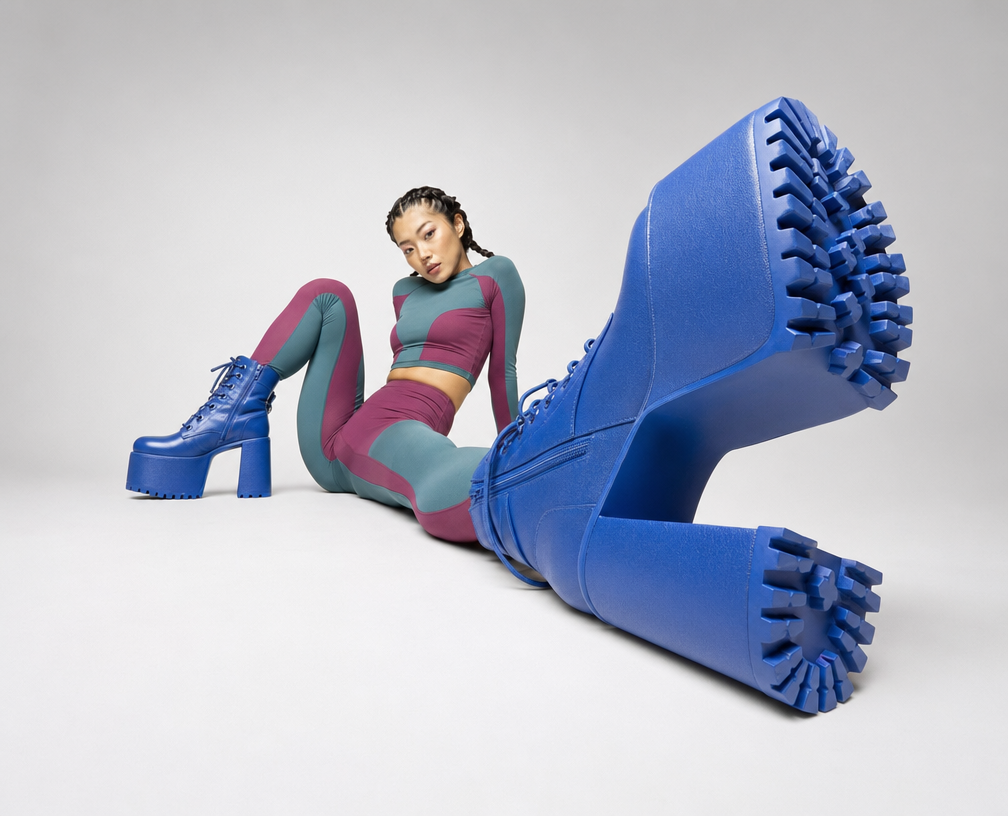
Cobalt Boots in Sleek Studio Edit
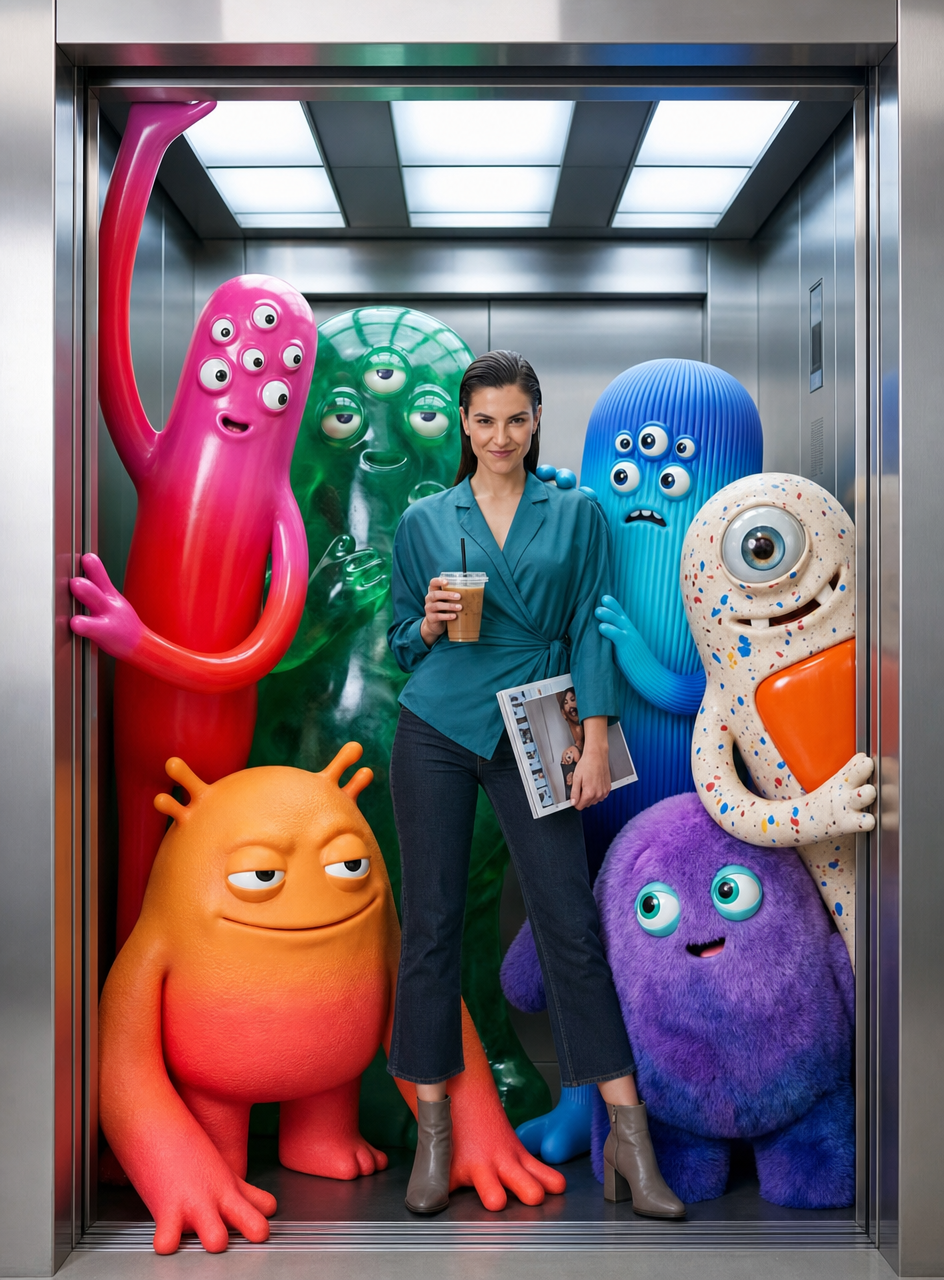
Teal fashion editorial in monster-filled lift
Sunlit editorial on striped beach towel
Silhouette Influencer by Sunlit Window