Why this works
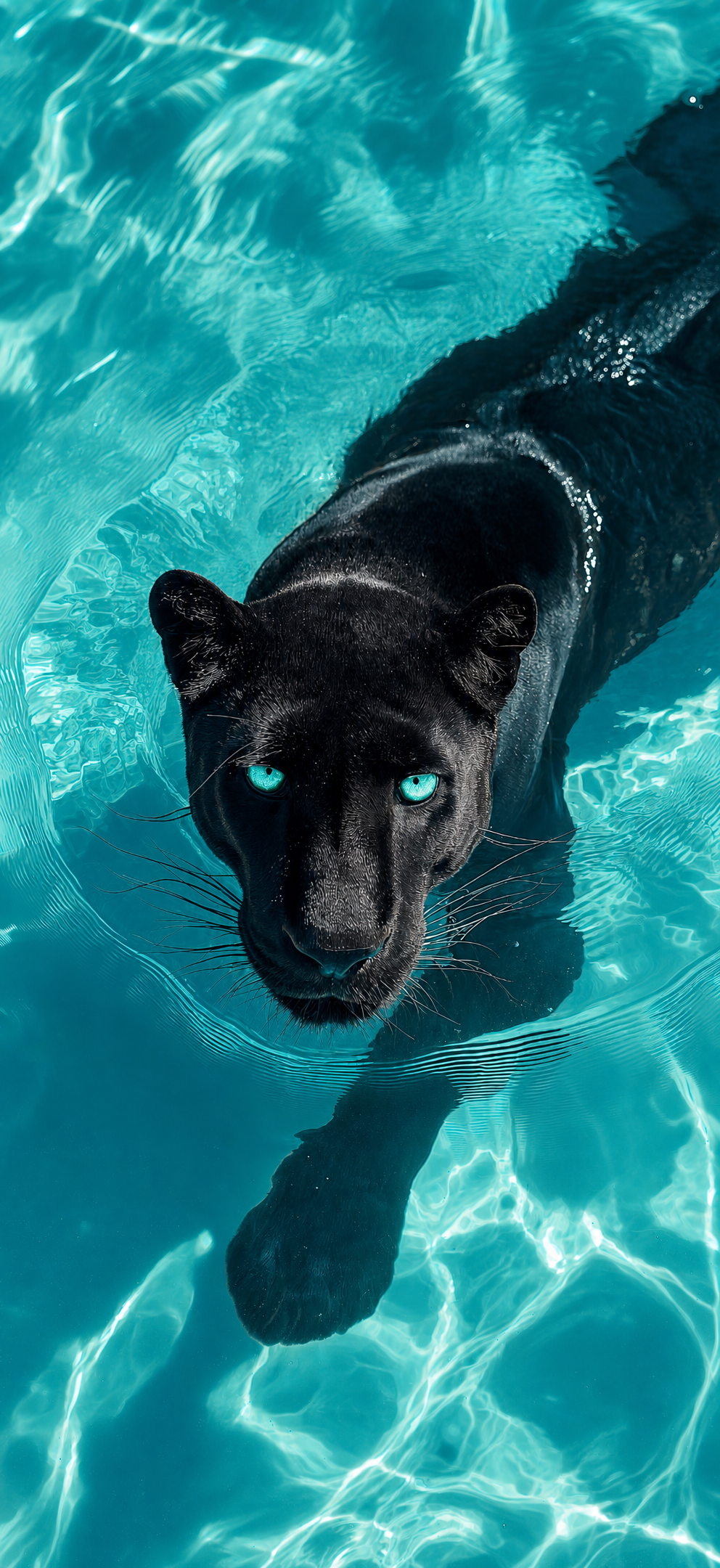
The top-down view and “portrait-full-body” composition make the swimming panther immediately legible as a complete silhouette, while “vivid ripples and mirror-like reflections across the surface” expand the frame around it. The phrase “neon cyan water” sets the dominant cool field against the panther’s black fur, and “bright teal eyes” supplies a precise focal accent rather than relying on color alone. “High-contrast cinematic lighting,” “glossy highlights,” and “dramatic caustics” create the mysterious, luxurious tone by carving bright reflections into the sleek wet fur; “ultra-detailed, sharp focus” preserves those textures and the eye contact.
FAQ
→How do I make the panther’s face and eyes more prominent?
Replace “seen from a top-down perspective” with “close overhead three-quarter view centered on the panther’s head and shoulders,” and replace “portrait-full-body” with “tight portrait crop.” Strengthen “bright teal eyes that intensify the gaze” to “glowing electric-teal eyes in razor-sharp focus, looking directly upward,” while changing “ultra-detailed, sharp focus” to “eyes and facial fur in extreme sharp focus, background ripples softly blurred.”
→How do I change the mysterious luxury mood into a darker, threatening scene?
Replace “luxurious, otherworldly color palette” and “vivid neon color palette” with “ominous nocturnal palette of deep indigo, black, and blood-red accents.” Change “glossy highlights” to “harsh fragmented highlights,” and replace “dramatic caustics” with “stark, distorted underwater shadows and narrow red reflections.” Keep “high-contrast cinematic lighting,” but add “heavy vignetting and oppressive darkness around the frame.”
→How do I create a series of variations while keeping the same visual identity?
Keep the fixed phrases “black panther,” “neon cyan water,” “top-down perspective,” “photorealistic surreal scene,” and “cinematic realism,” then vary one controlled element per prompt. Swap “vivid ripples and mirror-like reflections” for “concentric storm ripples,” “floating bioluminescent particles,” or “fractured glass-like reflections,” and change “bright teal eyes” to “violet,” “amber,” or “crimson” eyes while preserving “ultra-detailed, sharp focus” and the same full-body composition.
Learn the technique behind this
- Why can't AI spell, and how do I get readable text in an image? — Older diffusion models had no character-level representation of text, so they produced letterform-shaped texture instead of words.
- How should a prompt be structured, and does word order matter? — A prompt that behaves predictably names one subject first, then what it is doing, then where, then the light, then the lens or medium, then the style.
- Do negative prompts work, and what should go in one? — Negative prompts work on models that support a separate negative conditioning channel — mainly Stable Diffusion and FLUX-family models.
Related prompts
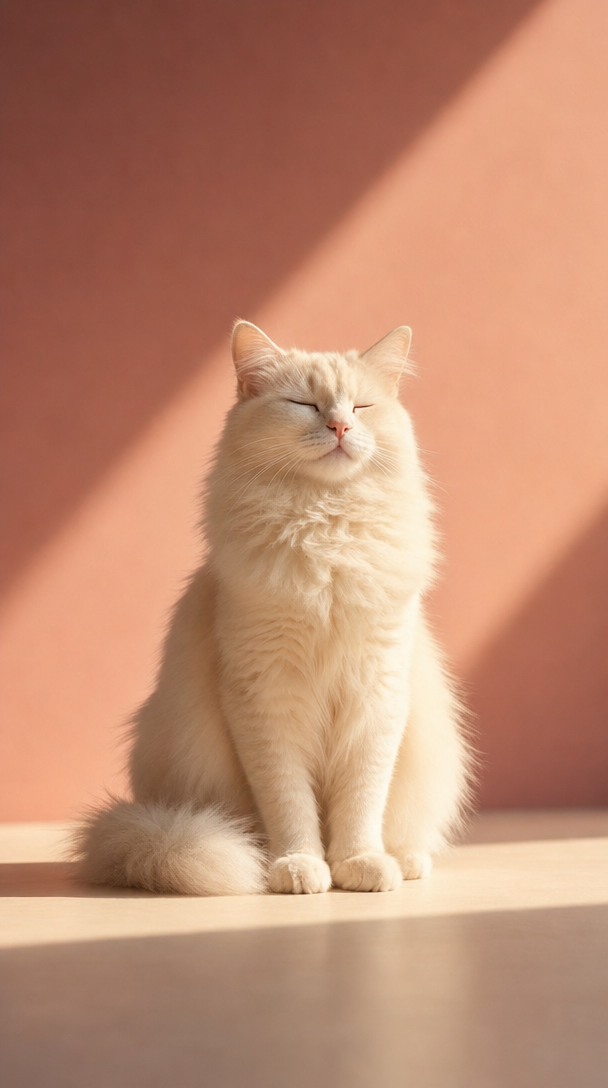
Cream Longhaired Cat in Warm Dusty-Rose Light
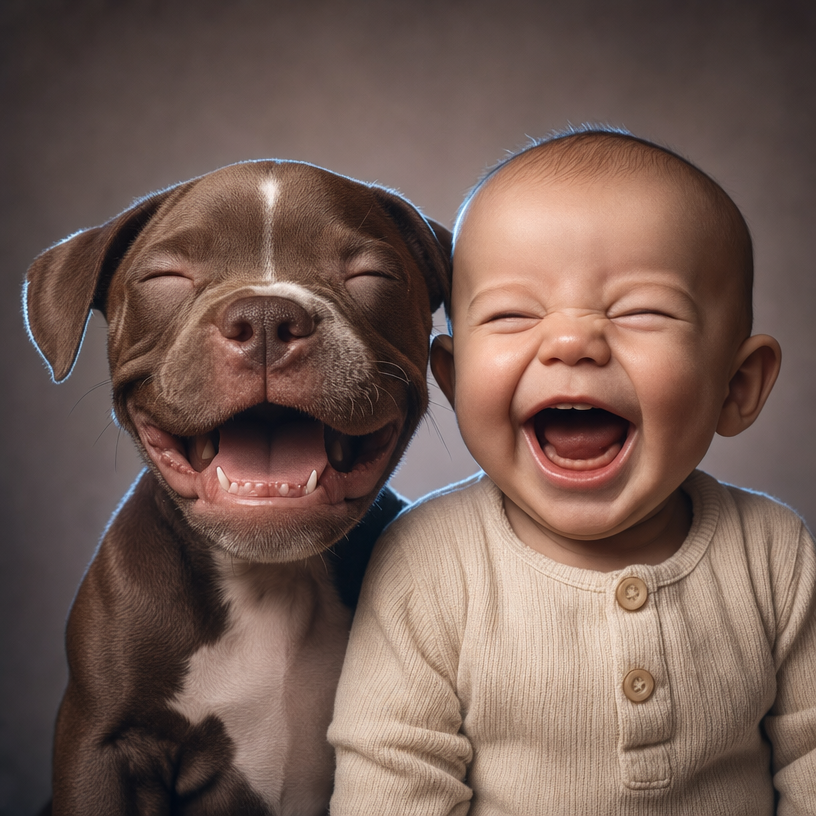
Warm Studio Laughter With Brown Puppy
Cream, Smoky Gray, and Ginger Tabby Stacked Cats
Long-haired gray tabby cat with green eyes