Why this works
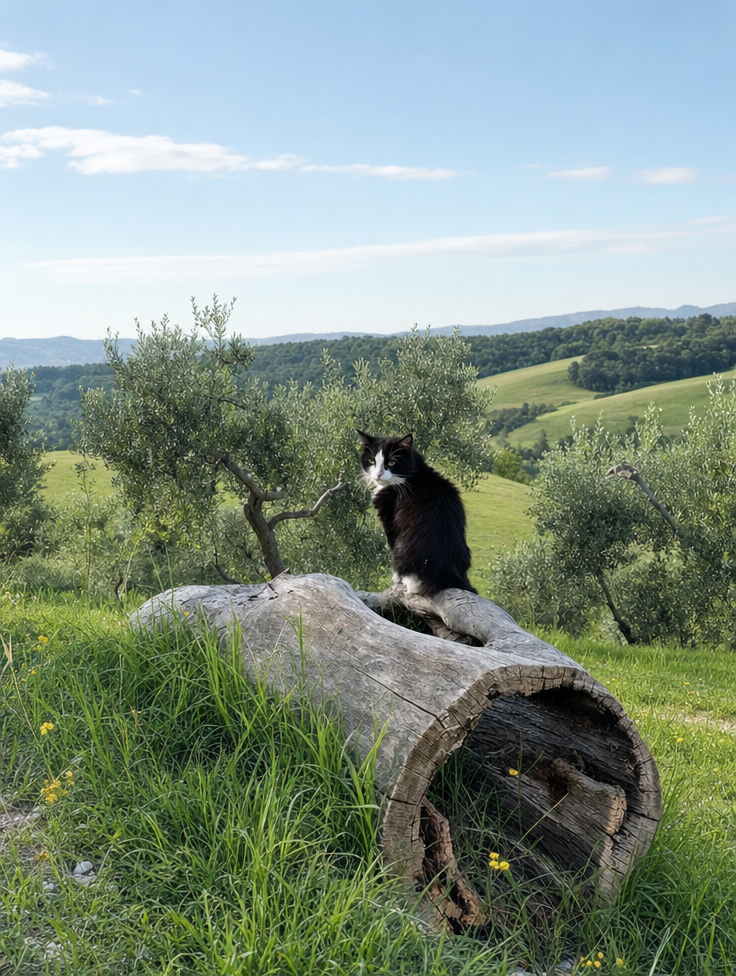
“Black-and-white tuxedo cat sitting upright on a hollow fallen log” gives the image a compact, legible focal subject, while “cat and log in crisp focus” reinforces that hierarchy. “Shallow depth of field” and “lightly blurred distant landscape” create separation from the meadow and hills, and the “rule-of-thirds” composition keeps the cat from feeling centered or static. The dominant blue-gray sky and distant landscape temper the warm early light, while “gentle cool-to-warm contrast” and “a few yellow wildflowers” provide the specific color accents behind the serene mood.
FAQ
→How do I make the cat more prominent in the image?
Replace “shallow depth of field” with “very shallow depth of field with strong subject isolation,” and add “close three-quarter portrait framing, cat filling most of the frame.” Keep “cat and log in crisp focus,” but replace “lightly blurred distant landscape” with “heavily blurred meadow and hills.”
→How do I shift this from peaceful morning to a dramatic stormy mood?
Replace “bright early-morning natural light with gentle cool-to-warm contrast (no pastel sunset)” with “low storm light, dark overcast clouds, and sharp breaks of sunlight across the meadow.” Change “serene, warm, peaceful mood” to “quiet, cinematic tension,” and replace “sunlit spring grass” with “windblown wet grass under approaching rain.”
→How do I create a matching series with different animals?
Keep “rural hillside meadow with scattered olive trees, rolling green hills, and a few yellow wildflowers,” “bright early-morning natural light,” “rule-of-thirds,” and “shallow depth of field” unchanged. Replace “black-and-white tuxedo cat sitting upright on a hollow fallen log” with a consistent structure such as “red fox sitting alert on the same hollow fallen log,” “barn owl perched on the same hollow fallen log,” or “small brown rabbit resting beside the same hollow fallen log.”
Learn the technique behind this
- Why can't AI spell, and how do I get readable text in an image? — Older diffusion models had no character-level representation of text, so they produced letterform-shaped texture instead of words.
- Which aspect ratio should I use, and how does it change the image? — Aspect ratio determines what the model composes, not how it's cropped afterwards.
- How should a prompt be structured, and does word order matter? — A prompt that behaves predictably names one subject first, then what it is doing, then where, then the light, then the lens or medium, then the style.
Related prompts
Cream Longhaired Cat in Warm Dusty-Rose Light
Warm Studio Laughter With Brown Puppy
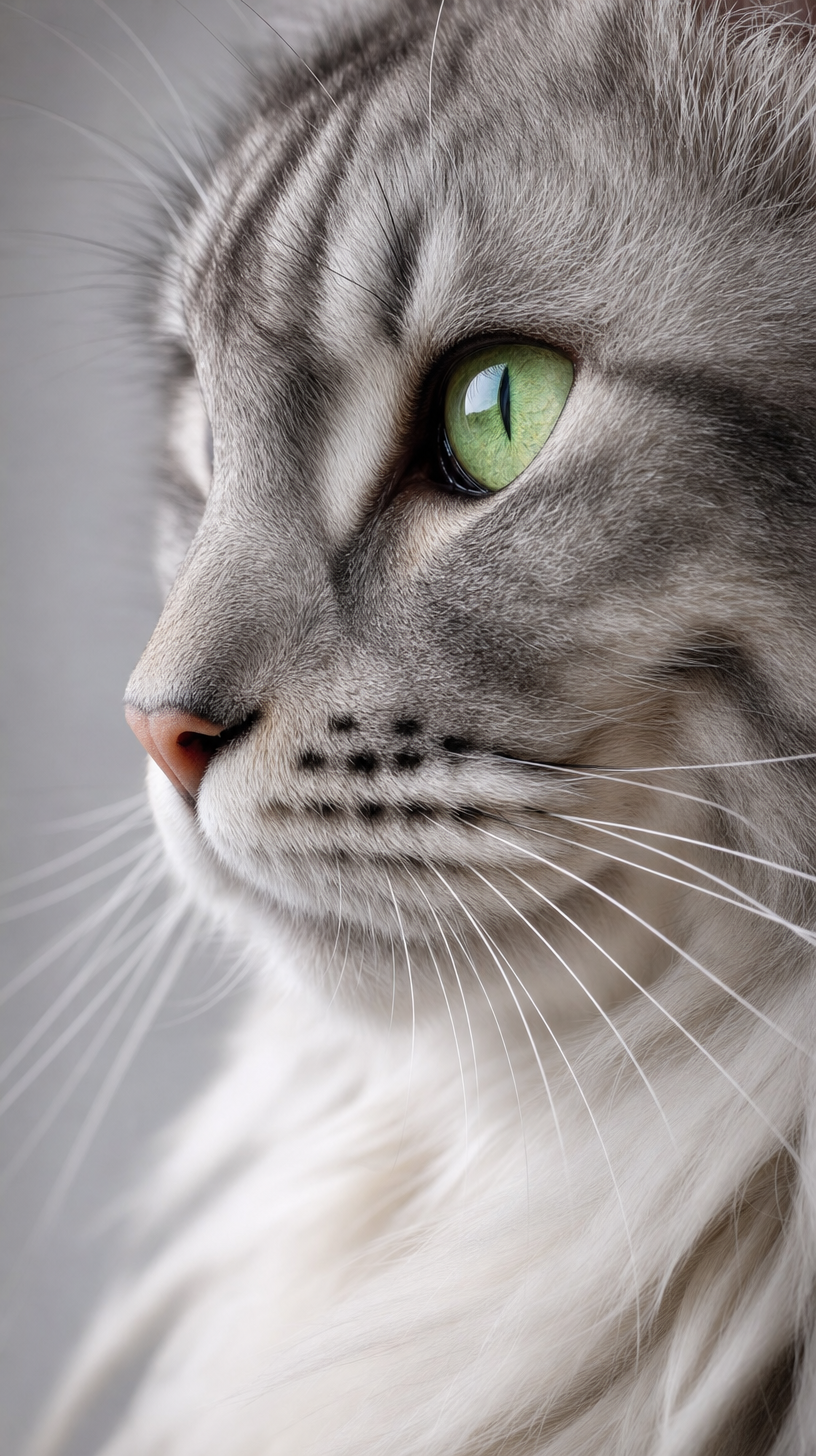
Long-haired gray tabby cat with green eyes
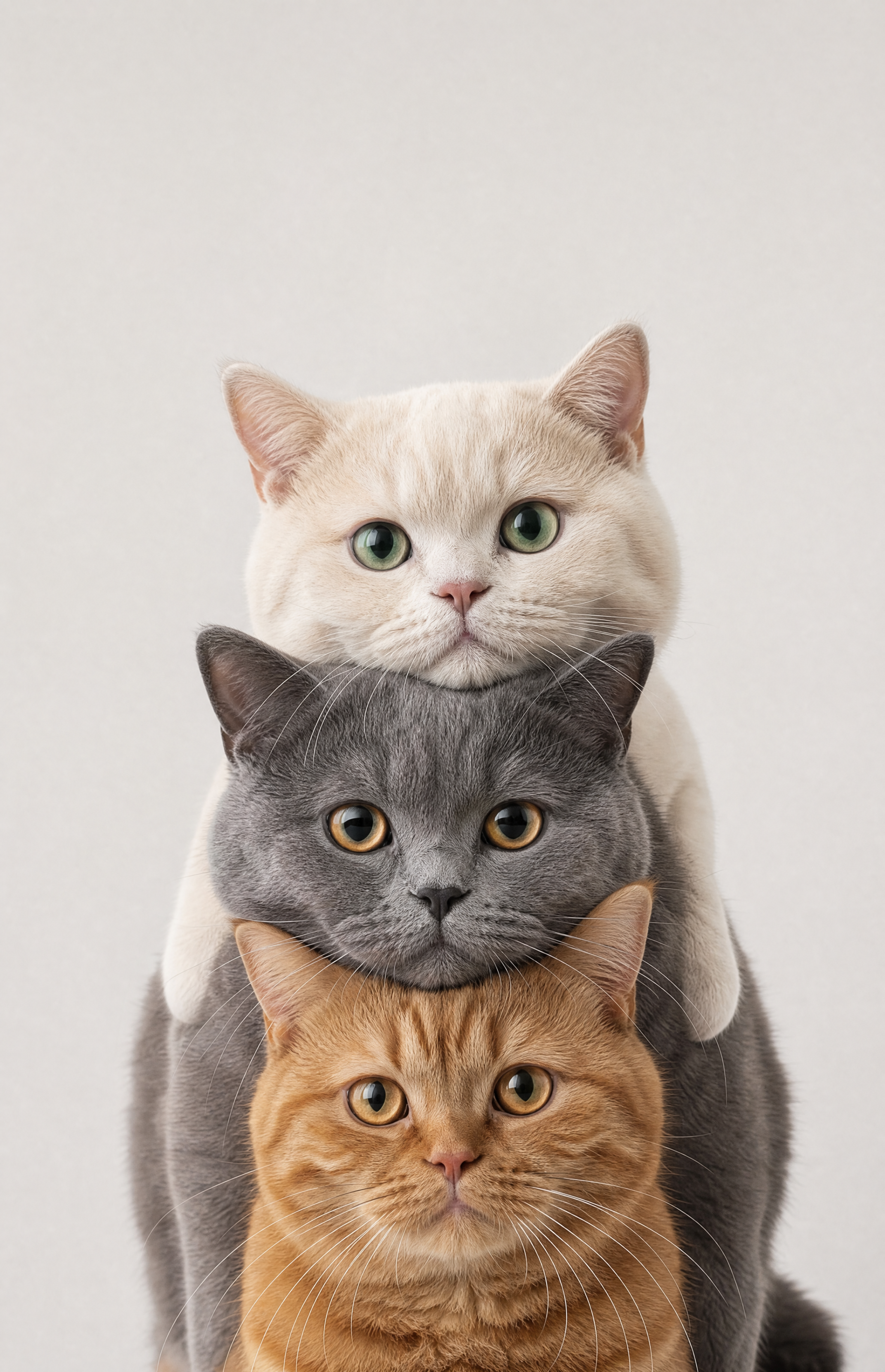
Cream, Smoky Gray, and Ginger Tabby Stacked Cats