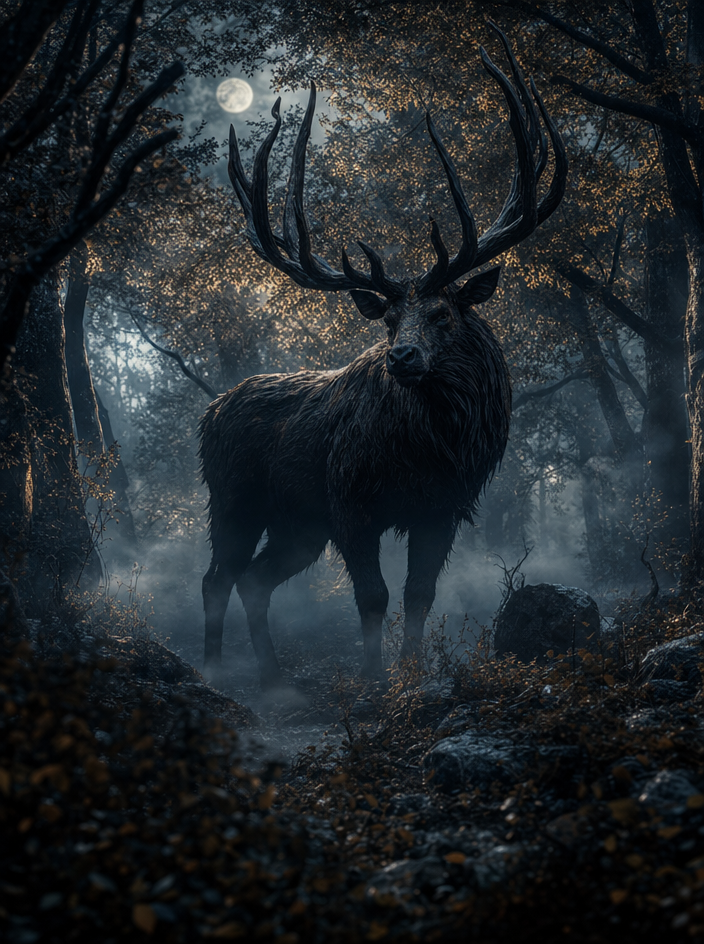
Same prompt, generated with each model separately — click one to see how it holds up.
Why this works
“Broader matte banana leaves” gives the wide composition a clear foreground anchor, while “still rooted among exposed roots” ties that subject to the brown, tactile forest floor. “Late afternoon golden light with gentler haze” accounts for the dominant gold tones and serene humid mood, and “shallow depth of field” keeps the small waterfall blurred in the far background while wet moss-covered stones and leaves carry the detail. The phrase “clear rocky stream” creates a visual corridor through the dense vegetation, giving the wide shot depth without competing with the leaves.
FAQ
→How do I make the banana leaves more visually dominant?
Replace “wide-shot” with “medium-wide foreground composition” and add “banana leaves filling the left and center foreground, sharply defined and larger than the surrounding vegetation.” Keep “small waterfall blurred in the far background” so the depth hierarchy remains intact.
→How do I turn the serene scene into a moodier rainforest image?
Replace “late-afternoon golden light with gentler haze” with “overcast storm light with deep green shadows and heavier mist,” and replace “serene humid immersive mood” with “quiet, ominous humid atmosphere.” Change “natural color palette” to “muted green, charcoal, and bronze palette” to reduce the warm gold emphasis.
→How do I build a related variation with a different rainforest subject?
Replace “oversized tropical rainforest leaves growing from exposed roots” with a specific alternative such as “a scarlet tree frog perched on a moss-covered root beside the clear rocky stream.” Retain “wet moss-covered stones,” “small waterfall blurred in the far background,” and “shallow depth of field,” then change the composition to “close foreground wildlife portrait” to make the new subject central.
Learn the technique behind this
- Why can't AI spell, and how do I get readable text in an image? — Older diffusion models had no character-level representation of text, so they produced letterform-shaped texture instead of words.
- How should a prompt be structured, and does word order matter? — A prompt that behaves predictably names one subject first, then what it is doing, then where, then the light, then the lens or medium, then the style.
- Do negative prompts work, and what should go in one? — Negative prompts work on models that support a separate negative conditioning channel — mainly Stable Diffusion and FLUX-family models.
Related prompts
Solitary Woman in Twilight Wildflower Meadow
Woman Relaxing in Golden Autumn Field

Man on sand dune in blue hour

Golden-hour surf under dramatic clouds