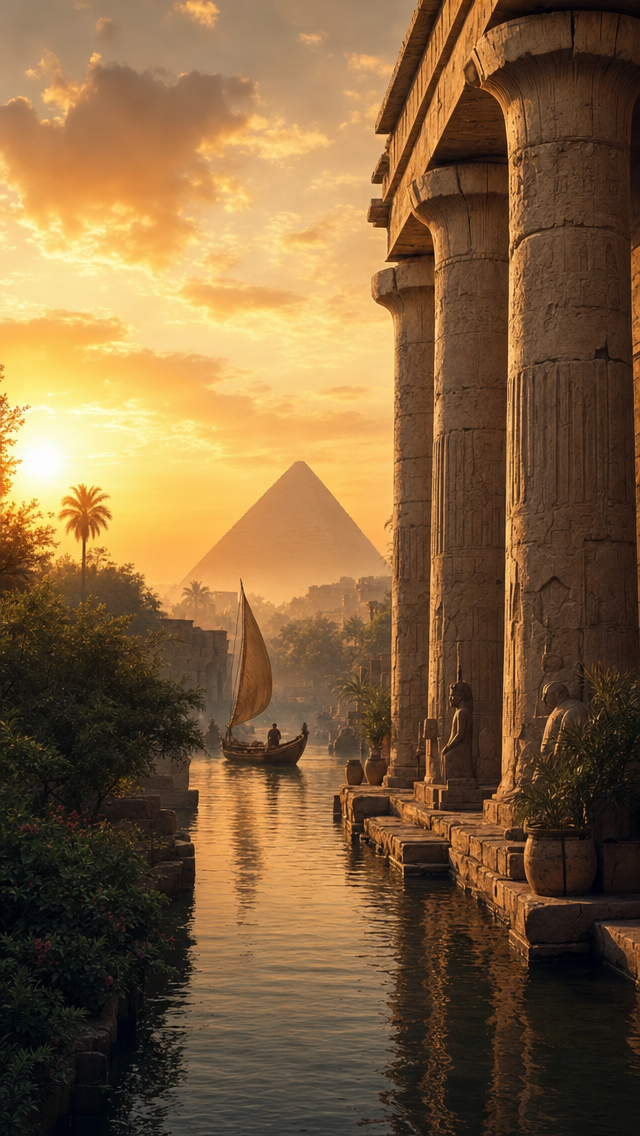
Why this works
The “wide cinematic view, centered canal perspective” makes the waterway the compositional axis, while “visible depth toward the distant pyramid” gives the scene a strong vanishing point and sense of scale. “Late-afternoon warm orange-gold light at a slightly lower sun angle” drives the brown, orange, and beige harmony, and “soft volumetric haze” separates the pyramid from the horizon without losing the “deeper contrast and richer shadow detail” in the temple stonework. “Calm, mirror-like water” and “natural reflections in the canal” reinforce the symmetrical framing, while “weathered limestone,” “carved stone columns,” and “more exposed texture” supply the photorealistic surface detail.
FAQ
→How do I make the pyramid more prominent in the composition?
Replace “a different distant pyramid silhouette emerging from soft coastal mist” with “a large, sharply defined pyramid dominating the distant horizon, clearly visible above the canal.” Keep “centered canal perspective,” but add “the pyramid aligned with the central vanishing point” to make it the visual destination.
→How do I change the warm majestic mood into a darker, more mysterious scene?
Replace “late-afternoon warm orange-gold light” and “high contrast golden-hour color grading” with “cool blue twilight light, muted desaturated grading, and long atmospheric shadows.” Change “soft coastal mist” to “thick ground fog obscuring the canal banks and lower pyramid,” while retaining “subtle volumetric haze” for layered depth.
→How do I create a series of variations without losing the established visual identity?
Keep the fixed anchors “wide cinematic view, centered canal perspective,” “cinematic photorealism,” “ultra-detailed textures,” and “natural reflections in the canal.” Vary one subject or setting block at a time, such as replacing “a small wooden fishing skiff with a tan sail” with “two reed boats carrying lanterns,” or replacing “weathered limestone temple facades” with “flooded sandstone ruins,” while preserving “warm orange-gold light” and “deeper contrast and richer shadow detail.”
Learn the technique behind this
- Why can't AI spell, and how do I get readable text in an image? — Older diffusion models had no character-level representation of text, so they produced letterform-shaped texture instead of words.
- How should a prompt be structured, and does word order matter? — A prompt that behaves predictably names one subject first, then what it is doing, then where, then the light, then the lens or medium, then the style.
- Do negative prompts work, and what should go in one? — Negative prompts work on models that support a separate negative conditioning channel — mainly Stable Diffusion and FLUX-family models.
Related prompts
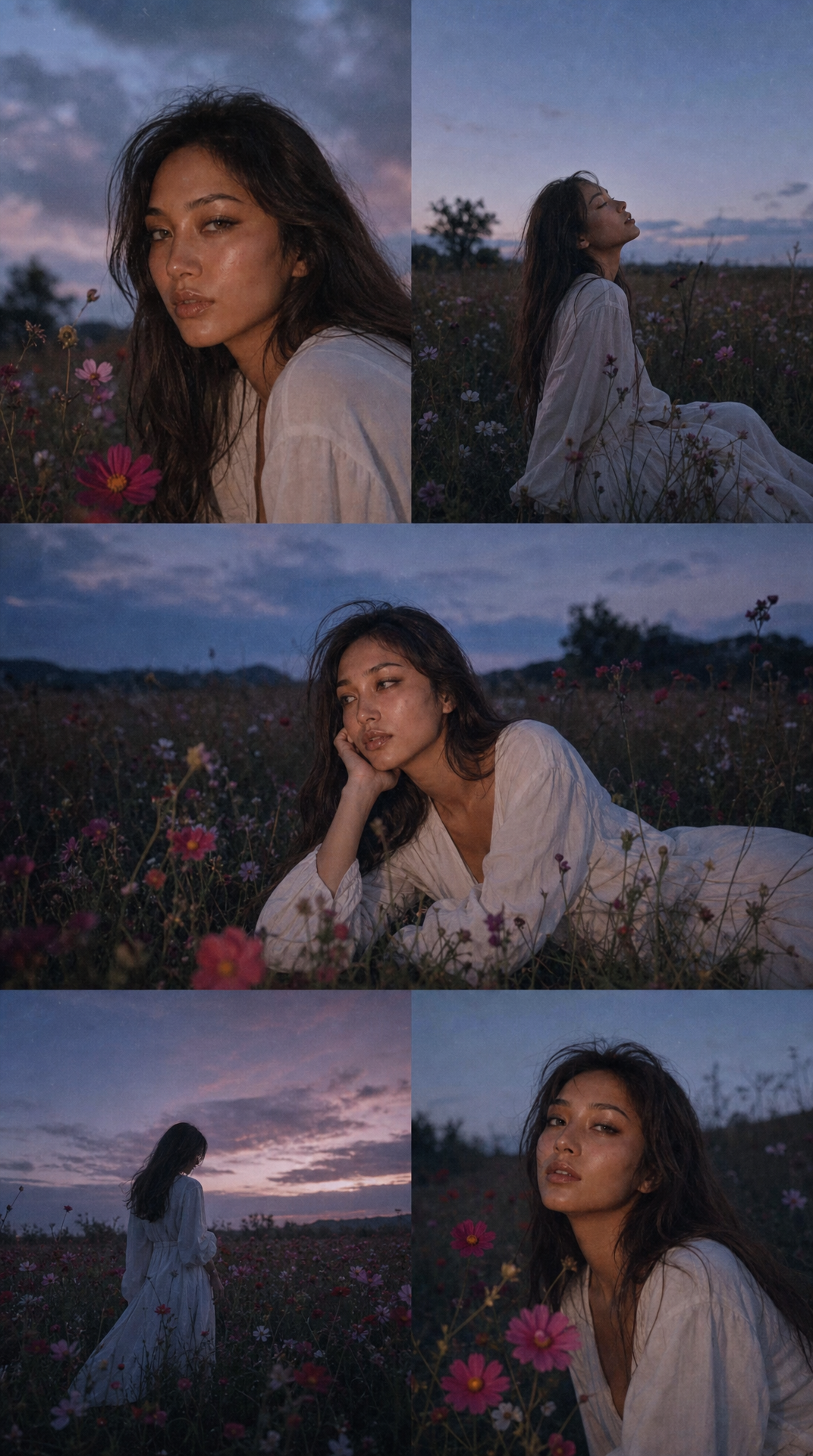
Solitary Woman in Twilight Wildflower Meadow
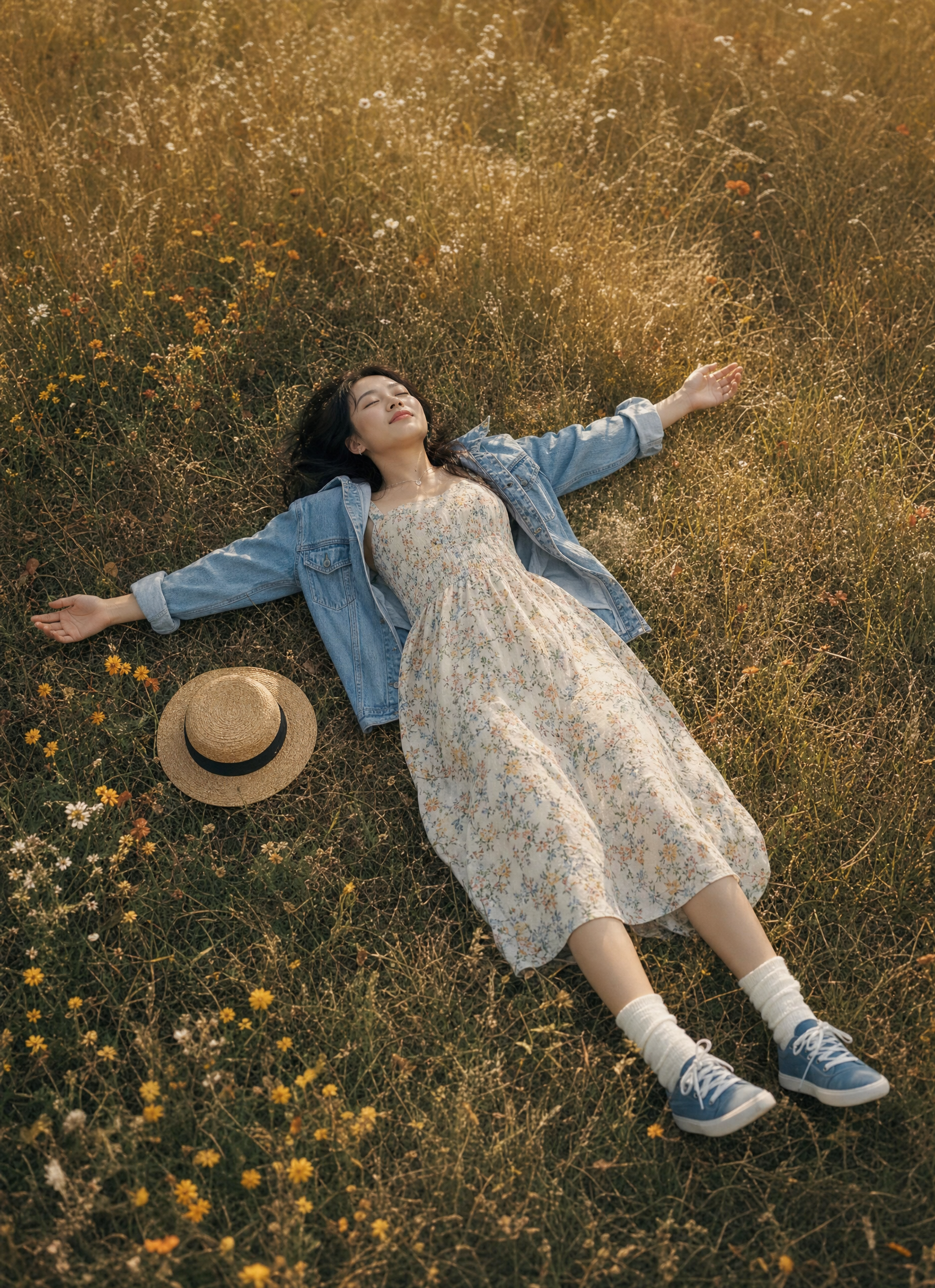
Woman Relaxing in Golden Autumn Field
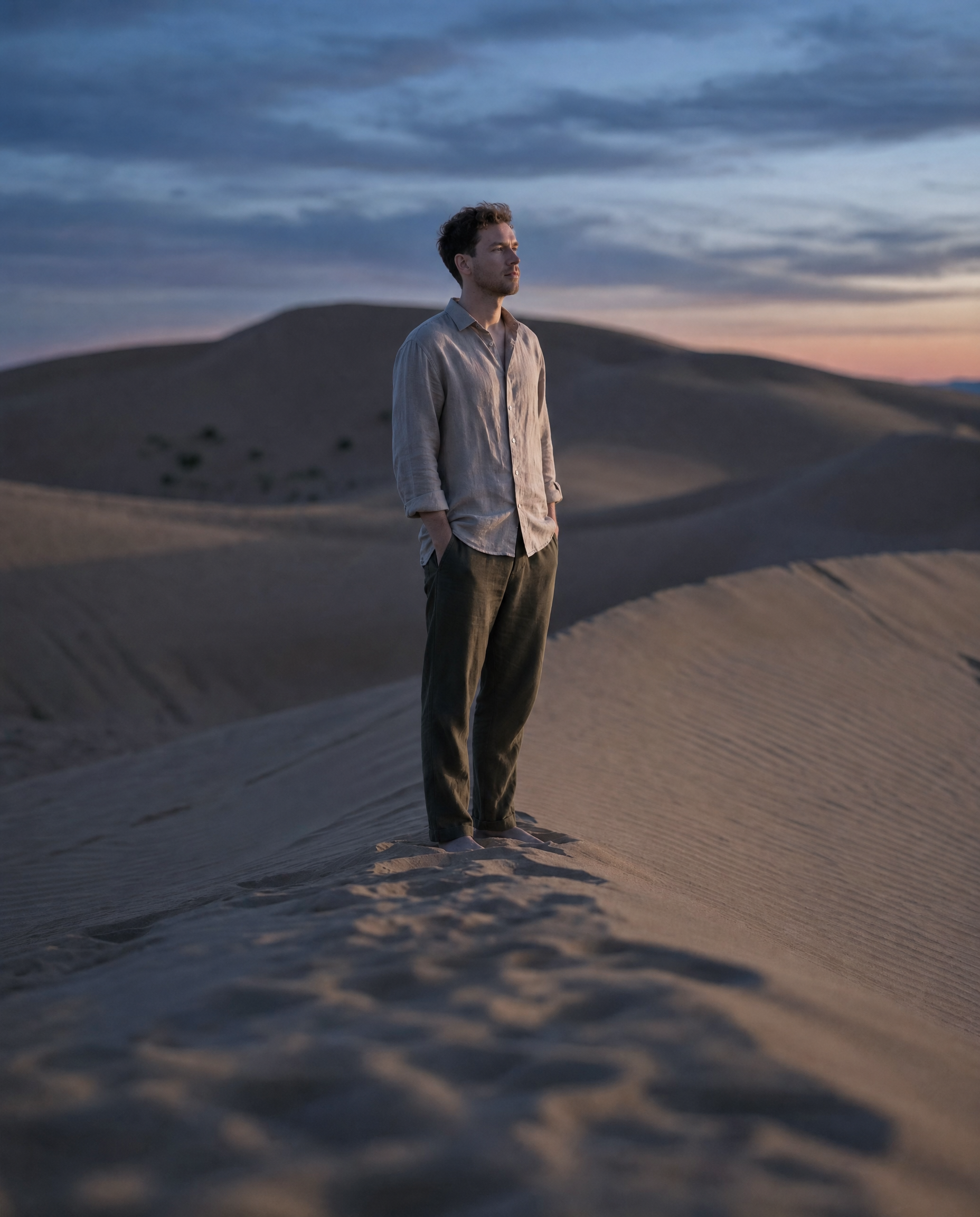
Man on sand dune in blue hour

Golden-hour surf under dramatic clouds