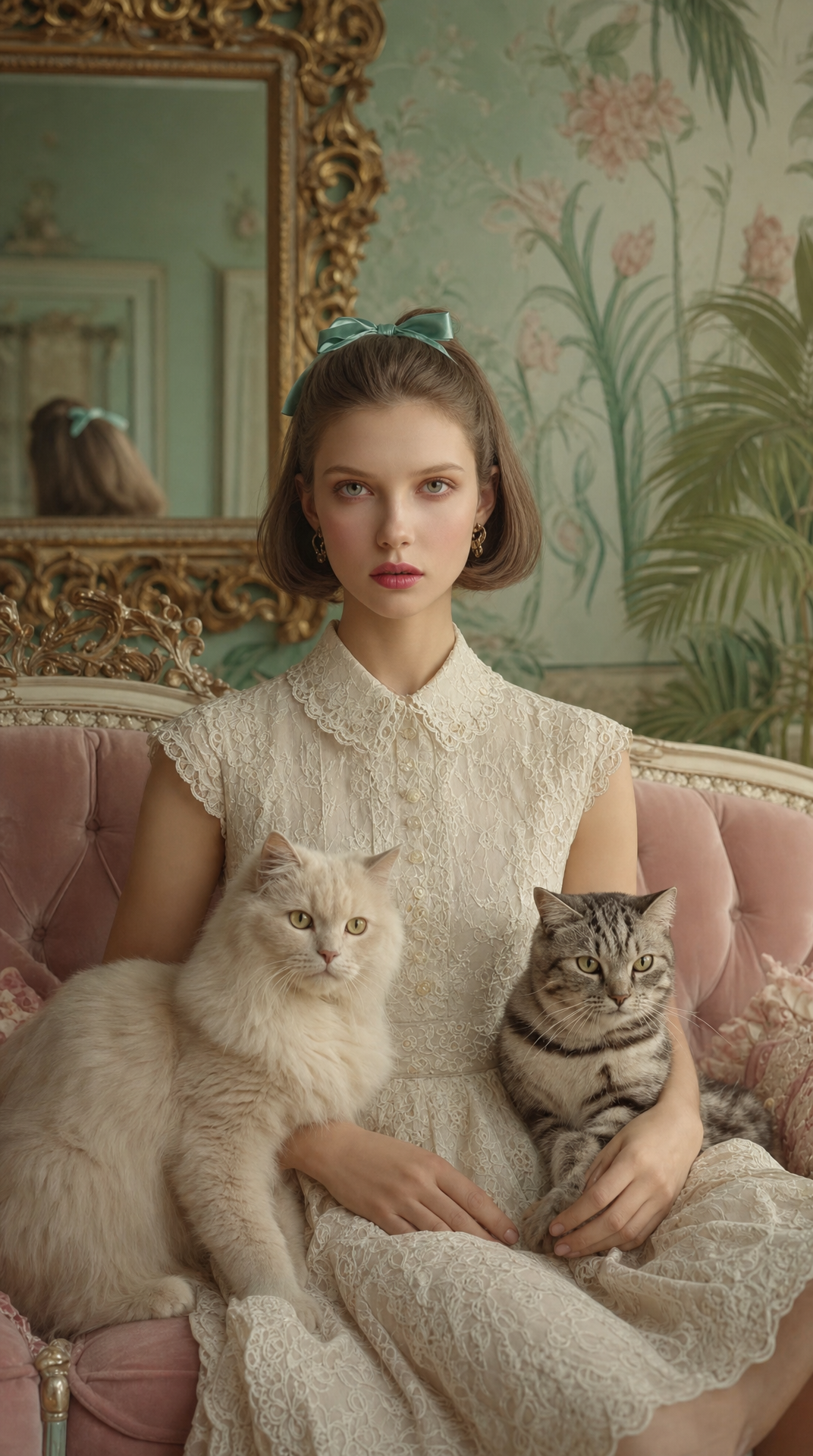
Why this works
The centered, eye-level close framing makes the woman and both cats the immediate focal cluster, while “crisp focus on face and cats” preserves their expressions and fur detail. “Blush velvet sofa,” “soft sage-green floral wallpaper,” and the “ornate gold-framed mirror” establish a pink-green-gold harmony, and “dreamy pastel lighting” with “vibrant yet soft color grading” keeps the elegant, whimsical mood gentle rather than theatrical. “Shallow depth of field” separates this group from the plants and wallpaper, while “hyper-realistic fur and fabric texture” gives the soft pastel scene tactile credibility.
FAQ
→How do I make the two cats more prominent than the woman?
Replace “centered portrait, close framing” with “cats in the foreground, occupying the lower center of the frame, woman slightly behind them,” and change “crisp focus on face and cats” to “crispest focus on both cats’ faces and fur, woman softly secondary.” Keep “hyper-realistic fur” to preserve their visual detail.
→How do I shift this from soft and whimsical to a moodier vintage portrait?
Replace “dreamy pastel lighting with soft, gentle highlights” with “low-key window light with deep gentle shadows,” and change “vibrant yet soft color grading” to “muted sepia, olive, and antique gold grading.” Retain the “ornate gold-framed mirror” and “elegant vintage interior styling,” which anchor the period atmosphere.
→How do I build a matching series with different subjects while keeping this visual identity?
Keep “photorealistic pastel portrait,” “centered portrait,” “dreamy pastel lighting,” “vibrant yet soft color grading,” and “elegant vintage interior styling” unchanged. Replace “a young woman seated on a blush velvet sofa, gently holding two cats” with a consistent new structure such as “an older man seated on a blush velvet sofa, gently holding a white rabbit,” and swap “chestnut-brown bob haircut with a small teal satin ribbon” for a subject-specific detail such as “silver hair neatly combed with a teal satin pin.”
Learn the technique behind this
- Why can't AI spell, and how do I get readable text in an image? — Older diffusion models had no character-level representation of text, so they produced letterform-shaped texture instead of words.
- How should a prompt be structured, and does word order matter? — A prompt that behaves predictably names one subject first, then what it is doing, then where, then the light, then the lens or medium, then the style.
- Why does the model ignore parts of my prompt? — Ignored instructions are almost always conflicts, counts, or spatial relationships — three things current models handle badly — rather than the model failing to read you.
Related prompts
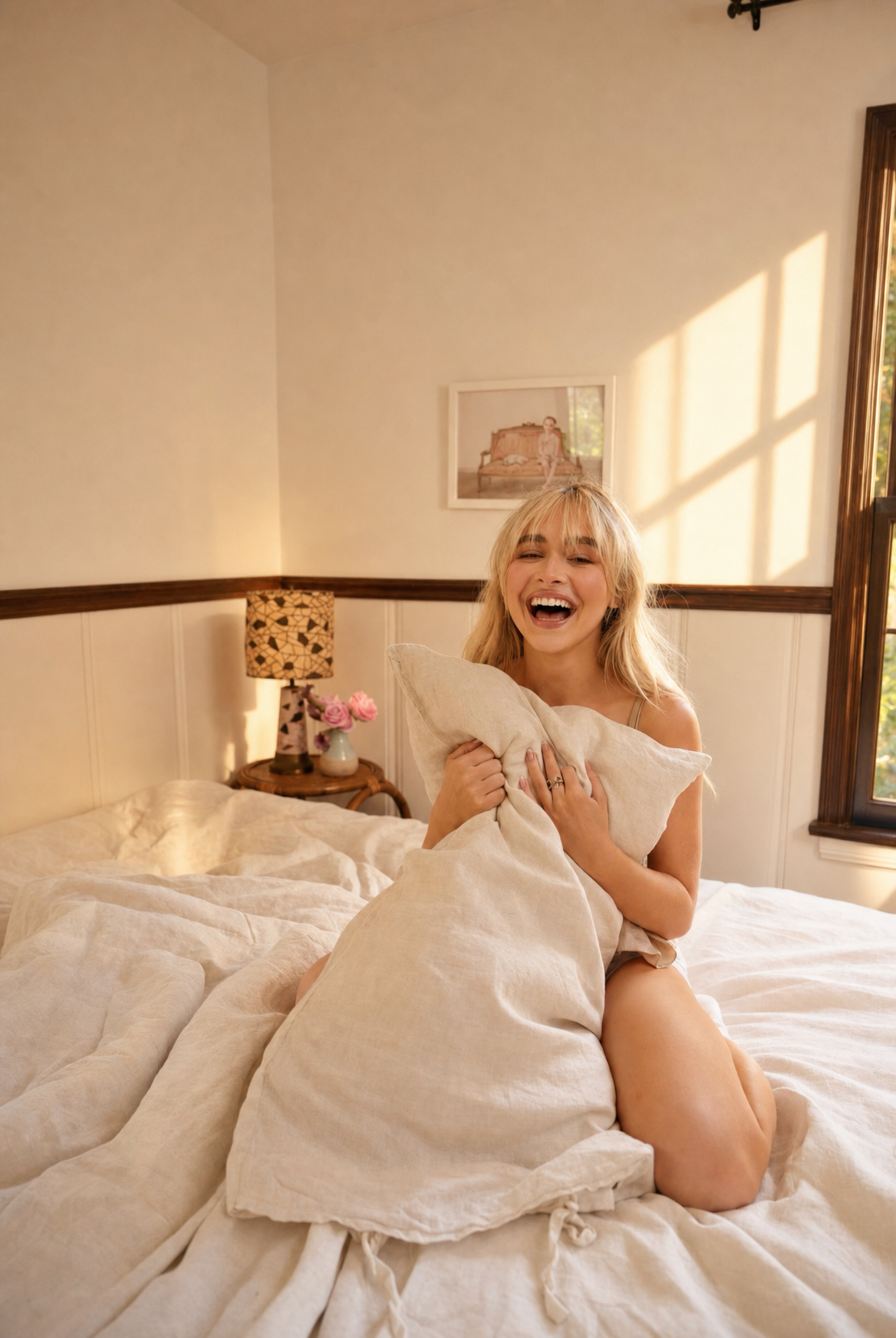
Blonde woman hugging beige pillow on off-white bed
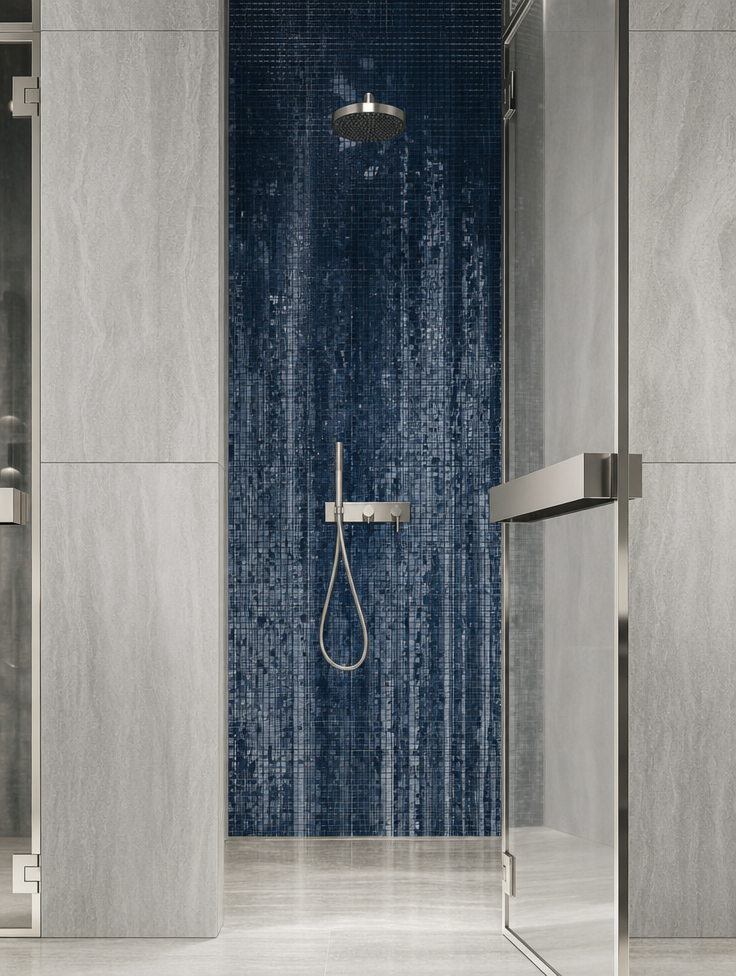
Luxury shower niche in cool tones
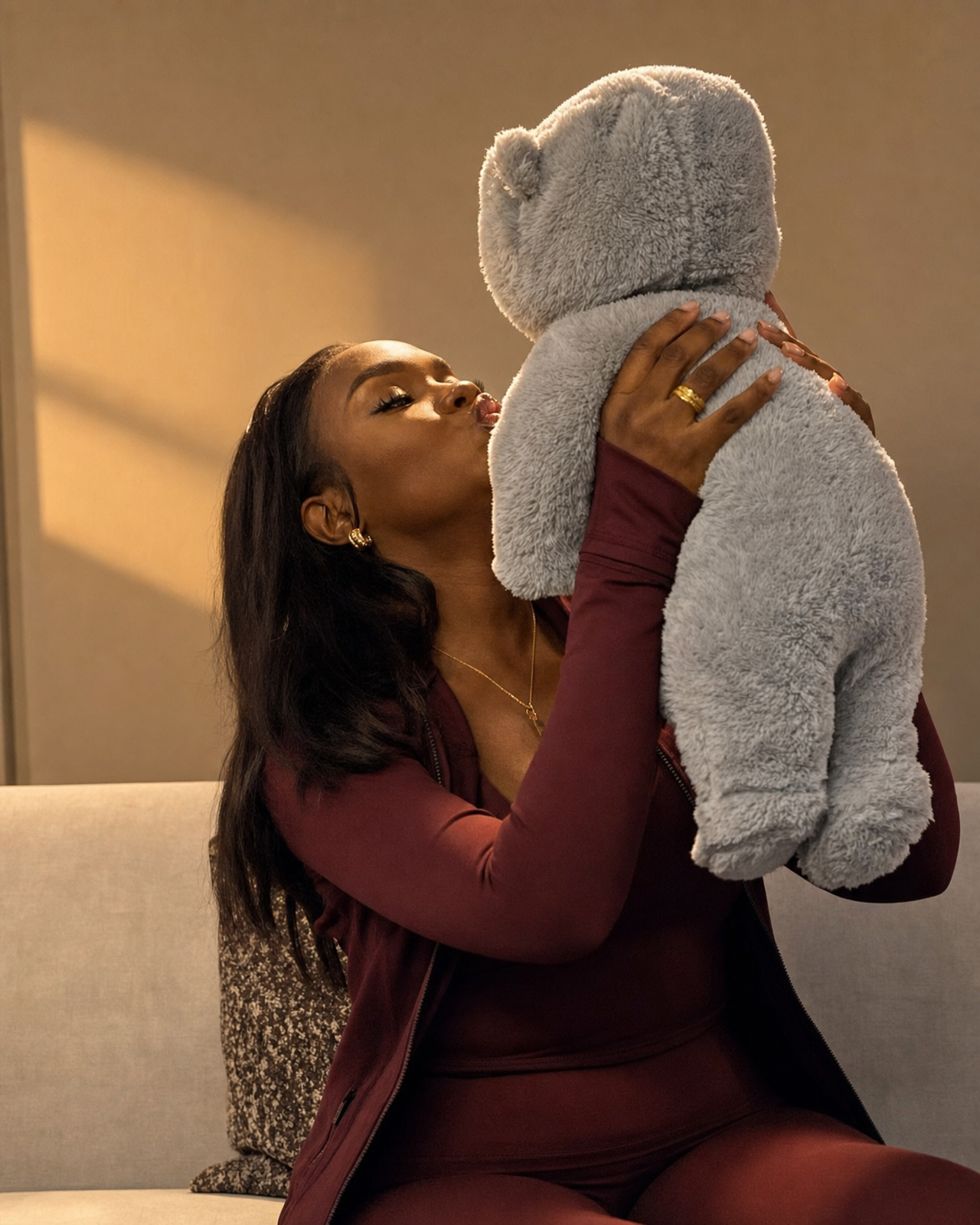
Warm couch cuddle with teddy bear
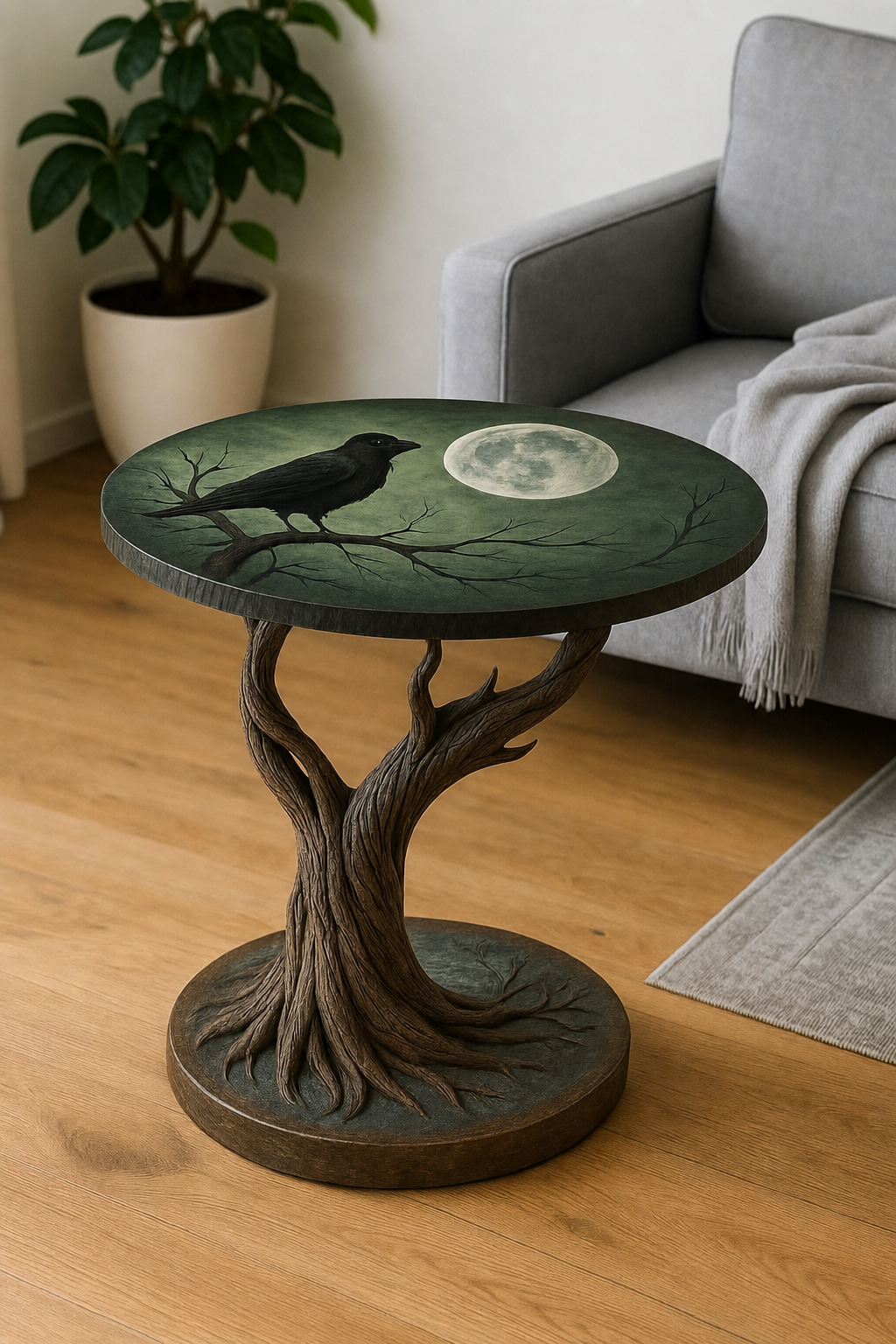
Twisted-Root Side Table with Green Top and Raven