Why this works
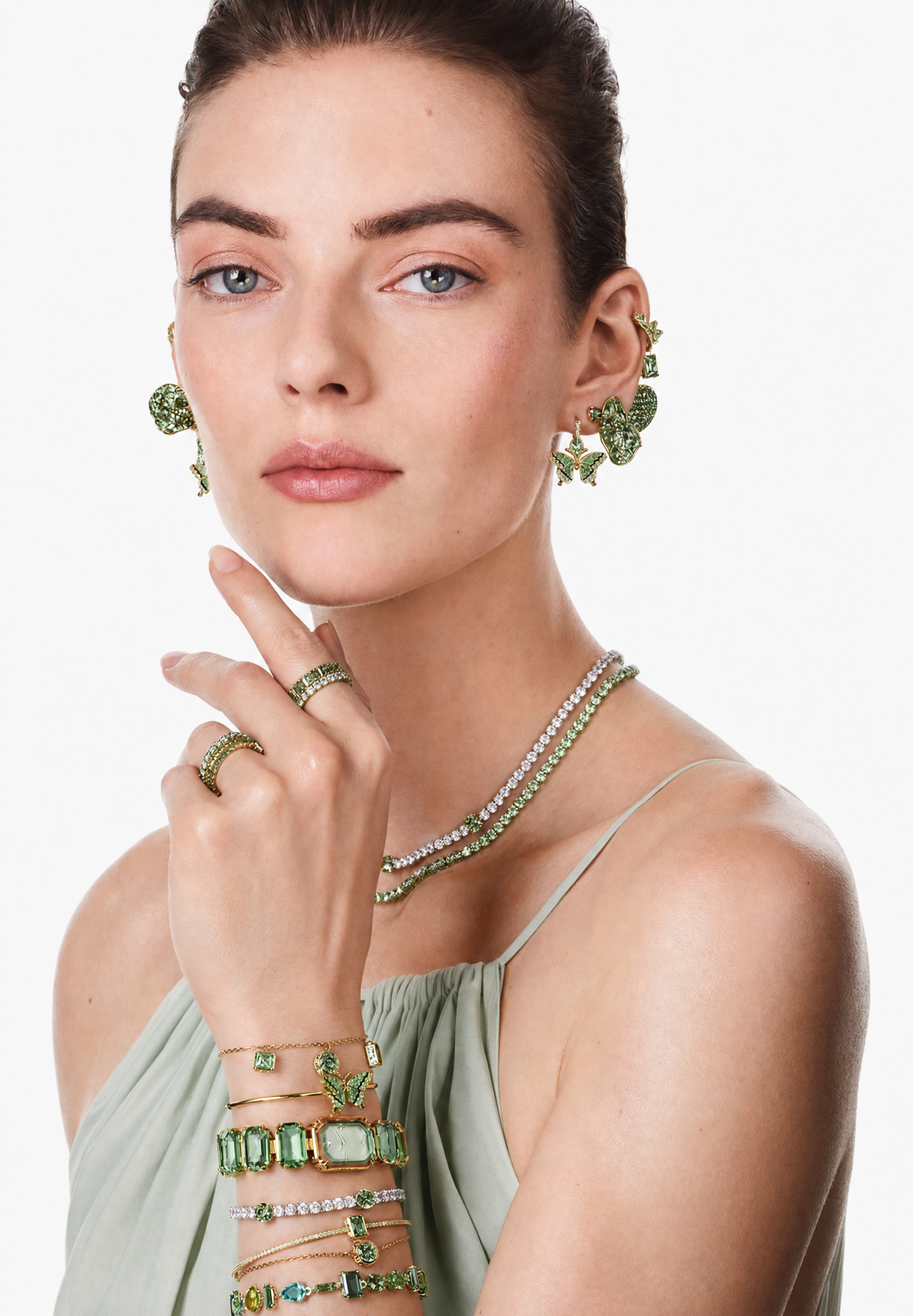
“Coordinated green gemstone jewelry” repeated across earrings, rings, necklaces, and stacked bracelets gives the close portrait a unified visual focal point, while “sharp focus on the jewelry” ensures those small details remain legible. The “soft sage green dress” and dominant green-and-gold palette create a controlled, harmonious luxury look against the “clean off-white background,” which also preserves the uncluttered framing. “Soft diffused lighting,” “natural skin texture,” and “studio portrait framing” balance commercial polish with a believable face and crisp accessory detail.
FAQ
→How do I make the jewelry more prominent than the model’s face?
Replace “studio portrait framing” with “tight crop from collarbone to lips, face partially cropped,” and strengthen “sharp focus on the jewelry” to “primary focus on the necklace, earrings, rings, and stacked bracelets, with the eyes and facial features slightly softer.” Add “jewelry fills the foreground” for larger accessories in frame.
→How do I shift this from polished luxury to a darker, more dramatic mood?
Replace “soft diffused, even studio lighting” with “directional chiaroscuro lighting with deep shadows and a narrow highlight on the green gemstones,” and replace “clean off-white background” with “dark charcoal studio background.” Change “soft sage green dress” to “deep emerald velvet dress” and add “moody high-fashion editorial styling.”
→How do I build a coordinated series with different gemstone colors?
Keep “young woman,” “studio portrait framing,” “natural skin texture,” and “high-end jewelry advertisement look” unchanged, then replace “green gemstone jewelry” and “soft sage green dress” with a matched color pair for each image, such as “sapphire blue jewelry” and “powder blue silk dress,” or “ruby red jewelry” and “deep burgundy satin dress.” Replace “dominant green and gold palette” with the corresponding gemstone-and-metal palette, such as “blue and silver” or “red and yellow gold.”
Learn the technique behind this
- Why can't AI spell, and how do I get readable text in an image? — Older diffusion models had no character-level representation of text, so they produced letterform-shaped texture instead of words.
- How should a prompt be structured, and does word order matter? — A prompt that behaves predictably names one subject first, then what it is doing, then where, then the light, then the lens or medium, then the style.
- Which aspect ratio should I use, and how does it change the image? — Aspect ratio determines what the model composes, not how it's cropped afterwards.
Related prompts
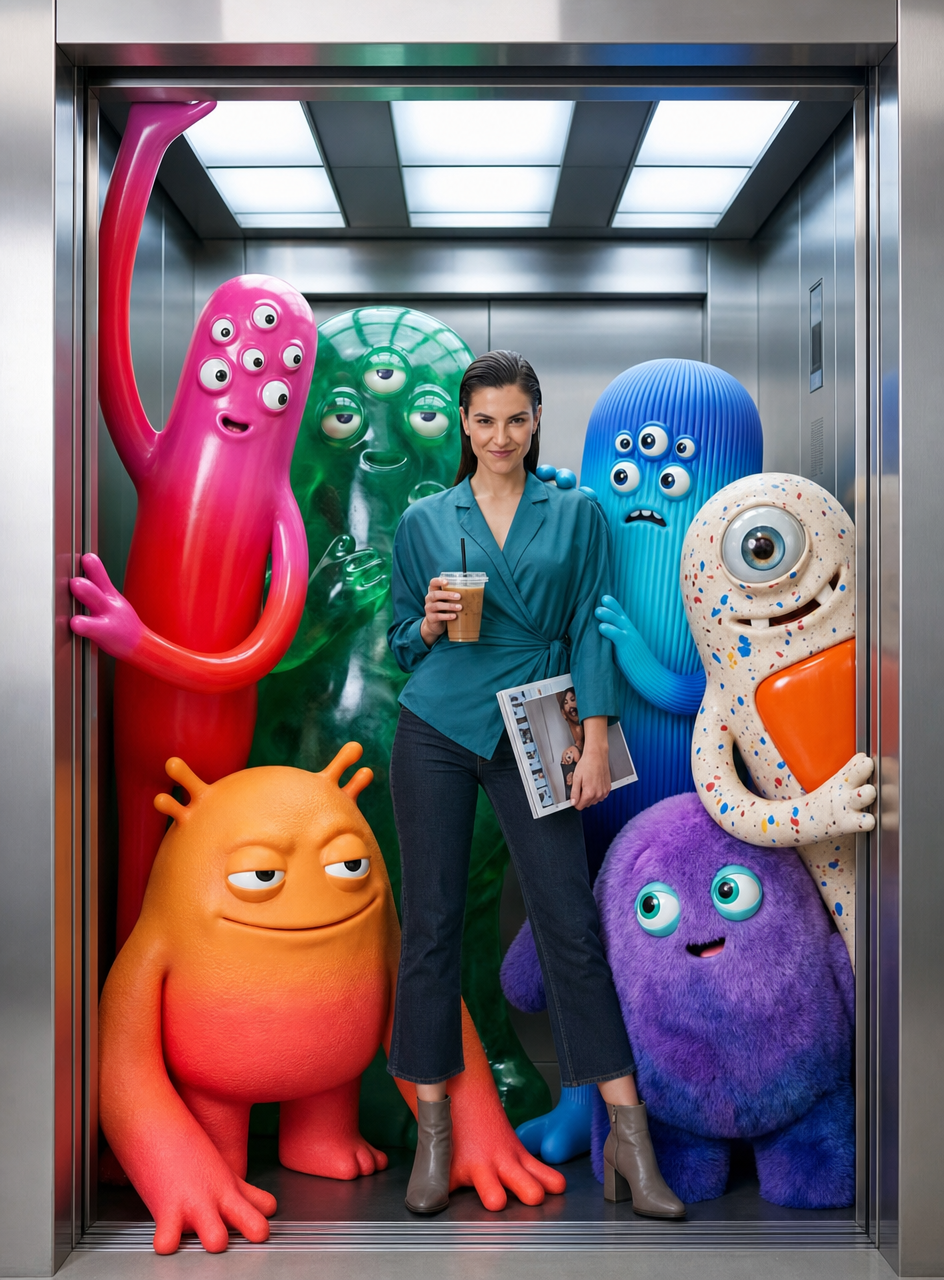
Teal fashion editorial in monster-filled lift
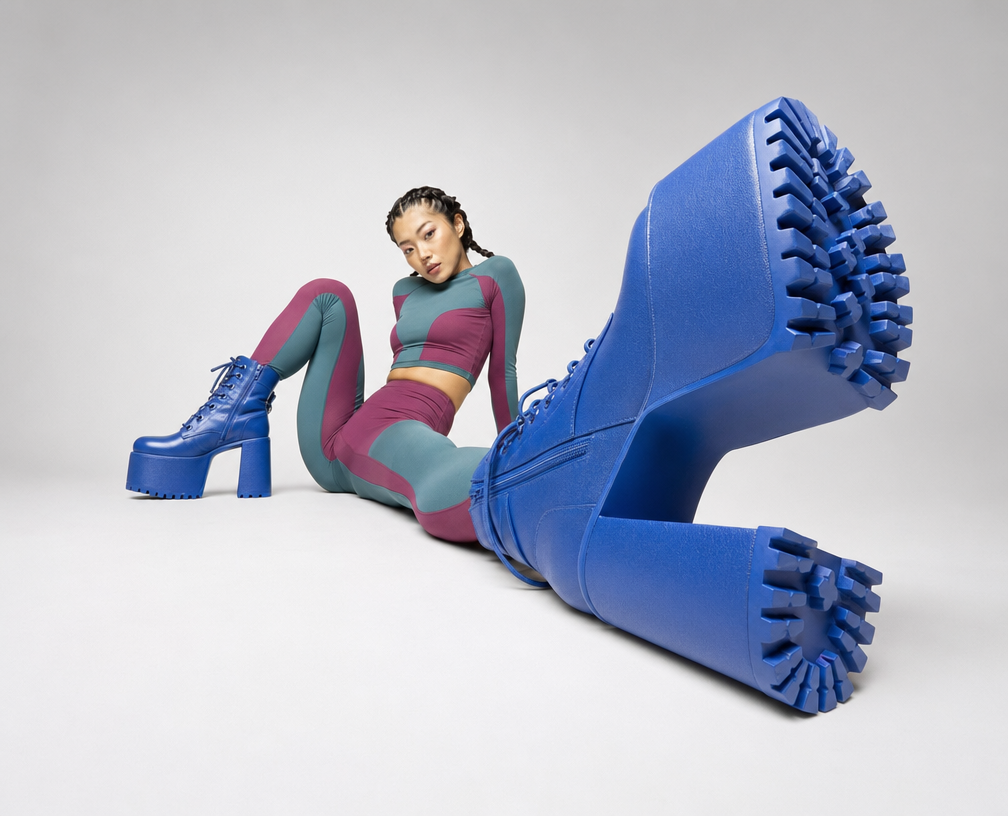
Cobalt Boots in Sleek Studio Edit
Silhouette Influencer by Sunlit Window
Sunlit editorial on striped beach towel