Why this works
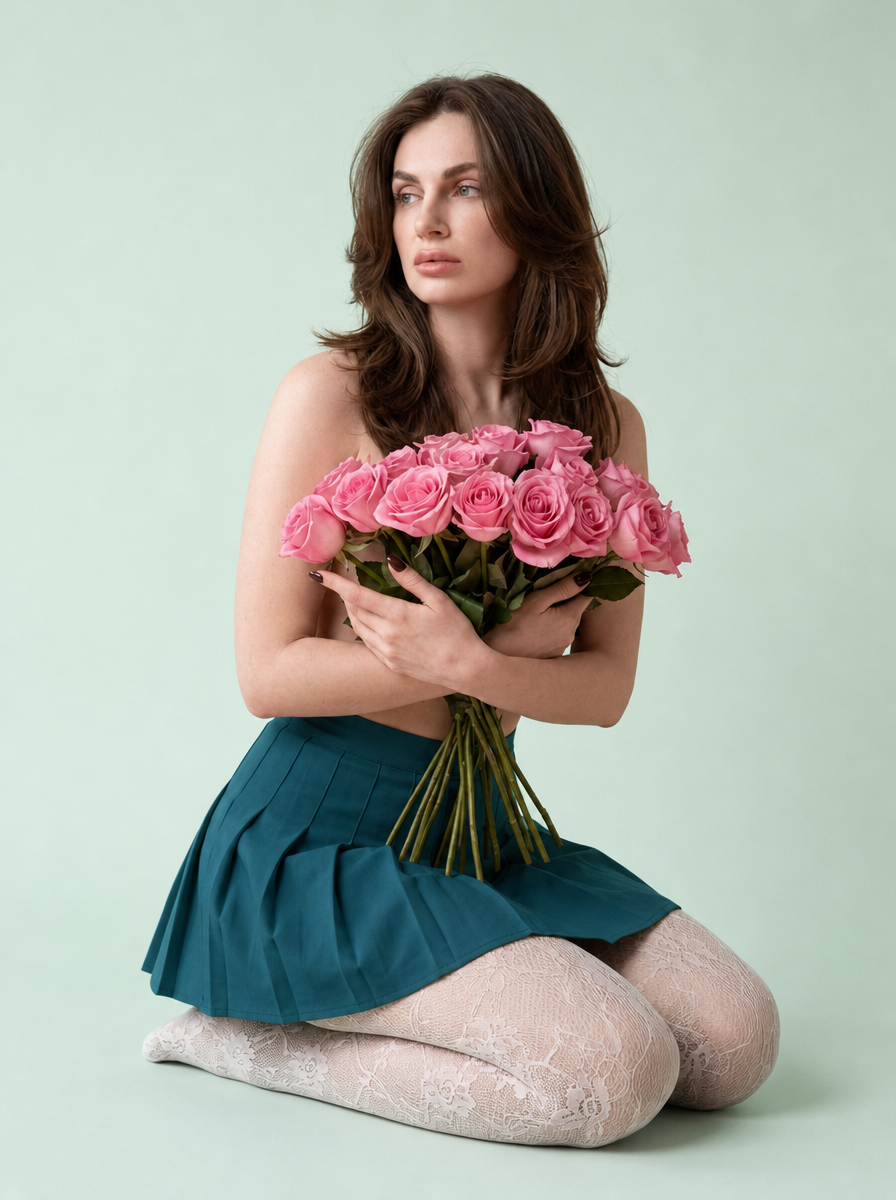
The phrase “tight studio framing, eye-level fashion editorial composition” keeps the kneeling figure and oversized bouquet dominant while preserving a full-body portrait read. “Soft diffused studio lighting with gentle highlights and natural shadows” produces the gentle, romantic mood and keeps the model’s skin and the brown rose stems from looking harsh. The palette is held together by “subtle color contrast between the pink roses and the mint/teal wardrobe,” with the pale mint background, deep teal skirt, off-white tights, and pink bouquet creating a restrained editorial harmony. “Ultra-detailed skin and fabric texture” gives the pleats, lace, and bouquet definition without disturbing the “clean background” minimalism.
FAQ
→How do I make the bouquet more central and visually dominant?
Replace “holding a large bouquet of pink roses” with “cradling an oversized bouquet of pink roses that fills the foreground and overlaps the torso,” and change “tight studio framing” to “medium-close editorial framing with the bouquet in the central foreground.” Keep “eye-level” if you want the flowers to remain intimate rather than imposing.
→How do I shift the image from soft romantic to dramatic and luxurious?
Replace “soft diffused studio lighting with gentle highlights” with “directional side lighting with deep sculpted shadows and controlled specular highlights,” and replace “romantic soft mood” with “dramatic haute couture mood.” Change “pale mint-green background” to “deep charcoal-green seamless background” for stronger separation from the pink roses and teal skirt.
→How do I build a coordinated series with different flowers and wardrobe colors?
Keep “photorealistic studio fashion editorial,” “kneeling,” “eye-level fashion editorial composition,” and “seamless minimal background” fixed, then swap “pink roses” and “deep teal pleated skirt” as matched color pairs, such as “white peonies” with “cobalt blue satin skirt” or “orange ranunculus” with “warm ivory pleated skirt.” Replace the color-contrast phrase with “deliberate complementary contrast between the bouquet and wardrobe” so each variation retains the same editorial structure.
Learn the technique behind this
- Why can't AI spell, and how do I get readable text in an image? — Older diffusion models had no character-level representation of text, so they produced letterform-shaped texture instead of words.
- How should a prompt be structured, and does word order matter? — A prompt that behaves predictably names one subject first, then what it is doing, then where, then the light, then the lens or medium, then the style.
- Which aspect ratio should I use, and how does it change the image? — Aspect ratio determines what the model composes, not how it's cropped afterwards.
Related prompts

Teal fashion editorial in monster-filled lift
Cobalt Boots in Sleek Studio Edit
Silhouette Influencer by Sunlit Window
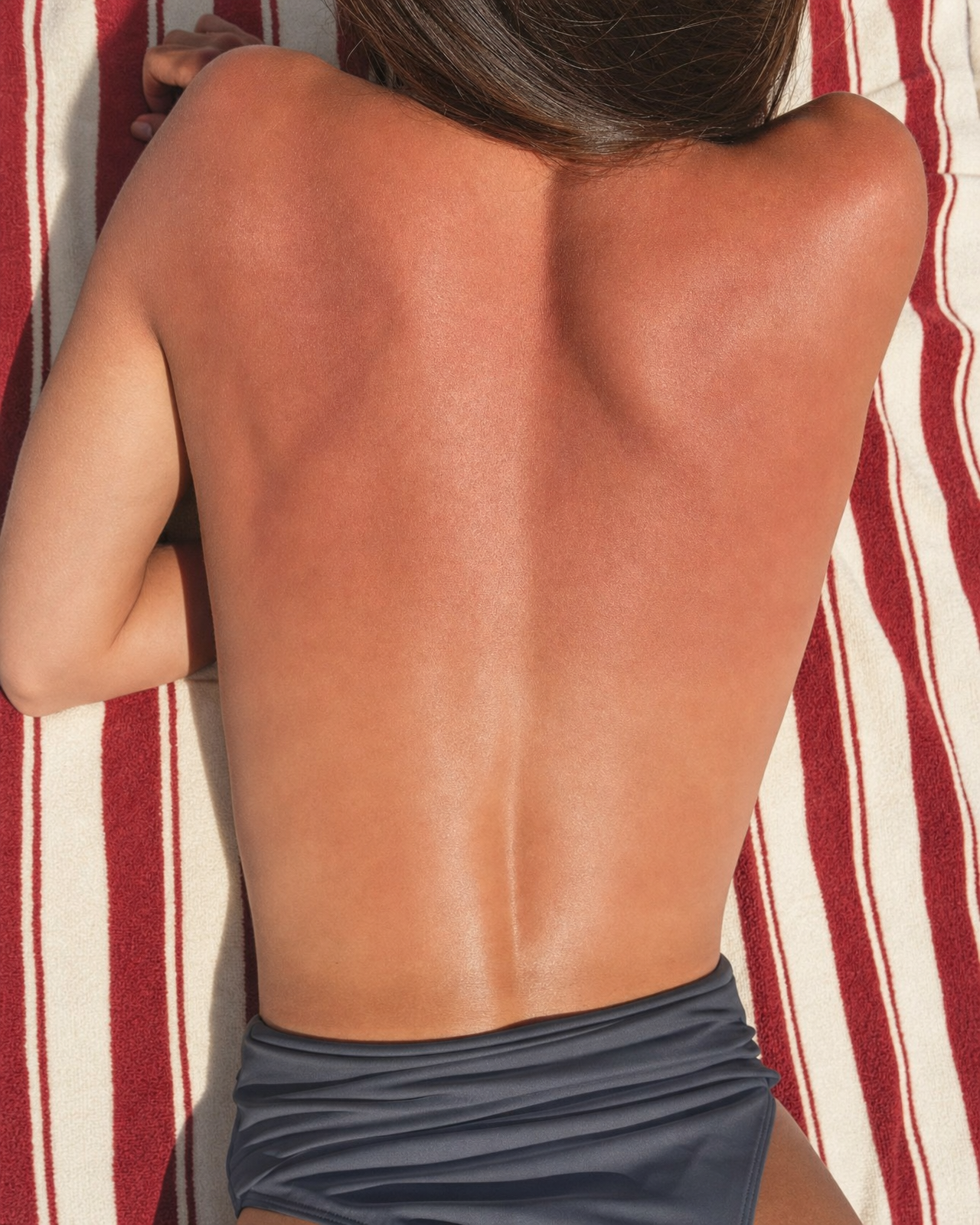
Sunlit editorial on striped beach towel