Why this works
The portrait-full-body composition is anchored by the “young woman in a beauty creator setup” seated at the makeup table, while the “full-length mirror with an LED frame” and “chandelier overhead” give the bedroom vertical scale. The polished, intimate mood comes from “modern polished intimate mood,” the “elegant bedroom interior,” and the organized “small clusters” of cosmetics; “cooler morning daylight with a faint blue tint and slightly higher contrast” shifts the dominant white, gray, and black palette toward a crisp editorial finish. “Shallow depth of field” keeps the woman and tabletop readable while softening the bed and curtains into a controlled interior backdrop.
FAQ
→How do I make the woman’s face and makeup the clear focal point?
Replace “portrait-full-body” with “tight waist-up beauty portrait” and change “shallow depth of field” to “very shallow depth of field with precise focus on her eyes and makeup.” Keep “smartphone on a tripod continues filming her” but move it to “secondary background detail” so the camera does not compete with her face.
→How do I change the cool morning mood into a warmer evening beauty tutorial?
Replace “cooler morning daylight with a faint blue tint and slightly higher contrast” with “warm golden-hour window light with amber highlights and gentle low contrast.” Add “soft warm reflections in the LED mirror” and change “light beige satin robe” to “champagne satin robe” for a warmer version of the same setup.
→How do I build a series of variations without losing the beauty-creator identity?
Keep “young woman in a beauty creator setup,” “smartphone on a tripod,” and “makeup brushes, palettes, and cosmetics” unchanged, then swap the setting phrase “elegant bedroom interior with bed, curtains, and a chandelier overhead” for “minimalist studio vanity,” “sunlit hotel dressing room,” or “marble bathroom beauty counter.” Preserve “full-length LED-framed mirror” and vary only the light phrase, such as “soft peach afternoon light” or “neutral overcast daylight,” to make the images feel like one coherent series.
Learn the technique behind this
- Why can't AI spell, and how do I get readable text in an image? — Older diffusion models had no character-level representation of text, so they produced letterform-shaped texture instead of words.
- Why does AI get hands and faces wrong, and how do I fix it? — Hands fail because they're small in frame, extremely variable in pose, and self-occluding — the model has less usable signal per pixel than for any other body part.
- How do I keep the same character across multiple images? — Text prompts alone won't hold a face across images — a description defines a type, not a person.
Related prompts
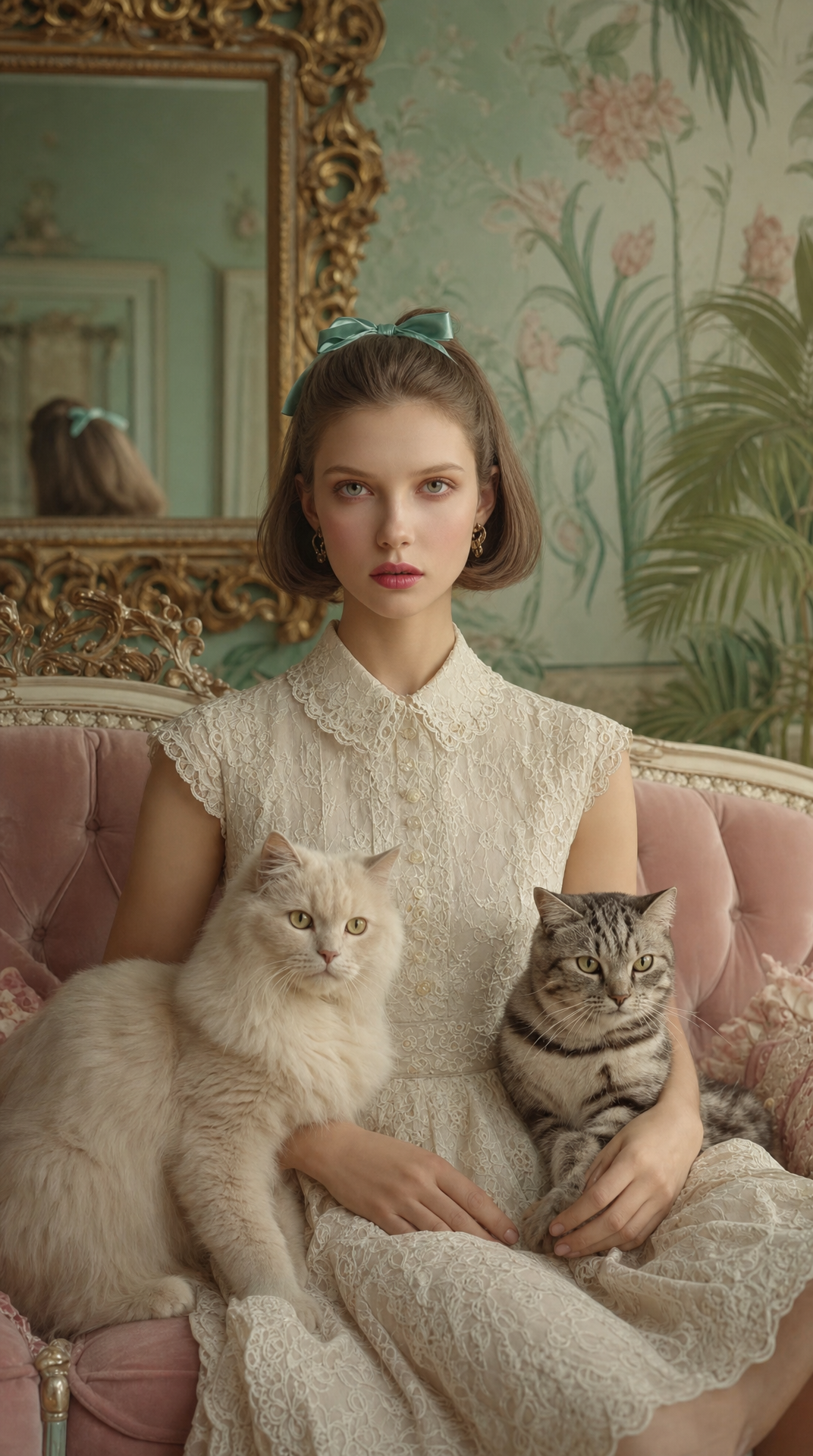
Young woman with two cats
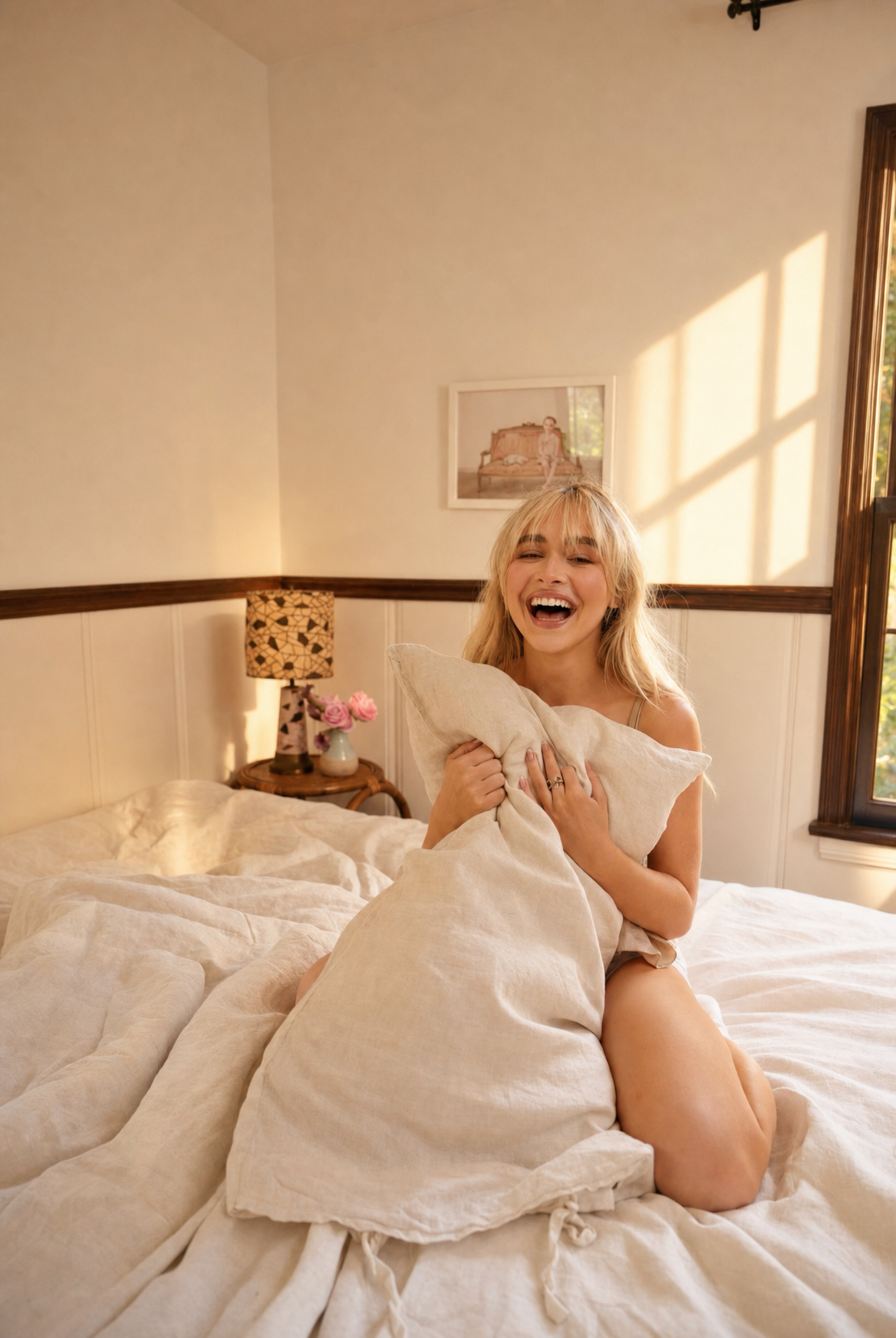
Blonde woman hugging beige pillow on off-white bed
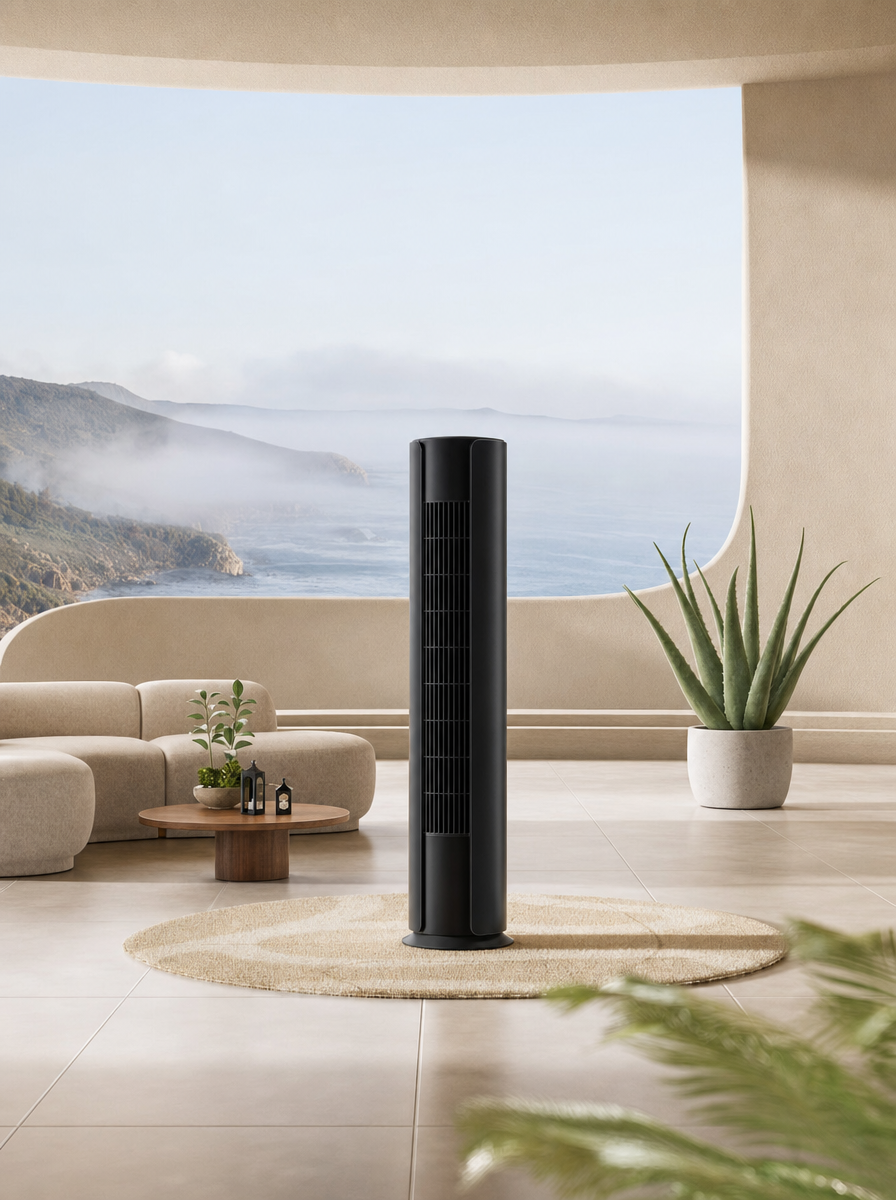
Black tower fan on gray rug by window
Cozy Winter Living Room in Sage