Why this works
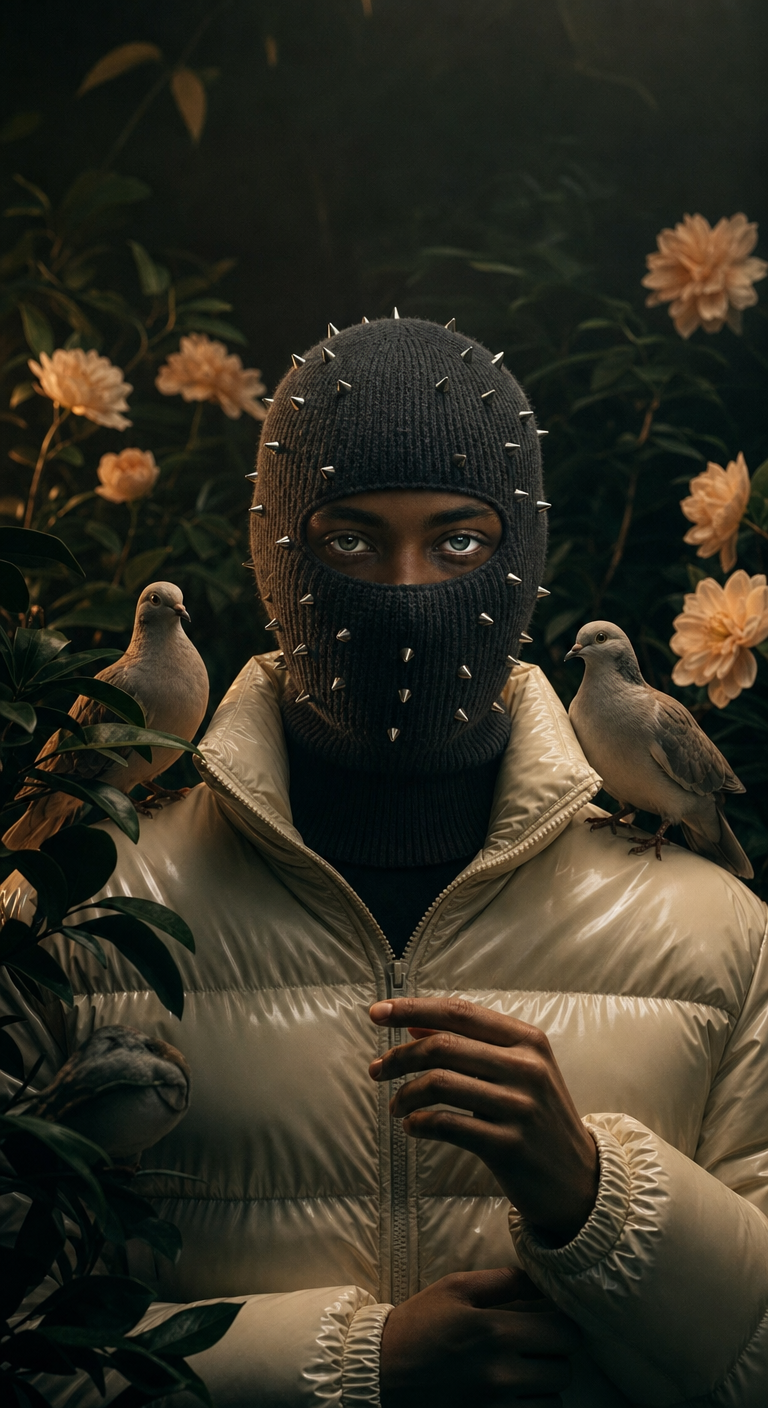
“Centered in frame” and “50mm cinematic framing” give the portrait-full-body composition a controlled editorial symmetry, while “ultra-detailed eye skin texture around the gaze” makes the softly lit eyes the visual anchor. The dark charcoal balaclava, glossy cream-beige puffer, and “subdued emerald and warm ivory palette” create a restrained beige, brown, and green harmony, with “rich chiaroscuro lighting with warm rim light” supplying the luxurious contrast. “Lush deep forest foliage,” pale peach blooms, and “soft haze” place the sharply dressed figure in a dramatic yet serene natural setting without letting the background overpower the face.
FAQ
→How do I make the doves more prominent in the composition?
Replace “with two gentle doves perched on the shoulders and near the hand” with “two sharply detailed white doves prominently framing the face, one perched on each shoulder, wings slightly open,” and replace “centered in frame” with “centered three-quarter portrait with the doves occupying the left and right foreground.”
→How do I shift this from serene luxury to a darker, more ominous mood?
Replace “pale peach garden blooms” with “wilted burgundy flowers,” change “warm rim light” to “cold blue edge light with narrow crimson highlights,” and replace “dramatic yet serene mood” with “tense, mysterious, gothic editorial mood.” Keep “rich chiaroscuro lighting” to preserve the strong facial contrast.
→How do I build a matching series with different settings while keeping the same fashion identity?
Keep “knitted studded balaclava,” “glossy cream-beige puffer jacket,” “50mm cinematic framing,” “centered framing,” and “subdued emerald and warm ivory palette” unchanged. Replace “lush deep forest foliage with pale peach garden flowers” with a specific setting such as “brutalist concrete courtyard with wet marble and ivory orchids,” then change “soft haze” to a setting-appropriate modifier such as “thin architectural mist” for visual continuity.
Learn the technique behind this
- Why can't AI spell, and how do I get readable text in an image? — Older diffusion models had no character-level representation of text, so they produced letterform-shaped texture instead of words.
- How should a prompt be structured, and does word order matter? — A prompt that behaves predictably names one subject first, then what it is doing, then where, then the light, then the lens or medium, then the style.
- Why does the model ignore parts of my prompt? — Ignored instructions are almost always conflicts, counts, or spatial relationships — three things current models handle badly — rather than the model failing to read you.
Related prompts
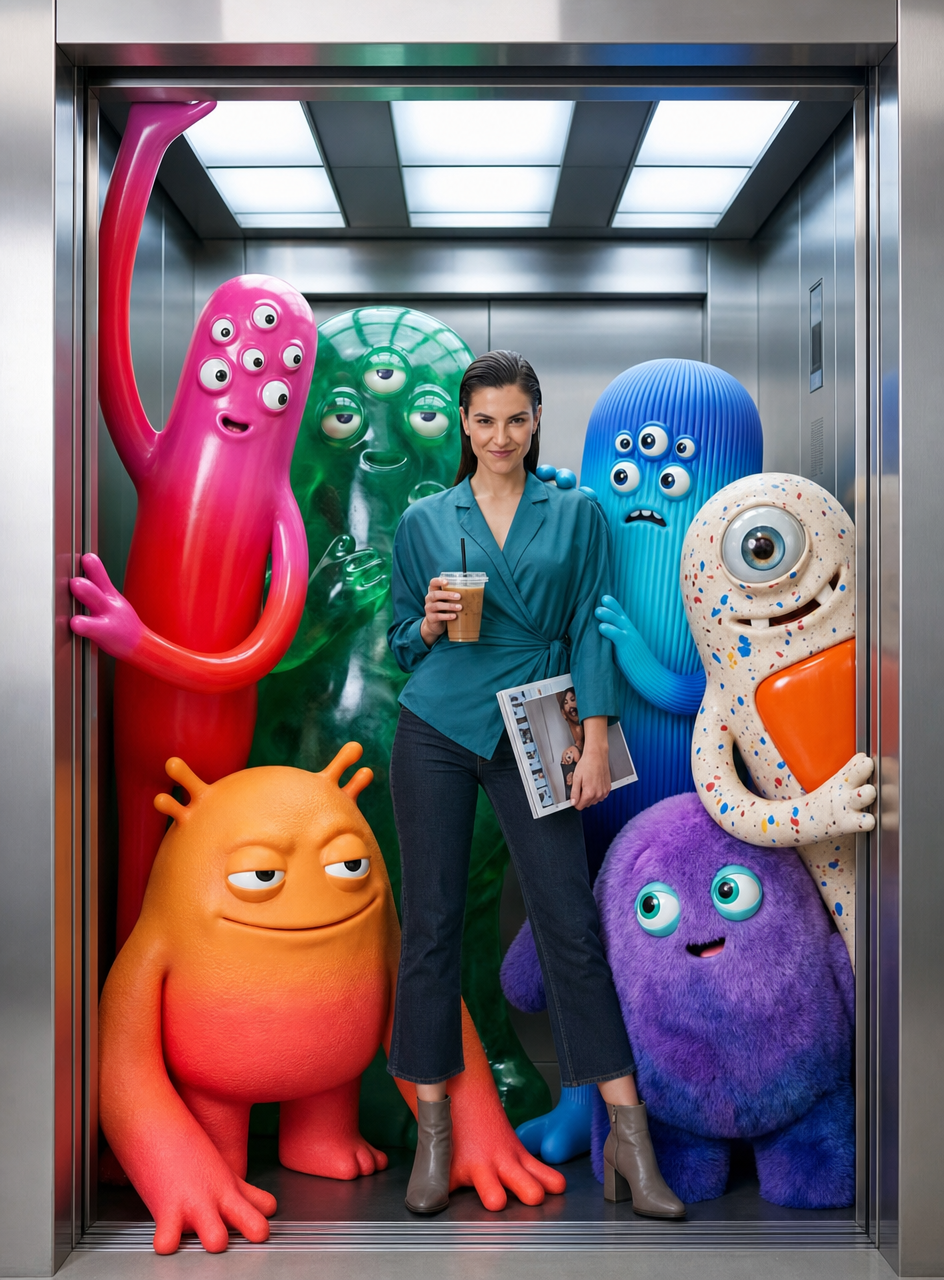
Teal fashion editorial in monster-filled lift
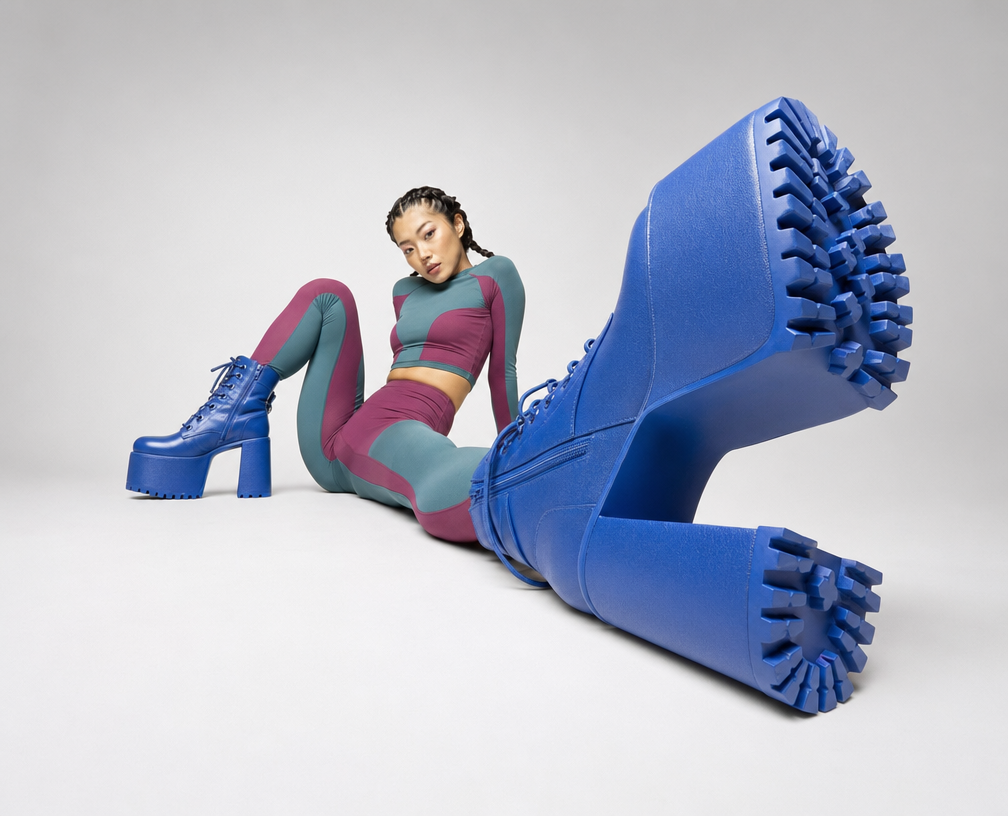
Cobalt Boots in Sleek Studio Edit
Silhouette Influencer by Sunlit Window
Sunlit editorial on striped beach towel