Why this works
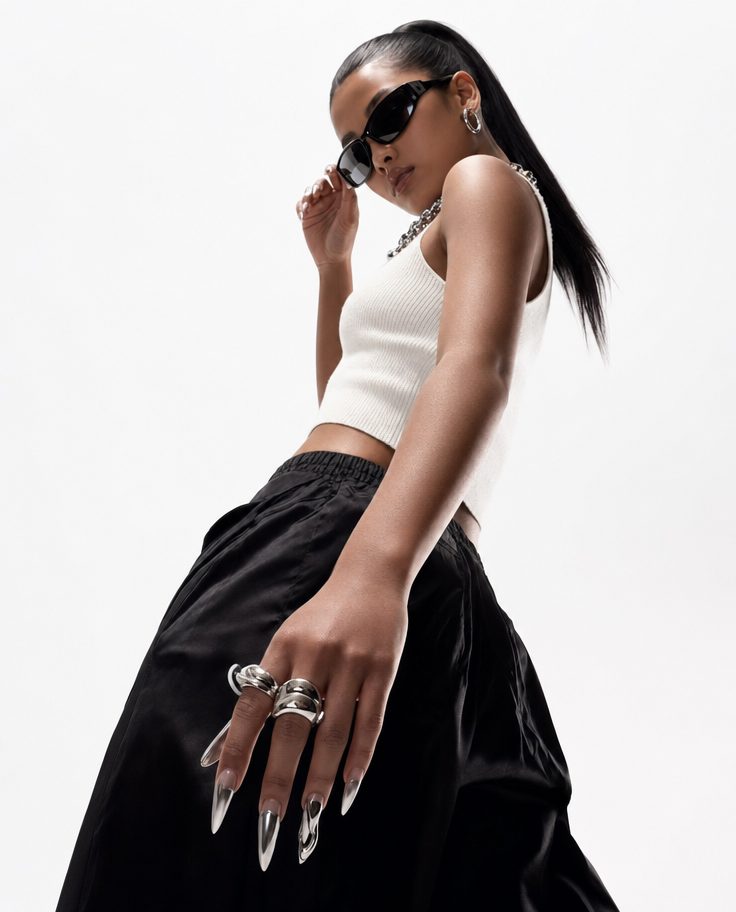
“Low-angle perspective” and “close editorial framing” give the young model a commanding, high-fashion presence while preserving a portrait-full-body silhouette. The “clean white seamless background” and off-white cropped knit tank create a stark white-dominant composition, contrasted by “black” oversized pants with a “subtle satin sheen.” “High-contrast studio lighting,” “shallow depth of field,” and “sharp focus on the face and accessories” concentrate attention on the darker tinted sunglasses, silver rings, statement chain, and long sculptural nails.
FAQ
→How do I make the accessories and sunglasses more visually central?
Replace “sharp focus on the face and accessories” with “tight emphasis on the sunglasses, chunky silver rings, and single statement chain necklace, with the face and accessories occupying the visual center.” You can also change “close editorial framing” to “waist-up accessory-focused framing,” though that will reduce the visibility of the full-body pants silhouette.
→How do I shift the image from edgy studio fashion to a softer, more luxurious mood?
Replace “edgy, confident mood” with “quiet, refined luxury,” and change “high-contrast studio lighting” to “large softbox lighting with gentle highlights and minimal shadows.” For a warmer palette, replace “clean white seamless background” with “warm ivory studio backdrop” and “off-white” with “champagne cream.”
→How do I create a series of variations while keeping the same editorial identity?
Keep “photorealistic fashion editorial photography,” “low-angle perspective,” “contemporary magazine fashion photography,” and “sharp focus on the face and accessories” unchanged. Build each variation by replacing the accessory and clothing phrases, such as “chunky silver rings and a single statement chain necklace” with “polished gold cuffs and geometric earrings,” or “black with a subtle satin sheen” with “deep burgundy velvet,” while retaining the “clean white seamless background” for visual consistency.
Learn the technique behind this
- Why can't AI spell, and how do I get readable text in an image? — Older diffusion models had no character-level representation of text, so they produced letterform-shaped texture instead of words.
- How should a prompt be structured, and does word order matter? — A prompt that behaves predictably names one subject first, then what it is doing, then where, then the light, then the lens or medium, then the style.
- Which aspect ratio should I use, and how does it change the image? — Aspect ratio determines what the model composes, not how it's cropped afterwards.
Related prompts
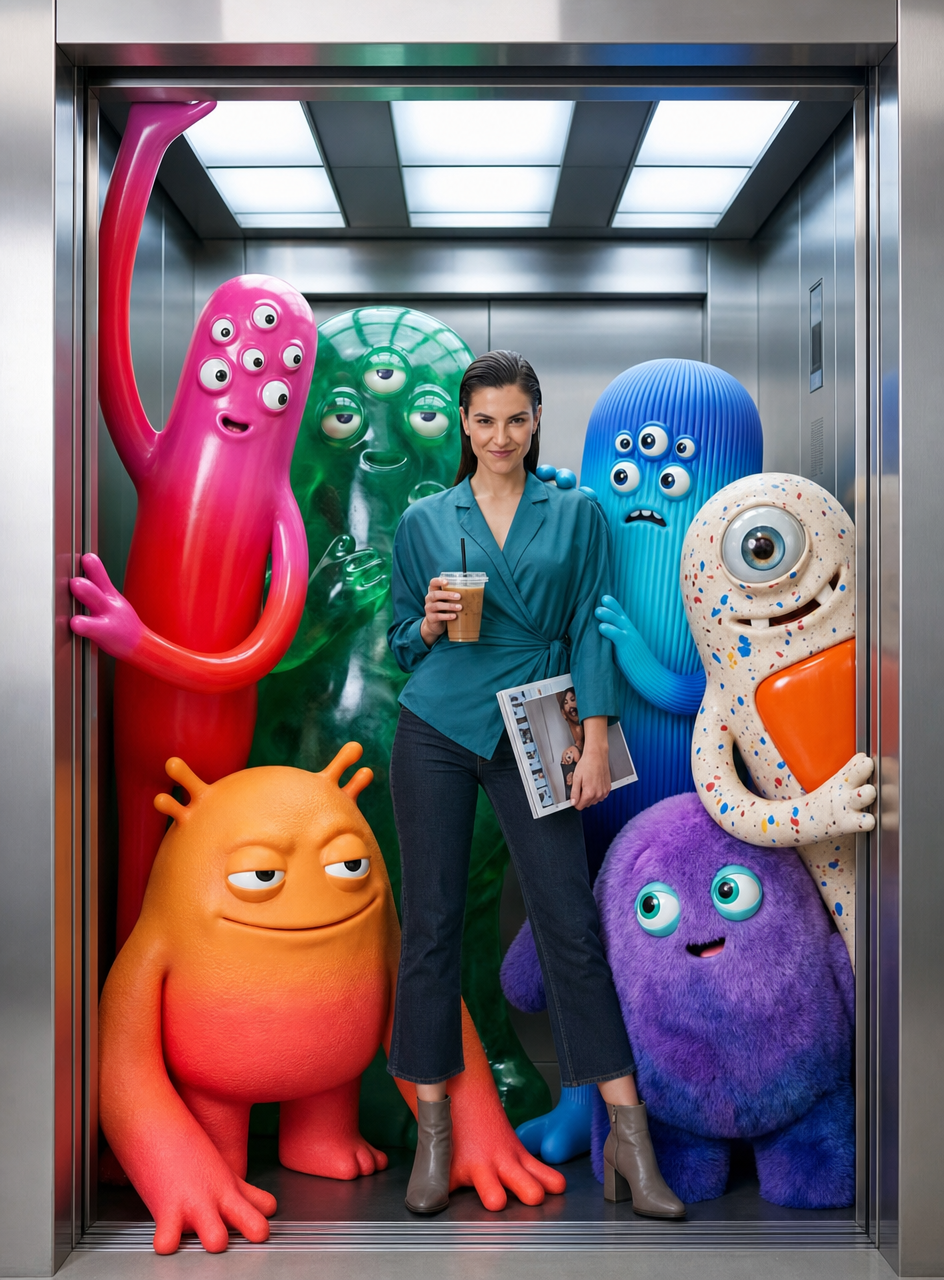
Teal fashion editorial in monster-filled lift
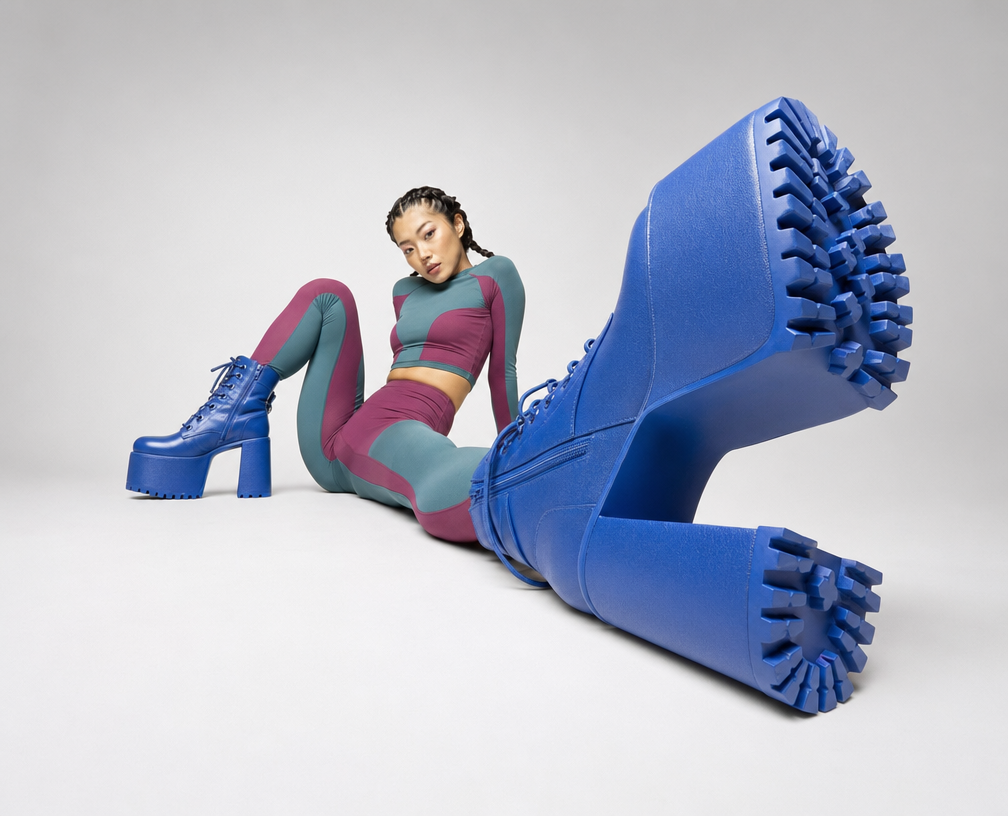
Cobalt Boots in Sleek Studio Edit
Silhouette Influencer by Sunlit Window
Sunlit editorial on striped beach towel