Why this works
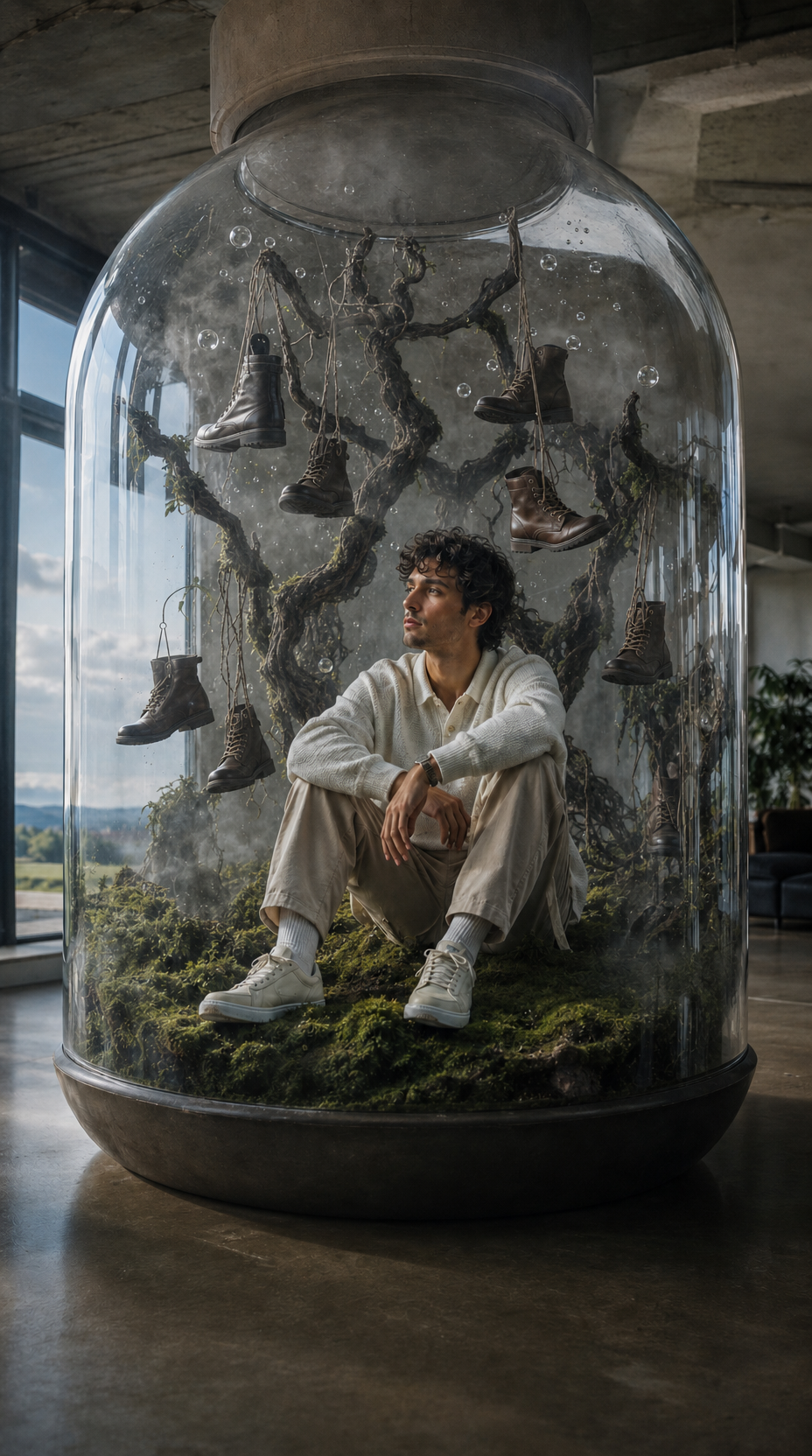
The centered editorial framing makes the seated man and terrarium the immediate focal point, while “dramatic composition” gives the glass enclosure a strong architectural presence. “Rich green moss,” “twisted dark-wood roots,” and the beige, brown, black, and green palette create an earthy luxury harmony against the “modern loft interior,” keeping the surreal subject grounded in a sophisticated setting. “Cinematic natural light” and “crisp reflections on the glass” establish the dreamy separation between viewer and subject, while “shallow depth of field” concentrates detail on the photorealistic skin, moss, and droplets rather than the loft background.
FAQ
→How do I make the young man more prominent than the terrarium environment?
Replace “young man sitting inside a giant glass terrarium filled with rich green moss” with “close-up three-quarter portrait of a young man seated inside a glass terrarium, face and upper body dominant in frame, moss and roots receding around him.” Change “centered” to “slightly off-center portrait framing” and add “sharp focus on his eyes and skin texture.”
→How do I shift the mood from dreamy luxury to darker, more mysterious fashion editorial?
Replace “Dreamy, cinematic whimsical luxury mood” and “cinematic natural light” with “dark cinematic gothic luxury mood” and “low-key directional lighting with deep shadows.” Change “beige, brown, black, and green” toward “charcoal black, deep forest green, tarnished bronze, and muted ivory,” while keeping “crisp reflections on the glass” for a polished, controlled finish.
→How do I build a series of variations without losing the terrarium concept?
Keep “surreal editorial fashion photograph,” “giant glass terrarium,” “high-end luxury magazine aesthetic,” and “shallow depth of field” unchanged. Swap the subject phrase for variations such as “young woman in a sculptural ivory suit,” “androgynous model in metallic tailoring,” or “childlike figure in a crimson couture coat,” then replace “rich green moss,” “twisted dark-wood roots,” and “glassy dew droplets and faint mist” with coordinated environments such as “pale lichen, bleached roots, and floating ice crystals” or “black moss, charred roots, and suspended amber droplets.”
Learn the technique behind this
- Why can't AI spell, and how do I get readable text in an image? — Older diffusion models had no character-level representation of text, so they produced letterform-shaped texture instead of words.
- How do I keep one consistent style across a whole set of images? — Style consistency is more achievable than character consistency because style lives in describable attributes.
- How should a prompt be structured, and does word order matter? — A prompt that behaves predictably names one subject first, then what it is doing, then where, then the light, then the lens or medium, then the style.
Related prompts
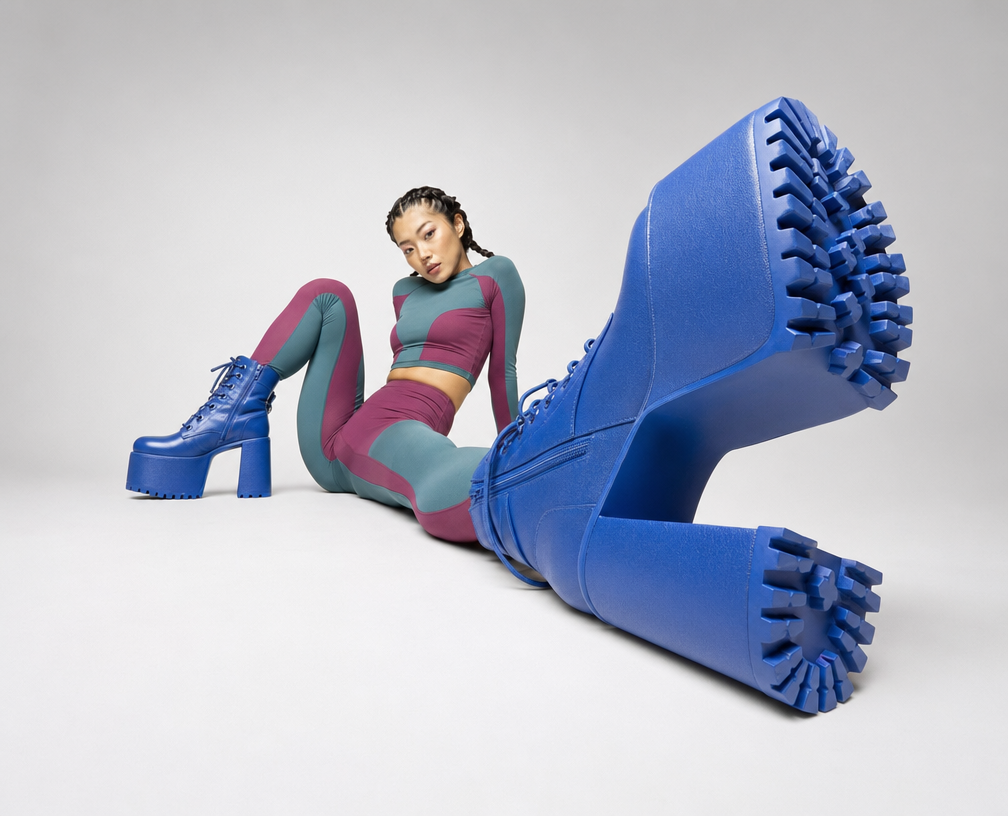
Cobalt Boots in Sleek Studio Edit
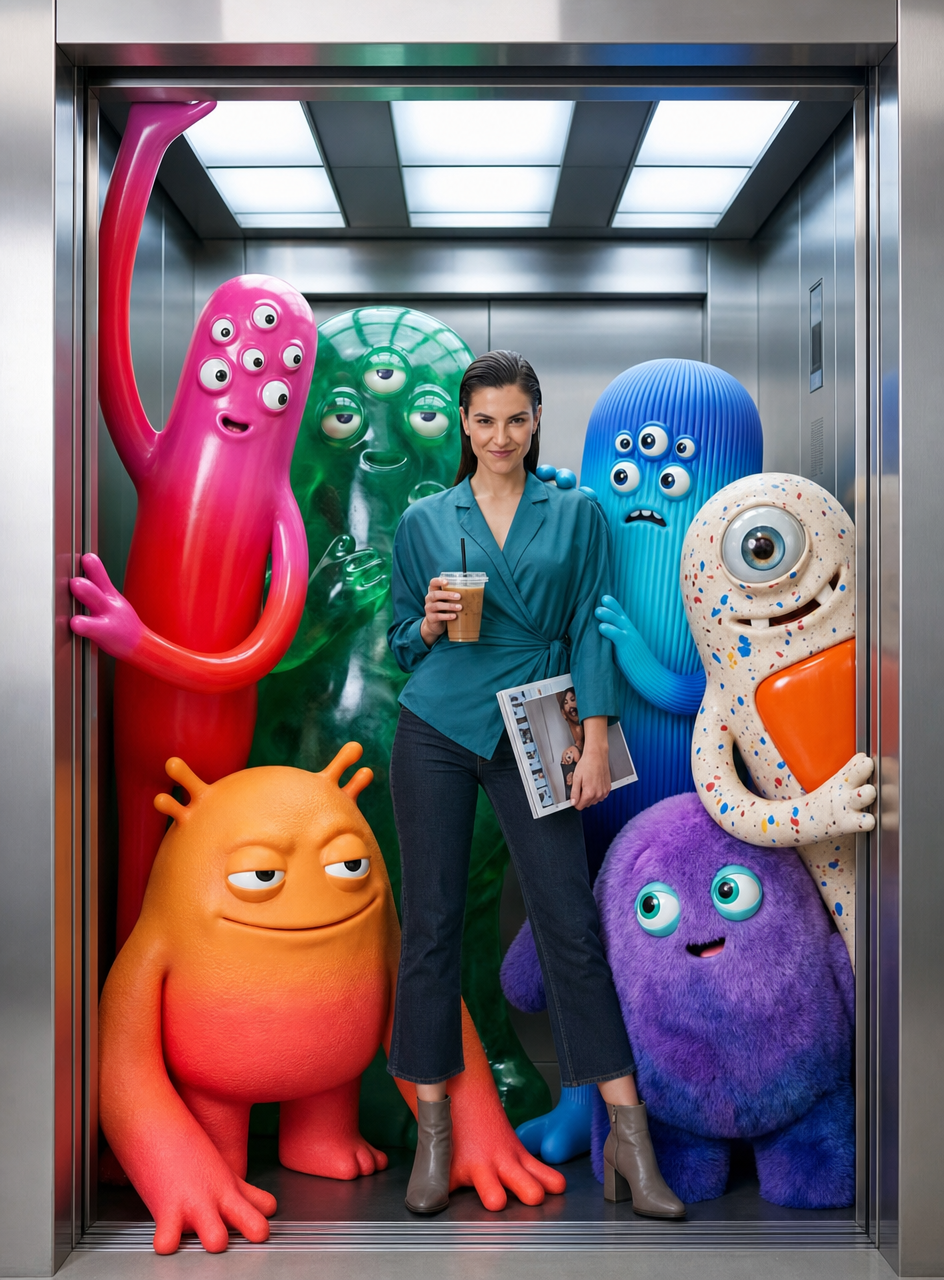
Teal fashion editorial in monster-filled lift

Sunlit editorial on striped beach towel
Silhouette Influencer by Sunlit Window