Why this works
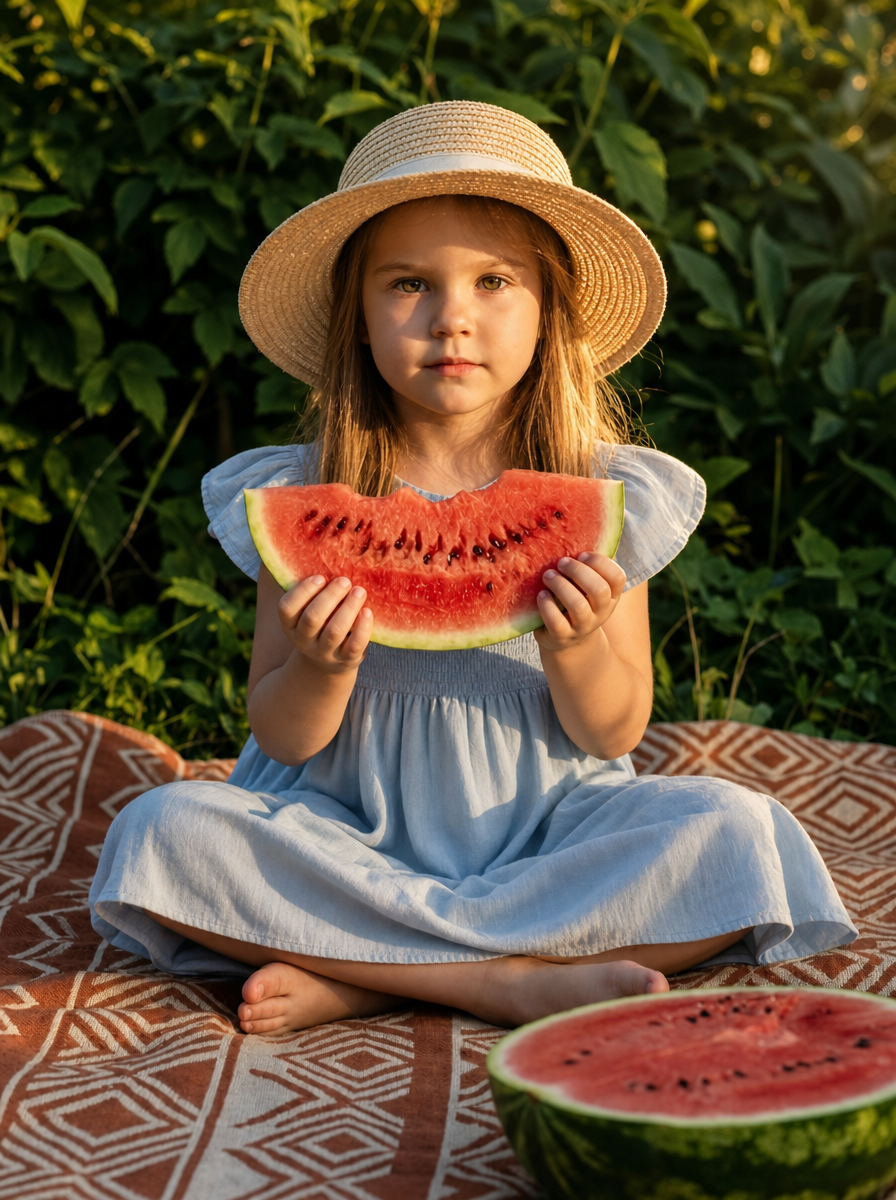
The centered full-body framing comes directly from “centered composition” and “portrait-full-body,” keeping the cross-legged girl, blanket, and foreground watermelon slice readable as a single picnic scene. “Pale blue solid dress,” “ripe watermelon,” and “straw wide-brim hat” establish the dominant blue, red, and brown color grouping, while “lush dark green foliage” provides a deep natural backdrop. The warm, serene mood is specifically anchored by “warm late-afternoon sunlight,” “gentle rim light,” and “calm summery atmosphere,” with “shallow depth of field” separating the subject from the soft-bokeh foliage.
FAQ
→How do I make the watermelon and eating action more visually central?
Replace “centered composition” with “close three-quarter composition focused on the girl’s hands and watermelon slice,” and change “another watermelon slice rests in the foreground” to “a large foreground watermelon slice dominates the lower frame.” Keep “subject sharp with soft bokeh background” so the fruit and hands remain the focal point.
→How do I shift this from serene summer portrait to a brighter, more playful scene?
Replace “calm summery atmosphere” with “joyful, lively picnic atmosphere,” and change “warm late-afternoon sunlight with gentle rim light” to “bright midday sunlight with crisp highlights and vivid color.” You can also replace “pale blue solid dress” with “bright yellow floral sundress” to increase the cheerful color contrast against the dark green foliage.
→How can I create a matching series with different seasonal settings?
Keep “photorealistic lifestyle portrait,” “centered composition,” and “natural skin tones” unchanged, then replace “lush dark green foliage” and “warm late-afternoon sunlight” with a paired setting and light treatment such as “golden autumn meadow with amber leaves” and “low autumn sunlight with soft backlight.” For a winter variation, replace them with “snow-covered pine grove” and “cool overcast daylight with subtle reflected fill,” while changing “ripe watermelon” to “steaming mug of cocoa.”
Learn the technique behind this
- Why can't AI spell, and how do I get readable text in an image? — Older diffusion models had no character-level representation of text, so they produced letterform-shaped texture instead of words.
- Which aspect ratio should I use, and how does it change the image? — Aspect ratio determines what the model composes, not how it's cropped afterwards.
- Why does the model ignore parts of my prompt? — Ignored instructions are almost always conflicts, counts, or spatial relationships — three things current models handle badly — rather than the model failing to read you.
Related prompts
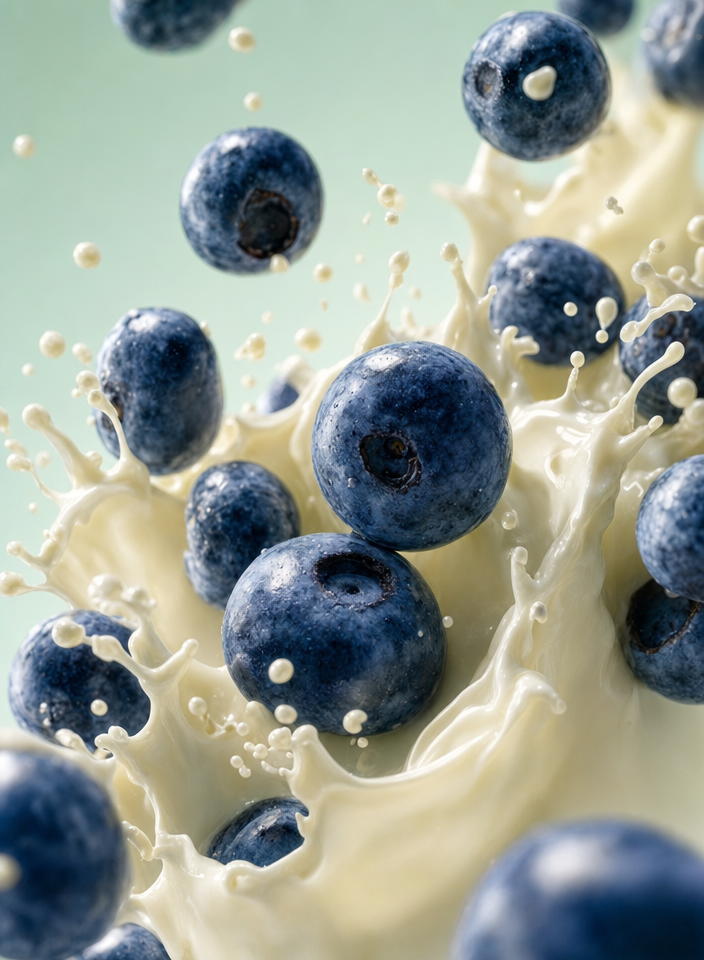
Blueberries Bursting Into Vanilla Cream

Chocolate Filled Cookie Splitting Midair With Dark Drip

Partially Peeled Banana on Blue
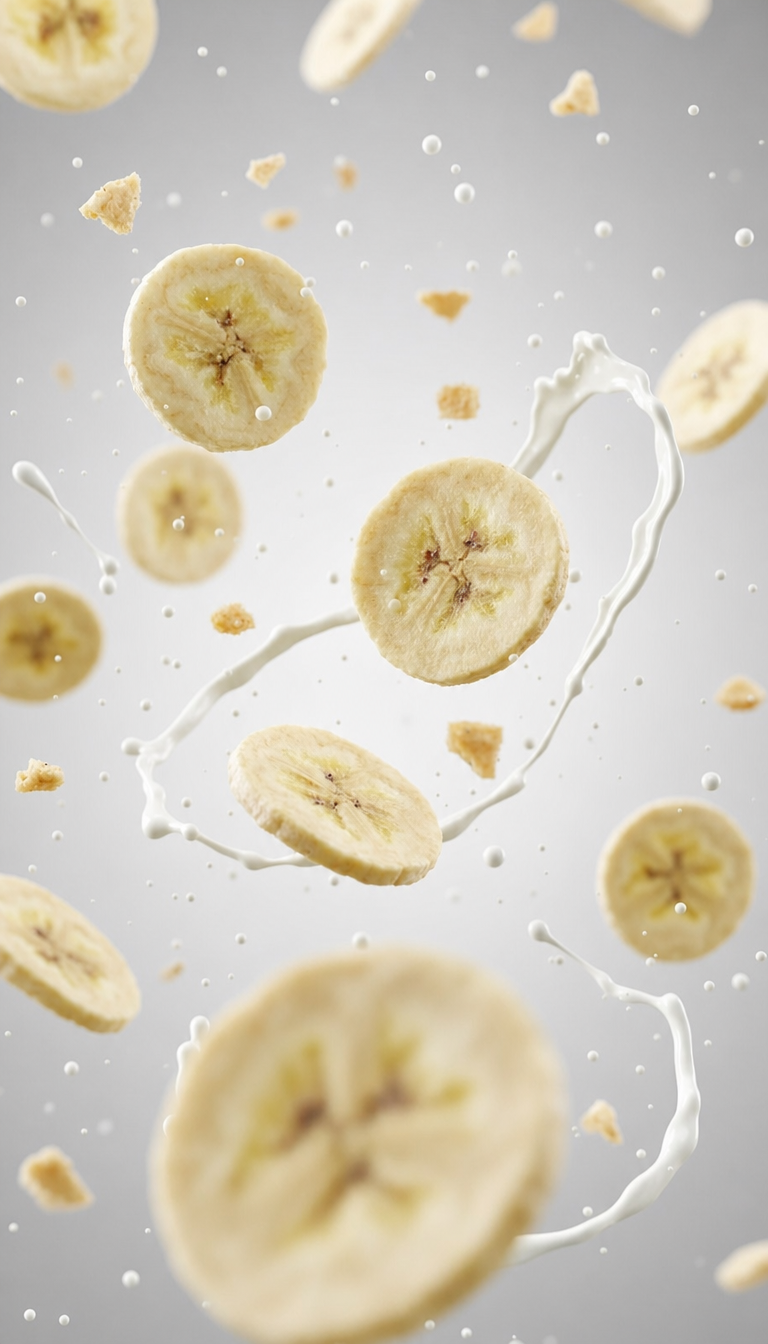
Banana slices in cool milk splash background