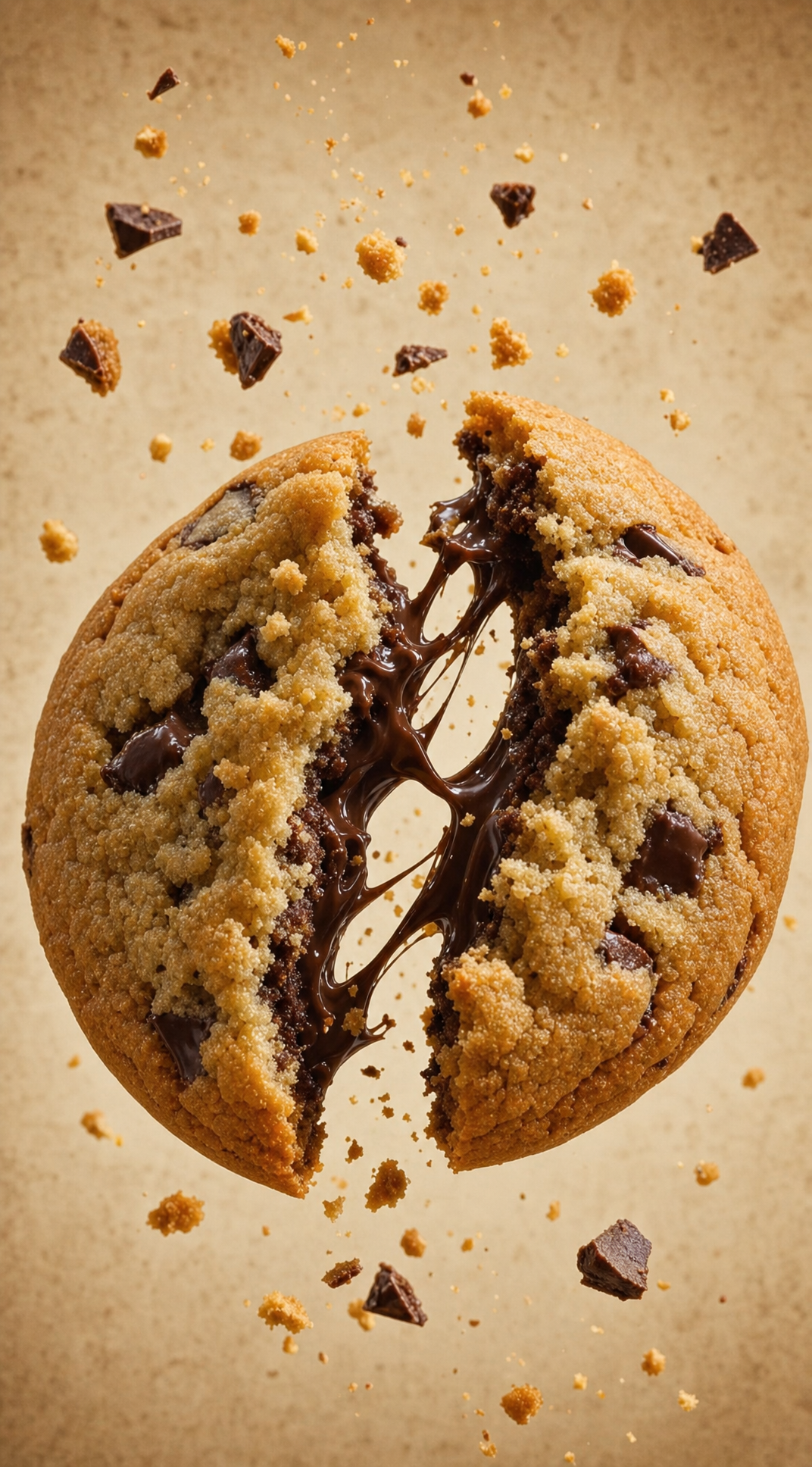
Why this works
The centered studio close-up makes the splitting cookie and its oozing chocolate the unmistakable focal point, while “shallow depth of field” pushes the suspended crumbs into a softer secondary layer. “Soft golden rim lighting,” “warm beige paper backdrop,” and “appetizing commercial food lighting” explain the warm brown-and-gold harmony and polished food-advertising mood. “Captured with crisp high-speed clarity” and “fine crumbs and chocolate cookie chunks suspended around it” supply the frozen-instant drama, while “ultra-detailed textures on the cookie interior and chocolate surface” makes the filling visually tactile.
FAQ
→How do I change this prompt for a darker, more indulgent mood?
Replace “Warm beige paper backdrop” with “deep espresso-brown studio backdrop,” and change “Soft golden rim lighting” to “hard amber side lighting with deep shadows.” Keep “thick dark chocolate oozes” but add “glossy, nearly black ganache” to intensify the richness.
→How do I make the chocolate filling more prominent than the cookie?
Replace “studio close-up of a chocolate-filled cookie” with “extreme macro close-up centered on the flowing chocolate filling,” and change “shallow depth of field” to “focus locked on the glossy chocolate stream.” Add “cookie halves framing the edges” so the broken cookie supports rather than competes with the center.
→How do I build a coordinated series of variations from this prompt?
Keep the fixed structure, including “photorealistic studio close-up,” “centered,” “crisp high-speed clarity,” and “warm beige paper backdrop,” while swapping the subject and filling in parallel phrases. For example, replace “chocolate-filled cookie” and “thick dark chocolate” with “vanilla sandwich cookie” and “white cream filling,” then with “red velvet cookie” and “raspberry ganache,” preserving “fine crumbs suspended around it” for consistent motion and composition.
Learn the technique behind this
- Why can't AI spell, and how do I get readable text in an image? — Older diffusion models had no character-level representation of text, so they produced letterform-shaped texture instead of words.
- How should a prompt be structured, and does word order matter? — A prompt that behaves predictably names one subject first, then what it is doing, then where, then the light, then the lens or medium, then the style.
- Do negative prompts work, and what should go in one? — Negative prompts work on models that support a separate negative conditioning channel — mainly Stable Diffusion and FLUX-family models.
Related prompts
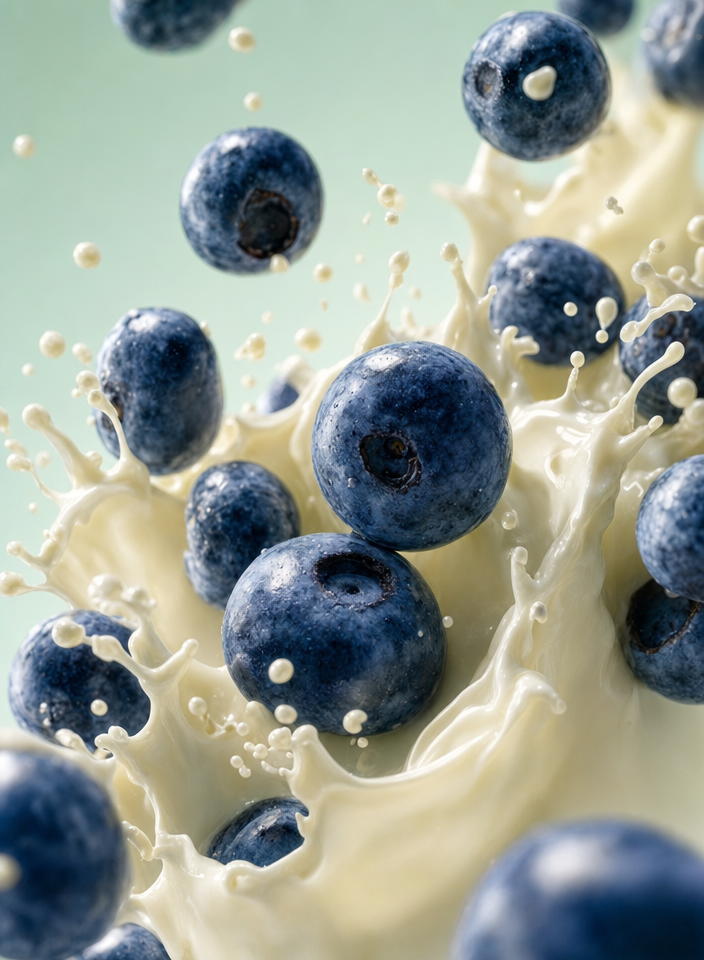
Blueberries Bursting Into Vanilla Cream
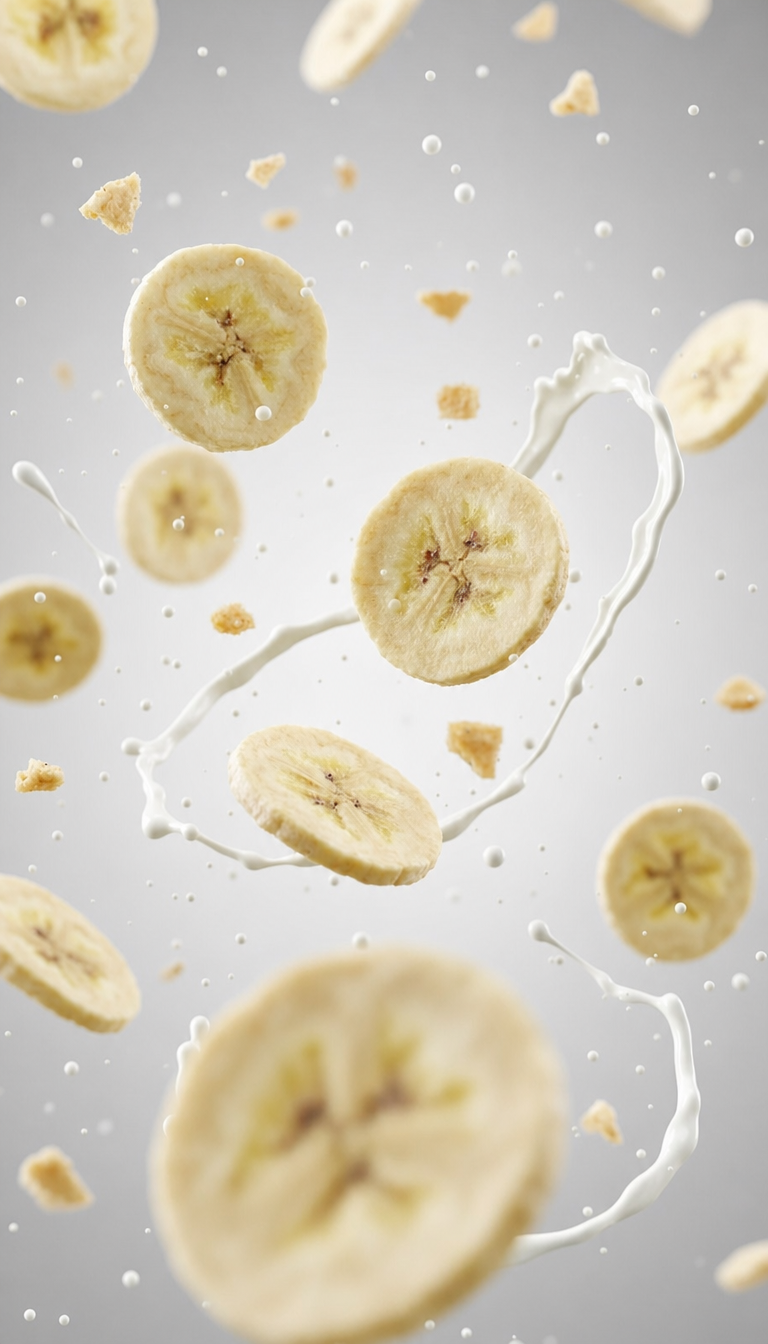
Banana slices in cool milk splash background

Partially Peeled Banana on Blue
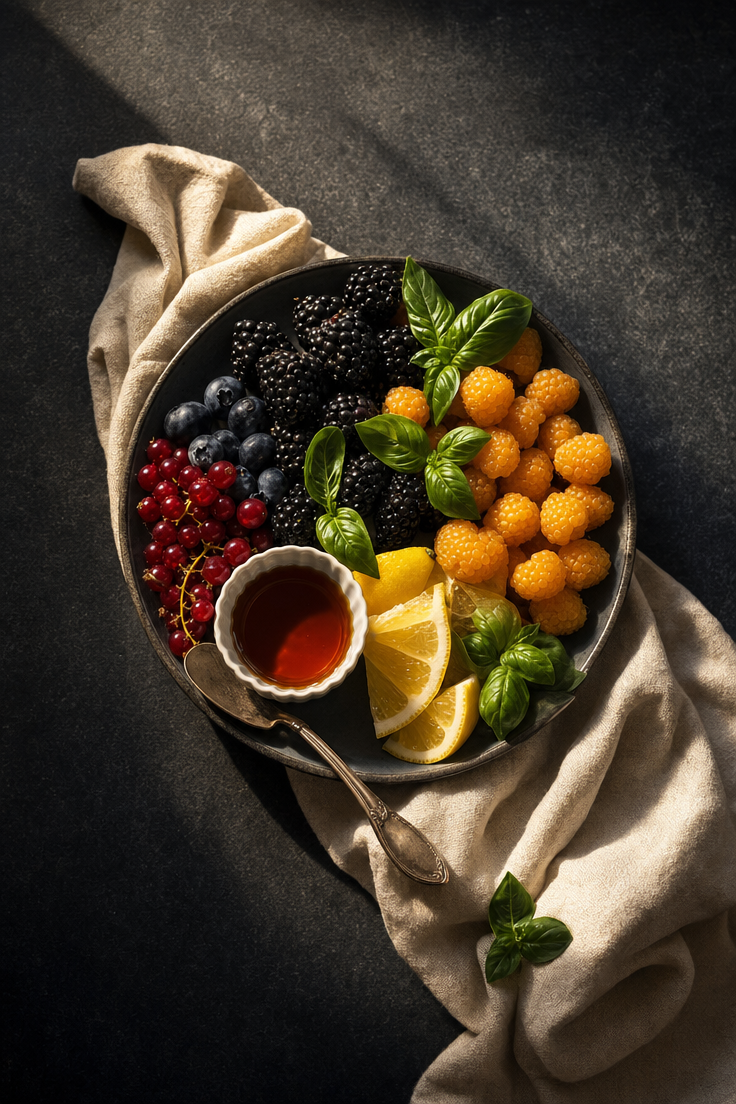
Luxe Berry Medley with Citrus and Herbs