Why this works
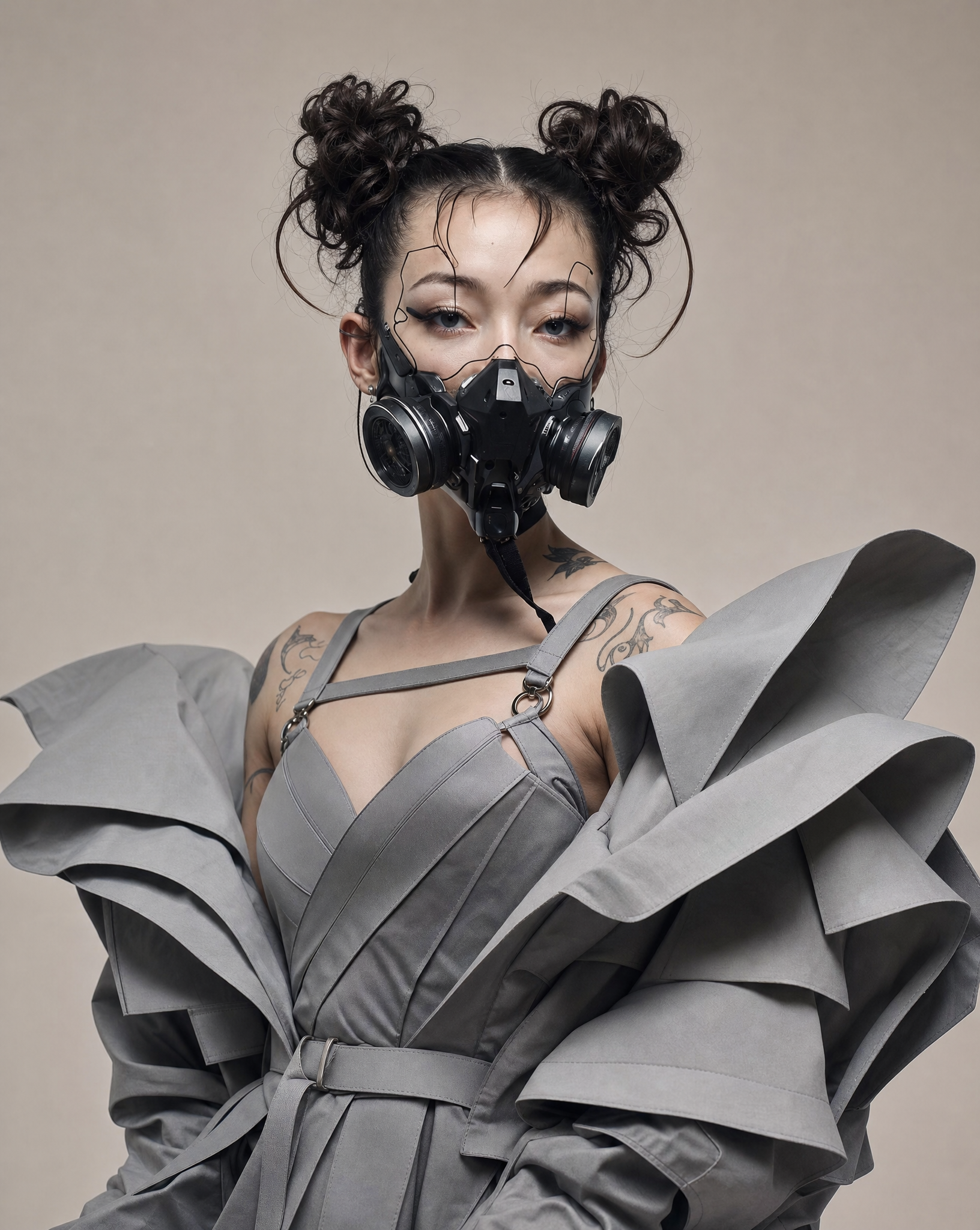
The tight studio framing and portrait-closeup composition make the respirator-style mask, two high curly buns, and exaggerated sculptural shoulders the visual anchors. “Dramatic side lighting with sharp specular highlights” gives the ash-gray outfit and mask a hard, futuristic edge, while the neutral light-beige backdrop separates the predominantly black-and-beige figure from the background. “Shallow depth of field” concentrates attention on the ultra-realistic skin and fabric texture, and “cinematic fashion photography” reinforces the controlled editorial finish.
FAQ
→How do I make the respirator-style mask more central and imposing?
Replace “Tight studio framing” with “extreme close-up framing centered on the respirator-style mask,” and change “portrait of a woman wearing a respirator-style mask” to “mask-dominant fashion portrait, with the respirator-style mask occupying the center of the frame.” Reduce the shoulder description to “only the upper edges of the sculptural shoulders visible” so the mask controls the composition.
→How do I shift this from edgy and dramatic to softer and more approachable?
Replace “futuristic, edgy, dramatic mood” with “soft, restrained, intimate editorial mood,” and change “dramatic side lighting with sharp specular highlights” to “large diffused frontal light with gentle cheek highlights.” Swap the “neutral light-beige studio backdrop” for “warm cream backdrop” and replace “ash-gray avant-garde outfit” with “soft dove-gray tailored outfit with flowing fabric.”
→How do I create a matching series with different hairstyles and outfits?
Keep the fixed structure, including “editorial studio fashion portrait,” “neutral light-beige studio backdrop,” “tight studio framing,” and “cinematic fashion photography,” while replacing “two high curly buns” with controlled variants such as “sleek braided crown,” “short sculpted pixie cut,” or “long wet-look waves.” Replace “ash-gray avant-garde outfit with exaggerated sculptural shoulders and layered fabric panels” with consistent silhouette variants such as “matte black tailored suit with angular lapels” or “pearl-white sculptural dress with pleated panels.”
Learn the technique behind this
- Why can't AI spell, and how do I get readable text in an image? — Older diffusion models had no character-level representation of text, so they produced letterform-shaped texture instead of words.
- How should a prompt be structured, and does word order matter? — A prompt that behaves predictably names one subject first, then what it is doing, then where, then the light, then the lens or medium, then the style.
- Why does AI get hands and faces wrong, and how do I fix it? — Hands fail because they're small in frame, extremely variable in pose, and self-occluding — the model has less usable signal per pixel than for any other body part.
Related prompts
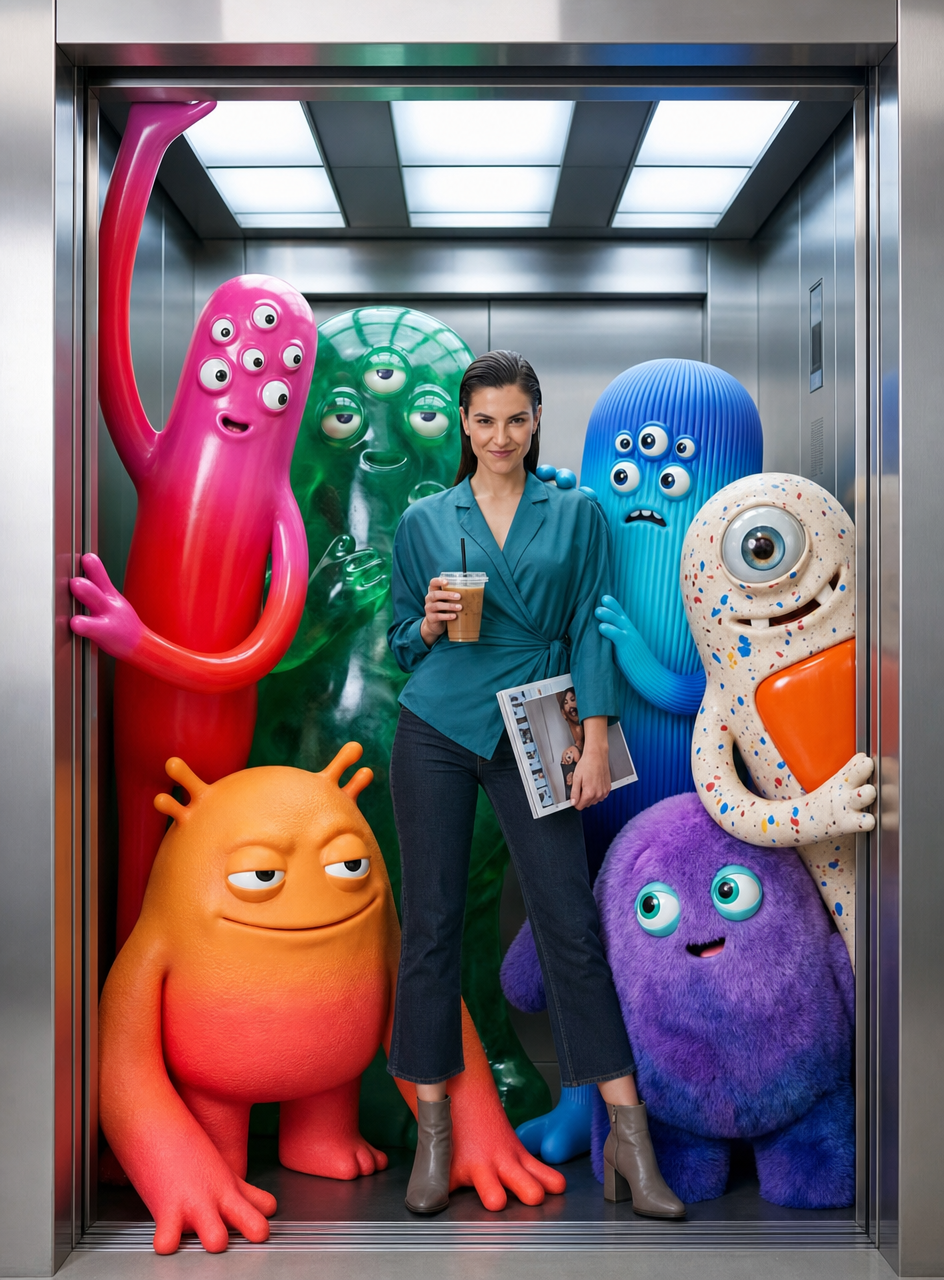
Teal fashion editorial in monster-filled lift
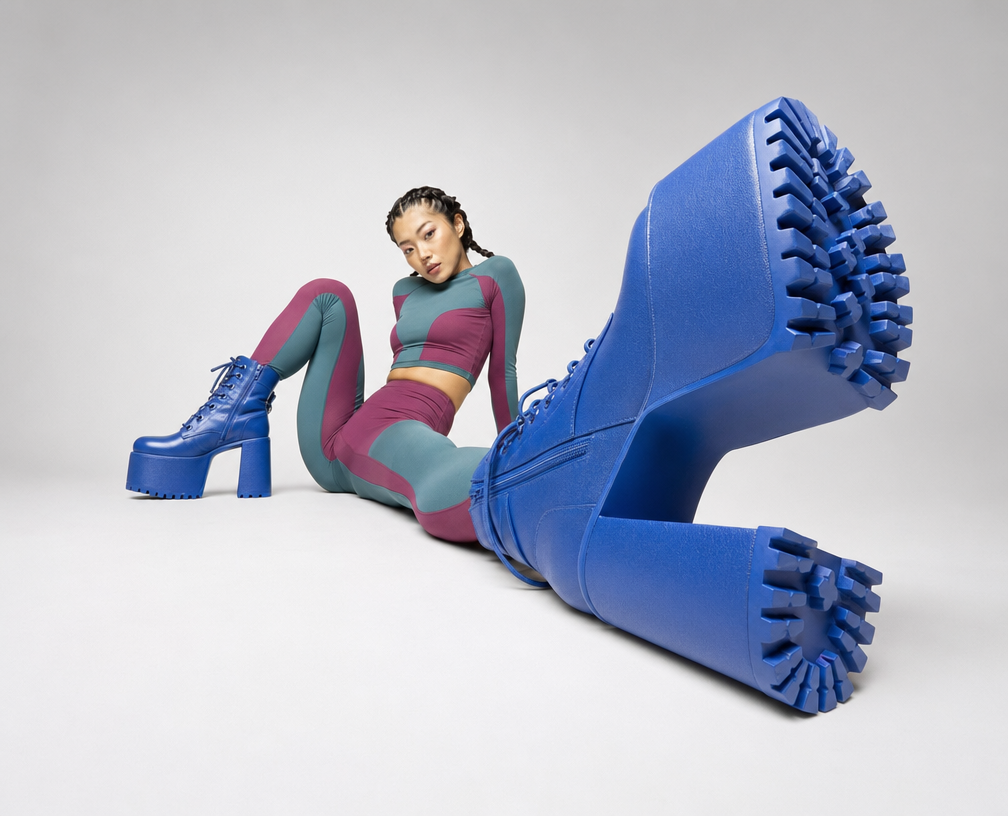
Cobalt Boots in Sleek Studio Edit
Silhouette Influencer by Sunlit Window
Sunlit editorial on striped beach towel