Why this works
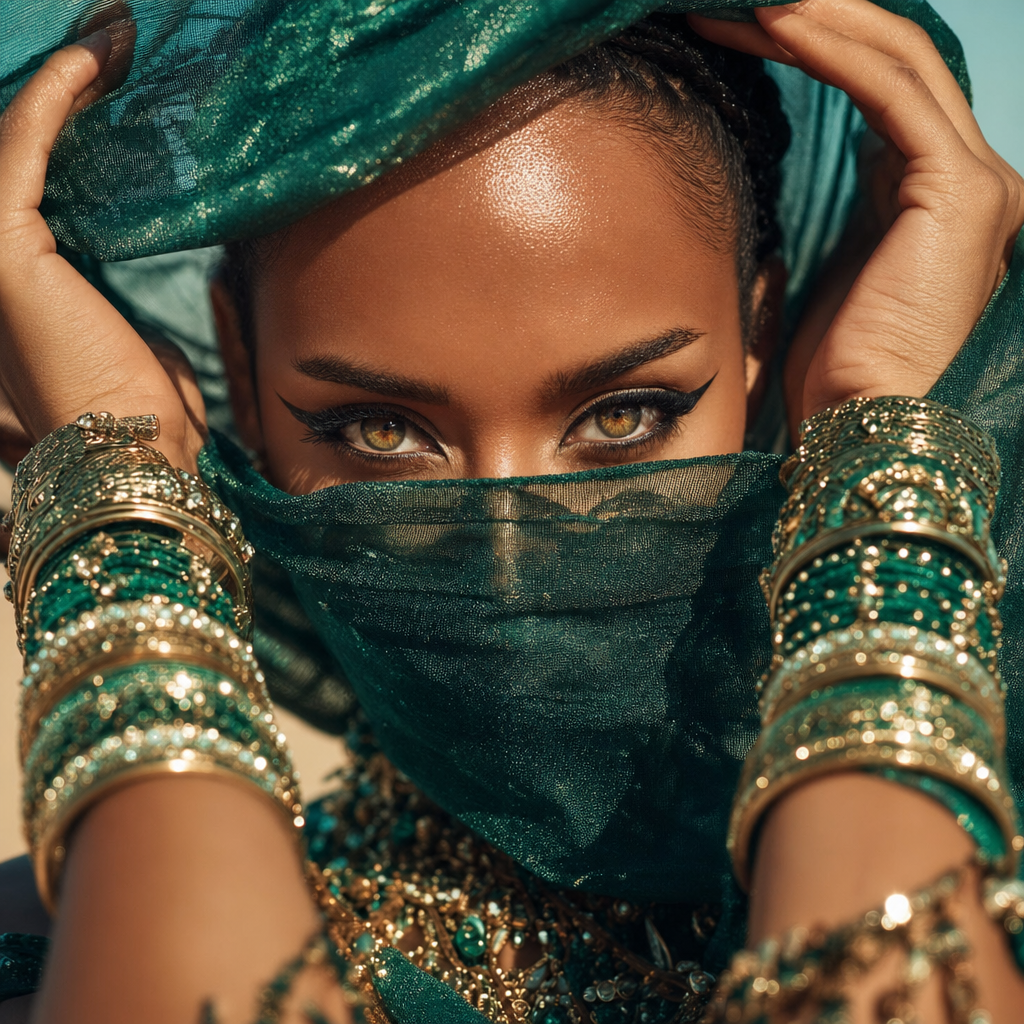
The close-up framing, “hands raised to frame her face,” and “sharp focus on the eyes” make the hazel eyes the compositional anchor while the sheer veil adds a controlled obstruction and mystery. “Warm late-afternoon sunlight” produces the tan, gold, and brown dominance visible in the image, while the “ornate gold and emerald-green bangles” provide concentrated luxury accents. “Dark, softly blurred background bokeh” isolates the portrait, and “shallow depth of field” keeps attention on the eyes and jewelry rather than the surroundings.
FAQ
→How do I make the emerald veil more prominent than the eyes?
Replace “sharp focus on the eyes” with “sharp focus on the flowing emerald-green silk veil and its translucent folds,” and change “partially veiled” to “face largely obscured by layered sheer emerald-green silk.” Keep “close-up framing” so the fabric still fills the composition.
→How do I change the luxurious, mysterious mood into a brighter editorial look?
Replace “dark, softly blurred background bokeh” with “bright sunlit studio backdrop with pale cream bokeh,” and change “mysterious intense mood” to “fresh, radiant editorial mood.” Swap “warm late-afternoon sunlight” for “clean high-key morning light” to reduce the brown-and-gold heaviness.
→How do I build a coordinated series with different colors and settings?
Keep “close-up cinematic editorial fashion portrait,” “hands raised to frame her face,” and “sharp focus on the eyes” unchanged as the series structure. Replace “emerald-green silk,” “gold and emerald-green bangles,” and “dark, softly blurred background bokeh” with a repeatable color-setting set such as “cobalt-blue chiffon,” “silver geometric bangles,” and “cool gray architectural background with blurred window light.”
Learn the technique behind this
- Why does AI get hands and faces wrong, and how do I fix it? — Hands fail because they're small in frame, extremely variable in pose, and self-occluding — the model has less usable signal per pixel than for any other body part.
- Why can't AI spell, and how do I get readable text in an image? — Older diffusion models had no character-level representation of text, so they produced letterform-shaped texture instead of words.
- How should a prompt be structured, and does word order matter? — A prompt that behaves predictably names one subject first, then what it is doing, then where, then the light, then the lens or medium, then the style.
Related prompts
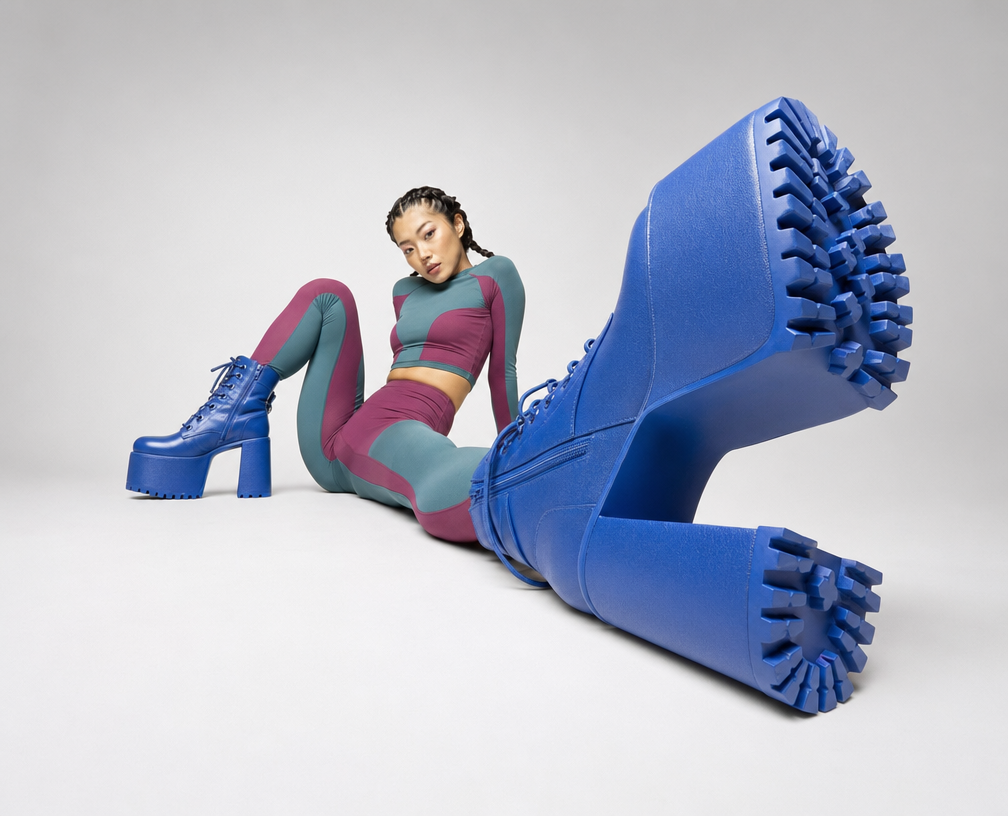
Cobalt Boots in Sleek Studio Edit
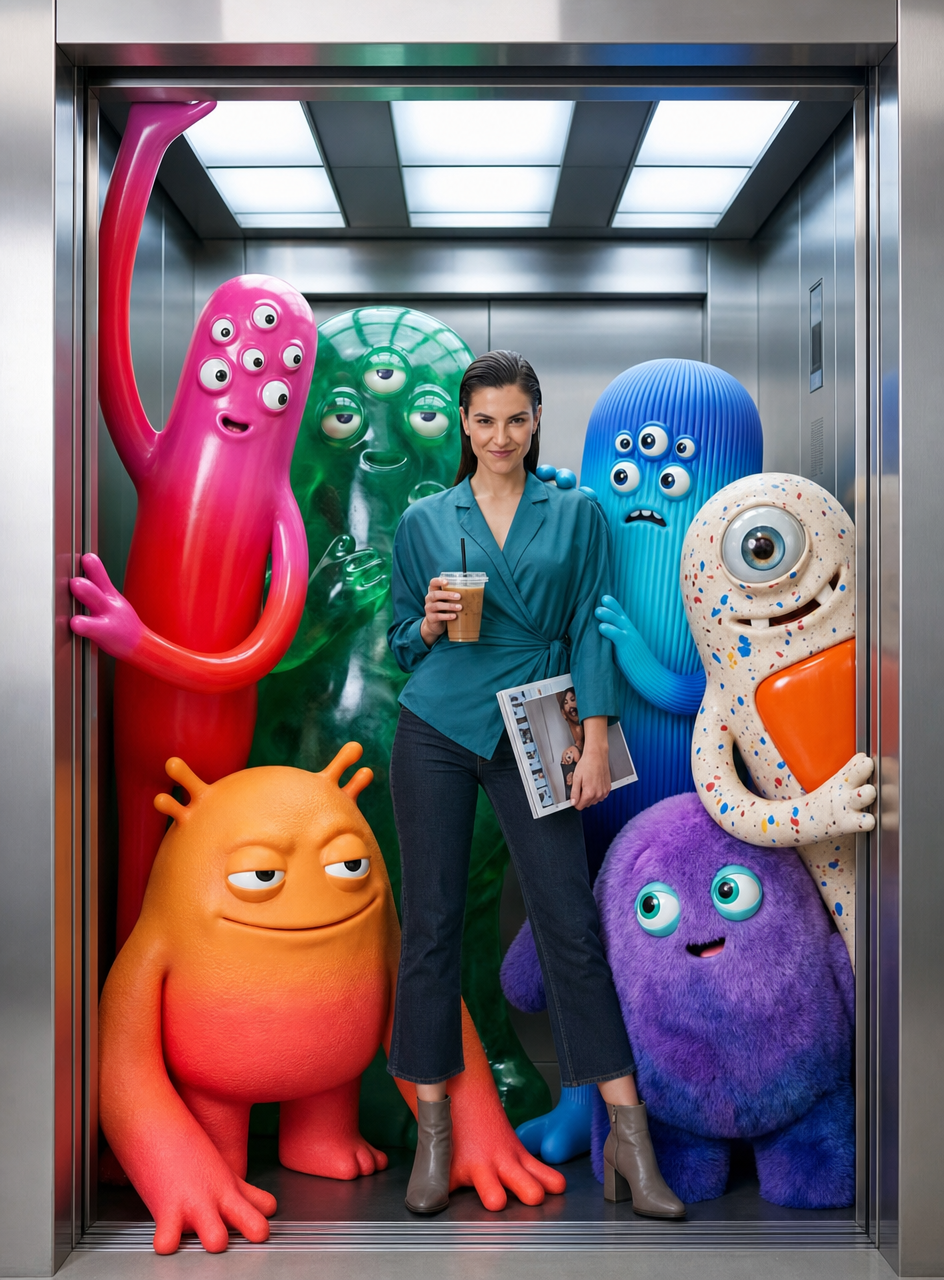
Teal fashion editorial in monster-filled lift

Sunlit editorial on striped beach towel

Silhouette Influencer by Sunlit Window