Why this works
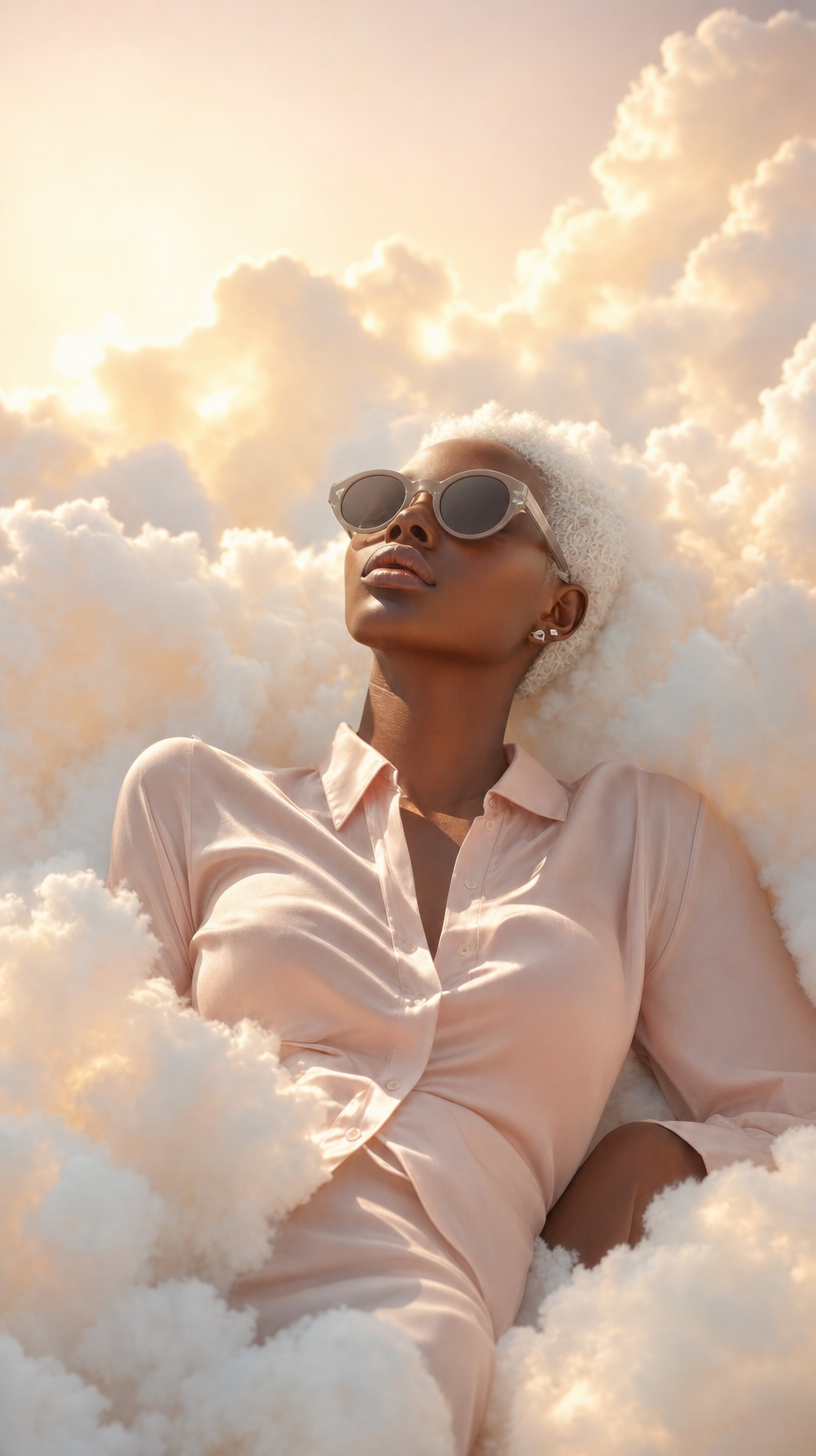
The close framing is anchored by “photorealistic portrait framing with high detail on face and sunglasses,” keeping the woman’s tilted head, luminous expression, and opaque smoke-gray glasses dominant. “Voluminous white clouds,” a “pale pastel gradient,” and “clean minimal color palette” produce the soft beige-led harmony visible in the image, while “soft golden-hour sunlight filtering through cloud edges” supplies the warm highlights without breaking the muted palette. The serene, ethereal mood comes specifically from “relaxed, luminous expression,” “reclining among voluminous white clouds,” and “airy surreal dreamscape,” with “smooth realistic skin and fabric highlights” preserving the polished editorial finish.
FAQ
→How do I make the woman’s face and expression more central than the clouds?
Replace “reclining among voluminous white clouds” with “tight head-and-shoulders portrait emerging from softly blurred clouds,” and change “portrait framing with high detail on face and sunglasses” to “extreme close-up framing centered on the eyes, lips, and tilted head.” Keep “high detail on face and sunglasses” so the accessories remain legible.
→How do I shift this from serene dreamscape to a darker, more dramatic editorial mood?
Replace “relaxed, luminous expression” with “poised, enigmatic expression,” “pale pastel gradient” with “smoky mauve and charcoal sky,” and “soft golden-hour sunlight filtering through cloud edges” with “directional low-key side lighting with deep cloud shadows.” Swap “airy surreal dreamscape” for “moody nocturnal surrealism” while retaining the fashion-editorial portrait framing.
→How do I create a coordinated series with different outfits while preserving this visual identity?
Keep “photorealistic fashion editorial,” “clean minimal palette,” “pastel-toned color grading,” “voluminous white clouds,” and “soft golden-hour sunlight filtering through cloud edges” unchanged. Replace only “soft blush-pink satin blouse” with controlled variants such as “ivory silk camisole,” “powder-blue satin blazer,” or “warm beige organza dress,” and assign each garment one restrained pastel accent.
Learn the technique behind this
- Why can't AI spell, and how do I get readable text in an image? — Older diffusion models had no character-level representation of text, so they produced letterform-shaped texture instead of words.
- Why does AI get hands and faces wrong, and how do I fix it? — Hands fail because they're small in frame, extremely variable in pose, and self-occluding — the model has less usable signal per pixel than for any other body part.
- How do I keep the same character across multiple images? — Text prompts alone won't hold a face across images — a description defines a type, not a person.
Related prompts
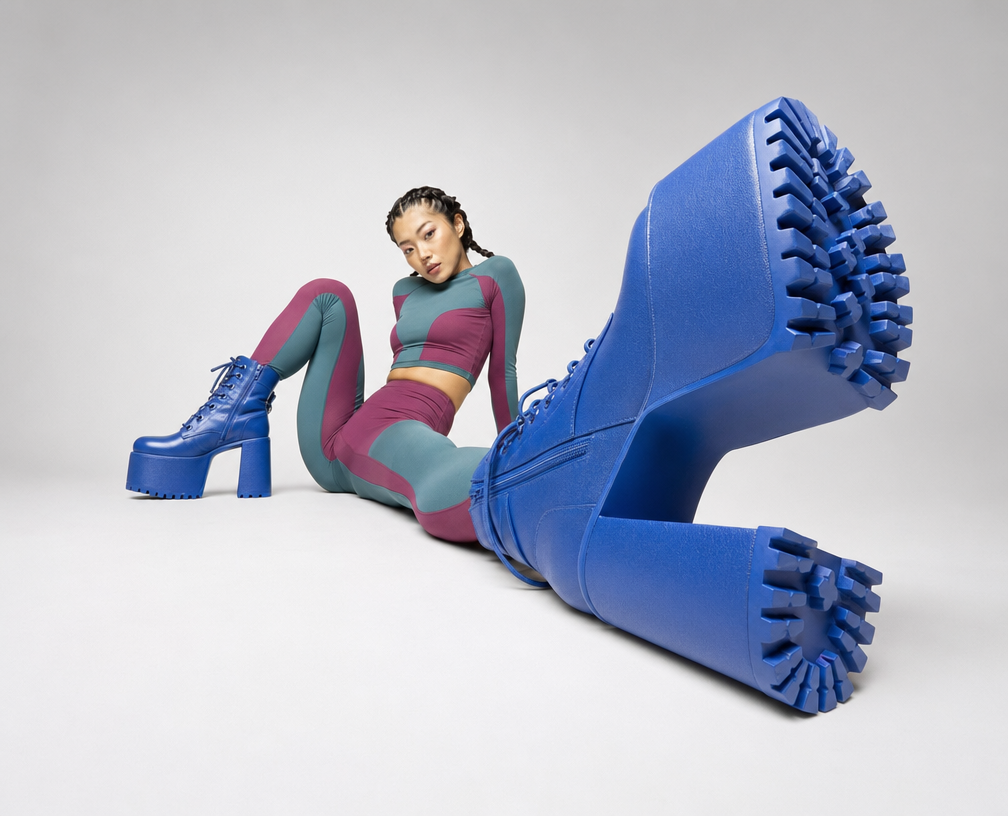
Cobalt Boots in Sleek Studio Edit
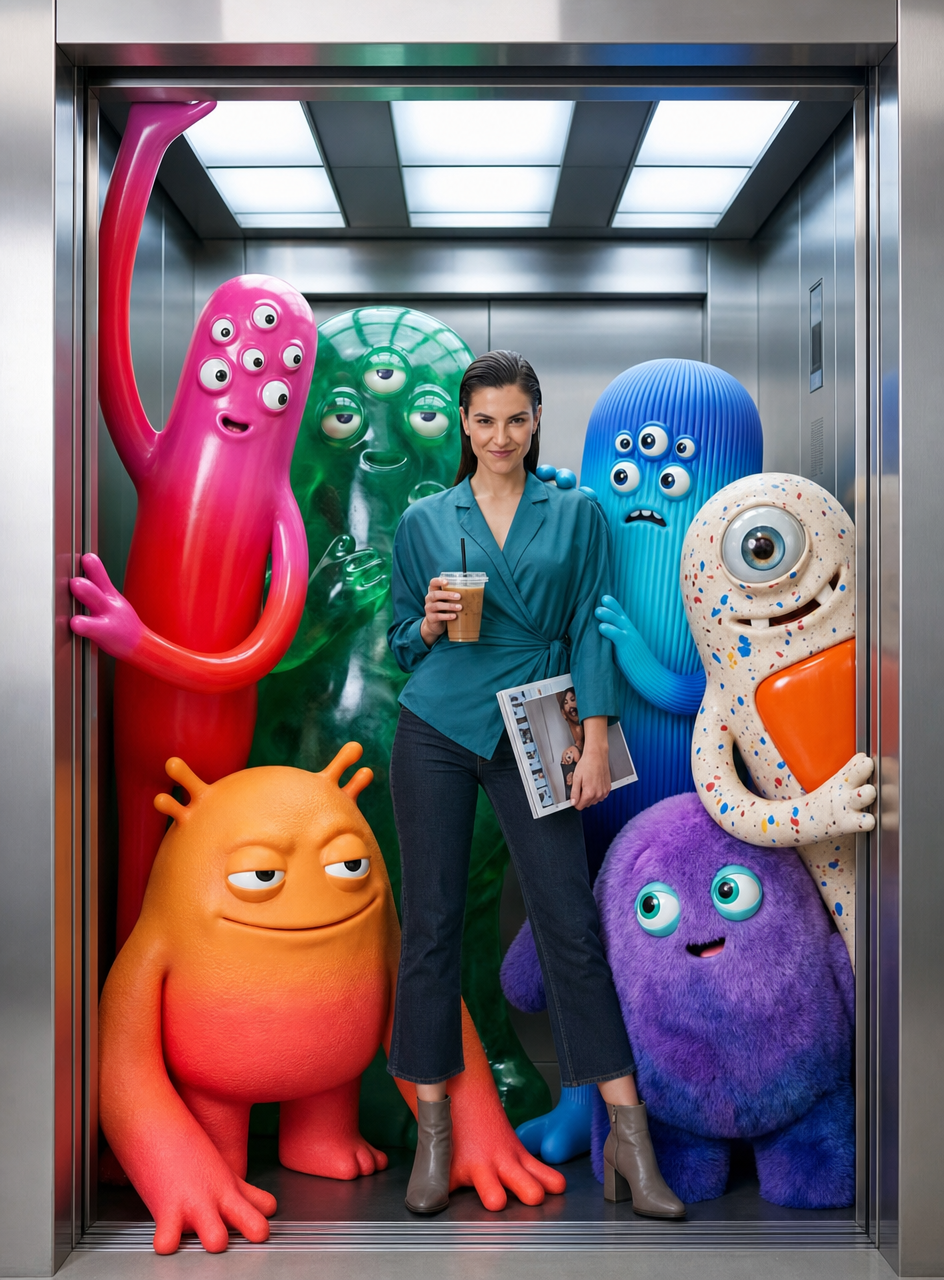
Teal fashion editorial in monster-filled lift
Sunlit editorial on striped beach towel
Silhouette Influencer by Sunlit Window