Why this works
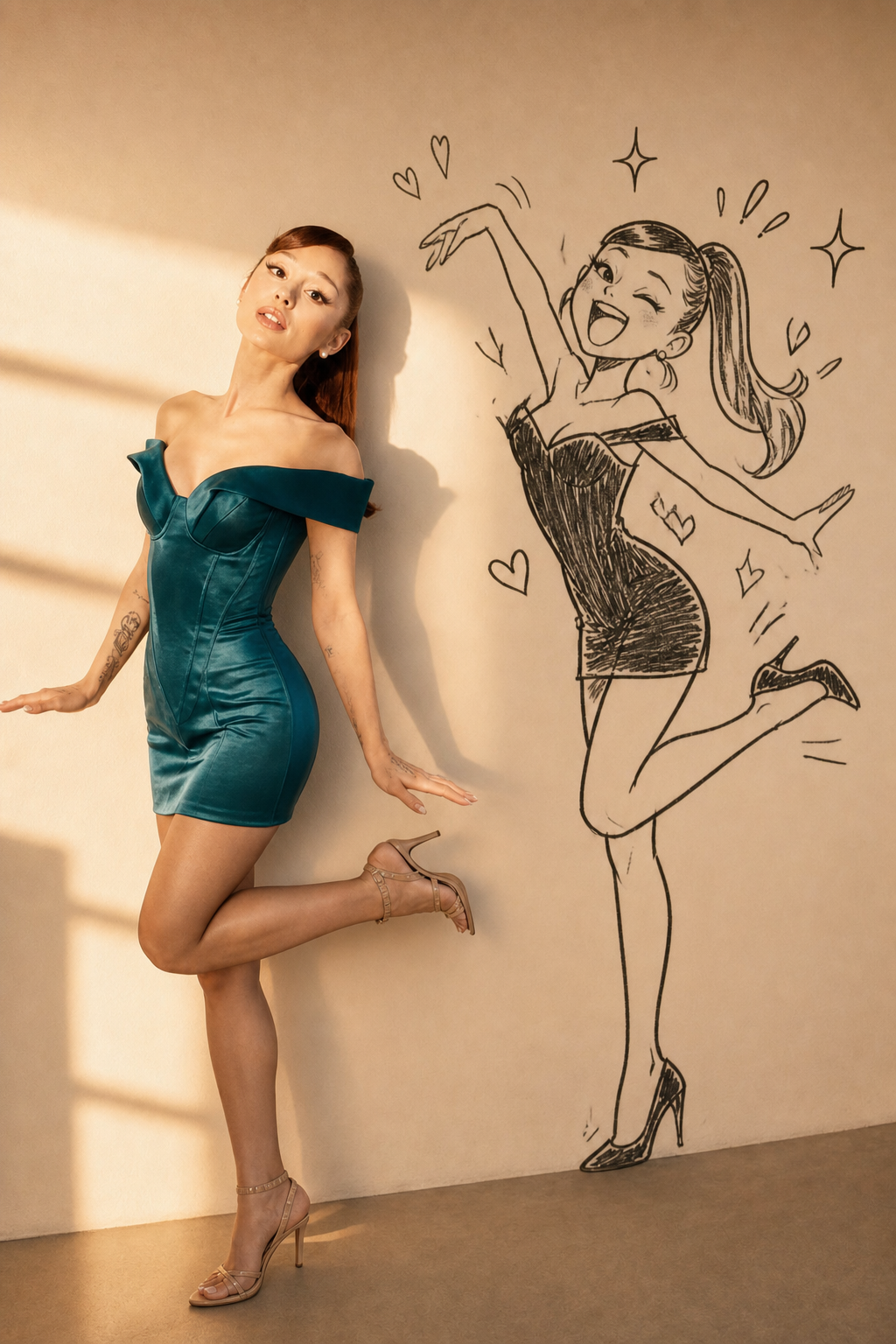
The phrase “full-body composition” and the “straight-on slight angle” keep the bent-knee stance, nude sandals, and teal satin mini dress readable as a complete fashion silhouette. “Soft golden rim-light look” separates the woman from the “plain warm beige wall,” while “crisp yet natural shadows” preserves the editorial realism rather than making the scene look glossy or artificial. The “whimsical hand-drawn cartoon sketch of the woman” supplies the playful focal contrast: realistic teal, tan, and warm beige against lightly sketched gray-brown lines.
FAQ
→How do I make the wall sketch more prominent than it is here?
Replace “On the wall beside her, a whimsical hand-drawn cartoon sketch of the woman appears in a similar pose, lightly sketched lines” with “a large, high-contrast hand-drawn cartoon sketch occupying most of the wall behind her, with bold charcoal outlines and visible expressive details.” Keep “beside her” only if you still want the figure and drawing separated rather than layered.
→How do I change the playful editorial mood into a darker, more dramatic portrait?
Replace “posing playfully,” “soft golden rim-light look,” and “warm minimalist color palette” with “standing in a poised, serious fashion pose,” “hard directional side-lighting with deep sculptural shadows,” and “cool charcoal, muted teal, and desaturated beige palette.” Change “whimsical” to “eerie, rough ink sketch” so the wall drawing supports the darker tone.
→How do I build a series of variations while preserving the same visual concept?
Keep “photorealistic fashion editorial,” “full-body composition,” and “a hand-drawn cartoon sketch of the woman,” then swap the outfit and pose in matched pairs: for example, replace “teal satin off-shoulder mini dress” with “coral velvet wrap dress” and “one knee bent” with “one hand on hip, feet crossed.” For location variants, replace “plain warm beige wall” with “pale sage plaster wall” or “cream tiled studio wall,” while changing the sketch line color to “green pencil” or “sepia ink” to match.
Learn the technique behind this
- Why does AI get hands and faces wrong, and how do I fix it? — Hands fail because they're small in frame, extremely variable in pose, and self-occluding — the model has less usable signal per pixel than for any other body part.
- Why can't AI spell, and how do I get readable text in an image? — Older diffusion models had no character-level representation of text, so they produced letterform-shaped texture instead of words.
- How do I keep the same character across multiple images? — Text prompts alone won't hold a face across images — a description defines a type, not a person.
Related prompts
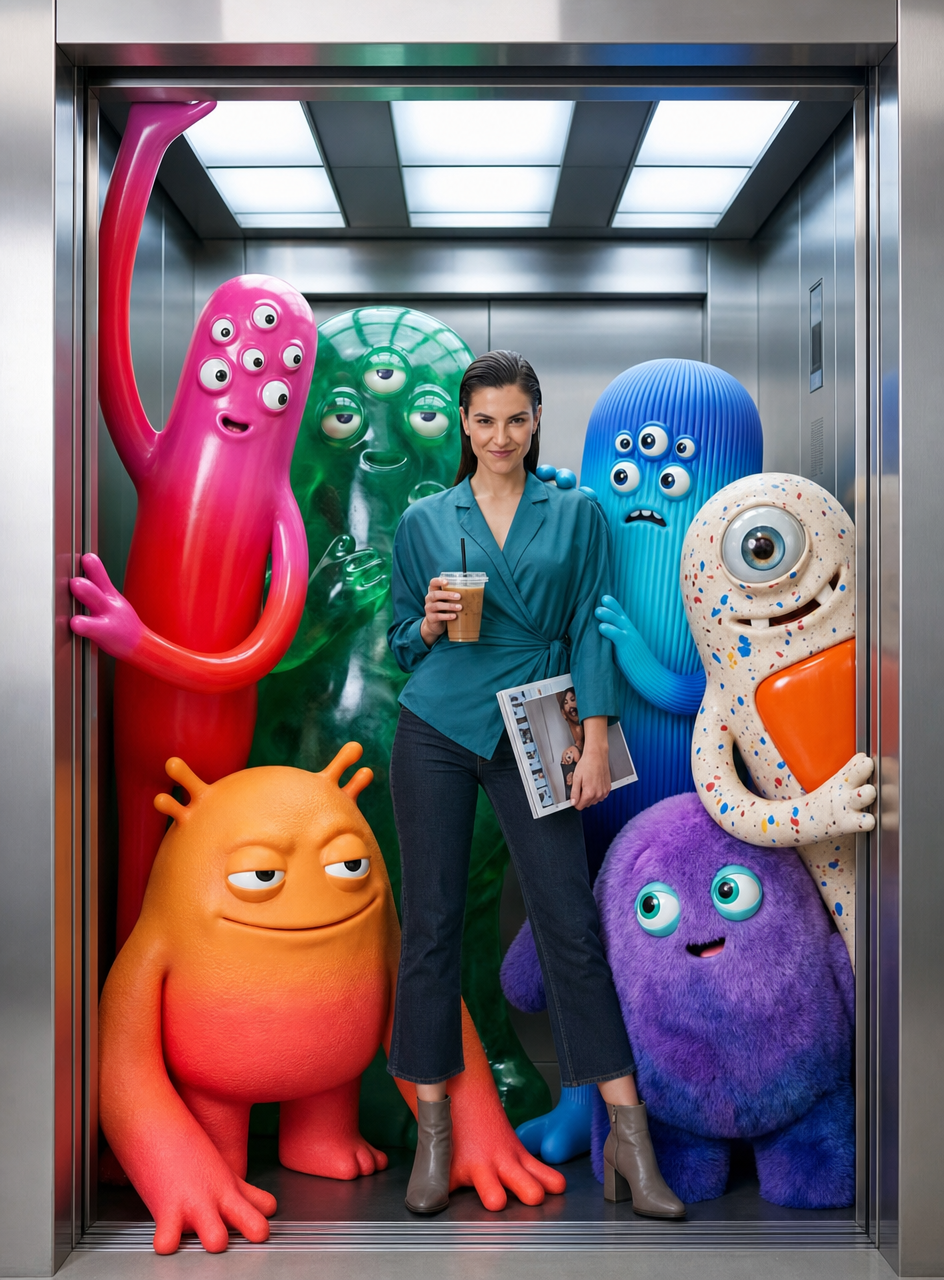
Teal fashion editorial in monster-filled lift
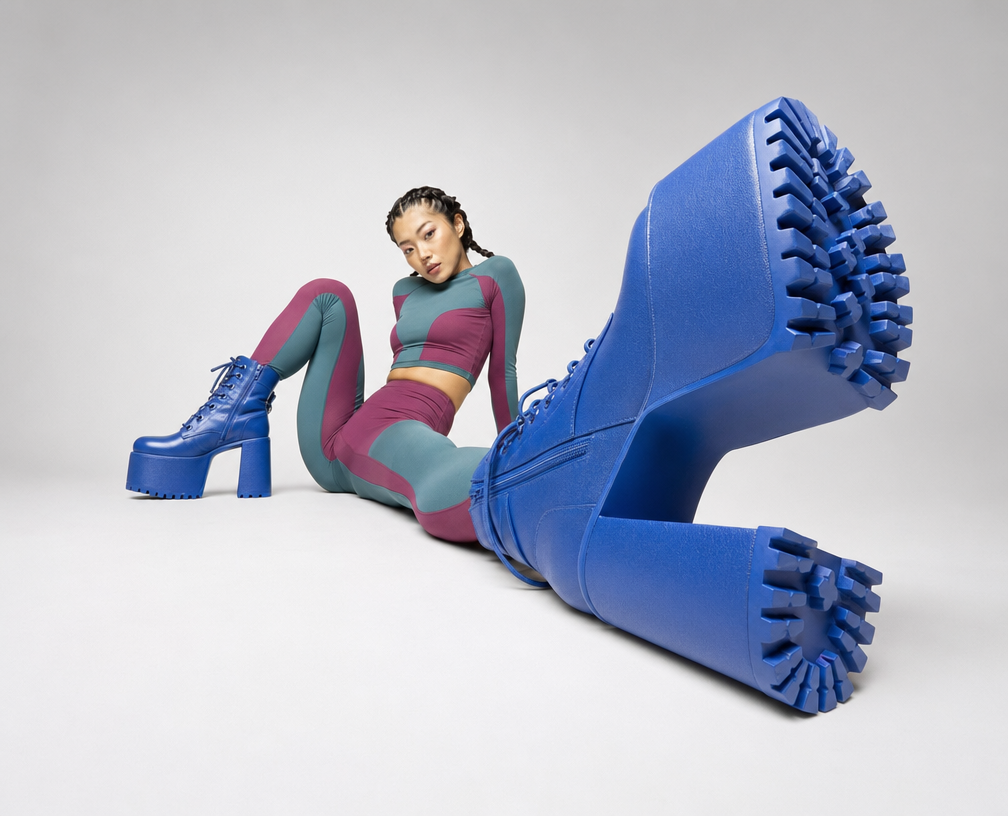
Cobalt Boots in Sleek Studio Edit
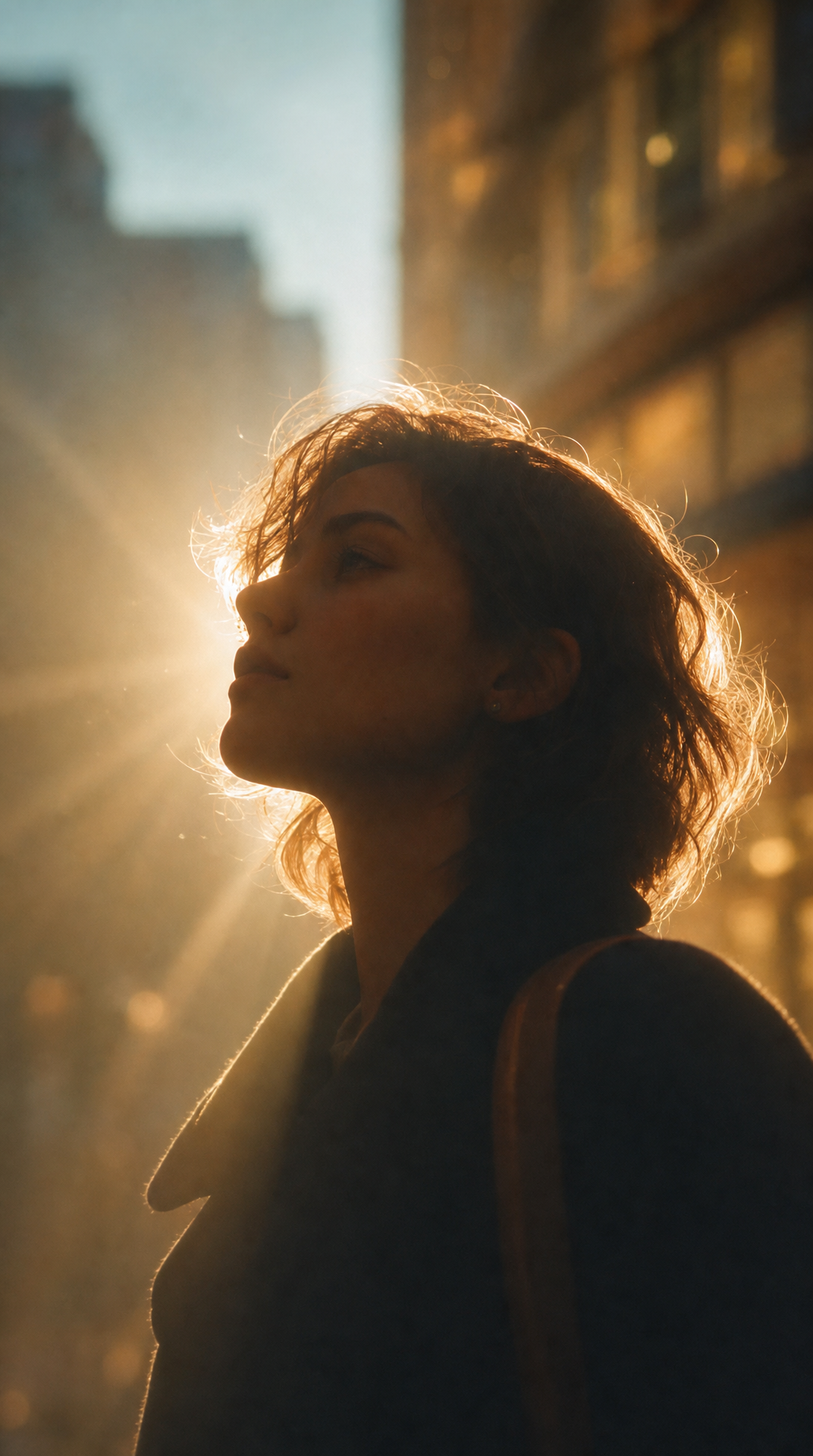
Silhouette Influencer by Sunlit Window
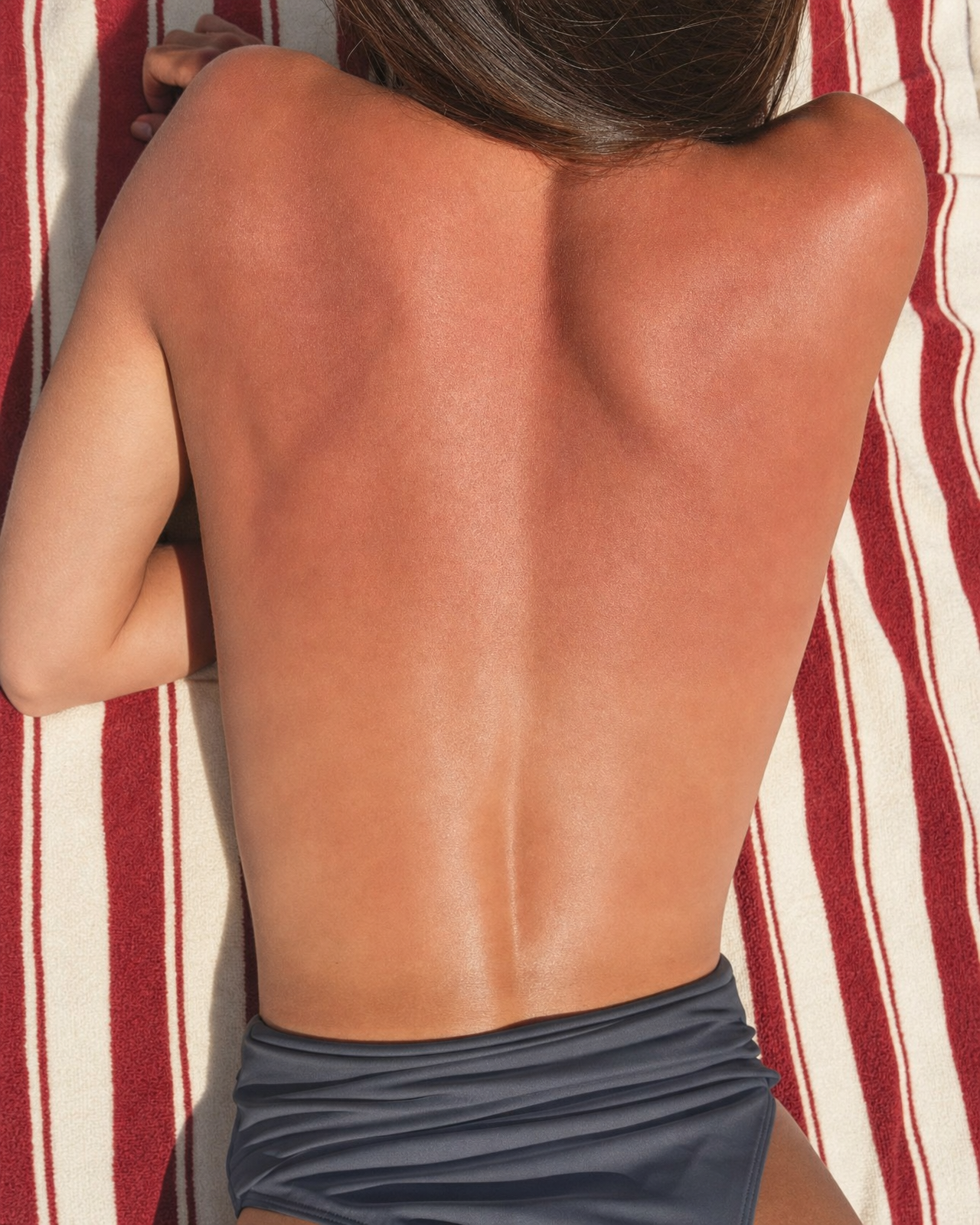
Sunlit editorial on striped beach towel