Why this works
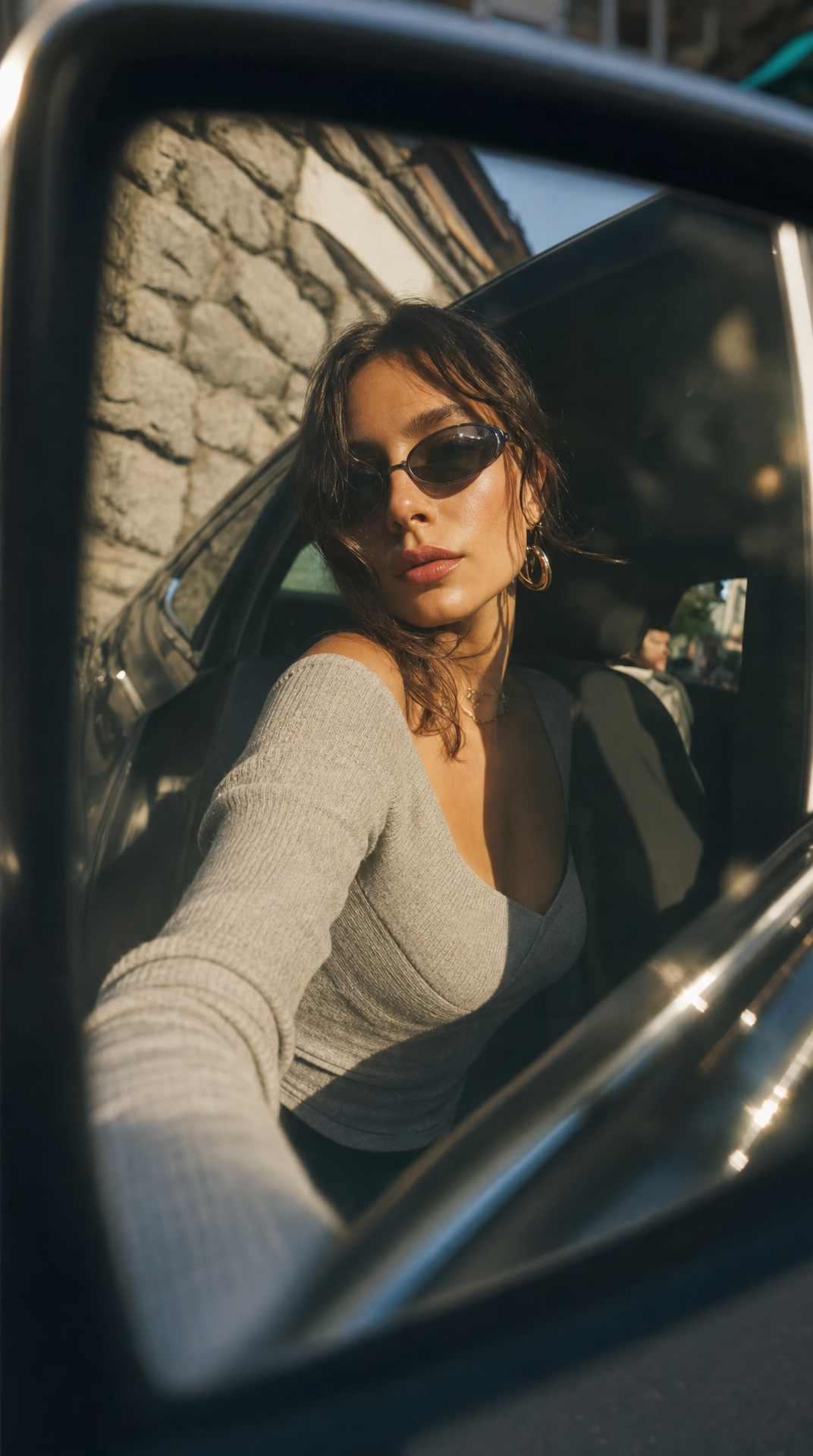
The phrase “seen in a side mirror reflection” supplies the portrait-closeup framing and adds a candid, observational angle, while “shallow depth of field” keeps the woman separated from the urban background. “Natural late-afternoon light” and “warm cinematic tones” explain the warm beige highlights, while “weathered stone textures” and “reflective chrome car trim” anchor the dominant gray palette with tactile contrast. The specific styling swaps, “sleek oval sunglasses with a smoky tint,” “matte rose shade,” and “fitted light-gray knit top,” give the image its restrained fashion-editorial polish rather than relying on the lighting alone.
FAQ
→How do I make the woman’s face and sunglasses more prominent in the reflection?
Replace “seen in a side mirror reflection” with “tight face-dominant side-mirror reflection, sunglasses filling the upper third of the frame,” and change “portrait-closeup” to “extreme close-up.” Keep “shallow depth of field,” but add “sharp focus on the eyes and oval sunglasses” so the chrome and stone recede further.
→How do I shift this from warm cinematic to a cooler, moodier street portrait?
Replace “natural late-afternoon light” and “warm cinematic tones” with “overcast blue-hour light, cool desaturated tones, and deep soft shadows.” Change “softly highlighted skin” to “subtly shadowed skin with restrained highlights,” and replace “beige” styling cues such as warm color emphasis with “charcoal, slate gray, and muted steel-blue accents.”
→How do I create a coordinated series of variations from this prompt?
Keep the fixed structure, including “fashion-forward woman in a side mirror reflection,” “iPhone 15 Pro style smartphone photorealistic photography,” and “shallow depth of field,” then swap one controlled group per image. For wardrobe variations, replace “fitted light-gray knit top” with “structured black blazer,” “cream ribbed turtleneck,” or “metallic silver camisole”; for locations, replace “weathered stone textures and reflective chrome car trim” with “rainy glass storefronts,” “concrete parking garage,” or “sunlit café windows.”
Learn the technique behind this
- Why can't AI spell, and how do I get readable text in an image? — Older diffusion models had no character-level representation of text, so they produced letterform-shaped texture instead of words.
- How should a prompt be structured, and does word order matter? — A prompt that behaves predictably names one subject first, then what it is doing, then where, then the light, then the lens or medium, then the style.
- Why does AI get hands and faces wrong, and how do I fix it? — Hands fail because they're small in frame, extremely variable in pose, and self-occluding — the model has less usable signal per pixel than for any other body part.
Related prompts
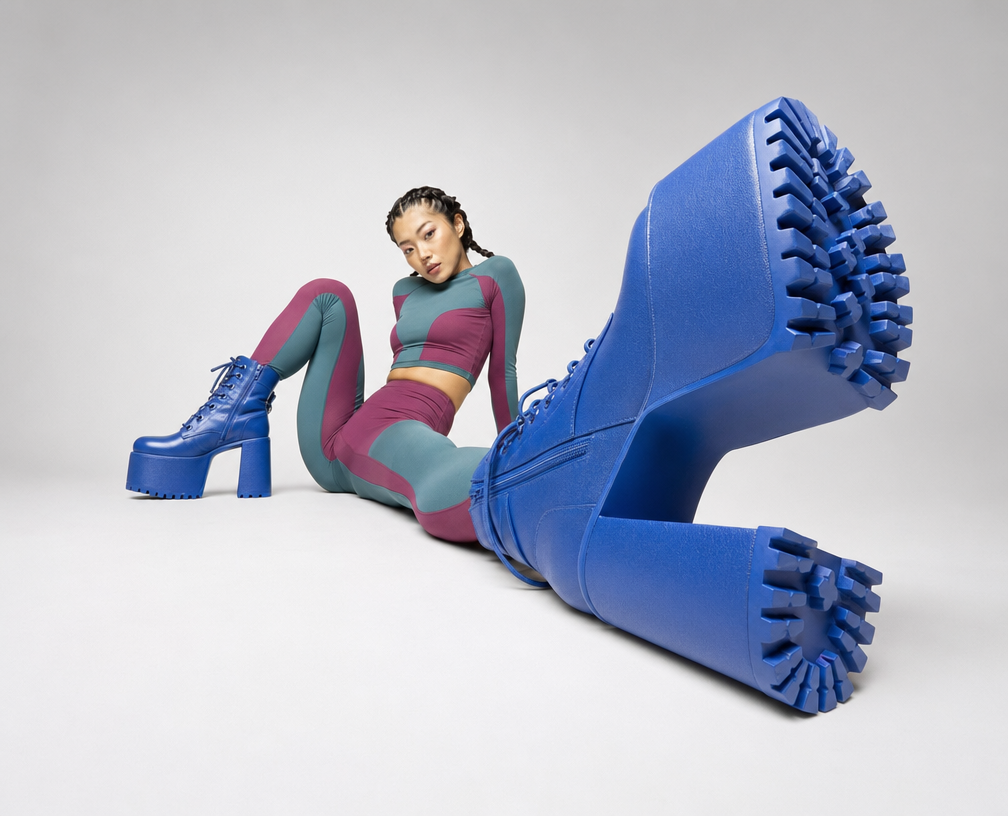
Cobalt Boots in Sleek Studio Edit

Teal fashion editorial in monster-filled lift

Sunlit editorial on striped beach towel
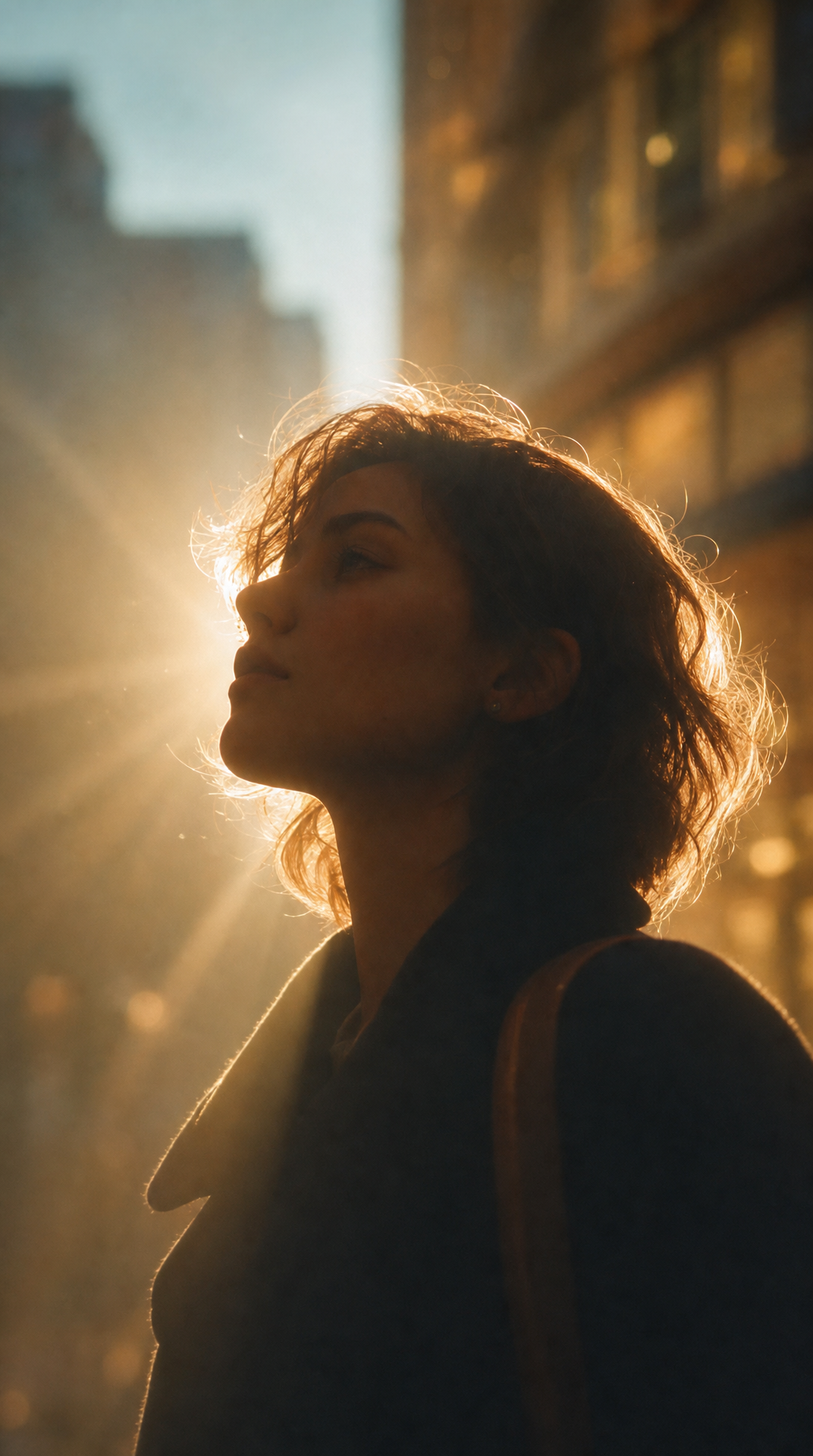
Silhouette Influencer by Sunlit Window