Why this works
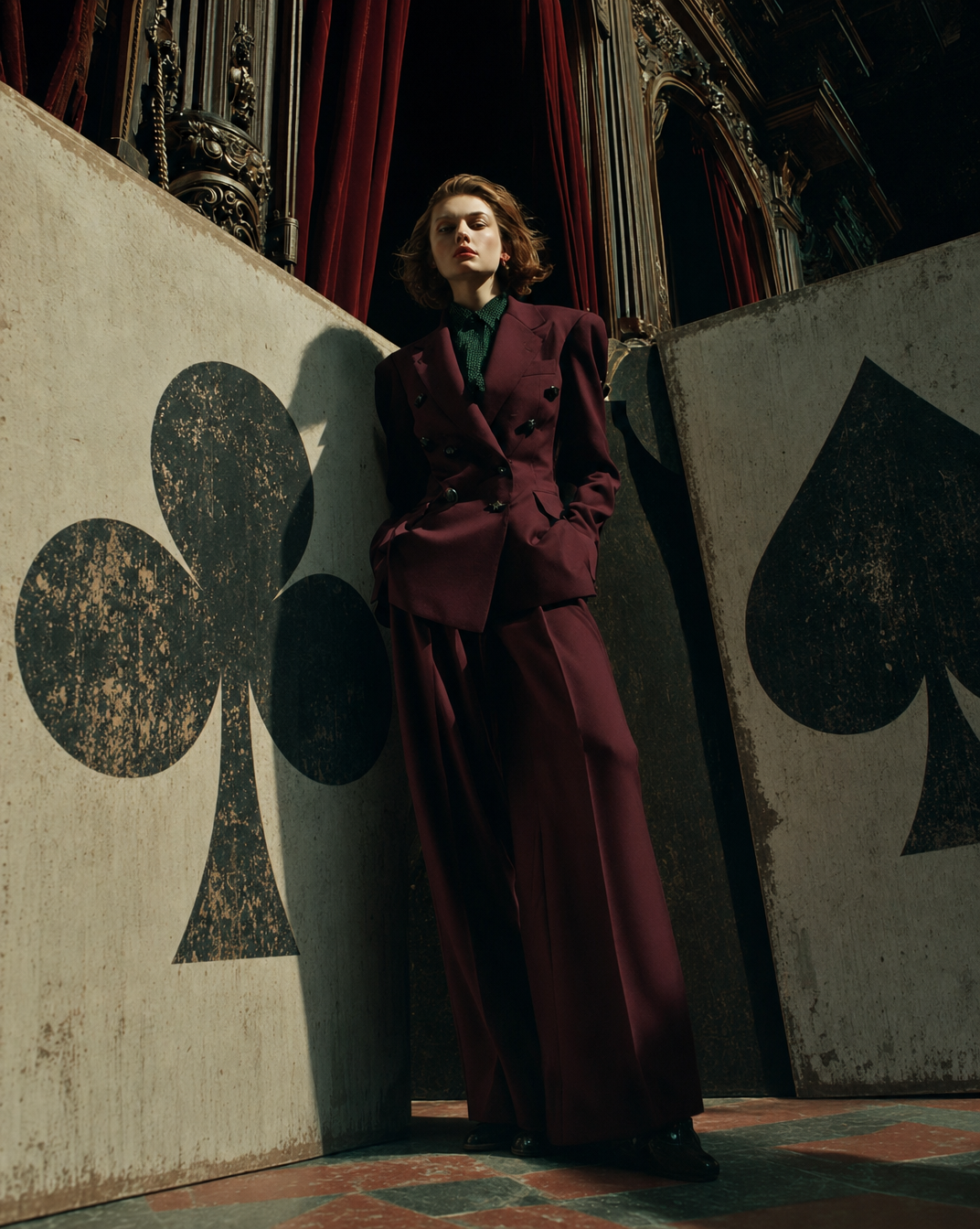
The phrase “woman in a burgundy tailored suit standing among oversized playing-card panels” gives the portrait a clear full-body subject and a graphic frame, while “large club and spade motifs instead of hearts and diamonds” establishes the surreal card-world concept. “Dramatic low-angle composition” makes her appear imposing, and “ornate vintage interior with tall drapes and decorative architecture” supplies theatrical scale behind her. The mood comes from the specific pairing of “moody cinematic lighting” with the “rich burgundy and emerald green palette,” though the rendered image’s dominant red and black tones make the result feel darker and more mysterious than the stated palette alone.
FAQ
→How do I make the woman feel more dominant and central in the composition?
Keep “dramatic low-angle composition,” but replace “standing among oversized playing-card panels” with “standing centered in the foreground, towering over the oversized playing-card panels.” Add “cards pushed to the far edges of the frame” and “full-body subject occupying most of the vertical image” to reduce competition from the set.
→How do I shift this from mysterious and theatrical to brighter, more glamorous fashion editorial?
Replace “moody cinematic lighting” with “bright diffused studio lighting with crisp highlights,” and change “rich burgundy and emerald green palette” to “burgundy, ivory, and polished gold palette.” Keep “high-fashion magazine aesthetic,” but add “clean luxury campaign finish” to preserve the editorial quality while lifting the tone.
→How do I build a matching series with a different card suit and setting?
Replace “large club and spade motifs instead of hearts and diamonds” with the desired suit language, such as “oversized red heart and diamond motifs.” Then swap “ornate vintage interior with tall drapes and decorative architecture” for a controlled location like “geometric Art Deco ballroom with mirrored walls,” while retaining “woman in a burgundy tailored suit,” “dramatic low-angle composition,” and “photorealistic editorial fashion portrait” as the series anchors.
Learn the technique behind this
- Why can't AI spell, and how do I get readable text in an image? — Older diffusion models had no character-level representation of text, so they produced letterform-shaped texture instead of words.
- How do I keep one consistent style across a whole set of images? — Style consistency is more achievable than character consistency because style lives in describable attributes.
- How should a prompt be structured, and does word order matter? — A prompt that behaves predictably names one subject first, then what it is doing, then where, then the light, then the lens or medium, then the style.
Related prompts
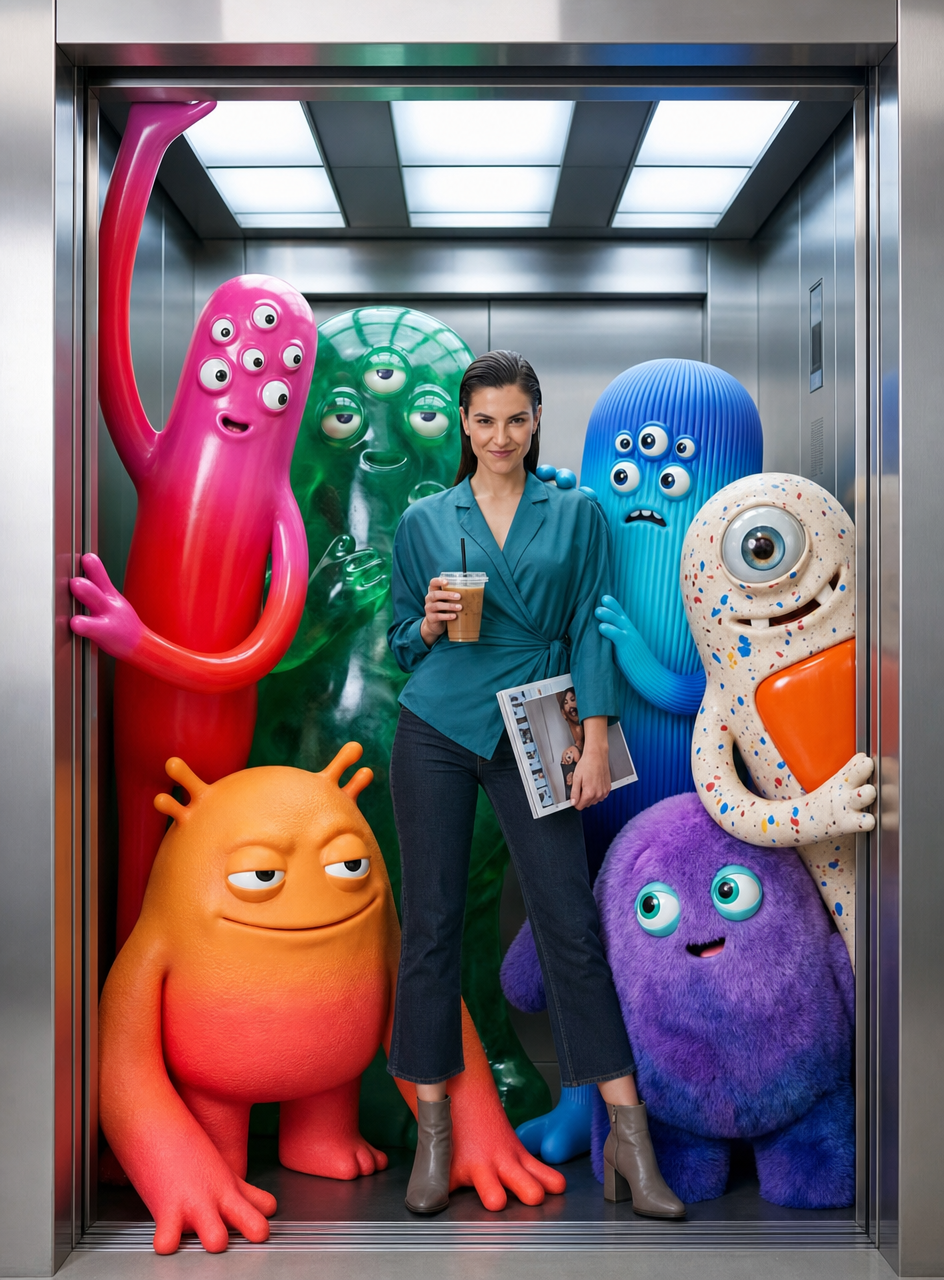
Teal fashion editorial in monster-filled lift
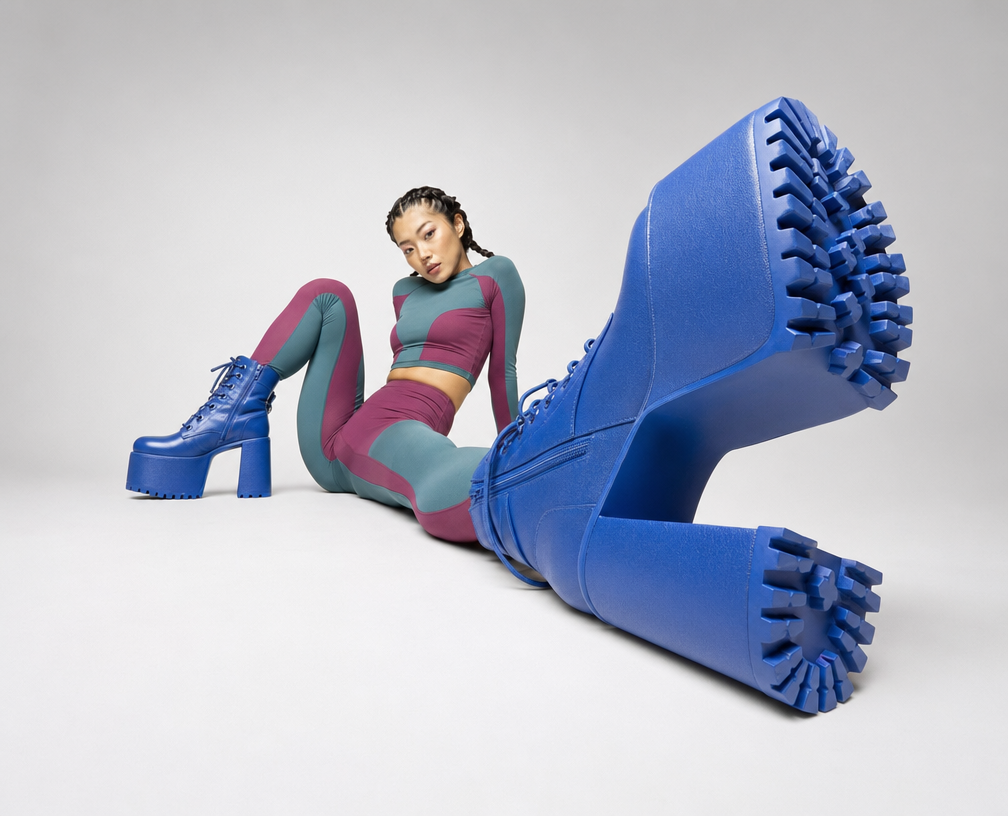
Cobalt Boots in Sleek Studio Edit
Silhouette Influencer by Sunlit Window
Sunlit editorial on striped beach towel