Why this works
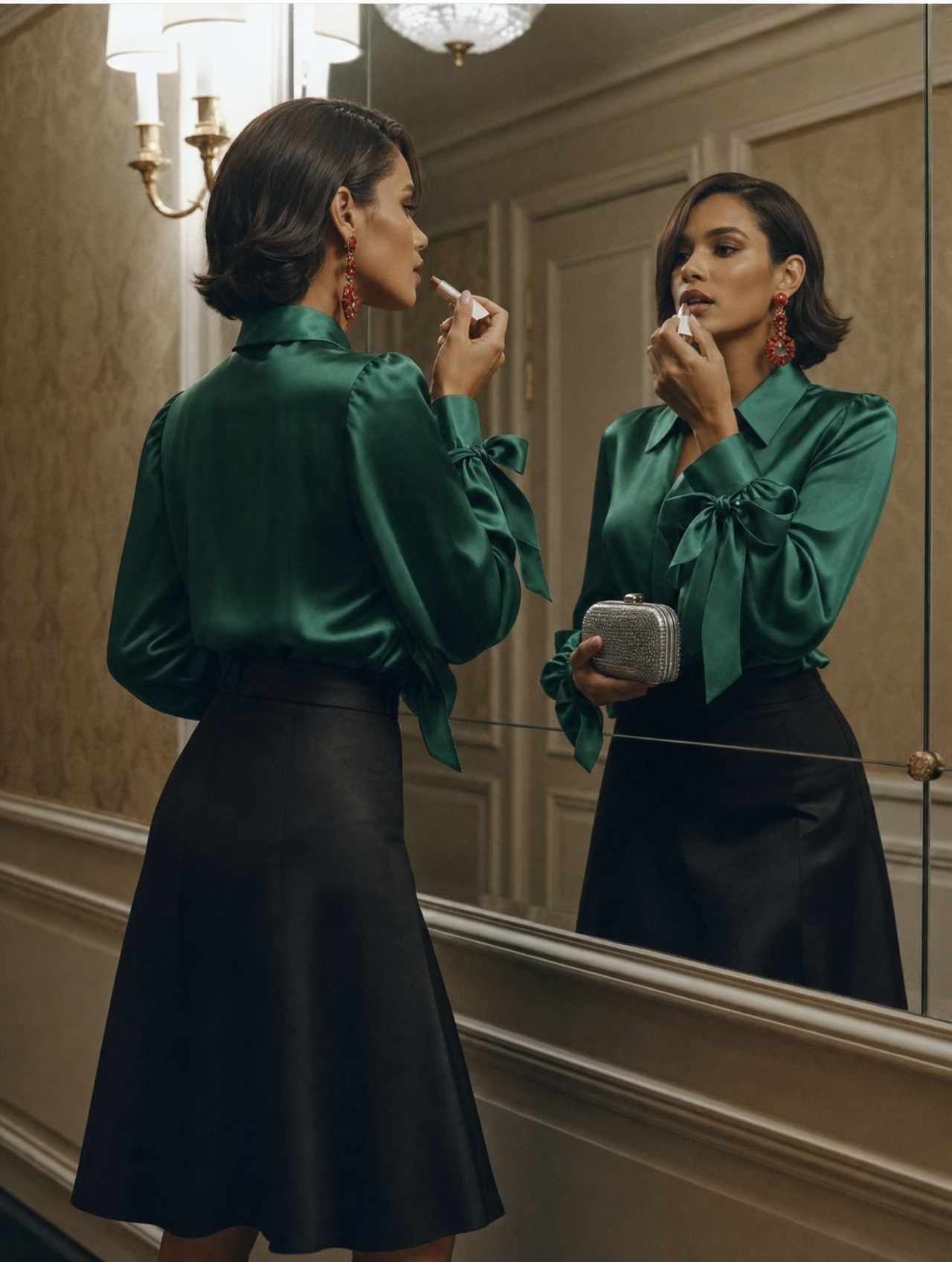
The polished fashion-editorial mood comes from the exact combination of “photorealistic fashion editorial,” “refined luxurious interior details,” and “luxurious polished mood,” while “warm ambient lighting” adds softness to the beige-and-brown room and the black skirt anchors the darker palette. “Large wall mirror,” “ornate wall sconces,” and “portrait-full-body” establish a vertical, full-length composition with layered reflections and architectural framing. The phrase “shallow depth of field focusing on makeup application and face” directs attention toward the lipstick gesture and facial detail, while “soft highlights on the satin fabric” makes the deep emerald blouse a controlled accent against the image’s dominant black, beige, and brown tones.
FAQ
→How do I make the woman’s face and lipstick application more prominent?
Replace “portrait-full-body” with “tight waist-up fashion portrait,” and change “shallow depth of field focusing on makeup application and face” to “extreme shallow depth of field, sharp focus on lips, lipstick tube, and fingertips.” Replace “standing near ornate wall sconces” with “framed closely beside the mirror,” so the gesture occupies more of the composition.
→How do I shift this from a warm luxurious editorial to a cooler, more dramatic mood?
Replace “warm ambient lighting” with “cool directional blue-gray light with crisp side shadows,” and change “soft highlights on the satin fabric and gentle reflections in the mirror” to “high-contrast reflections with controlled specular highlights.” Replace “luxurious polished mood” with “moody cinematic night-editorial mood,” while keeping the emerald blouse for a strong jewel-tone accent.
→How do I build a coordinated series of variations from this prompt?
Keep “photorealistic fashion editorial,” “portrait-full-body,” “cinematic composition,” and the same camera phrasing fixed across every image. Swap “deep emerald satin blouse with dramatic bow-tied sleeves” for variants such as “cobalt blue velvet blazer,” “ivory silk dress,” or “burgundy sequined top,” and replace “elegant hotel-like room” with “art deco dressing room,” “marble bathroom,” or “Parisian apartment foyer.” Retain “large wall mirror” and “applying lipstick” as recurring anchors so the series stays visually related.
Learn the technique behind this
- Why can't AI spell, and how do I get readable text in an image? — Older diffusion models had no character-level representation of text, so they produced letterform-shaped texture instead of words.
- How should a prompt be structured, and does word order matter? — A prompt that behaves predictably names one subject first, then what it is doing, then where, then the light, then the lens or medium, then the style.
- Do negative prompts work, and what should go in one? — Negative prompts work on models that support a separate negative conditioning channel — mainly Stable Diffusion and FLUX-family models.
Related prompts
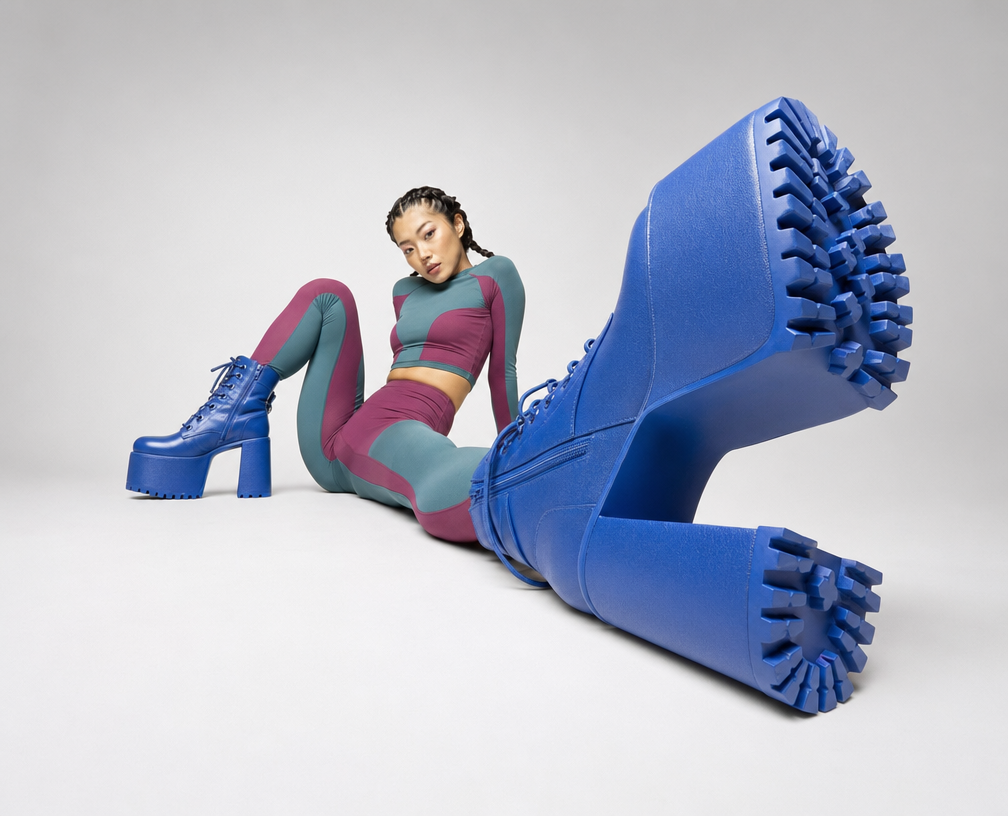
Cobalt Boots in Sleek Studio Edit
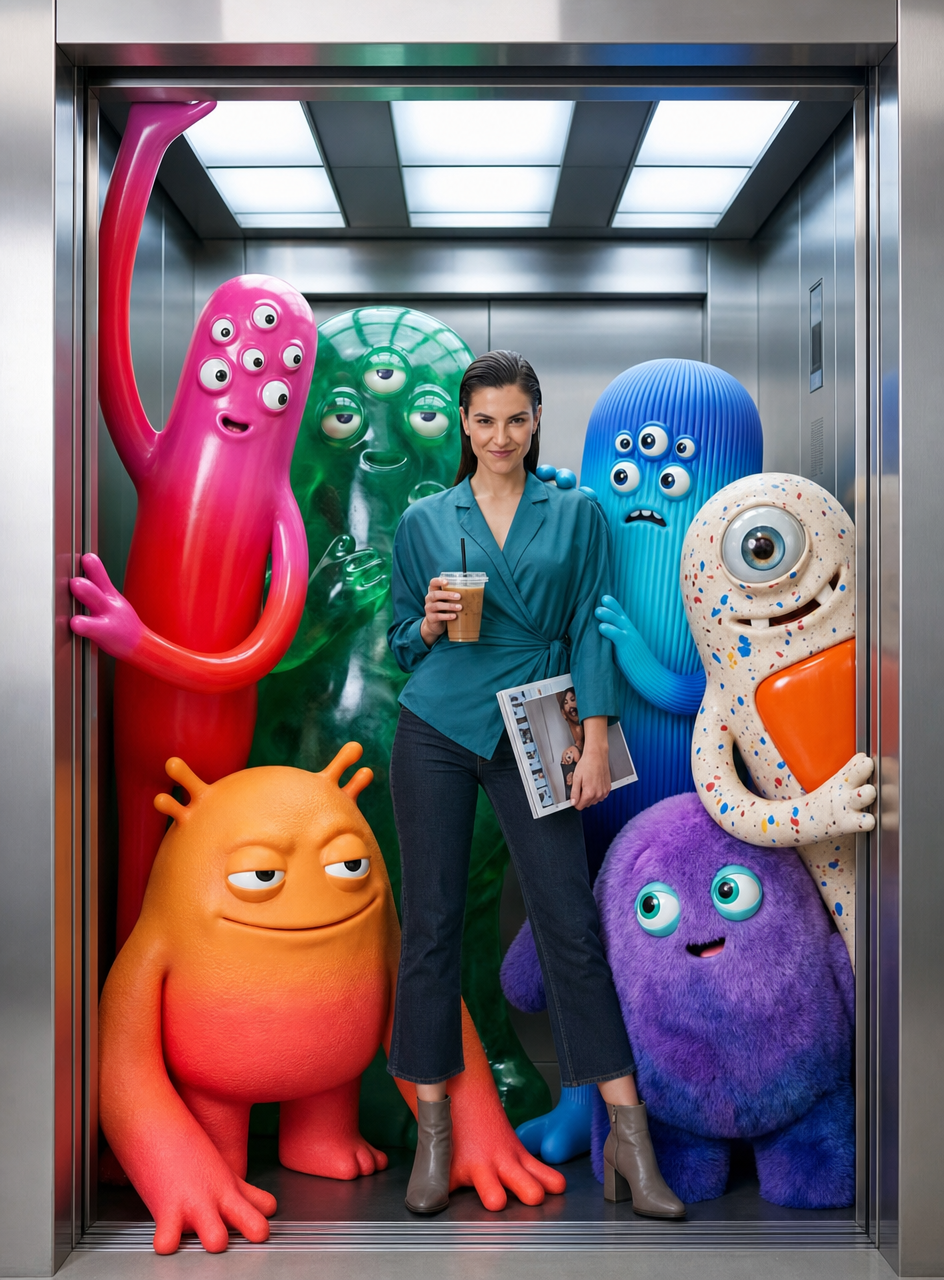
Teal fashion editorial in monster-filled lift
Sunlit editorial on striped beach towel
Silhouette Influencer by Sunlit Window