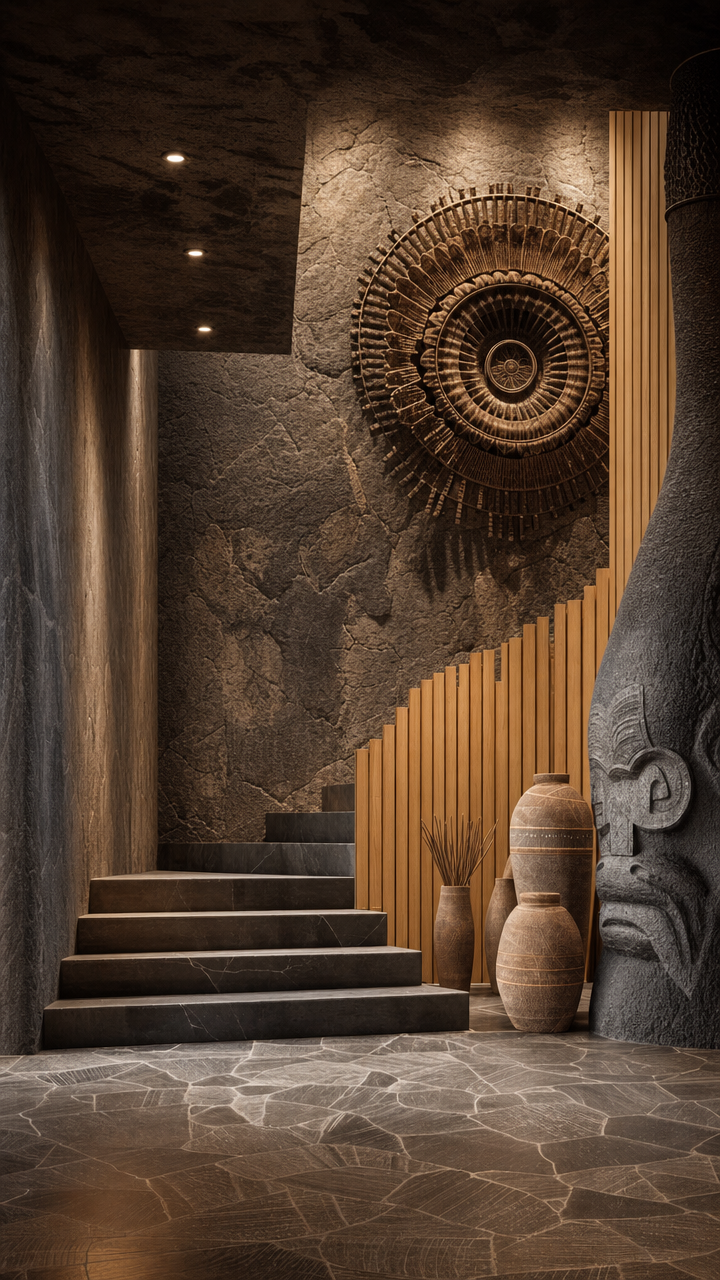
Why this works
The wide architectural framing gives the stairwell a strong sense of structure, while “35mm lens look” and “keeps stair geometry crisp” preserve the stepped staircase as the visual anchor. “Warm golden ambient lighting softened by haze,” “recessed ceiling spotlights,” and “moody long shadows” produce the warm, dramatic atmosphere; the tan, gray, and black palette reinforces it through clay beige, warm greige, deep umber, and the dark stair. The vertical oak slat wall, circular wall art, and elevated vessels create a controlled rhythm across the landing without competing with the central stair geometry.
FAQ
→How do I make the circular wall art the main focal point?
Replace “stair geometry crisp” with “circular wall art in razor-sharp focus as the primary focal point,” and change “wide-shot” to “medium-wide framing centered on the landing wall.” Keep “dark stepped staircase” but replace “shallow depth of field” with “staircase gently receding into softer focus.”
→How do I make this stairwell brighter and less moody?
Replace “moody long shadows” with “soft, short shadows,” “warm golden ambient lighting softened by haze” with “bright diffuse daylight,” and reduce “deep umber” to “light walnut brown.” Change “high-contrast depth” to “low-contrast, evenly exposed interior lighting” while retaining the recessed ceiling spotlights.
→How do I create a matching series in different materials?
Keep the fixed structure, including “35mm lens look,” “architectural photography,” and “wide-shot,” then swap “carved stone and textured plaster walls” for variations such as “hand-troweled limewash and pale travertine” or “blackened stone and smooth clay plaster.” Replace “vertical light-oak wooden slat accent wall” with “vertical smoked-oak slat wall” or “woven natural-fiber panel,” while preserving “sculptural tribal-inspired circular wall art” for visual continuity.
Learn the technique behind this
- Why can't AI spell, and how do I get readable text in an image? — Older diffusion models had no character-level representation of text, so they produced letterform-shaped texture instead of words.
- How do I keep one consistent style across a whole set of images? — Style consistency is more achievable than character consistency because style lives in describable attributes.
- How should a prompt be structured, and does word order matter? — A prompt that behaves predictably names one subject first, then what it is doing, then where, then the light, then the lens or medium, then the style.
Related prompts
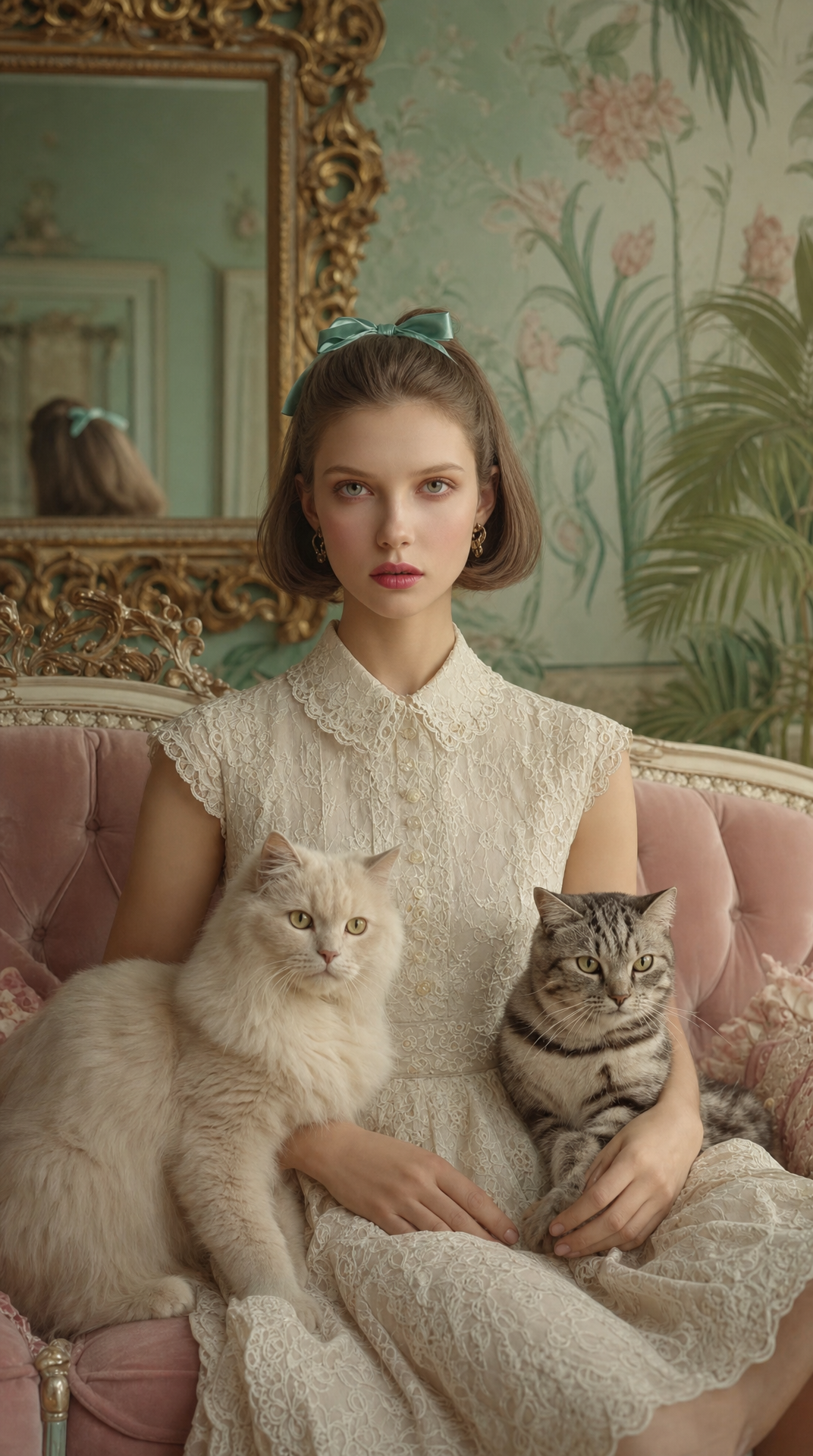
Young woman with two cats
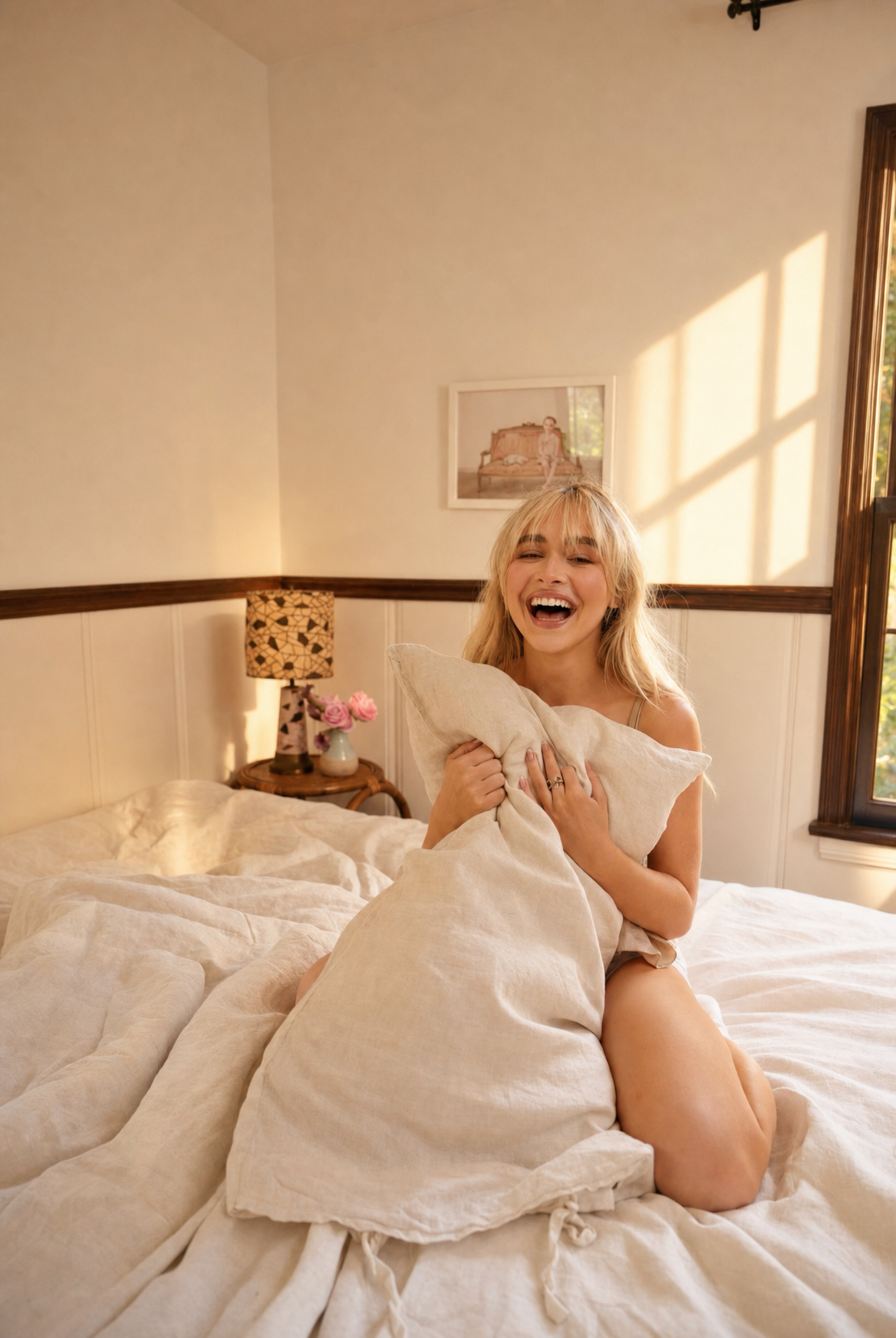
Blonde woman hugging beige pillow on off-white bed
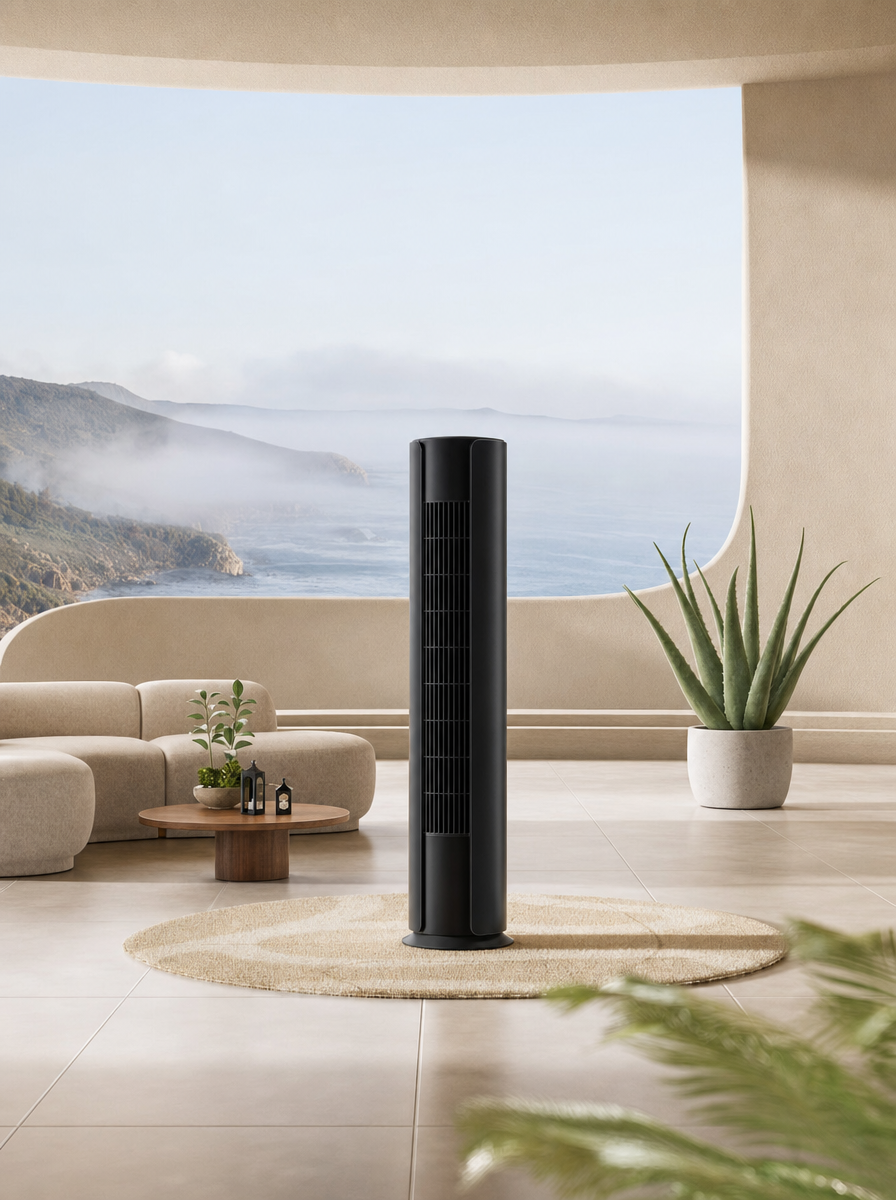
Black tower fan on gray rug by window
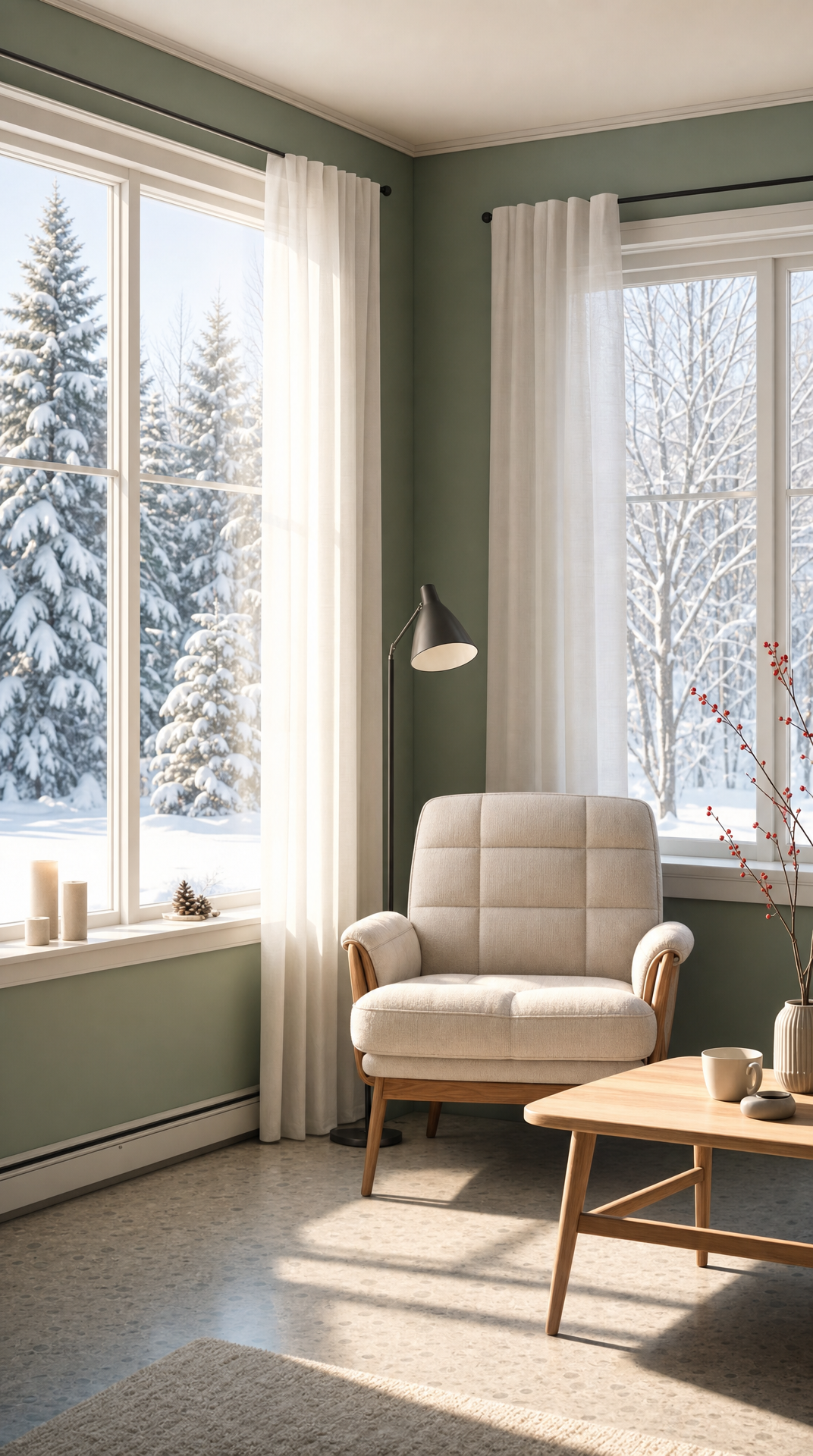
Cozy Winter Living Room in Sage