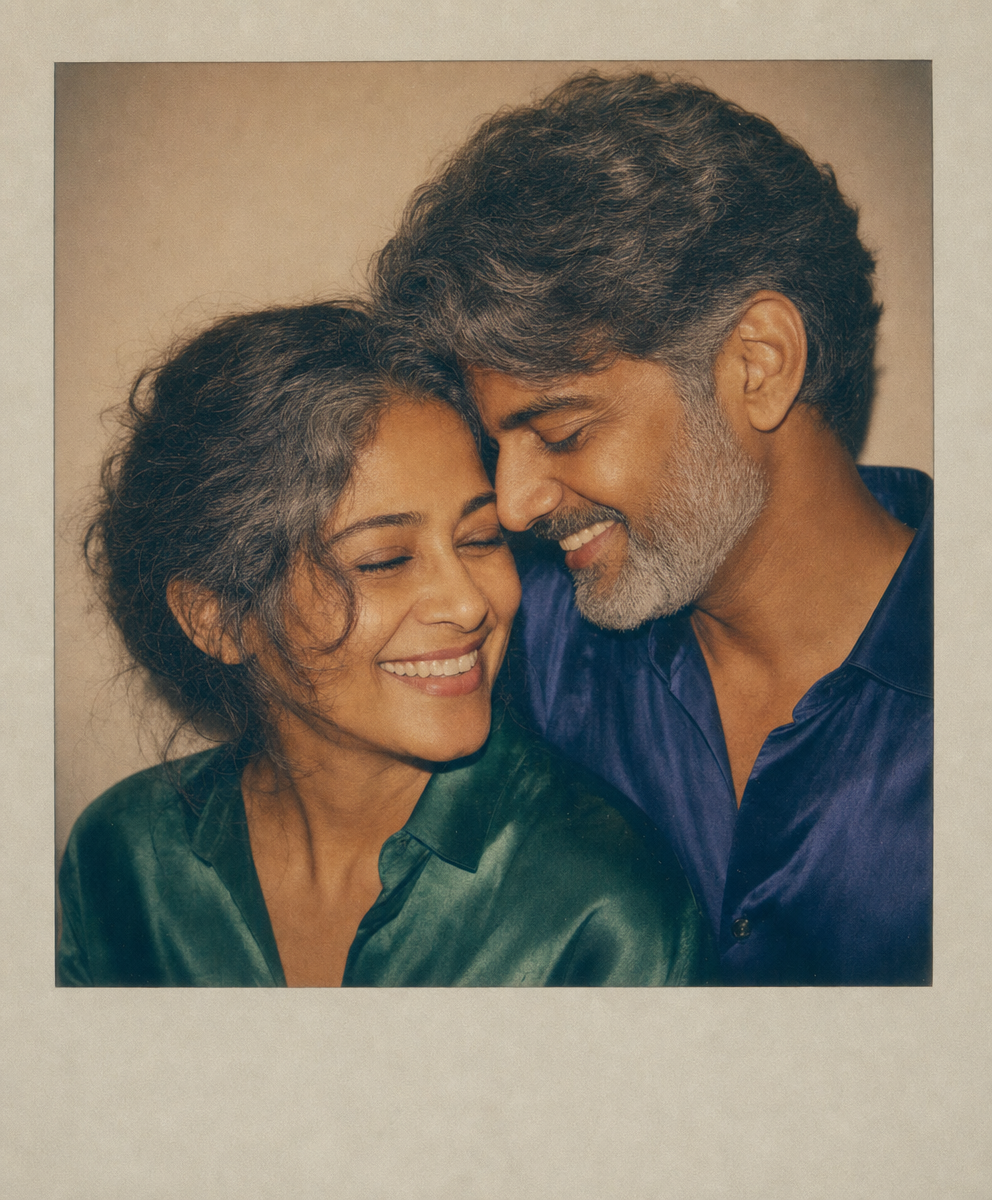
Why this works
'Faces close, cheeks nearly touching' is what forces the tight, portrait-closeup framing and makes the intimacy read instantly, not the amber tones alone. 'Warm nostalgic amber tones' plus 'soft grain, faded muted colors' are the phrases doing the color-harmony work, pulling the jewel-toned silk shirts (source of that navy and green) down into a muted, aged register instead of letting them pop as saturated color. 'White polaroid border frame' and 'retro instant camera aesthetic' are what cue the eye to read this as a found object, a physical photo pulled from a drawer, rather than a clean digital portrait. 'Candid intimate moment' is the phrase steering the couple's laughing expressions away from posed stiffness toward something caught mid-moment.
FAQ
→How do I make the jewel-toned shirts stand out more instead of looking muted?
Drop or soften 'faded muted colors' and 'warm nostalgic amber tones' since those are actively desaturating the shirt colors. Replace with something like 'rich saturated jewel tones' and keep 'soft grain' but remove 'faded' so the navy and green in the silk stay vivid against the vintage border.
→How do I shift this from joyful to more bittersweet or reflective?
Swap 'laughing joyfully together' for 'gazing at each other quietly' or 'smiling softly, eyes glistening' and change 'candid intimate moment' to 'tender, wistful moment'. Keep the amber tones and grain since those still support a reflective mood, they just need a calmer expression driving the scene.
→How do I build a series of variations from this same prompt?
Keep the fixed elements 'vintage polaroid-style photograph', 'white polaroid border frame', and 'soft natural lighting' as your anchor, then rotate the subject line: try 'two elderly sisters embracing', 'a father and adult son sharing a laugh', or 'young siblings mid-giggle' in place of 'middle-aged South Asian couple laughing joyfully together'. The retro camera and grain language will hold the series together visually even as the subjects change.
Learn the technique behind this
- Why can't AI spell, and how do I get readable text in an image? — Older diffusion models had no character-level representation of text, so they produced letterform-shaped texture instead of words.
- How should a prompt be structured, and does word order matter? — A prompt that behaves predictably names one subject first, then what it is doing, then where, then the light, then the lens or medium, then the style.
- How do I keep one consistent style across a whole set of images? — Style consistency is more achievable than character consistency because style lives in describable attributes.
Related prompts
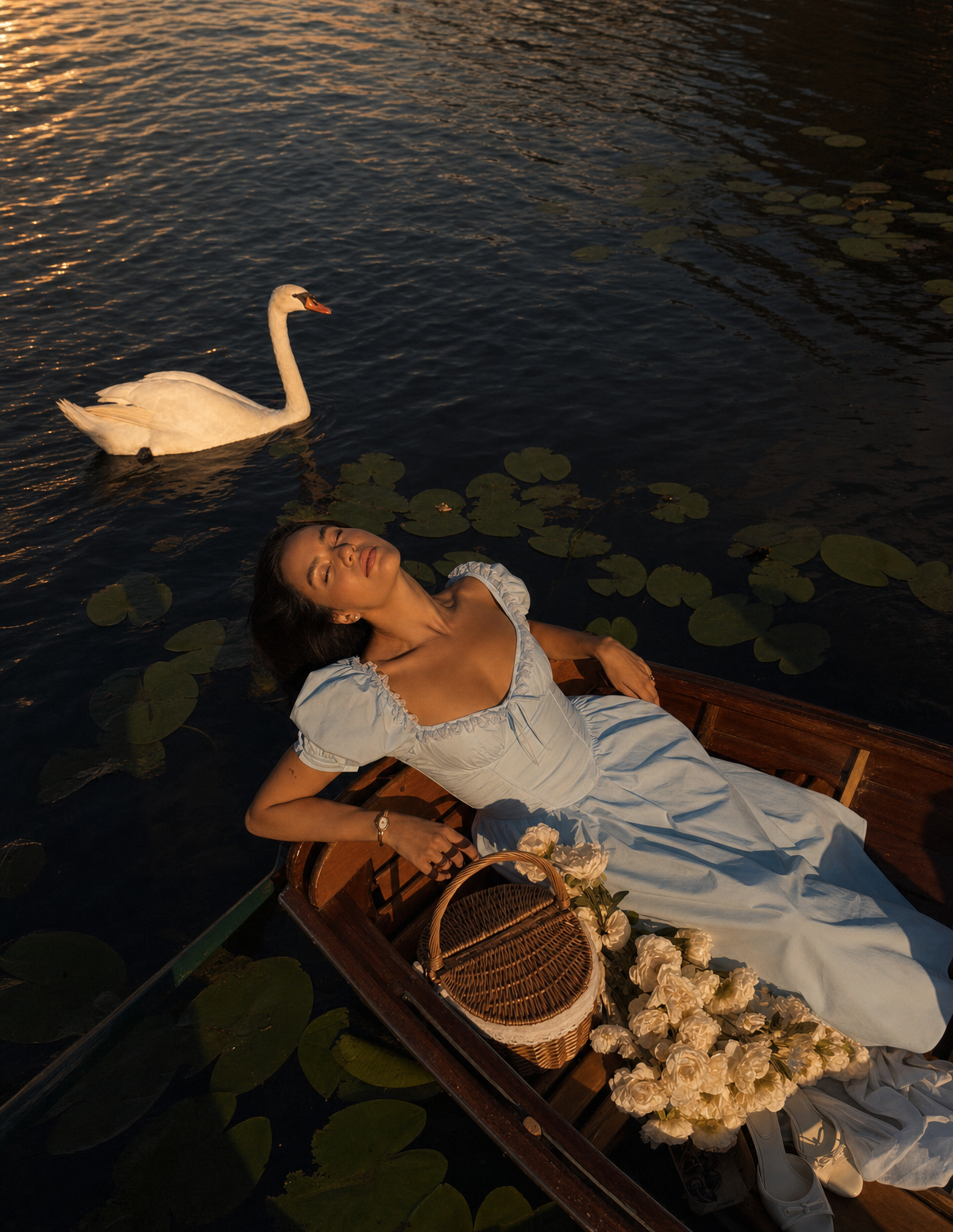
Woman in pale blue dress in lily boat
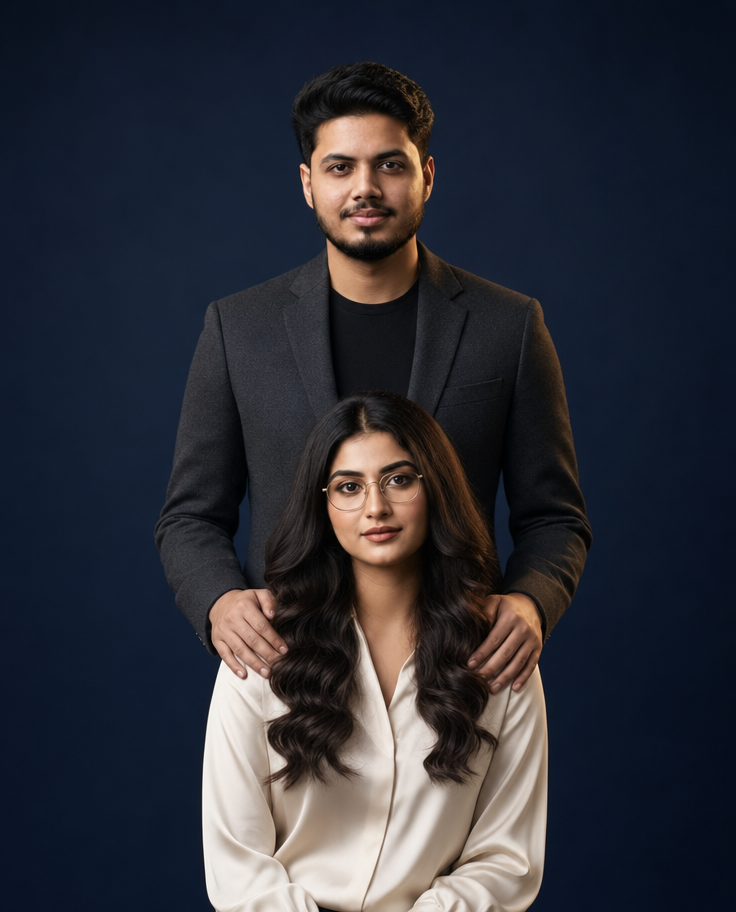
Woman and Man in Intimate Studio Portrait
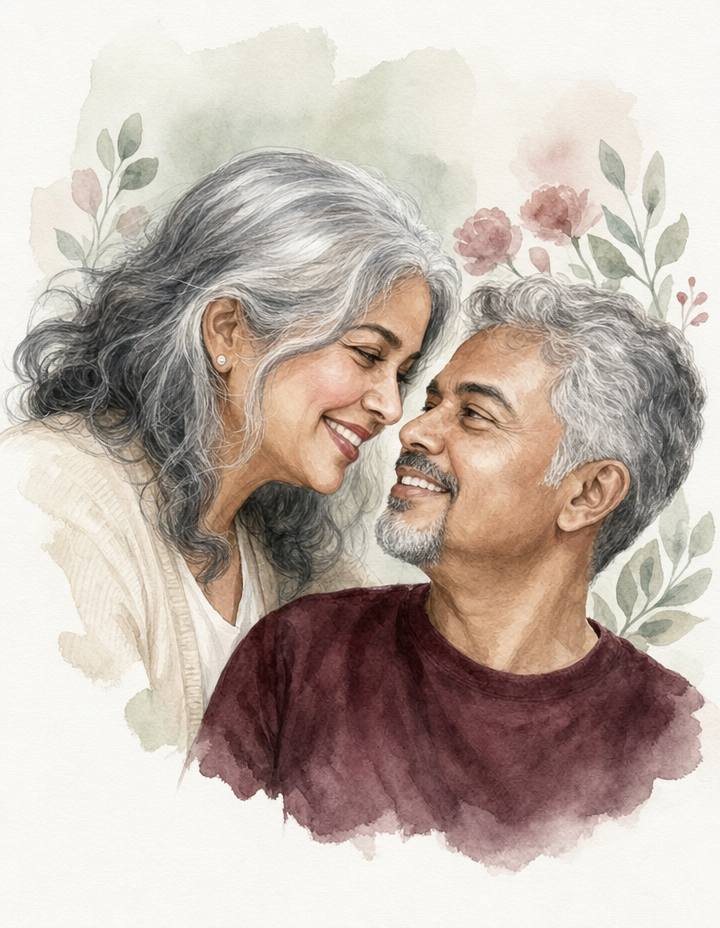
Older Couple in Tender Watercolor Embrace
South Asian Couple in Sage and Cream