Why this works
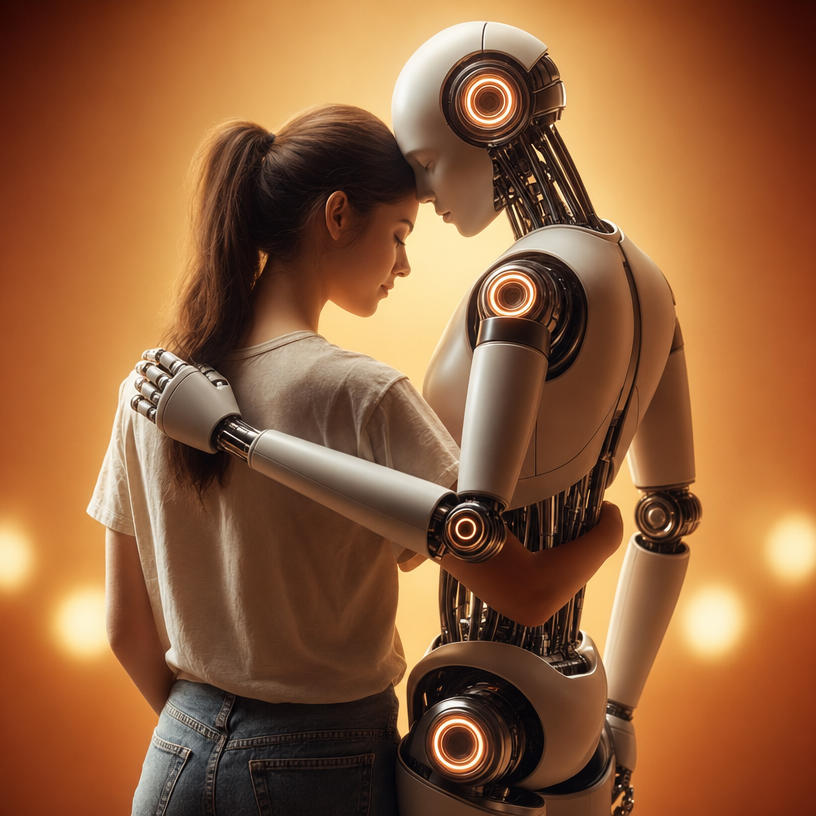
The intimate mood comes from the concrete pose, “robot’s arm around her shoulders in an intimate embrace,” while “warm tungsten lighting with a faint teal rim light” adds a restrained futuristic color contrast to the beige, brown, white, and gray image palette. “Cinematic three-quarter side view focusing on faces and upper bodies” makes their expressions and relationship the visual priority, even within the portrait-full-body composition. “Soft bokeh in the background” separates the pair from the futuristic studio without competing with the robot’s “warm red-orange circular mechanical details” and “smooth matte white and brushed steel body panels.”
FAQ
→How do I make the robot more visually prominent than the woman?
Replace “focusing on faces and upper bodies” with “robot-centered composition with the humanoid robot occupying most of the frame,” and change “standing beside a sleek humanoid robot” to “the woman standing slightly behind a dominant humanoid robot.” Keep “robot’s arm around her shoulders” to preserve the embrace.
→How do I make the scene feel colder and more technologically distant?
Replace “Warm tungsten lighting with a faint teal rim light” with “cool blue-white overhead lighting with strong cyan rim light,” and change “intimate embrace” to “formal side-by-side stance with minimal physical contact.” You can also replace “subtle futuristic atmosphere” with “sterile high-tech laboratory atmosphere” for a less romantic tone.
→How do I create a series of variations while keeping the same visual identity?
Keep “Photorealistic futuristic studio look,” “smooth matte white and brushed steel body panels,” “warm red-orange circular mechanical details,” and “cinematic three-quarter side view,” then swap the action phrase “robot’s arm around her shoulders in an intimate embrace” for variations such as “examining a holographic interface together,” “walking side-by-side through the studio,” or “the woman resting her hand on the robot’s forearm.”
Learn the technique behind this
- How should a prompt be structured, and does word order matter? — A prompt that behaves predictably names one subject first, then what it is doing, then where, then the light, then the lens or medium, then the style.
- Why can't AI spell, and how do I get readable text in an image? — Older diffusion models had no character-level representation of text, so they produced letterform-shaped texture instead of words.
- Why does AI get hands and faces wrong, and how do I fix it? — Hands fail because they're small in frame, extremely variable in pose, and self-occluding — the model has less usable signal per pixel than for any other body part.
Related prompts

Woman in pale blue dress in lily boat
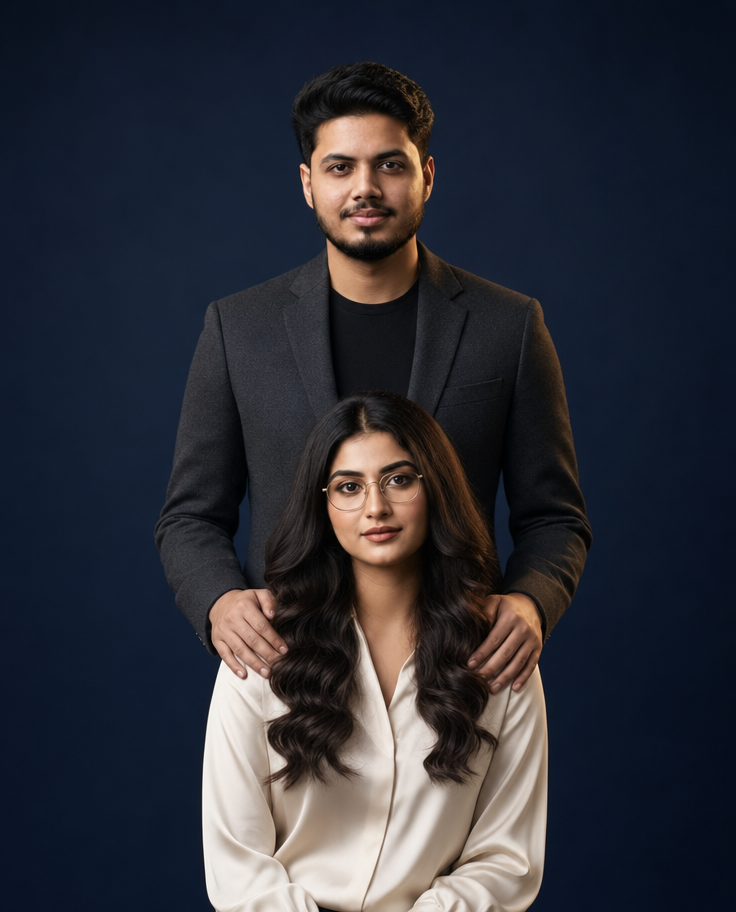
Woman and Man in Intimate Studio Portrait
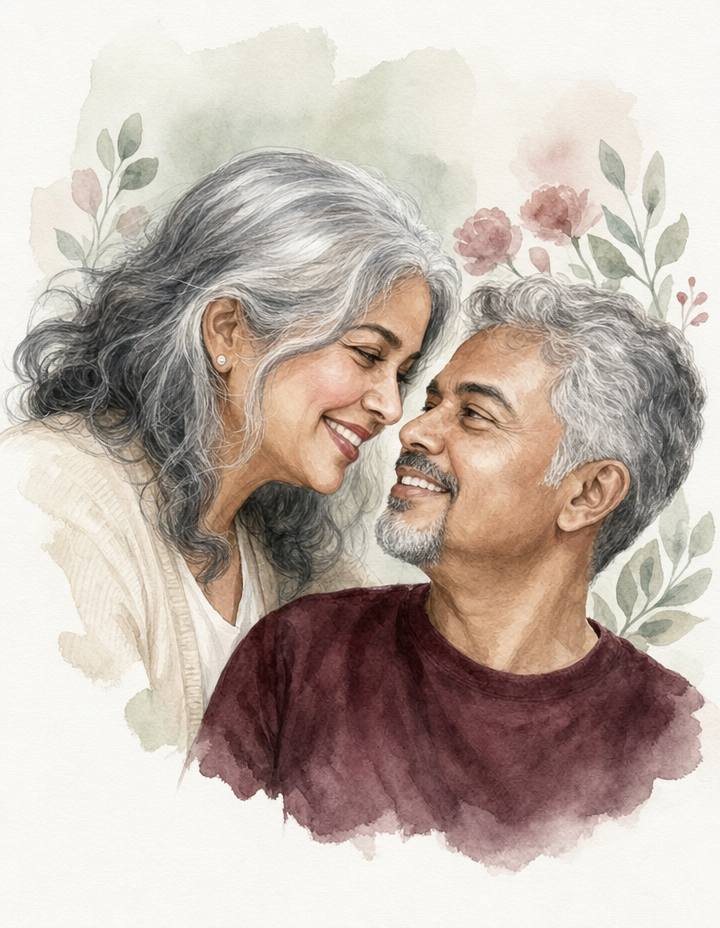
Older Couple in Tender Watercolor Embrace
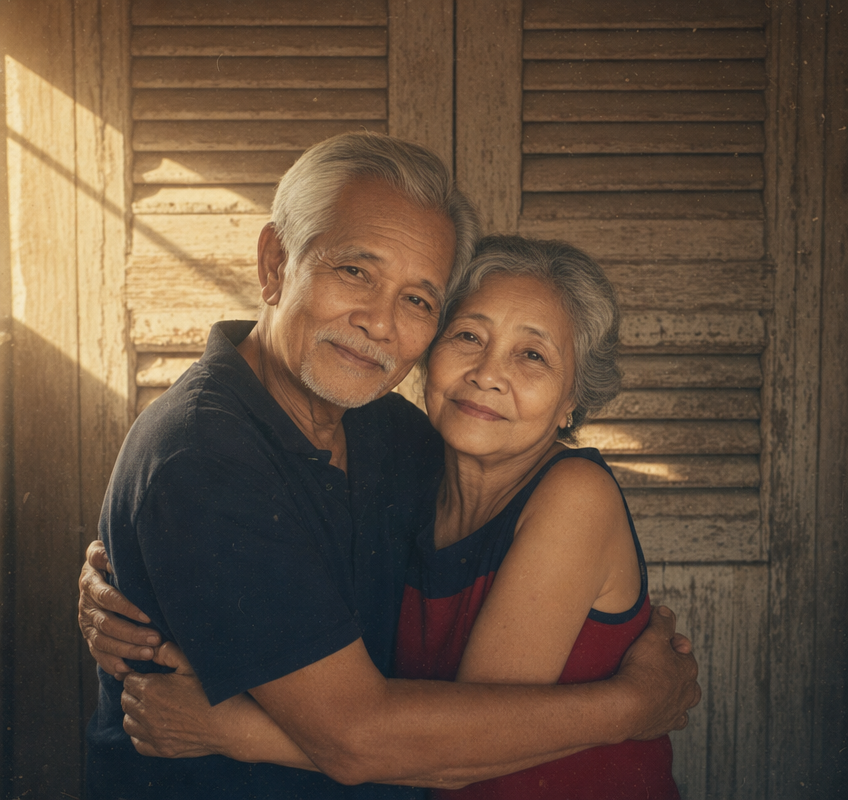
Elderly Couple Embracing in Golden Afternoon Light