Why this works
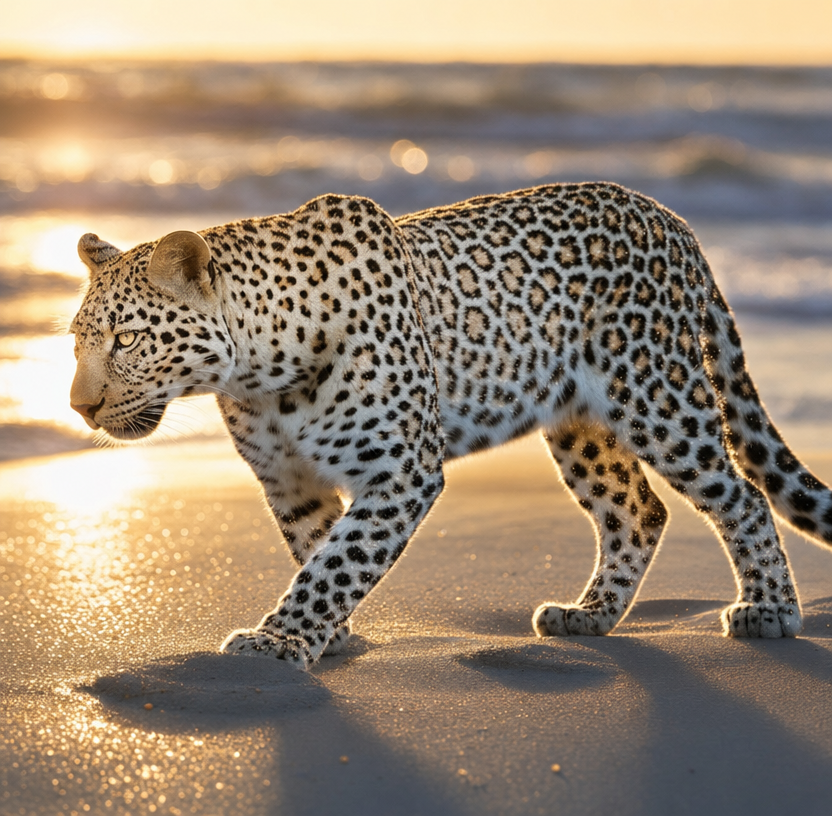
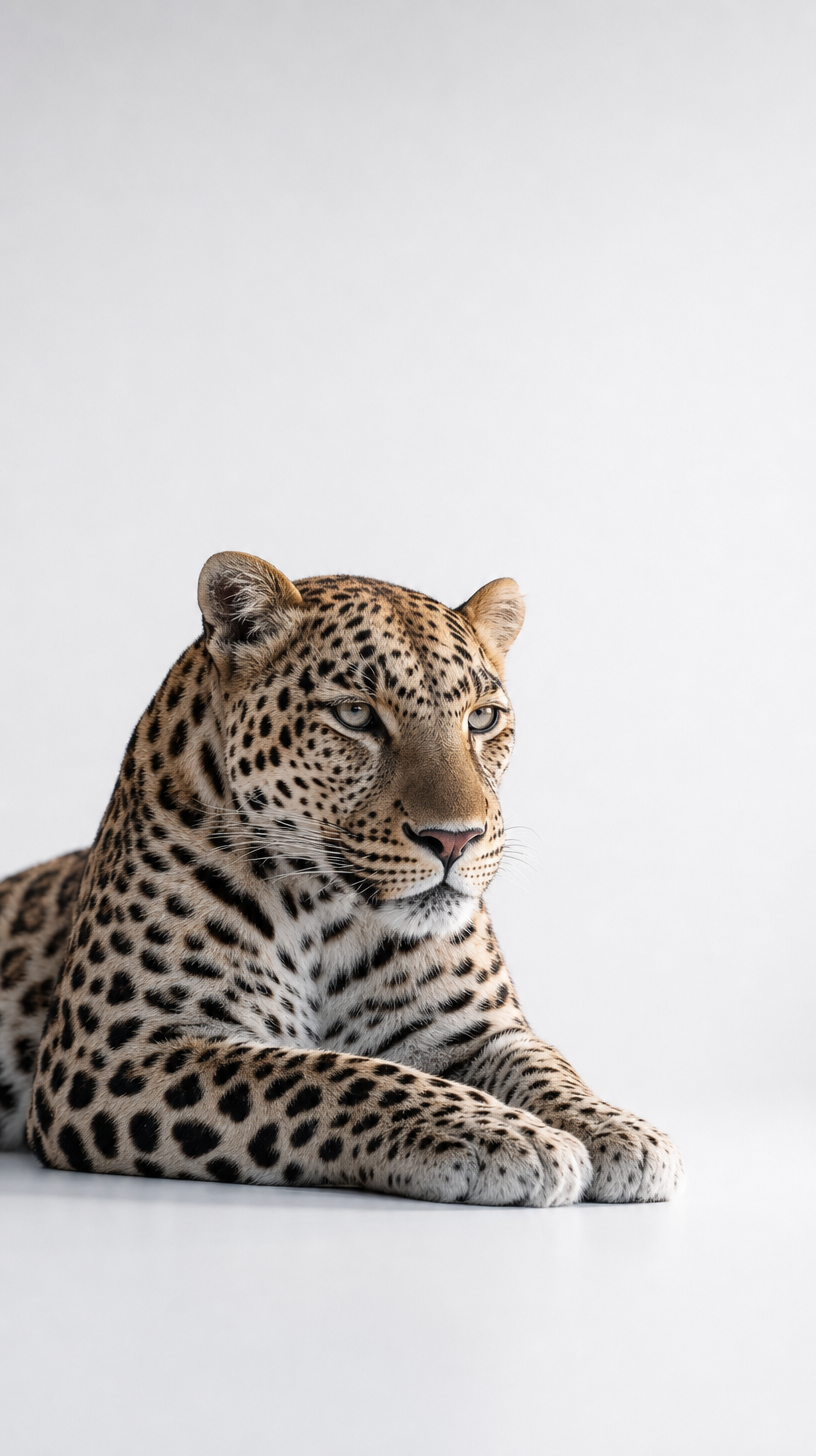
The phrase “low front-facing angle” gives the resting leopard quiet authority, while “calm alert expression” keeps the mood poised rather than passive. “Minimalist white studio” and “clean seamless background” create spacious negative space around the brown-and-black coat, and “soft directional lighting with subtle shadow under the paws” anchors the body without breaking the high-key look. “Three-quarter angle,” “full body visible,” and “gentle foreground framing” provide a formal portrait composition that shows the leopard’s shape while keeping its face as the visual entry point.
FAQ
→How do I make the leopard’s face and eyes more dominant?
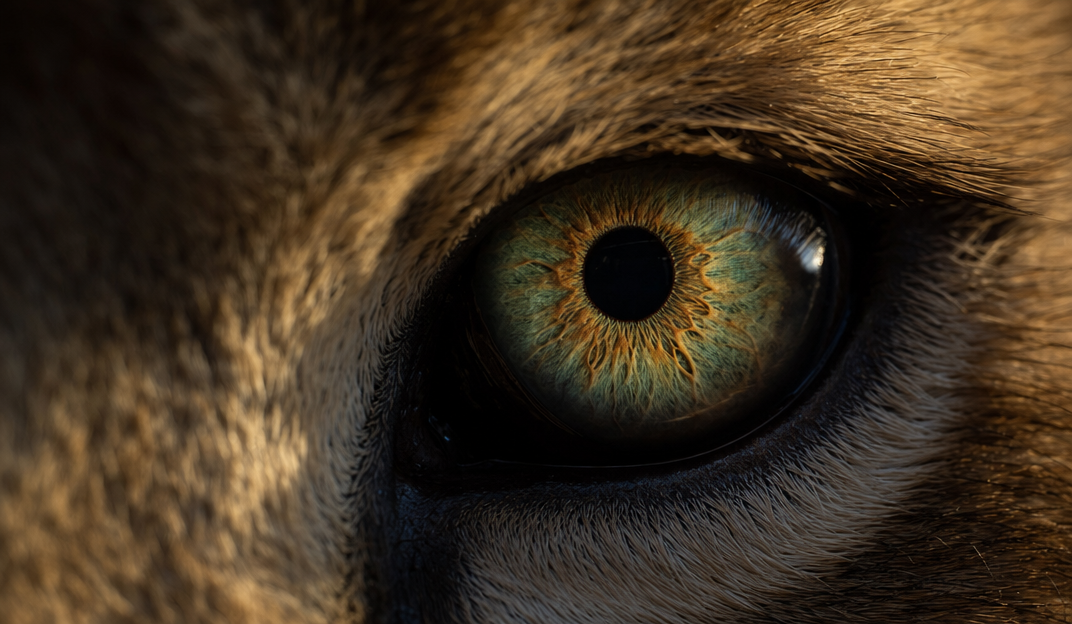
Replace “full body visible with gentle foreground framing” with “tight head-and-shoulders portrait with the eyes centered,” and change “low front-facing angle” to “eye-level close-up.” Keep “calm alert expression,” but add “sharp catchlights in the eyes” to increase facial emphasis.
→How do I shift this from a cool, elegant studio portrait to a warmer, more dramatic image?
Replace “high-key studio photography with a cooler neutral color palette” with “low-key cinematic studio photography with warm amber and deep charcoal tones,” and change “soft directional lighting with subtle shadow under the paws” to “strong warm side-lighting with pronounced shadows and a dark falloff.” Replace “minimalist white studio” with “dark matte studio backdrop” if you want the contrast to extend beyond the lighting.
→How do I create a series of variations while keeping the same leopard portrait identity?
Keep “photorealistic leopard,” “crisp fur detail,” “realistic high-resolution fur texture,” and “three-quarter turned pose” unchanged, then swap only the setting and lighting phrases. For example, replace “minimalist white studio” with “misty forest clearing,” “soft directional lighting” with “dappled morning sunlight,” or “high-key” with “muted naturalistic tones” to produce related environmental variations.