Why this works
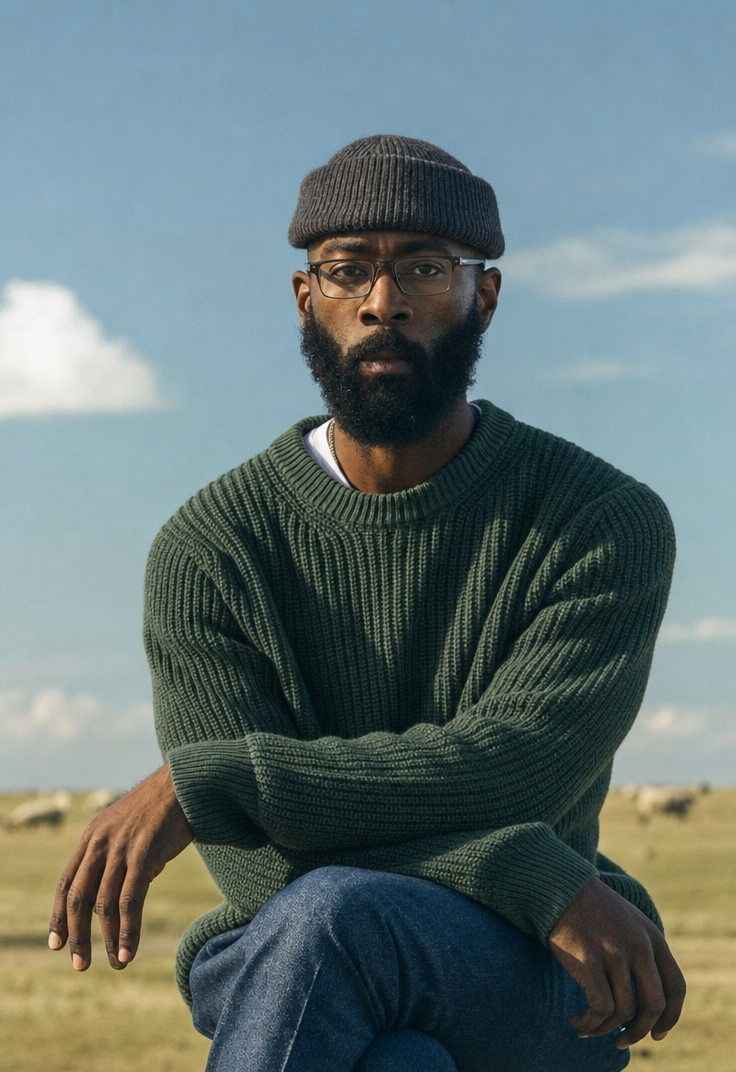
The calm, understated mood comes from the exact pairing of “calm thoughtful expression” and “natural muted light” beneath a “wide overcast sky,” while the sky-blue, blue, and gray dominance keeps the palette restrained around the subject’s deep forest-green sweater. “Portrait-full-body” and “seated in a grassy open field” establish a spacious environmental frame, and “shallow depth of field” preserves attention on his face, beanie, glasses, and knit texture while softening the field and clouds. “Realistic skin texture and knit fabric detail” gives the photorealistic editorial treatment its tactile anchor.
FAQ
→How do I change this prompt to make the portrait feel warmer and more approachable?
Replace “natural muted light” and “wide overcast sky with soft diffused clouds” with “late-afternoon golden sunlight, warm rim light, and a softly glowing pale sky.” Change “calm thoughtful expression” to “gentle relaxed smile” and replace “deep forest-green knit sweater” with “warm rust-colored knit sweater” to shift both expression and palette.
→How do I make the man more prominent while keeping the outdoor setting?
Replace “portrait-full-body” with “three-quarter environmental portrait” and change “seated in a grassy open field” to “seated in the foreground, framed from mid-thigh up.” Reduce “wide overcast sky” to “a narrow band of overcast sky in the background,” while keeping “shallow depth of field” so the field recedes more strongly.
→How do I build a series of variations from this prompt without losing its visual identity?
Keep “photorealistic editorial fashion portrait,” “natural muted overcast light,” “shallow depth of field,” and “realistic skin texture and knit fabric detail” unchanged. Swap only the setting phrase “grassy open field” for “windswept coastal meadow,” “quiet city park,” or “misty woodland clearing,” and vary the clothing phrase “deep forest-green knit sweater” with “charcoal wool coat” or “muted ochre cardigan” for controlled location and wardrobe changes.
Learn the technique behind this
- Why can't AI spell, and how do I get readable text in an image? — Older diffusion models had no character-level representation of text, so they produced letterform-shaped texture instead of words.
- Which aspect ratio should I use, and how does it change the image? — Aspect ratio determines what the model composes, not how it's cropped afterwards.
- How should a prompt be structured, and does word order matter? — A prompt that behaves predictably names one subject first, then what it is doing, then where, then the light, then the lens or medium, then the style.
Related prompts
Teal fashion editorial in monster-filled lift
Cobalt Boots in Sleek Studio Edit
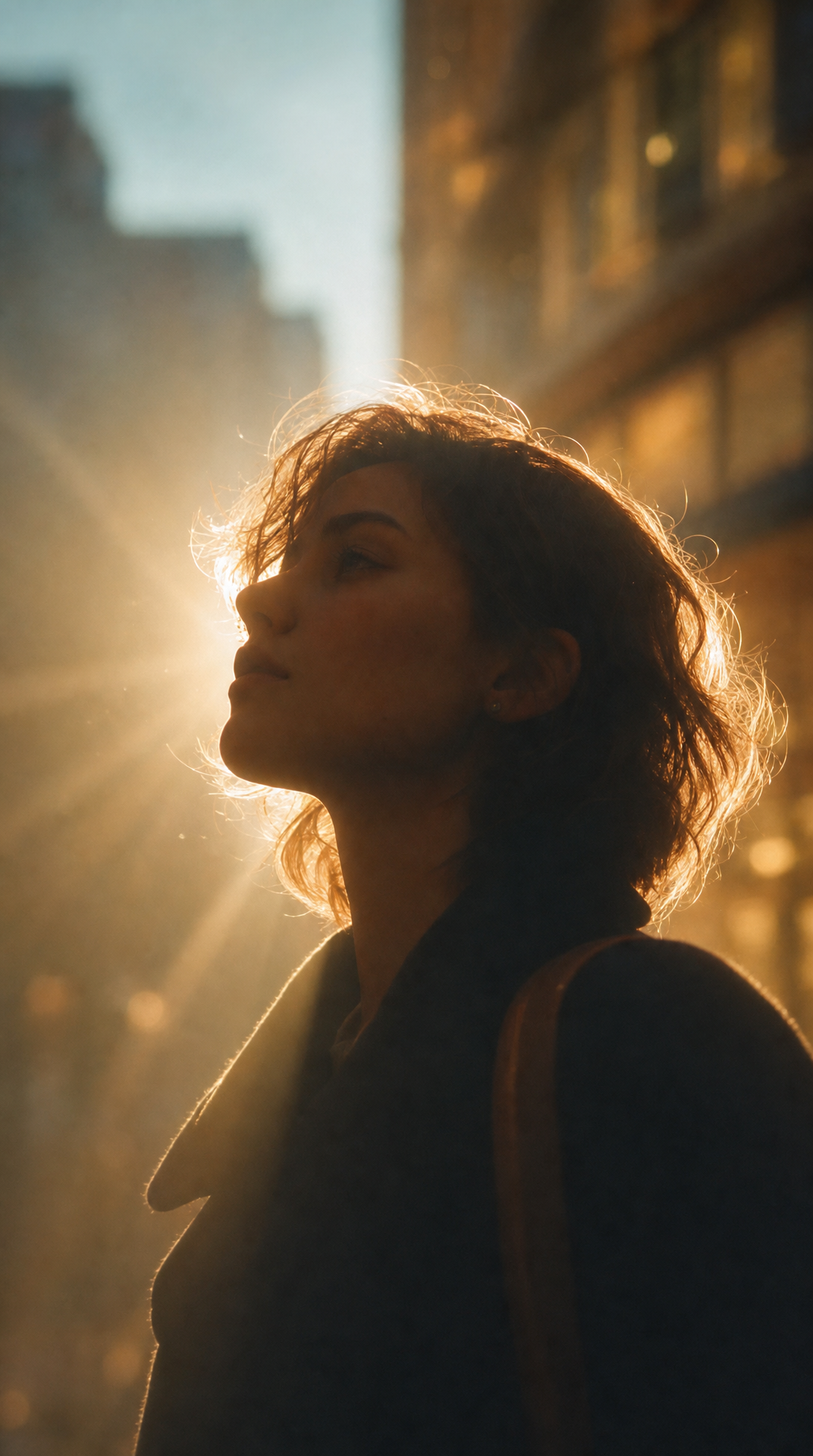
Silhouette Influencer by Sunlit Window
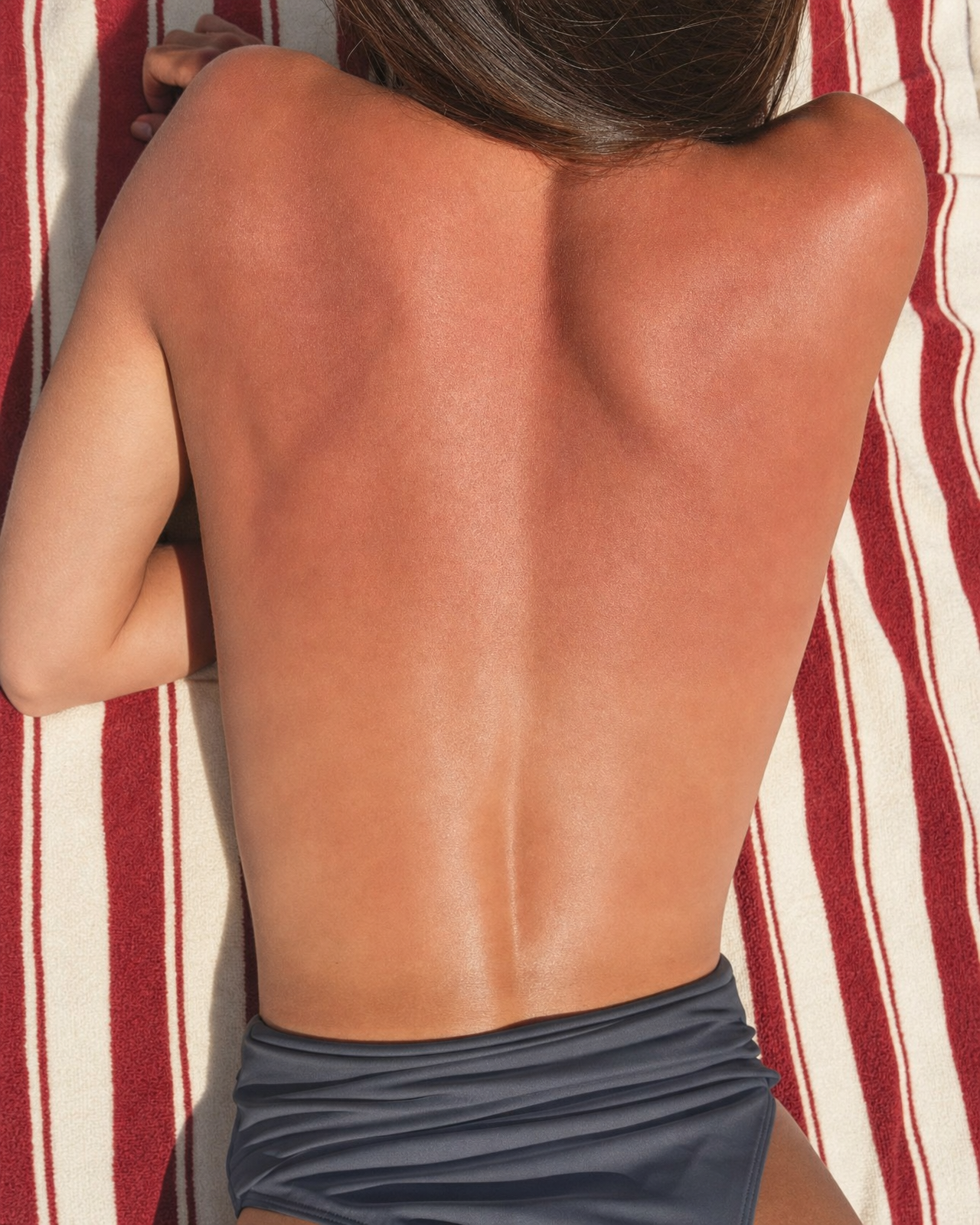
Sunlit editorial on striped beach towel