Why this works
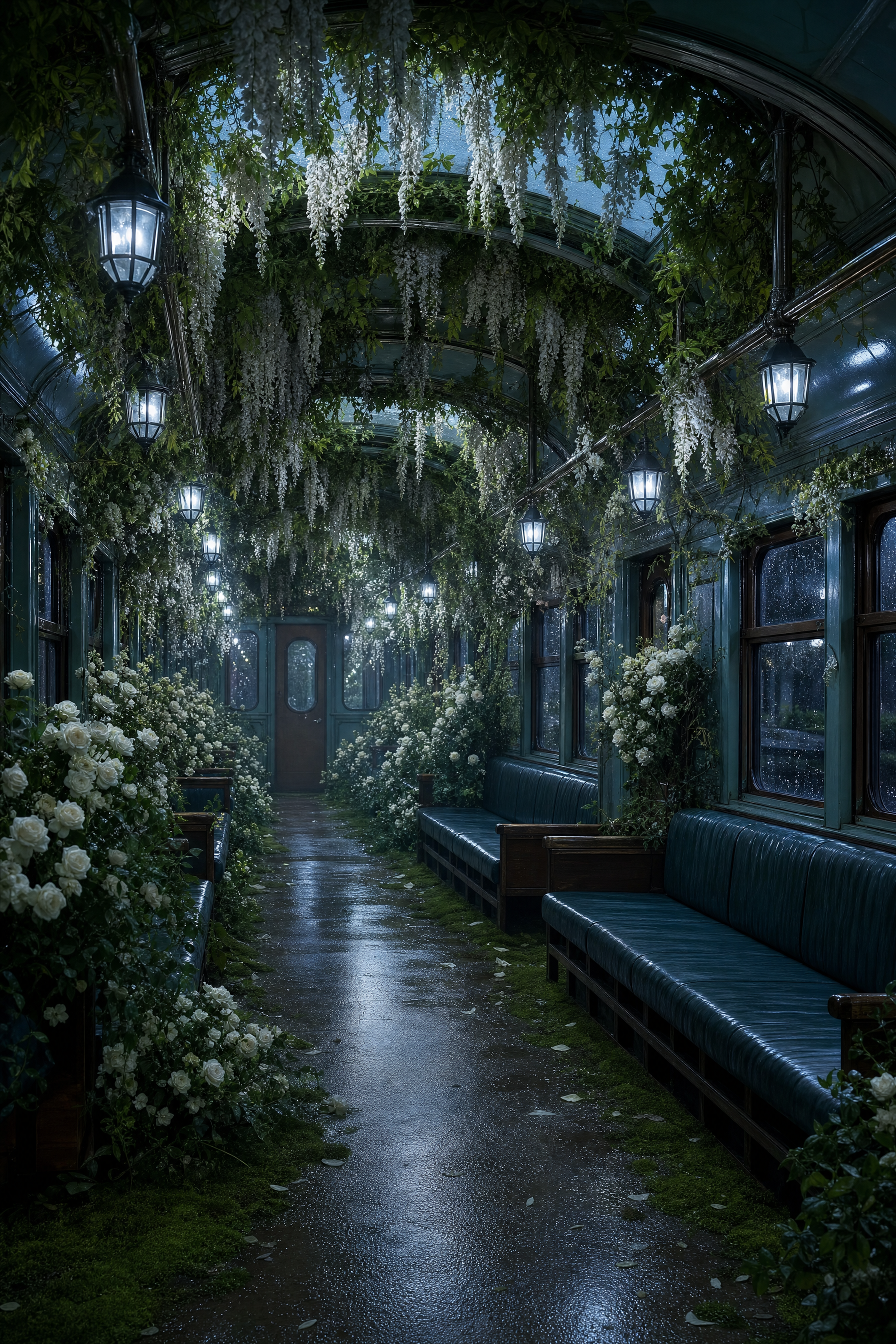
The phrase “symmetrical perspective looking straight down the carriage” makes the central aisle the visual axis, while the seats “running along both sides” and the wide-shot composition establish a strong, balanced frame. “Cascading white wisteria blossoms and mixed greenery hanging from the ceiling and window frames” creates a layered overhead canopy, with green, white, and gray forming a restrained botanical palette rather than the warmer rose-red scheme. “Cool moonlight-style lanterns,” “faint bluish rim light,” “soft atmospheric haze,” and the “slightly wet and reflective” floor supply the dreamy, atmospheric mood through cool highlights, softened depth, and reflected light.
FAQ
→How do I make the wisteria canopy more prominent than the train carriage?
Replace “symmetrical perspective looking straight down the carriage” with “low-angle wide perspective looking upward through the central aisle,” and expand “cascading white wisteria blossoms and mixed greenery” to “dense, overflowing white wisteria forming a near-solid ceiling canopy, blossoms dominating the upper two-thirds of the frame.”
→How do I change the dreamy romance into a darker, mysterious atmosphere?
Replace “cool moonlight-style lanterns” with “dim, flickering blue-green lanterns,” change “dreamy romantic ambiance” to “mysterious, gothic botanical ambiance,” and replace “soft atmospheric haze” with “dense low-lying mist and deeper shadows between the seats.” Keep the “faint bluish rim light” but make it “sharp, high-contrast bluish rim light” for stronger silhouettes.
→How do I create a series of variations while keeping the same composition?
Keep “symmetrical perspective looking straight down the carriage,” “central aisle,” and “wide-shot” unchanged, then swap only the botanical subject and palette: use “cascading lavender wisteria and fern fronds” for a purple variation, “trailing jasmine and pale ivy” for a cream-and-green variation, or “deep crimson orchids and dark tropical leaves” for a dramatic red variation. Replace “deep teal upholstered seats” only when you want the carriage color to harmonize with the new flowers.
Learn the technique behind this
- Why can't AI spell, and how do I get readable text in an image? — Older diffusion models had no character-level representation of text, so they produced letterform-shaped texture instead of words.
- How should a prompt be structured, and does word order matter? — A prompt that behaves predictably names one subject first, then what it is doing, then where, then the light, then the lens or medium, then the style.
- Do negative prompts work, and what should go in one? — Negative prompts work on models that support a separate negative conditioning channel — mainly Stable Diffusion and FLUX-family models.
Related prompts
Young woman with two cats
Blonde woman hugging beige pillow on off-white bed
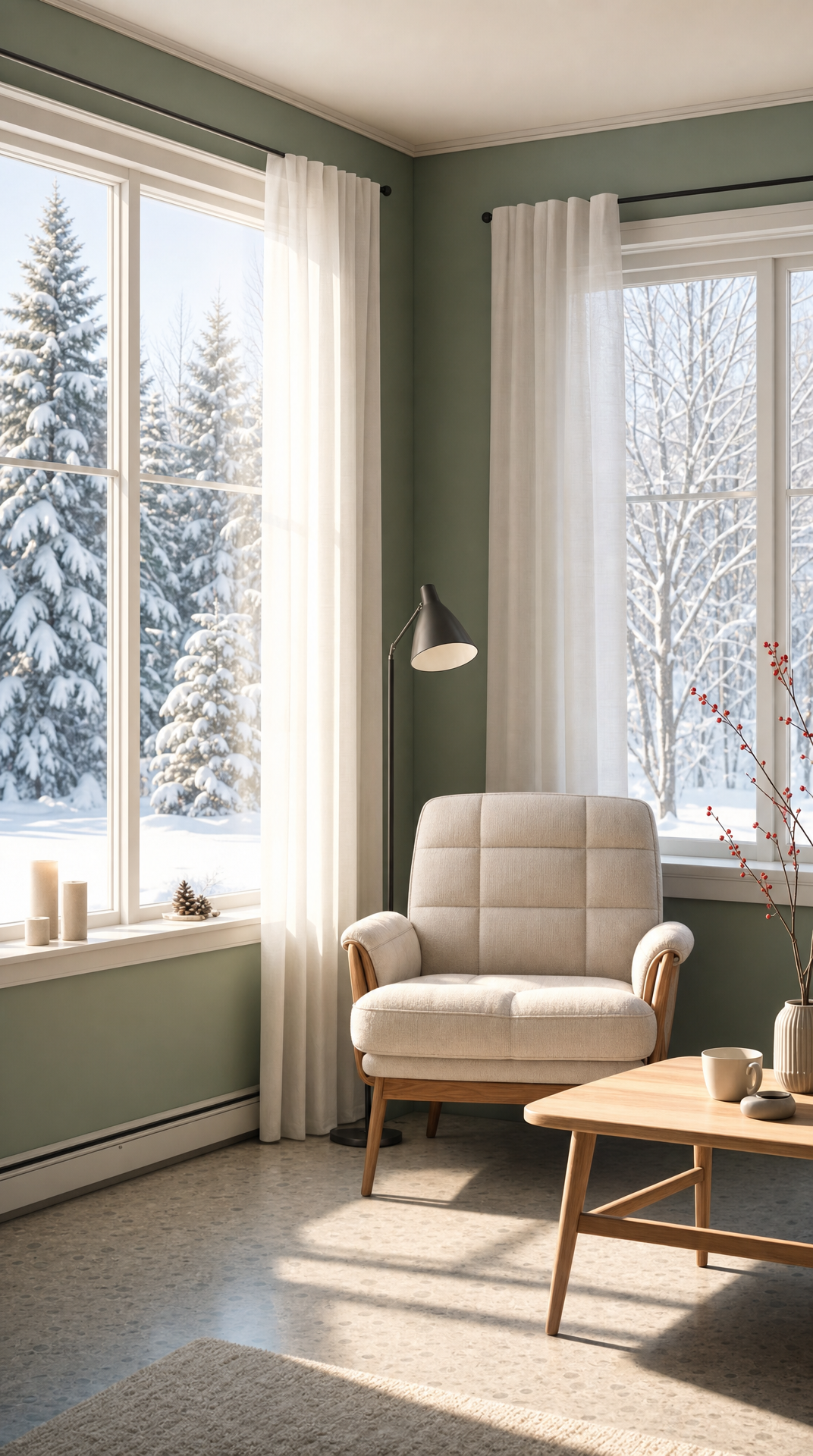
Cozy Winter Living Room in Sage

Morning Tea at the Writing Desk