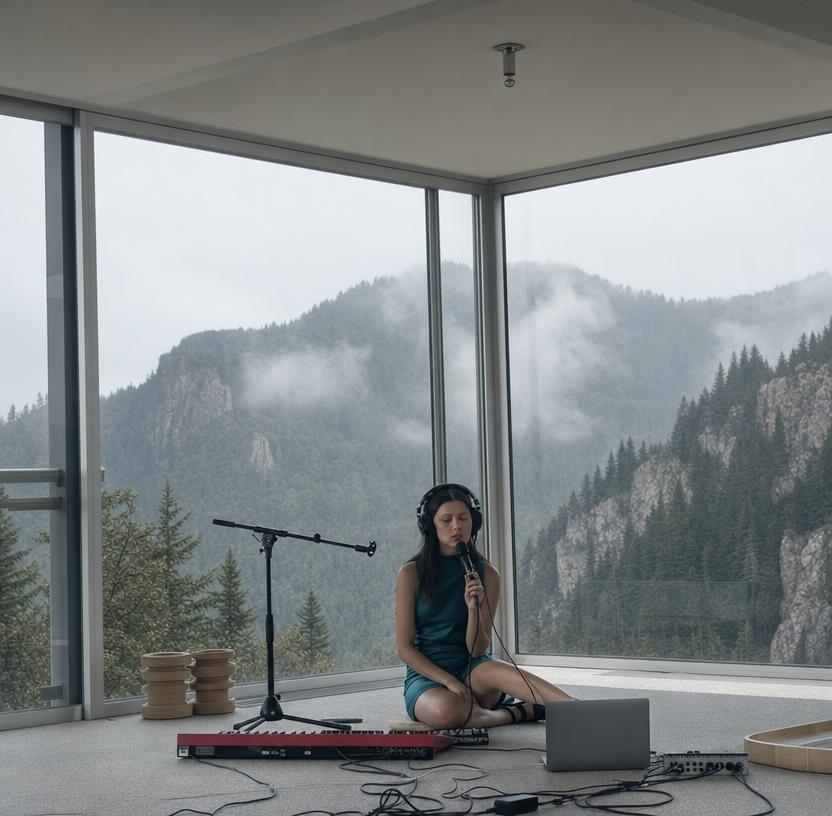
Why this works
The wide-shot framing comes directly from “wide-angle composition” and the seated figure, laptop, microphone, and cables distribute attention across the room rather than isolating her. “Floor-to-ceiling windows” and the “misty mountain landscape with darker coniferous greenery” create a strong green-blue color harmony and extend the scene beyond the glass. The calm, intimate mood is anchored by “soft natural overcast daylight,” “candid lifestyle photography,” and “shallow depth of field,” while “realistic skin texture” keeps the quiet performance grounded in a photorealistic register.
FAQ
→How do I make the performer more central and prominent?
Replace “wide-angle composition” with “medium shot, centered subject” and change “a young woman sits on the floor” to “a young woman sits centered in the frame, filling the foreground.” Keep “shallow depth of field,” but add “sharp focus on her face and headphones, softly blurred laptop and mountain view.”
→How do I shift this from calm and intimate to a more energetic live-performance mood?
Replace “calm, intimate, cinematic mood” with “dynamic, electric concert mood,” and change “soft natural overcast daylight” to “dramatic colored stage lighting with vivid teal and magenta accents.” Add “expressive singing pose, raised hand, stronger directional shadows” while retaining the microphone and headphones.
→How do I create a matching series with different environments?
Keep the fixed visual language, including “photorealistic lifestyle photography,” “realistic skin texture,” “candid framing,” “wide-angle composition,” and “shallow depth of field,” then replace “modern glass-walled room” and “misty mountain landscape” with a specific location such as “warm wooden cabin overlooking a snowy forest” or “sunlit urban studio with dense rooftop greenery.” Preserve “solid teal dress” and the open laptop to make the variations read as one series.
Learn the technique behind this
- Why can't AI spell, and how do I get readable text in an image? — Older diffusion models had no character-level representation of text, so they produced letterform-shaped texture instead of words.
- Which aspect ratio should I use, and how does it change the image? — Aspect ratio determines what the model composes, not how it's cropped afterwards.
- How should a prompt be structured, and does word order matter? — A prompt that behaves predictably names one subject first, then what it is doing, then where, then the light, then the lens or medium, then the style.
Related prompts
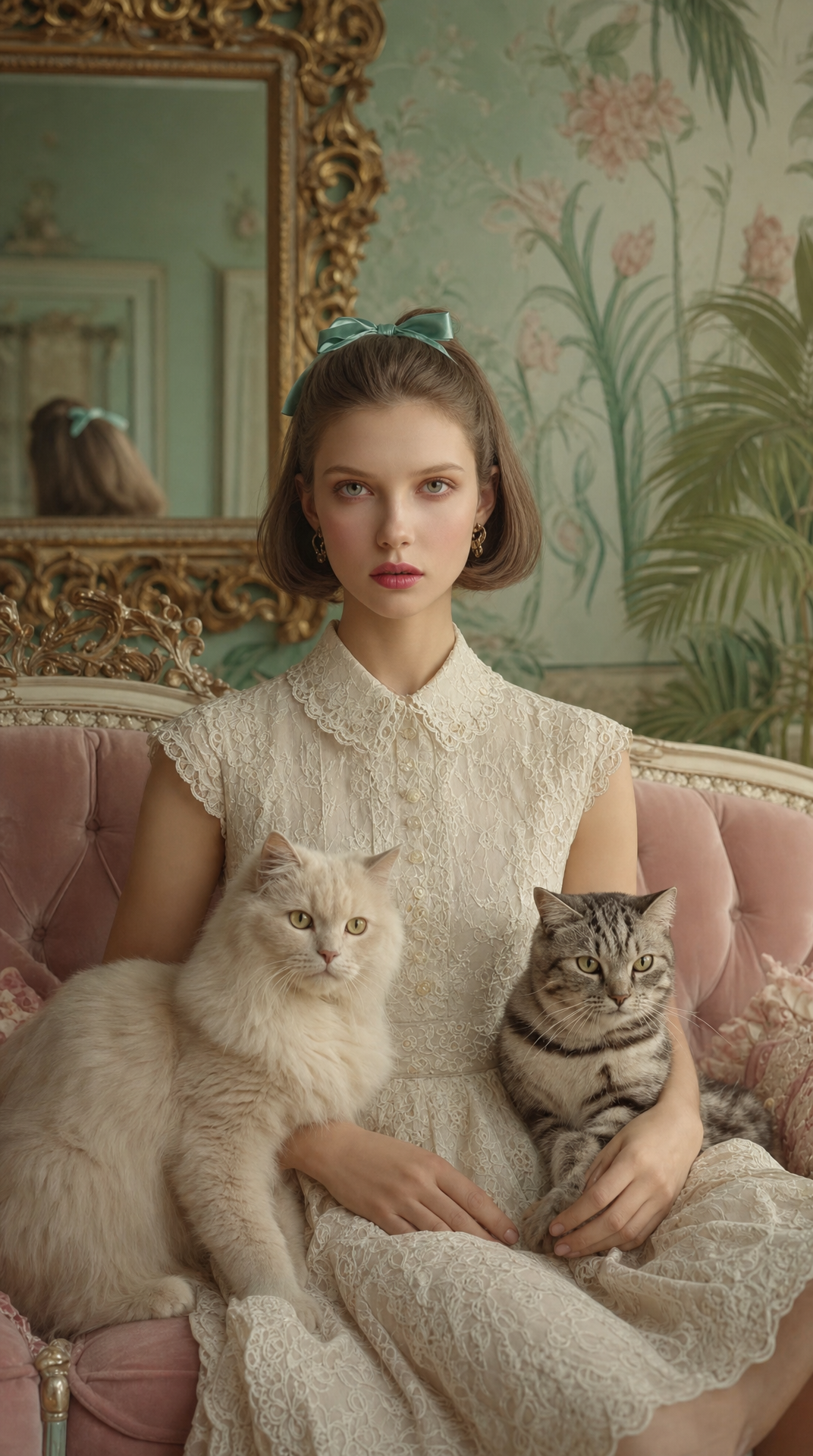
Young woman with two cats
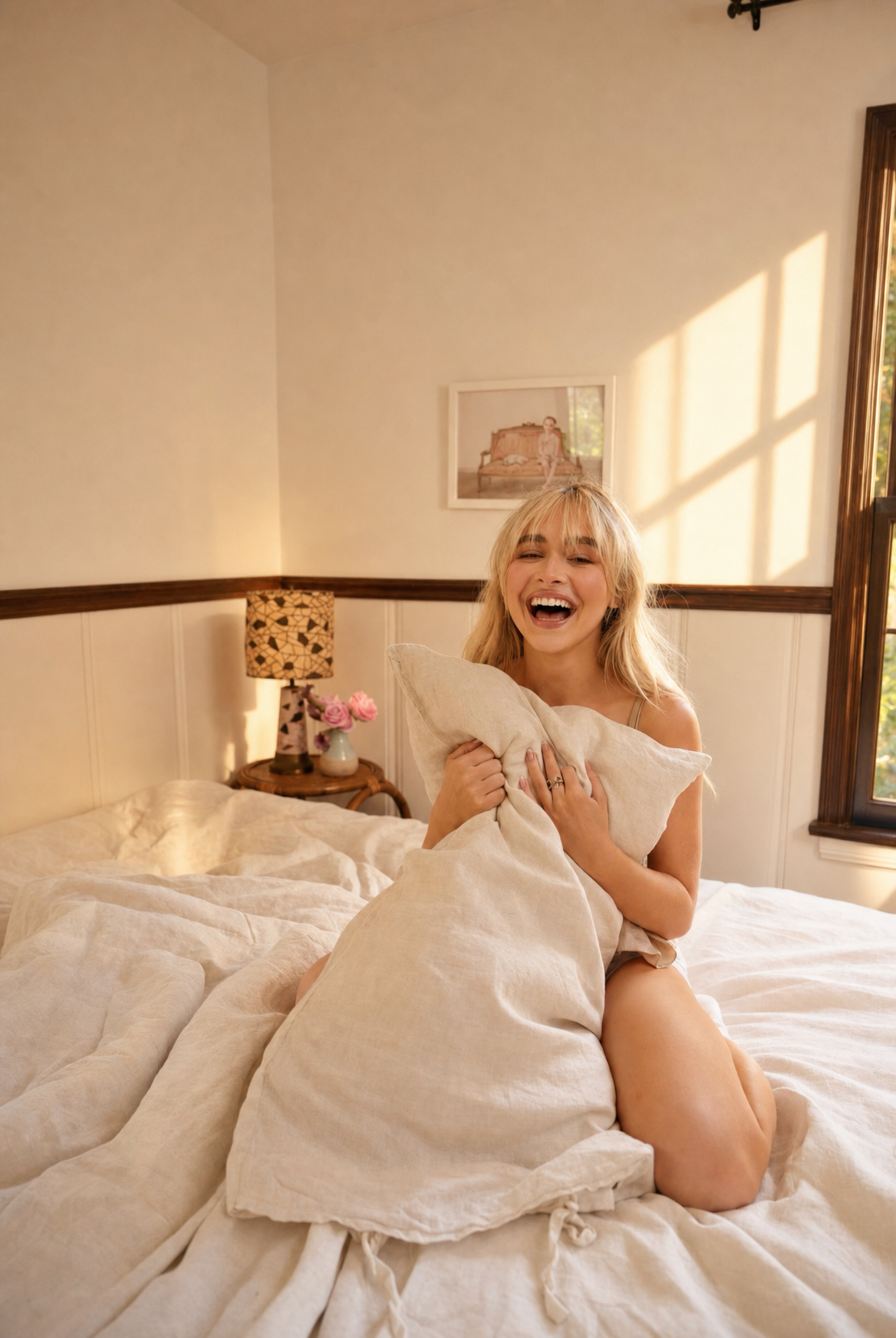
Blonde woman hugging beige pillow on off-white bed
Black tower fan on gray rug by window
Cozy Winter Living Room in Sage