Why this works
“Centered composition” makes the takeaway cup the immediate anchor, while the “loose ring” of coffee beans supplies a controlled frame around its base without competing for attention. The “warm beige-to-tan monochrome background” and brown palette create the restrained, premium harmony, and “soft diffused lighting with gentle rim light” separates the cup and curling steam from that warm field. “Shallow depth of field” keeps focus on the cup and realistic steam wisps while allowing the bean texture to soften naturally toward the edges.
FAQ
→How do I change this prompt to make the coffee steam feel moodier and more dramatic?
Replace “soft diffused lighting with gentle rim light” with “low-key side lighting with a narrow warm spotlight and deeper shadows,” and change “warm beige-to-tan monochrome background” to “deep espresso-brown gradient background.” Keep “realistic steam wisps curling upward,” but add “high-contrast steam backlighting” so the vapor becomes a visible graphic element.
→How do I change this prompt to make the coffee beans more prominent?
Replace “coffee beans artfully arranged in a loose ring around the base” with “a dense foreground bed of coffee beans rising around the lower half of the cup, with sharply rendered natural ridges and highlights.” Change “shallow depth of field” to “moderate depth of field with the cup and front beans both in crisp focus,” while retaining “centered composition” so the cup remains the main subject.
→How do I build a product-series variation from this prompt with a different café identity?
Replace “premium café packaging aesthetic” and “paper sleeve” with a defined identity such as “minimal Scandinavian café packaging, matte ivory sleeve with a deep green geometric logo.” Swap “warm beige-to-tan monochrome background” for “cool pale gray studio background with muted green accents,” and replace the brown palette with “ivory, charcoal, and forest green” while keeping “photorealistic studio product shot” and “centered composition” consistent across the series.
Learn the technique behind this
- Why can't AI spell, and how do I get readable text in an image? — Older diffusion models had no character-level representation of text, so they produced letterform-shaped texture instead of words.
- How should a prompt be structured, and does word order matter? — A prompt that behaves predictably names one subject first, then what it is doing, then where, then the light, then the lens or medium, then the style.
- Do negative prompts work, and what should go in one? — Negative prompts work on models that support a separate negative conditioning channel — mainly Stable Diffusion and FLUX-family models.
Related prompts
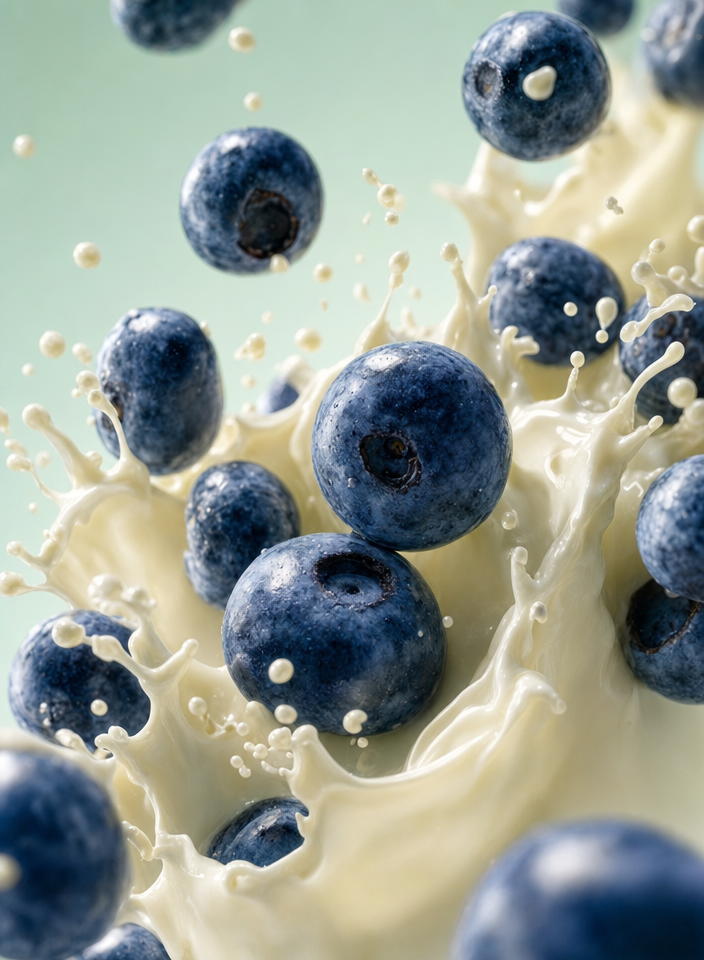
Blueberries Bursting Into Vanilla Cream
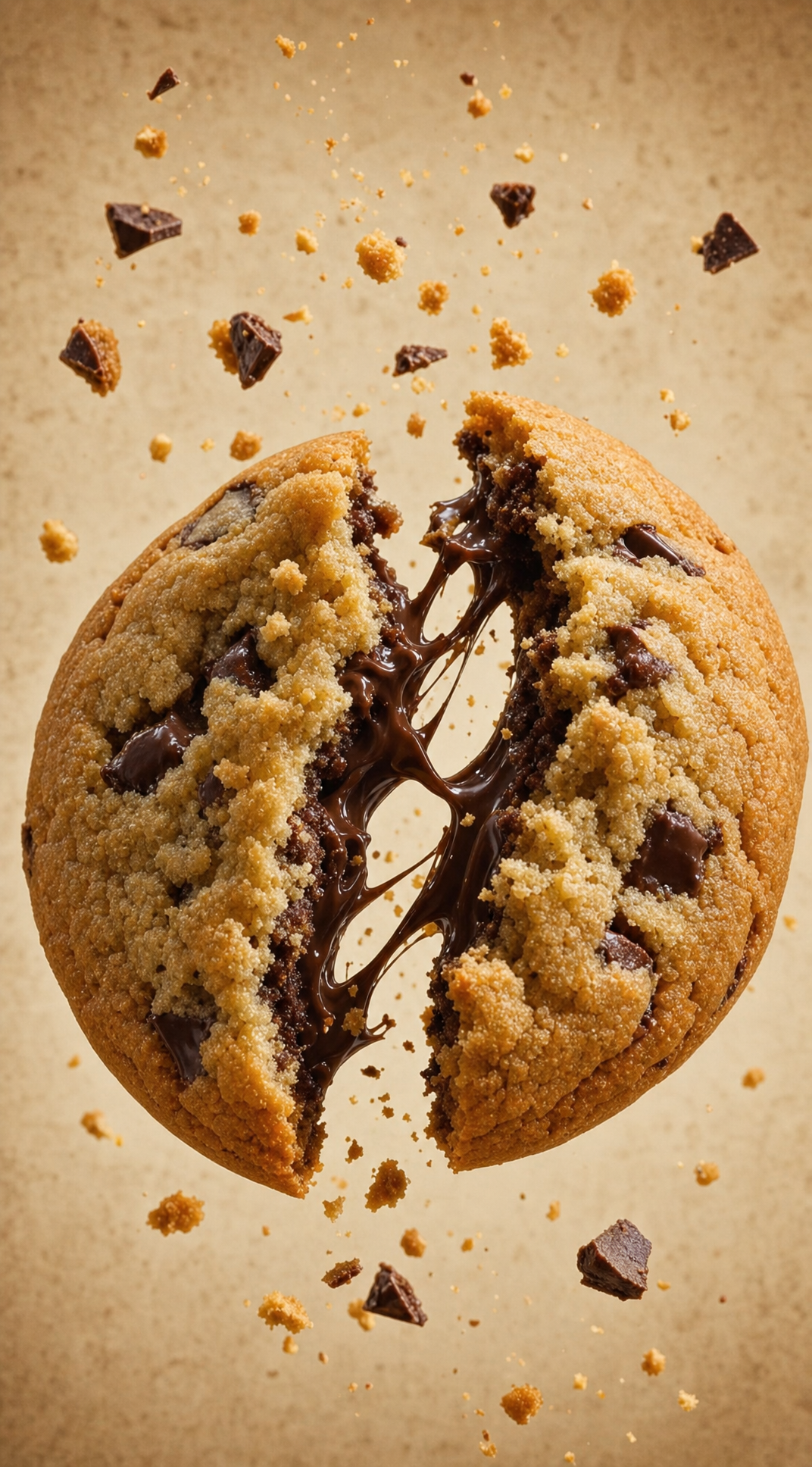
Chocolate Filled Cookie Splitting Midair With Dark Drip

Partially Peeled Banana on Blue
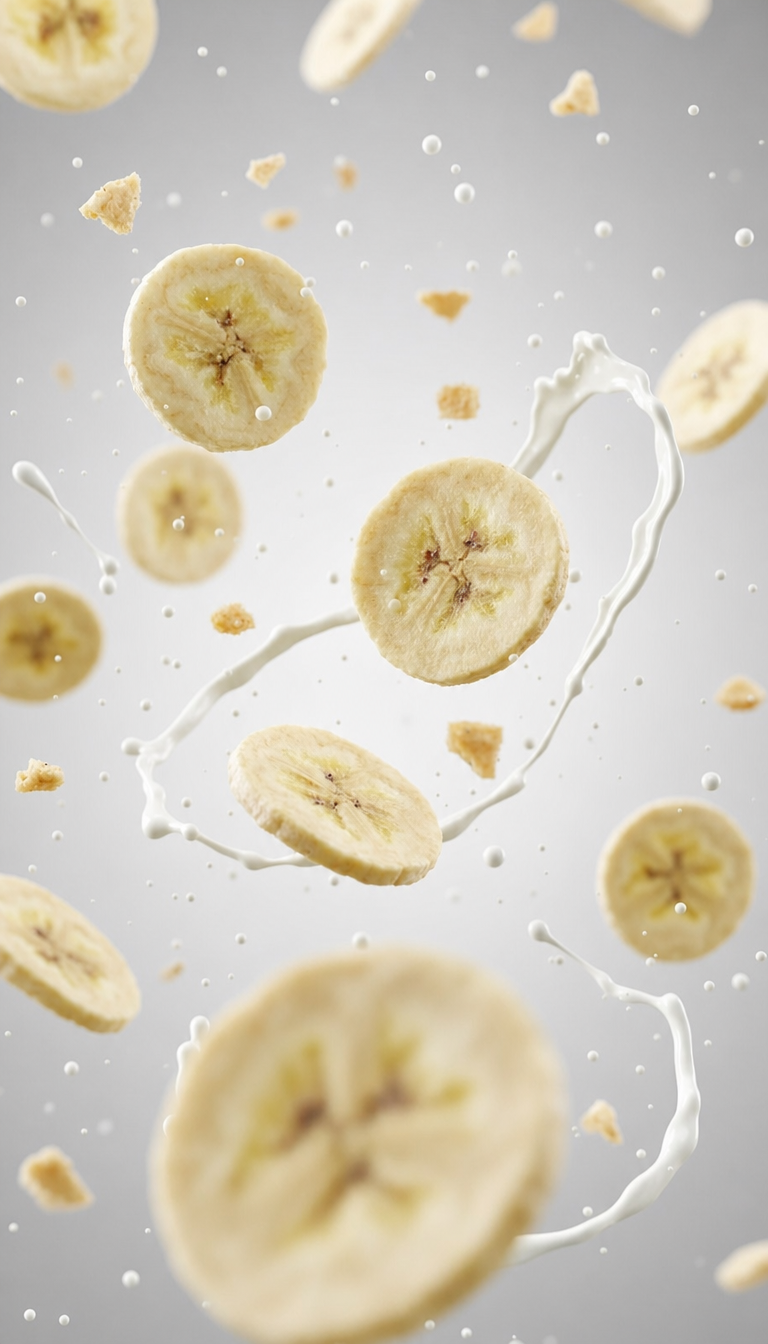
Banana slices in cool milk splash background