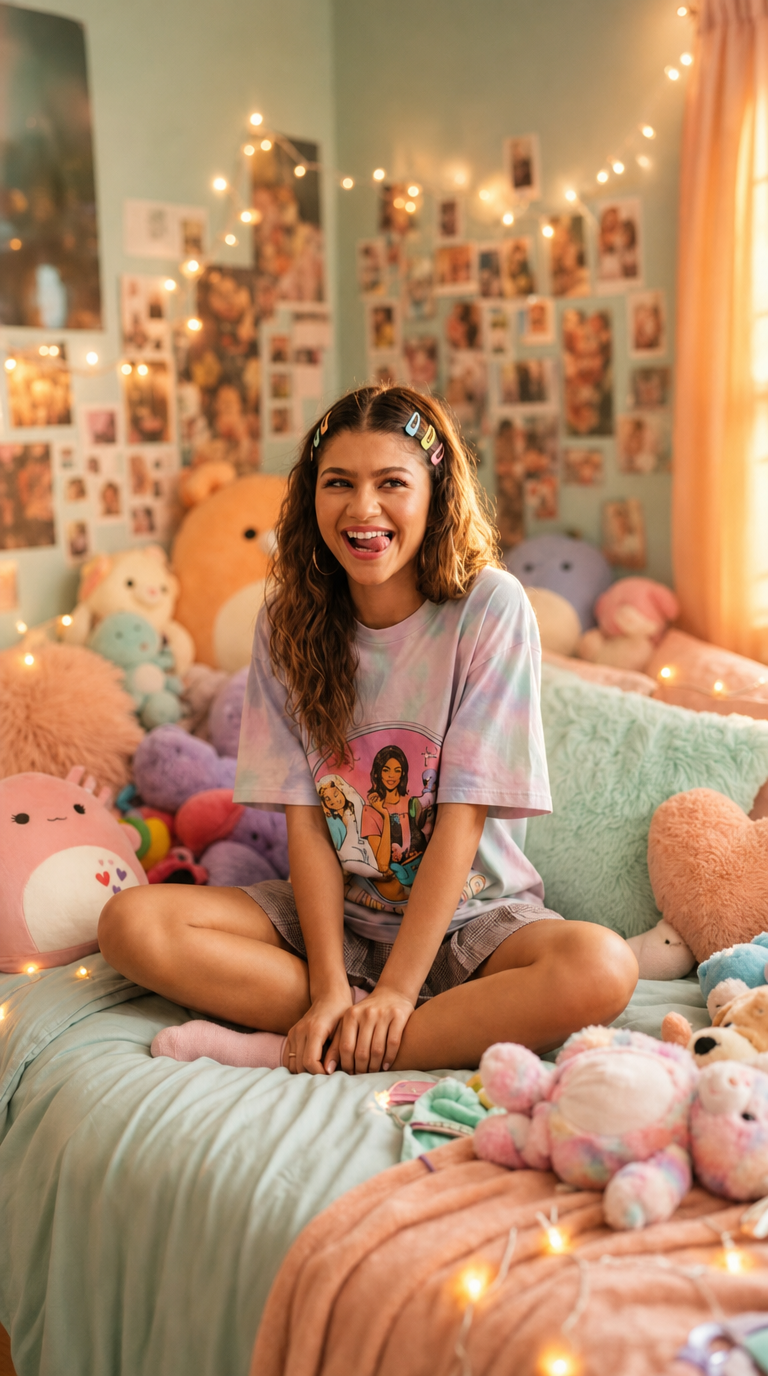
Why this works
The phrase “smiling young woman sitting cross-legged on a bed” supplies a relaxed full-body anchor, while “vertically oriented portrait” reinforces the tall composition shown in the image. “Golden-hour bedside illumination with warm highlights and gentle bokeh” creates the orange warmth and soft dreamy mood, balanced by the requested “mint green and warm peach tones” and the image’s pink accents. “Shallow depth of field” and “crisp focus on face” make her expression the visual priority, while “room decor softly blurs” keeps the plush toys, fairy lights, and collage wall readable without competing.
FAQ
→How do I make the woman’s face and expression even more prominent?
Replace “portrait-full-body” and “sitting cross-legged on a bed” with “medium portrait from the waist up, face centered in the upper third, hands resting loosely in frame.” Keep “crisp focus on face,” and strengthen it to “tack-sharp eyes and natural facial detail,” while changing “room decor softly blurs” to “minimal blurred background.”
→How do I make the bedroom feel more playful and colorful?
Replace “mint green and warm peach tones” with “mint green, peach, coral pink, and butter yellow accents,” and change “detailed, believable decor” to “densely layered playful decor with colorful plush toys, patterned bedding, sticker-covered collage art, and fairy-light strands.” Keep “photorealistic” so the added color remains believable rather than illustrated.
→How do I create a coordinated series of variations from this prompt?
Keep the fixed phrases “smiling young woman,” “photorealistic lifestyle portrait,” “vertical,” and “shallow depth of field,” then swap one controlled setting phrase per variation: replace “dreamy pastel bedroom” with “sunlit reading nook,” “cozy attic bedroom,” or “softly decorated studio corner.” For palette studies, replace “mint green and warm peach tones” with “powder blue and apricot,” “butter yellow and lilac,” or “sage green and terracotta,” while preserving “golden-hour bedside illumination” for consistent mood.
Learn the technique behind this
- Why can't AI spell, and how do I get readable text in an image? — Older diffusion models had no character-level representation of text, so they produced letterform-shaped texture instead of words.
- Why does AI get hands and faces wrong, and how do I fix it? — Hands fail because they're small in frame, extremely variable in pose, and self-occluding — the model has less usable signal per pixel than for any other body part.
- How do I keep the same character across multiple images? — Text prompts alone won't hold a face across images — a description defines a type, not a person.
Related prompts
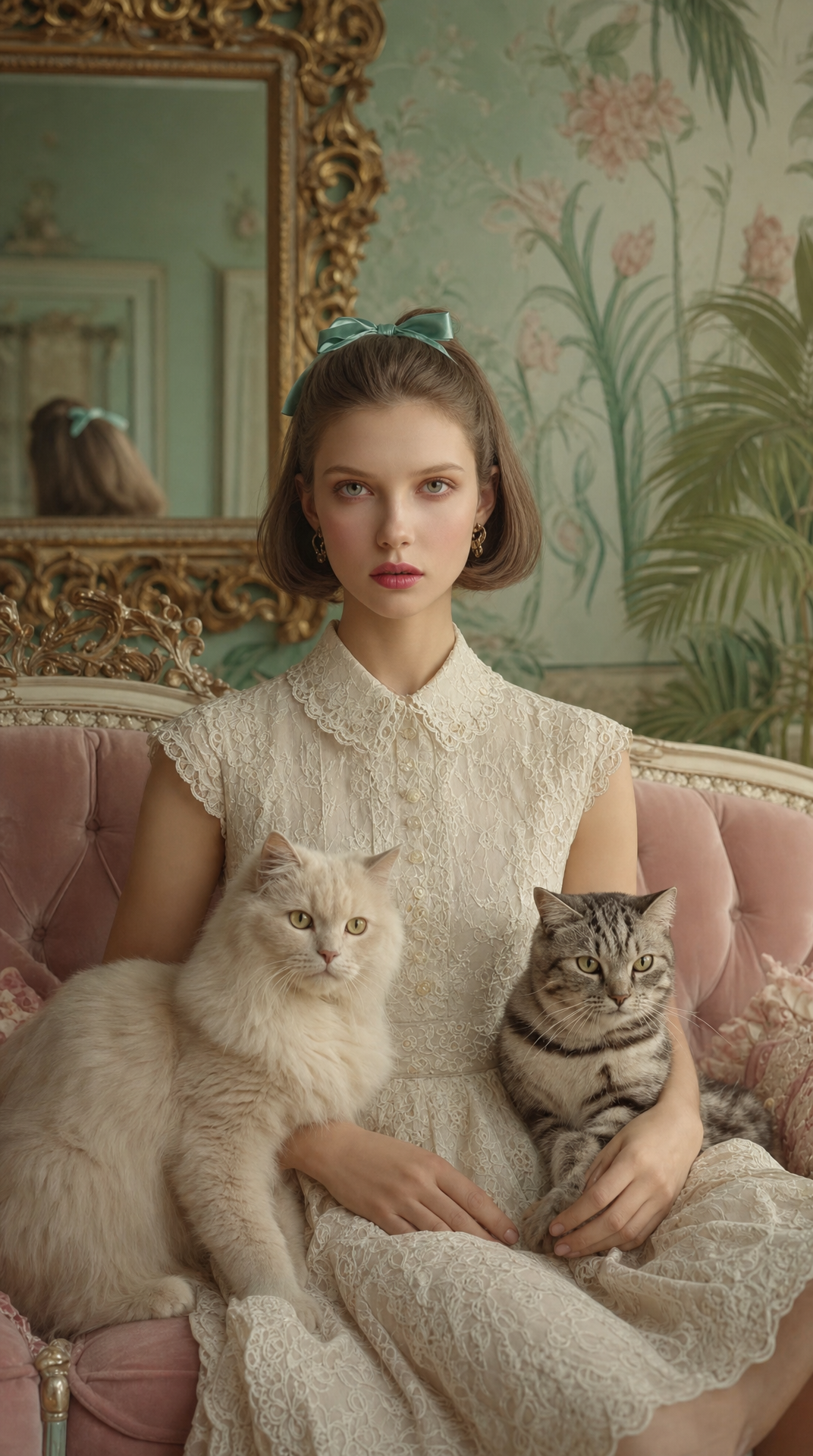
Young woman with two cats
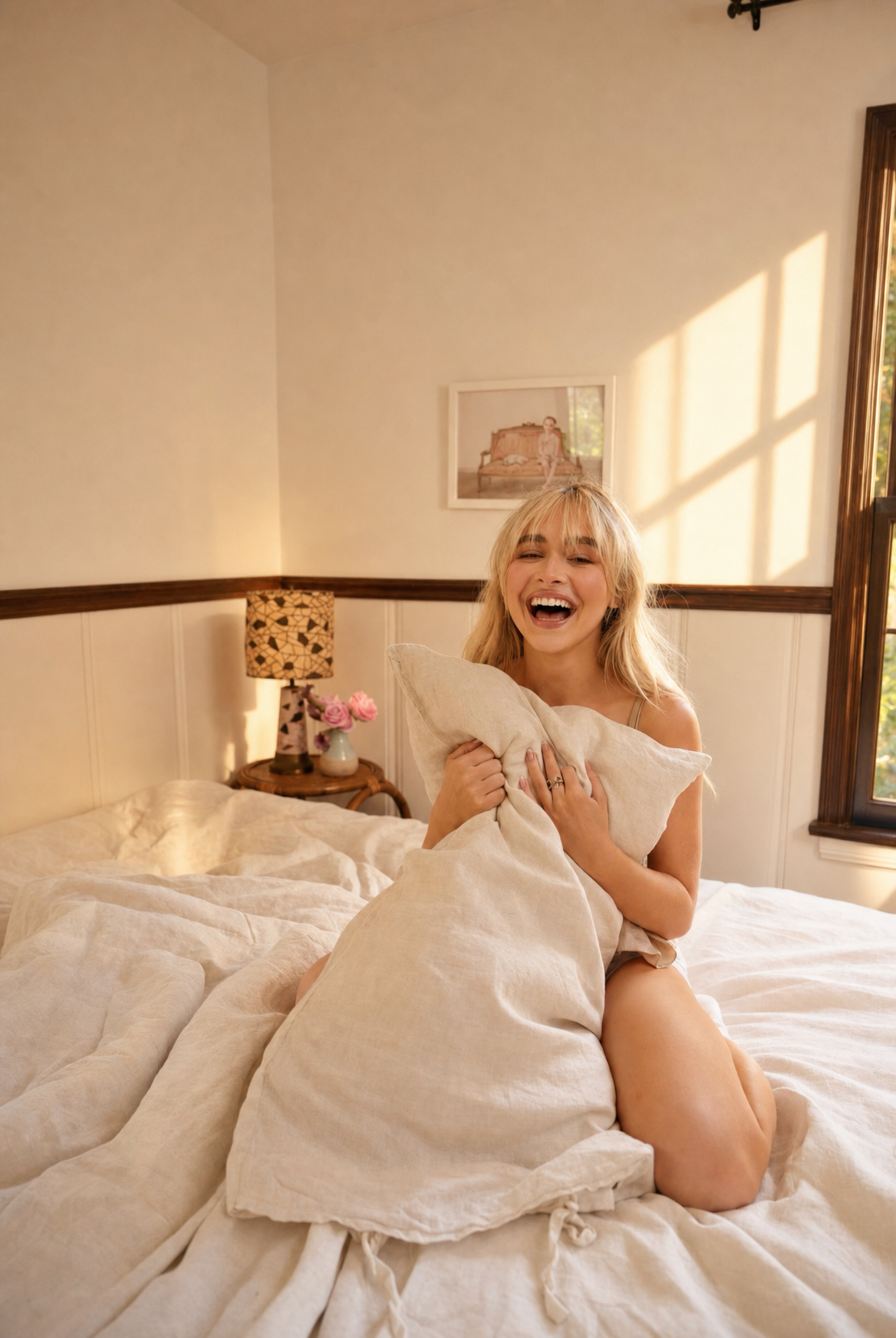
Blonde woman hugging beige pillow on off-white bed

Black tower fan on gray rug by window

Cozy Winter Living Room in Sage